
News
Ghana becomes record fifth African nation to take over from ruling party this year




Ghana’s vote brings to an end a remarkable 12 months in African politics, which have seen five transfers of power – more than ever before. This “annus horribilis” for governments has now also brought opposition victories in Botswana, Mauritius, Senegal and the self-declared republic of Somaliland.
Even beyond these results, almost every election held in the region this year under reasonably democratic conditions, has seen the governing party lose a significant number of seats.
This trend has been driven by a combination of factors:
*the economic downturn
*growing public intolerance of corruption
*and the emergence of increasingly assertive and well-co-ordinated opposition parties.
The trend is likely to continue into 2025, and will cause trouble for leaders such as Malawian President Lazarus Chakwera, whose country goes to the polls in September.
One of the most striking aspect of the elections that have taken place in 2024 is that many have resulted in landslide defeats for governments that have previously appeared to have a strong grip on power – including in countries that have never before experienced a change at the top.
The Botswana Democratic Party (BDP) that had ruled the country since independence in 1966 was crushed in October’s general elections.
As well as losing power, the BDP went from holding 38 seats in the 69-strong parliament to almost being wiped out.
After winning only four seats, the BDP is now one of the smallest parties in parliament, and faces an uphill battle to remain politically relevant.
There was also a landslide defeat for the governing party in Mauritius in November, where the Alliance Lepep coalition, headed by Pravind Jagnauth of the Militant Socialist Movement, won only 27% of the vote and was reduced to just two seats in parliament.
With its rival Alliance du Changement sweeping 60 of the 66 seats available, Mauritius has experienced one of the most complete political transformations imaginable.
Senegal and the self-declared republic of Somaliland also saw opposition victories.
In the case of Senegal, the political turnaround was just as striking as in Botswana, albeit in a different way.
Just weeks ahead of the election, the main opposition leaders Bassirou Diomaye Faye and Ousmane Sonko were languishing in jail as the government of President Macky Sall abused its power in a desperate bid to avert defeat.
After growing domestic and international pressure led to Faye and Sonko being released, Faye went on to win the presidency in the first round of voting, with the government’s candidate winning only 36% of the vote.
Even in cases where governments have not lost, their reputation and political control have been severely dented.
South Africa’s African National Congress (ANC) retained power but only after a bruising campaign that saw it fall below 50% of the vote in a national election for the first time since the end of white-minority rule in 1994.
This forced President Cyril Ramaphosa to enter into a coalition government, giving up 12 cabinet posts to other parties, including powerful positions such as home affairs.
The recent elections in Namibia told a similar story. Although the ruling party retained power, the opposition has rejected the results and claims the poll was badly manipulated after it was marred by logistical problems and irregularities.
Even with the flaws, the government suffered in the parliamentary election, recording its worst-ever performance, losing 12 of its 63 seats and only just holding on to its parliamentary majority.
As a result, a region that is known more for governments that manage to hold on to power for decades has seen 12 months of vibrant, intensely contested, multiparty politics.
The only exceptions to this have been countries where elections were seen as neither free nor fair, such as Chad and Rwanda, or in which governments were accused by opposition and rights groups of resorting to a combination of rigging and repression to avert defeat, as in Mozambique.
Three trends have combined to make it a particularly difficult year to be in power.
In Botswana, Mauritius and Senegal, growing citizen concern about corruption and the abuse of power eroded government credibility.
Opposition leaders were then able to play on popular anger at nepotism, economic mismanagement and the failure of leaders to uphold the rule of law to expand their support base.
Especially in Mauritius and Senegal, the party in power also undermined its claim to be a government committed to respecting political rights and civil liberties – a dangerous misstep in countries where the vast majority of citizens are committed to democracy, and which have previously seen opposition victories.
The perception that governments were mishandling the economy was particularly important because many people experienced a tough year financially.
High food and fuel prices have increased the cost of living for millions of citizens, increasing their frustration with the status quo.
In addition to underpinning some of the government defeats this year, economic anThis is not an African phenomenon, of course, but a global one.
Popular discontent over inflation played a role in the defeat of Rishi Sunak and the Conservative Party in the UK and the victory of Donald Trump and the Republican Party in the United States.
What was perhaps more distinctive about the transfers of power in Africa this year was the way that opposition parties learned from the past.
In some cases, such as Mauritius, this meant developing new ways to try and protect the vote by ensuring every stage of the electoral process was carefully watched.
In others, it meant forging new coalitions to present the electorate with a united front.
In Botswana, for example, three opposition parties and a number of independent candidates came together under the banner of the Umbrella for Democratic Change to comprehensively out-mobilise the BDP.
A similar set of trends is likely to make life particularly difficult for leaders that have to go to the polls next year, such as Malawi’s President Chakwera, who is also struggling to overcome rising public anger at the state of the economy.
With the defeat of the NPP in Ghana, Africa has seen five transfers of power in 12 months. The previous record was four opposition victories, which occurred some time ago in 2000.
That so many governments are being given an electoral bloody nose against a backdrop of global democratic decline that has seen a rise in authoritarianism in some regions is particularly striking.
It suggests that Africa has much higher levels of democratic resilience than is often recognised, notwithstanding the number of entrenched authoritarian regimes that continue to exist.
Civil society groups, opposition parties and citizens themselves have mobilised in large numbers to demand accountability, and punish governments that have failed both economically and democratically.
International governments, organisations, and activists looking for new ways to defend democracy around the world should pay more attention to a region that is often assumed to be an inhospitable environment for multiparty politics, yet has seen more examples of democratic bounce-back than other regions of the world.
BBC

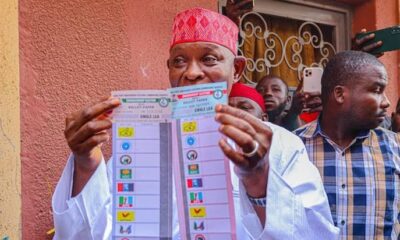





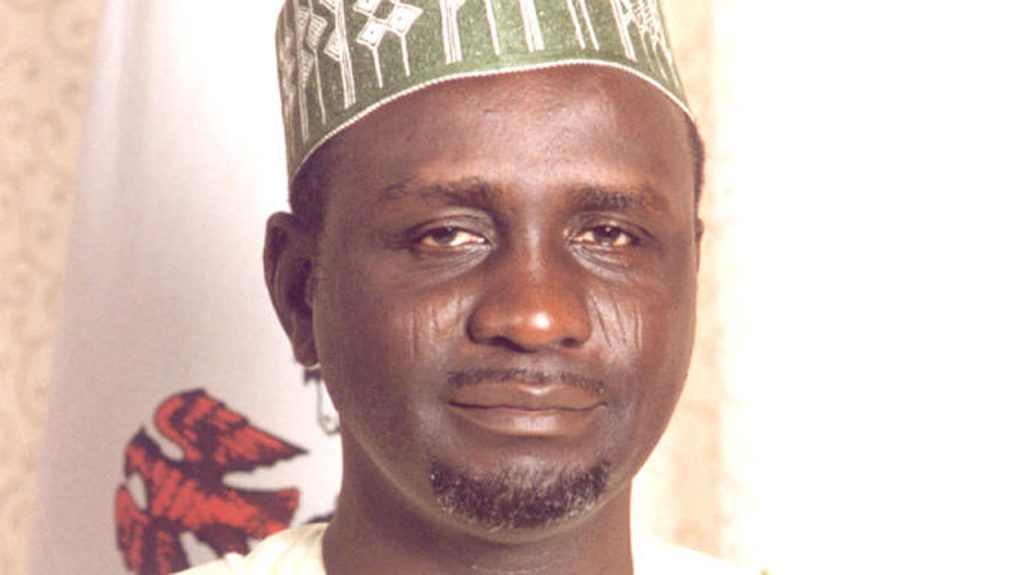
Ex- Kano State Governor, Ibrahim Shekarau, has defected from the opposition Peoples Democratic Party and rejoined the ruling All Progressives Congress (APC).
Shekarau announced his defection on Sunday at his residence on Mundubawa Avenue in Kano, which was decorated with APC posters.
As reported by Daily Trust, he left the party alongside Senator Bello Hayatu Gwarzo, a chieftain of the PDP.
Addressing party loyalists, Shekarau said the decision followed wide consultations and careful consideration of available political options.
“We have weighed all the options and arrived at this collective resolution. Do you all agree?” he asked, urging anyone opposed to the move to speak up.
The move comes hours after he submitted his resignation letter from the PDP.
In the letter dated April 19, 2026, and addressed to the PDP Chairman of Giginyu Ward in Nassarawa Local Government Area of Kano State, Shekarau said his exit took immediate effect.
“Accept this letter please as notice of my resignation from my position as member of the Peoples Democratic Party (PDP) with effect from today,” he wrote.
He expressed appreciation to party leadership at the ward level.
“I thank you for being a good leader, and pray that Allah will continue to guide you in your stewardship,” he added.
The letter was also copied to the Kano State PDP Chairman and the PDP Chairman of Nassarawa Local Government Area, indicating formal notification across party structures.
Shekarau’s move follows months of speculation fuelled by the PDP’s internal crisis.
In April, during a visit by APC National Chairman, Professor Nentawe Yilwatda, Shekarau hinted at his impending exit from the PDP, describing the opposition party as afflicted by problems that had rendered it ineffective.
He also held closed-door meetings with President Bola Ahmed Tinubu and Kano State Governor, Abba Yusuf.
Shekarau, who governed Kano State from 2003 to 2011 under the All Nigeria Peoples Party, has a history of party switches.
He was a founding member of the APC but later defected.
He left the PDP in 2018 and returned to the APC before he later crossed carpet.
Punch

By Gloria Ikibah
A member of the House of Representatives, Rep. Leke Abejide, has cautioned Nigerians against allowing economic strain to fracture their marriages, urging couples to remain grounded in shared values despite mounting pressures.
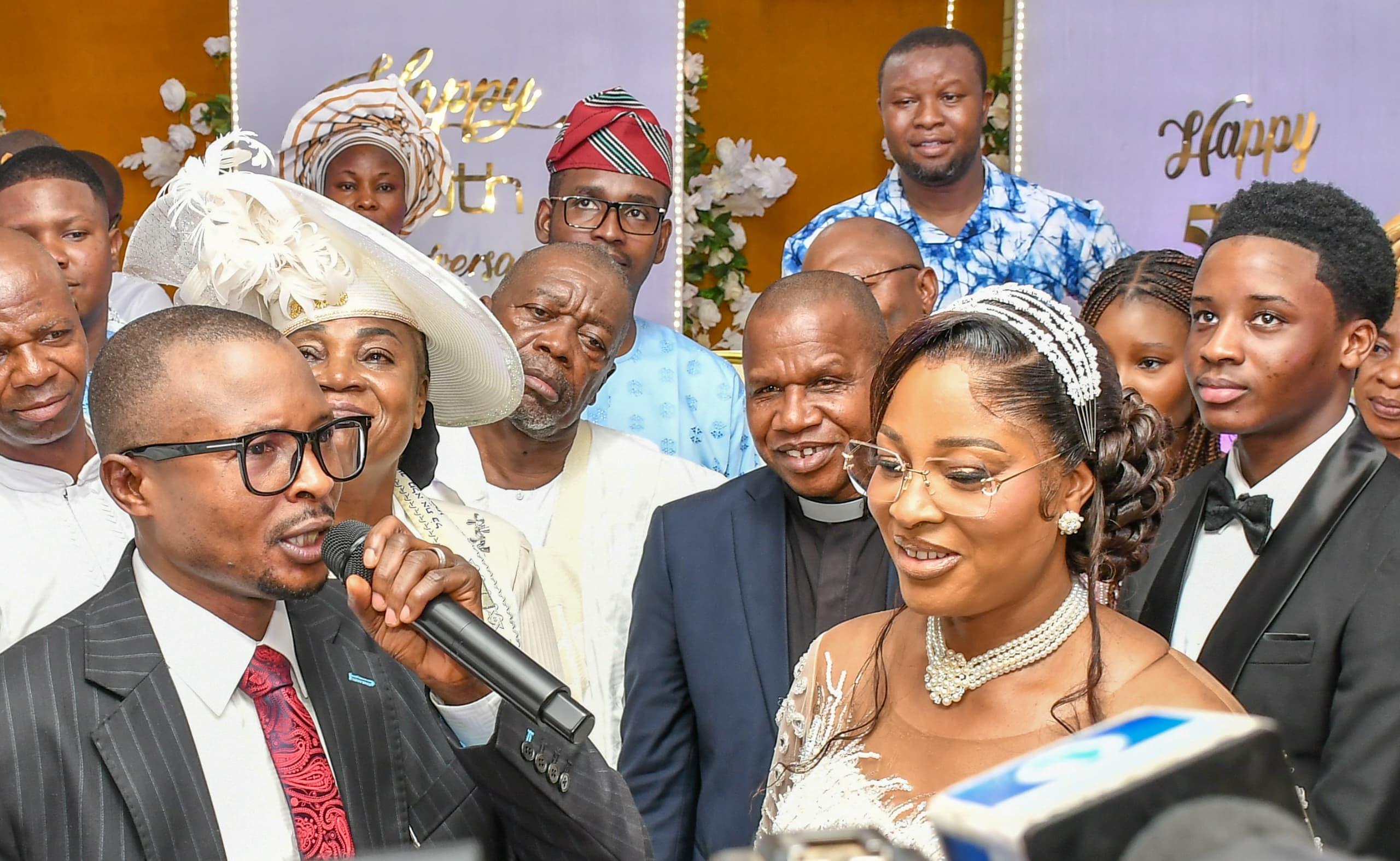
Speaking in Abuja during a thanksgiving service marking his wife’s 50th birthday alongside their 20th wedding anniversary, the Kogi lawmaker stressed that difficult times should not erode family stability.
He emphasised that enduring relationships are sustained through love, patience and mutual respect, noting that strong homes are built on understanding and a shared commitment to faith.

Abejide underscored the importance of staying united through hardship, warning that financial challenges, though real, should not outweigh the deeper foundations that hold families together.
“You sustain marriage with love as it is written in the book of Ephesians Chapter 5 — husbands should love their wives and wives should submit to their husbands. This principle has been working for us,” he said.
Abejide observed that despite widespread complaints about economic challenges, many Nigerians continue to make significant investments.
He said: “My message to Nigerians is: don’t allow hunger and hardship to take away your marriage. Let God be your foundation. When you have God, things will fall into place.
“You see people building houses, they say there is no money. You see estates springing up, people buying vehicles and travelling abroad. So we must not allow temporary hardship to destroy our homes,” he said.

In her remark, Deaconess Esther Abejide credited the strength of her two-decade marriage to a foundation built on patience, mutual understanding and genuine affection.
Reflecting on the journey, she highlighted the central role of faith and sacrifice in sustaining a lasting union.
“The secret is love and understanding. Couples must understand each other, know what their partner likes and dislikes. With that, the marriage will last.
“With God in the marriage, through prayer and even fasting, it will stand,” she said.
Speaking on balancing life as the spouse of a public office holder with her religious commitments, she described the experience as smooth and fulfilling, noting that her natural disposition has made the transition easier.
“It is easy for me because I love people and I am always happy to be around them, so it has not been difficult to cope,” she said.
Also at the event, Senator Sunday Karimi shared a hopeful outlook on the country’s economic trajectory, urging Nigerians to remain patient as reforms under President Bola Tinubu continue to unfold.
“There is hope. There is a renewed hope. Let me tell you what is happening, we are graduating from an economy that has no direction. When the country starts printing money, it’s a fake country. That was what was happening.
“But Tinubu came and said no. Let’s run a perfect economy. It’s not been easy. But I can promise you, we are moving to the promised land. Our economy is getting better. Don’t mind the borrowing they are talking about. Check the US and their debt. It’s in trillions of dollars but the economy is running well.
“Look at Lagos. Lagos is a shining example of a state that we ought to look up to in Nigeria. That is what Tinubu is doing for us. We need to be patient. Nigeria is getting better. By God’s grace, he is coming back to continue the work he is doing”, he said.
Karimi dismissed opposition coalition efforts, describing the actors as “the same old politicians” with nothing new to offer the country.
The celebration drew a mix of political allies, relatives and close friends, all turning out to mark the couple’s milestone. The occasion was further highlighted by the presentation of an 18-seater bus to the church as part of the festivities.
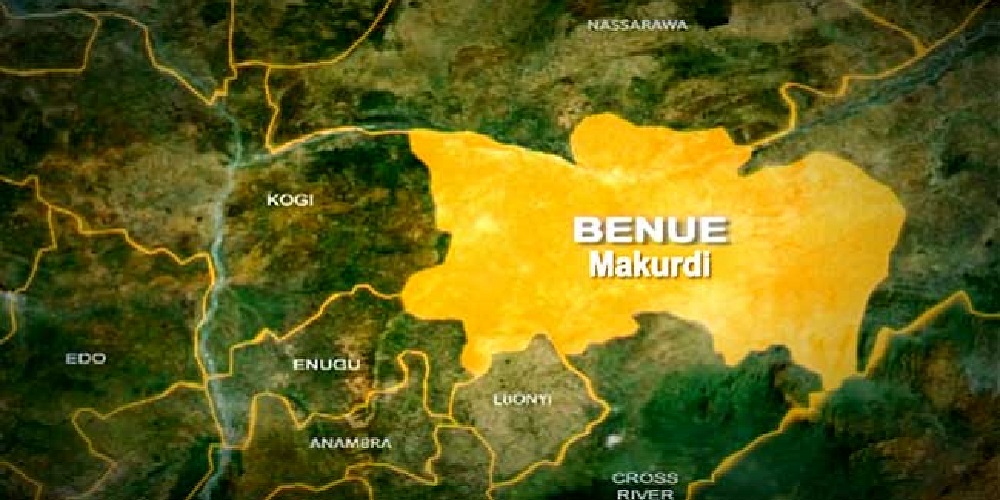
All 13 passengers abducted along the Makurdi–Otukpo road in Otukpo Local Government Area of Benue State have been successfully rescued.
The victims were reportedly freed in the early hours of Sunday, following what sources described as a coordinated effort.
Meanwhile, official confirmation and operational details are still being awaited at the time of filing this report.
The abduction had earlier raised concerns among residents and commuters along the busy Makurdi–Otukpo axis, a route that has witnessed sporadic security challenges in recent times.
Security agencies are yet to issue a formal statement on the circumstances surrounding both the abduction and the subsequent rescue.
It also remains unclear whether any arrests were made or if ransom was involved.
Local sources, however, expressed relief over the safe return of the victims, describing the development as a significant breakthrough amid ongoing security concerns in the area.
The spokesperson of the Benue state Police command, DSP Udeme Edet could not be reached to confirm the story as at the time of filing this report.

BREAKING: Ex-Kano gov, Ibrahim Shekarau goes back to APC

Hardship Not a Licence for Broken Homes – Abejide Tells Couples
All 13 kidnapped Otukpo passengers, successfully rescued




-

 Politics13 hours ago
ADC crisis deepens as Binani-led bloc quits Adamawa chapter
-
Metro13 hours ago
Bandits Demand N9m Per Benue JAMB Victim As Police Nab Seven
-

 Sports13 hours ago
Real Sociedad Beat Atletico On Penalties To Win Copa Dey Rey
-

 News13 hours ago
2027: Obi reacts to Atiku’s last bid comment, says “it’s a conditional statement”
-

 News13 hours ago
Army raises alarm over low South-East recruitment
-

 Sports13 hours ago
Another heavy headache for Chelsea as Man U secures 1-0 victory
-

 News22 hours ago
11 die, 32 injured in Bauchi tanker crash
-
 Politics22 hours ago
AFCON Fallout: Senegalese fans released after serving 3 months jail terms in Morocco
You must be logged in to post a comment Login