Connect with us

News

Oyo State Sharia Court Inauguration Suspended

Published

on

ADVERTISEMENT
Zoom Ad
ADVERTISEMENT
Zoom Ad

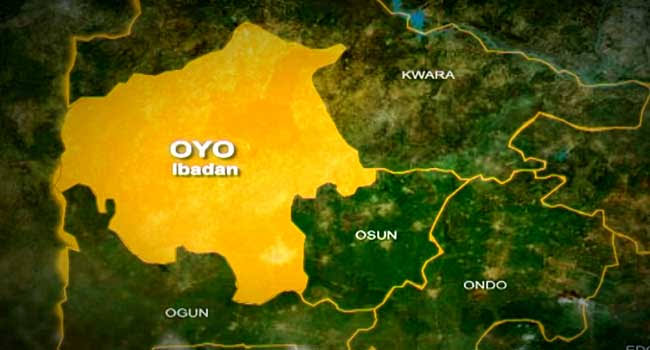
The Supreme Council for Shari’ah in Nigeria (Oyo branch), on Tuesday, announced the indefinite postponement of its plan to inaugurate a Sharia court in Oyo town.


The postponement followed widespread outcry against the planned Sharia Court inauguration earlier scheduled for January 11, 2025.

In a broadcast on Tuesday, Oyo State Governor, Seyi Makinde, acknowledged the planned Sharia court and the attendant controversy.

“About the establishment of Sharia court in Oyo town, people may try, but for us, I swore to uphold our laws and the Constitution of Nigeria.
“If their actions are within the law, fine, if not they should expect that I will insist the law must be followed,” the governor said.

Advertisement

The planned Sharia court inauguration was to take place at the Muslim Community Islamic Centre in Mobolaje Area, Oyo, and was to include prominent figures such as the Basorun of Oyo Land, High Chief Yusuf Akinade Olayinka, and the Aare Musulumi of Oyo Land, Alhaji Chief Tajudeen Abdul-Hammed Kamorise.

However, the announcement sparked intense debates on social media and within the state, with critics arguing that the introduction of a Sharia court could disrupt the state’s religious harmony.

Amid growing tension, the organisers announced the indefinite postponement of the event.
In a statement signed by the Khadimul Muslimeen of Oyo Kingdom, Imam Daud Igi Ogun, the group said, “The inauguration ceremony of the Supreme Council for Shari’ah in Nigeria (Oyo branch) has been suspended until further notice. Islam portrays peace.”

In an interview with The PUNCH, a Senior Advocate of Nigeria from Oyo State, Ahmed Raji, had clarified that the planned structure was not a Sharia court but an arbitration panel for Muslims seeking voluntary dispute resolution.

Advertisement

“The panel is for resolving matters between consenting Muslims and does not have judicial authority or punitive measures. No court can be established without government approval,” Raji explained.

The Oyo State Chairman of the Christian Association of Nigeria, Apostle Joshua Akinyemiju, dismissed the initiative, describing it as unconstitutional and a threat to the state’s secular nature.

“This should not happen in Oyo State, where Christians and Muslims coexist in nearly every family. There’s no law to support this, and the government is not aware. We won’t allow anything that jeopardizes the peaceful coexistence we enjoy,” Akinyemiju stated.

The state government, through the Chief Press Secretary to the Governor, Dr. Sulaimon Olanrewaju, emphasised its commitment to upholding the law.

Advertisement

“Oyo State will not permit anything illegal. The focus isn’t about wanting Sharia or not but ensuring that any structure aligns with the legal system we operate,” Olanrewaju said.

News

NRS issues deadline for e-invoicing compliance

Published

on

By

ADVERTISEMENT
Zoom Ad
ADVERTISEMENT
Zoom Ad

Nigeria Revenue Service (NRS) has set a July 31 deadline for all large taxpayers to fully adopt the national e-invoicing and electronic fiscal system (EFS).

This follows a public notice issued by NRS on February 17, 2026, on the implementation timeline and the mandatory adoption of the national e-invoicing and EFS, otherwise known as the Merchant Buyer Solution (MBS).

The public notice, signed by the NRS Chairman, Zacch Adedeji, informed all large taxpayers of the need to complete onboarding, integration, and testing, and to commence invoice transmission to the NRS e-invoicing platform in accordance with the prescribed implementation framework.

The Special Adviser on Media to the chairman, Dare Adekanmbi, in a statement yesterday, said NRS has already commenced compliance monitoring activities to assess the level of adherence to the e-invoicing mandate among large taxpayers.

Advertisement

“Consequently, any defaulting member may be subjected to appropriate regulatory and enforcement actions in accordance with the provisions of the relevant tax laws and regulations.

“Affected taxpayers are, therefore, advised to urgently conclude all outstanding onboarding and integration activities and commence invoice transmission before the compliance deadline.

“The NRS appreciates the cooperation of taxpayers and remains committed to providing the necessary support to ensure the successful implementation of the national e-invoicing regime,” the notice said.

Large taxpayers are companies with a gross turnover of N5 billion and above. As of the first quarter of this year, over 1,000 companies had complied.

Advertisement

Compliance with the e-invoicing and Electronic Fiscal System requires completing onboarding on the NRS Merchant Buyer Solution (MBS) and successfully integrating taxpayer systems through approved Access Point Providers (APPs) and/or Systems Integrators (SIs).

Others are completion of all required validation and testing activities; active transmission of invoices to the NRS e-invoicing platform in line with approved standards and guidelines; and ensuring the receipt of only compliant e-invoices with a valid Invoice Reference Number (RIN) from suppliers.

MEANWHILE, ActionAid Nigeria’s General Assembly and Board of Directors have called on the Federal Government and National Assembly to review the tax’s impact on small businesses.

They also called on them to provide relief or phased timelines where needed, and ensure that the revenue it generates is clearly tracked and spent specifically on primary healthcare in underserved communities, rather than absorbed into general government spending.

Advertisement

The Board of Directors noted this at its Annual General Meeting on Saturday.

They said Nigeria’s external reserves had grown to about $51.5 billion as reported, but that total public debt has also increased to N156.28 trillion.

They said with $11.6 billion set aside for debt servicing in 2026 alone, more than Nigeria spends on education, health, and agriculture combined.

ActionAid said most recently, the World Bank warned that despite recent reforms, 79% of Nigerians remain poor or vulnerable to falling into poverty.

Advertisement

They said the National Bureau of Statistics also reported a June headline inflation rate of 15.91 per cent, as food prices continue to rise, petrol sells above N1,100 per litre, transport remained high, and the N70,000 minimum wage cannot sustain a family anywhere in the country.

They said the recent reductions in the ex-depot price of petrol by the Dangote Refinery have not provided sufficient relief, as petrol still sells above N1,100 per litre, increasing transport and food costs.

They called on civil society organisations, the media, faith communities, and all Nigerians to continue to speak up.

They urged them to hold the government accountable and stand with the families whose children are still waiting to come home.

Advertisement

“ActionAid Nigeria remains committed to standing with people living in poverty and exclusion, to pursuing social justice and gender equality, and to ensuring that Nigeria’s development does not leave the most vulnerable behind,” they said.

Continue Reading

News

NLC To Push For New Minimum Wage, National Minimum Pension

Published

on

By

ADVERTISEMENT
Zoom Ad
ADVERTISEMENT
Zoom Ad

The Nigeria Labor Congress (NLC) has announced plans to launch a major national campaign to review the national minimum wage and to demand the introduction of a national minimum pension for retirees.

NLC president, Comrade Joe Ajaero, disclosed this during the commissioning of the Comrade Godwin Abumisi Pensioners Legacy House and Multipurpose Hall in Abuja.

Ajaero said the welfare of pensioners must be given the same level of attention as that of serving workers, stressing that organized labor would no longer advocate for improved wages without also seeking better living conditions for retirees.

“The Nigeria Labour Congress is currently in the preparatory stages for a major national struggle for a comprehensive review of the national minimum wage,” he said.

Advertisement

“However, it is no longer acceptable to discuss the welfare of workers without also discussing the welfare of those who have completed their active years of service.”

According to him, the NLC will not only campaign for a new national minimum wage but will also push for the establishment of a national minimum pension to guarantee retirees a decent standard of living.

“It is a historical injustice that men and women who devoted their youth, strength and productive years to the service of this nation should be condemned to live below the poverty line after retirement,” Ajaero stated.

The labour leader said the rising cost of living, coupled with increasing prices of food, healthcare and transportation, has made it difficult for many pensioners to survive.

Advertisement

“We cannot continue to allow our senior citizens to survive on pensions that have become poverty wages. Every retiree deserves to live with dignity after decades of faithful service to the nation,” he said.

Ajaero urged pensioners across the country to remain united and prepare for the struggles ahead, describing the newly commissioned Legacy House as a center for mobilization, strategic engagement and solidarity.

He also called on workers to remain united in defending their collective interests, noting that the labour movement would continue to demand the payment of outstanding pension arrears and the implementation of a pension system that guarantees retirees dignity and financial security.

“We will continue to demand the immediate payment of all outstanding pension arrears and the implementation of a pension regime that guarantees every retiree a life of dignity and security,” he added.

Advertisement
Continue Reading

News

Digital identity will track illegal miners– Alake

Published

on

By

ADVERTISEMENT
Zoom Ad
ADVERTISEMENT
Zoom Ad

The Federal Government is seeking to deploy digital identity technology to track mining operators, strengthen regulation and curb insecurity in the solid minerals sector.

The Minister of Solid Minerals Development, Dele Alake, stated this when he received the Director-General and Chief Executive Officer of the National Identity Management Commission, Abisoye Coker-Odusote, and her management team on a courtesy visit to his office in Abuja.

According to a statement issued on Sunday by the minister’s Special Assistant on Media, Lara Owoeye-Wise, the ministry and NIMC are exploring deeper collaboration to promote digital identity, strengthen governance and accelerate reforms in the mining sector.

Alake described NIMC as a critical institution in Nigeria’s development architecture, stressing that effective governance, regulation and national planning could not be achieved without credible identity management and reliable data.

Advertisement

“NIMC occupies a critical position in translating policy into reality. It is pivotal to the development of any nation because governance today is driven by data, technology and credible identity systems,” the minister said.

He said the ongoing reforms in the solid minerals sector required stronger collaboration with agencies responsible for identity management, particularly in efforts to improve transparency, accountability and security across the mining value chain.

Alake said a credible identity system would make it easier for the government to identify and track operators, monitor mining activities and distinguish legitimate operators from those engaged in illegal activities.

“Without identification, we cannot trace; we cannot track, and insecurity will flourish. In the solid minerals sector, we need effective tracking of both legal and illegal operations.

Advertisement

“A credible identity ecosystem will strengthen regulation, improve enforcement and support our efforts to sanitise the sector,” he said.

The minister identified technology, statistics, data gathering and digital identity as key tools for evidence-based policymaking, improved regulatory oversight, efficient licensing and investment promotion.

He said the availability of accurate and verifiable data would also help the government to better understand the activities of operators in the sector and design policies capable of supporting sustainable development.

The push for stronger digital identity integration comes amid the Federal Government’s efforts to reform Nigeria’s solid minerals sector, which has continued to face challenges including illegal mining, weak monitoring of operators, insecurity and inadequate data on activities across the value chain.

Advertisement

The government has repeatedly said that better regulation, improved data and stronger enforcement are critical to unlocking the sector’s contribution to the economy and reducing the activities of illegal miners.

Earlier, Coker-Odusote highlighted several areas of possible collaboration between NIMC and the Ministry of Solid Minerals Development.

She said the recently enacted NIMC Act 2026 had strengthened the legal framework for Nigeria’s digital identity ecosystem and created opportunities for deeper integration of identity management into government operations.

According to her, the integration of NIMC’s digital identity infrastructure into the solid minerals sector would support database integration across government agencies, improve regulatory compliance and strengthen security and law enforcement.

Advertisement

She also said it would enhance the monitoring of mining operators and provide stronger support for the implementation of Community Development Agreements in mining host communities.

Coker-Odusote said reliable digital identity would enable government institutions to build more accurate databases and improve service delivery and transparency in public administration.

She added that the new legal framework would accelerate secure identity verification, improve inter-agency data sharing and strengthen the ability of government agencies to deliver services to Nigerians and legal residents.

The NIMC boss said the commission’s infrastructure could support the creation of a more reliable identity ecosystem for the mining sector, helping regulators to verify operators and improve monitoring across the country.

Advertisement

Both institutions expressed their commitment to strengthening collaboration through technology-driven initiatives aimed at supporting the Ministry’s reforms and improving governance in the mining sector.

The partnership is also expected to contribute to improved security, greater transparency and stronger accountability in the management of Nigeria’s mineral resources.

Continue Reading

Trending

Copyright © 2024 Naija Blitz News