Connect with us

News

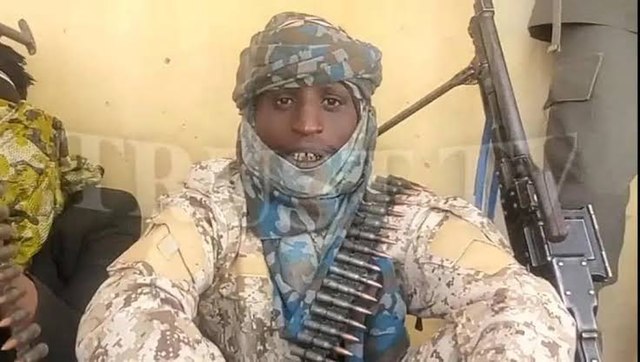
Terrorist leader vows revenge against Zamfara, Sokoto residents after arrest of his men

Published

on

ADVERTISEMENT
Zoom Ad
ADVERTISEMENT
Zoom Ad

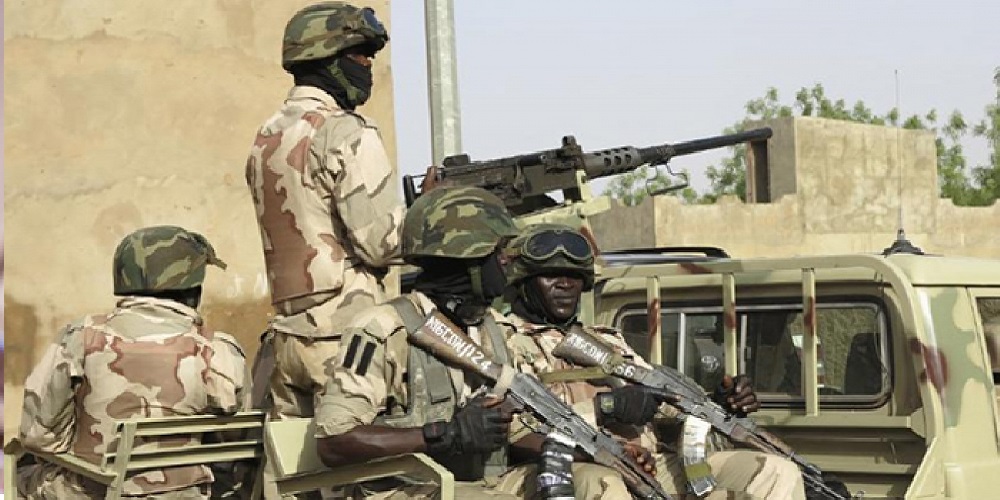
Bello Turji, a notorious terrorist leader, has issued a chilling threat to residents of Zamfara and Sokoto States, accusing them of aiding the Nigerian military in capturing his key lieutenants.


In a video released on Christmas Day, Turji vowed to make 2025 a year of violent reprisals if his demands for the release of his “brothers” were not met, specifically targeting residents of Shinkafi, Isa, and Zurmi.

His threats come after the Nigerian military’s announcement on December 20 that it had captured top members of his network, including Bako Wurgi, Abubakar Muhammad, and Hamisu Sale, in an operation.

While the military claimed that Wurgi died from gunshot wounds sustained during a firefight, Turji denied the reports, claiming the arrests were made in markets and hospitals, and that the detainees were elderly and innocent.

Advertisement

Turji further warned that any community that failed to comply with his demands would face increased violence, including kidnappings and destruction.

“Any town that fails to obey our directives, we are going to turn it into rubble,” Turji threatened.
News

ICPC reveals identities of four govt officials who aided ‘fake’ PFIPC

Published

on

ADVERTISEMENT
Zoom Ad
ADVERTISEMENT
Zoom Ad

The Independent Corrupt Practices and Other Related Offences Commission (ICPC) has revealed the identities of some civil servants who allegedly helped Adeniyi Adeyemi, the director-general of the now-disowned Presidential Foreign Intervention Promotion Council (PFIPC), to obtain government approvals and gain access to official financial and administrative systems.

This was contained in the ICPC interim investigation report on the PFIPC saga.

The findings by the ICPC revealed that Adeyemi was able to penetrate government structures through the help of forged documents and officials in several government institutions who processed its requests and facilitated approvals despite gaps in the required procedures.

Adeyemi began seeking formal recognition within government structures in November 2024 when he approached the Office of the Accountant-General of the Federation (OAGF) for an administrative code, self-accounting status and approval to open accounts with the Central Bank of Nigeria (CBN), supporting the applications with purported official documents, including an appointment letter, an establishment instrument, and a letter on State House letterhead allegedly signed by one Akanbi Adewale.Geographic Reference

Advertisement

However, ICPC investigators found that Akanbi Adewale did not exist. Forensic examination also showed that the letter attributed to him was signed by Adeyemi.

Despite these irregularities, the documents were used to process the applications.

According to Premium Times, the investigation probes the critical roles played by three civil servants in securing an authorised establishment and recruitment waiver for the PFIPC.Local News

The civil servants include Rose Achem, senior administrative officer to the director-general of the Budget Office of the Federation; Patricia Akhigbe, an assistant director in the Ministry of Budget and Economic Planning; and Mimi Abu, director of organisation design and development at the Office of the Head of the Civil Service of the Federation (OHCSF).

Advertisement

The findings revealed that Achem introduced Akhigbe to Abu as the head of human resources of the PFIPC, even though Akhigbe was an assistant director in the Ministry of Budget and Economic Planning.

The ICPC found that Achem, Akhigbe and Abu subsequently facilitated the purported council’s application for authorised establishment and recruitment waiver through the OHCSF.

Adeyemi, it was found, paid Akhigbe 500,000 naira during Easter in 2025. The payment was described in the evidence as a “thank you for your support.”

According to the anti-corruption agency, the authorised establishment was granted on the same day the three officials met.

Advertisement

No evidence existed that the PFIPC had formally applied for an authorised establishment and recruitment waiver. Instead, the three government officials proceeded with the approvals outside the required process.

The ICPC examined Abu’s role because her department is responsible for authorised establishment, manpower requirements and recruitment waivers for federal government organisations.

It said Abu oversees four units responsible for establishment and workforce planning, organisation design, job design and development, and rules and regulations.

The investigation found that Achem and Akhigbe met Abu on behalf of the PFIPC and presented what investigators described as forged establishment instruments and a forged appointment letter for Adeyemi.

Advertisement

Speaking to investigators, Abu reportedly described the controversial appointment letter, said to have been issued by the Chief of Staff to the President, as an “aberration”.Executive Branch

She added that she could not recall another government organisation presenting an appointment letter signed by the Chief of Staff.

The ICPC also examined the role of an official responsible for office allocation within the Office of the Secretary to the Government of the Federation (OSGF) named Aminu Abdullahi.

According to the ICPC findings, Abdullahi was responsible for coordinating the allocation of offices to political appointees within the OSGF.

Advertisement

Requests for office allocation are submitted to the Secretary to the Government of the Federation, processed through the Permanent Secretary, General Services Office, and subsequently referred to the Director, General Services, for necessary action.

It was gathered that a deputy director in General Services, Ibrahim Abdulkadir introduced Abdullahi to Adeyemi in March 2025 to guide the PFIPC ‘DG’ through the process of obtaining office accommodation at the Federal Secretariat after a request made on behalf of the PFIPC to the Economic and Financial Crimes Commission (EFCC) had not produced the expected result.

Investigators found that Abdullahi allocated offices previously occupied by the former Chief Economic Adviser to the President, Doyin Salami, at the Federal Secretariat Phase III for temporary use by the PFIPC without written approval.

An analysis of Abdullahi’s bank statement by Investigators showed that he received 3.25 million naira from Adeyemi in three tranches between March and November 2025.

Advertisement
Continue Reading

News

Just in: Kwara Assembly Lawmaker Saba Gideon Dumps APC, Cites Lack Of Internal Democracy

Published

on

ADVERTISEMENT
Zoom Ad
ADVERTISEMENT
Zoom Ad

Hon. Saba Yisa Gideon, a member of the Kwara State House of Assembly representing Edu State Constituency, has resigned his membership of the All Progressives Congress (APC) with immediate effect.

Gideon, who is also the Chairman of the House Committee on Livestock, announced his resignation in a letter dated August 19, 2026, addressed to the APC Ward Chairman of Tsaragi Ward 3 in Edu Local Government Area of Kwara State.

In the letter titled “Resignation of Membership of the All Progressives Congress (APC),” the lawmaker said his decision followed careful reflection and consultations with his constituents and key stakeholders.

He cited concerns over recent developments within the party, particularly issues relating to internal democracy, fairness and inclusiveness.

Advertisement

“I hereby formally resign my membership of the All Progressives Congress (APC), effective immediately,” Gideon stated in the letter.

He added, “This decision follows careful reflection and consultations with my constituents and key stakeholders. Recent developments within the Party, particularly concerning internal democracy, fairness, and inclusiveness, have led me to take this decision.”

The lawmaker, however, pledged to remain focused on his responsibilities to the people of his constituency, stressing that his resignation from the APC would not affect his commitment to public service.

“I remain committed to serving the people of Edu State Constituency, Kwara State, and Nigeria with integrity, dedication, and accountability,” he said.

Advertisement

Gideon also expressed appreciation for the opportunity to serve under the platform of the APC and for the support he received during his membership of the party.

“Thank you for the opportunity to serve and for the support received during my membership of the Party,” he stated.

On December 22, 2025, SaharaReporters reported that the Kwara State House of Assembly was embroiled in fresh controversy after suspending Gideon, the lawmaker representing Edu Local Government Area, over allegations that he leaked an audio recording to Ambassador Yahaya Seriki, a businessman and an APC chieftain with noted governorship ambitions.

Although the Assembly officially cited “unparliamentary conduct” as the basis for Gideon’s suspension, multiple sources in the House told SaharaReporters that the action was politically motivated and tied to deepening internal power struggles ahead of the 2027 elections.

Advertisement

Seriki, an APC chieftain widely believed to be nursing a governorship ambition, is reportedly at loggerheads with the Speaker of the House, Salihu Yakubu Danladi, whose own governorship aspiration has become an open secret in Ilorin political circles.

According to sources, the controversy erupted after Hon. Owolabi Rasaq, representing Share/Oke-Ode constituency, accused Gideon on the floor of the House of leaking sensitive legislative deliberations to Seriki.

One source explained that the alleged leak concerned a proposed motion seeking the revocation of Seriki’s mining licences in Kwara State, an issue said to have sparked intense behind-the-scenes lobbying and divisions within the Assembly.

The allegation reportedly began to unravel during plenary, with Owolabi himself admitting that he did not know who actually leaked the information.

Advertisement

Despite this admission, lawmakers sympathetic to the House leadership allegedly pressed ahead with calls for Gideon’s sanction, arguing that his close relationship with Seriki made him the “most likely” source of the leak.

Sources say the issue escalated from legislative disagreement to personal confrontation after an audio recording obtained by SaharaReporters captured a tense exchange between Speaker Salihu Yakubu Danladi and the suspended lawmaker.

In the leaked audio, the Speaker is heard warning Gideon to “play soft” and accusing him of talking too much.

Although the Speaker denied directly asking Gideon to support his alleged governorship ambition, the lengthy audio monologue repeatedly references political structures, party control, and loyalty.

Advertisement
Continue Reading

News

Boko Haram Faction Pocketed 90% Of Nigeria’s Nearly $5.8Million Ransom Payments In One Year –Report

Published

on

ADVERTISEMENT
Zoom Ad
ADVERTISEMENT
Zoom Ad

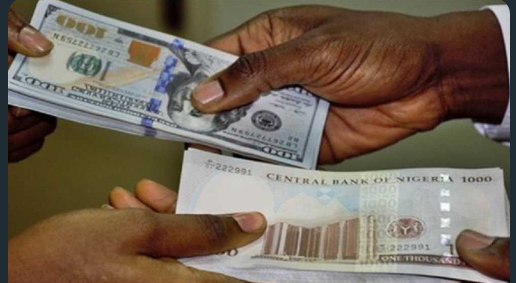
A single faction of Boko Haram collected 90% of all ransom money paid to kidnappers across Nigeria between July 2025 and June 2026, according to a new report by SBM Intelligence, in a finding that suggests the country’s kidnap-for-ransom crisis has been effectively captured by a designated terrorist organisation.

The report, titled The Capture of Nigeria’s Kidnap Economy, found that of ₦7.779 billion ($5.78 million) paid in ransom nationwide during the period, the Jama’atu Ahlis Sunna Lidda’awati Wal-Jihad (JAS) faction of Boko Haram and its allied cells took ₦7.0015 billion from just eight recorded incidents.

“Attributing each ransom to the actor named in its reporting, the JAS faction and its allied cells account for N7.0 billion of the N7.779 billion paid around the country, a staggering 90% of all ransom collected in Nigeria this year, from just a handful of incidents,” the report stated.

By contrast, the entire diffuse population of bandits and unaffiliated kidnappers, responsible for 146 separate cases, collected only ₦719.4 million between them, or 9.2% of the national total.

Advertisement

Two abductions, ₦7 billion

SBM Intelligence traced almost the entire national ransom bill to two mass abductions carried out months apart.

In April 2026, a faction reportedly commanded by one Ali Ngulde abducted 416 people from Ngoshe in Gwoza, Borno State, issuing a 72-hour ultimatum for ₦5 billion. The report said the full amount was paid, the largest single ransom SBM has ever recorded.

Months earlier, in November 2025, gunmen abducted 315 pupils and staff from St Mary’s School in Papiri, Niger State, in what the report called “one of the worst mass abductions in the country’s history.” Multiple intelligence sources cited in the report put the ransom paid at ₦2 billion.

Advertisement

“Together, these two incidents account for N7 billion and explain almost the entire national ransom bill,” the report said.

A “bumper harvest” for terrorism

The report described the shift as a structural change in how Nigeria’s kidnap industry now functions, warning that a “designated terrorist organisation is no longer merely participating in the kidnap economy; in ransom terms, it is the kidnap economy.”

It drew a sharp contrast between the economics of ideologically-driven mass abduction and everyday criminal kidnapping. Bandits and unaffiliated kidnappers, the report found, demanded ₦13.492 billion across 146 cases but collected only 5.3% of it. JAS, meanwhile, demanded ₦9.205 billion and collected 76.1% of what it asked for.

Advertisement

“Measured by what was demanded, the kidnap economy is a crime of the many. Measured by what was actually paid, it is dominated by a single terrorist organisation,” the report said.

It added that this concentration carries strategic consequences beyond the immediate cash figures: “For a designated terrorist organisation to collect N7 billion in a single year is hardly the criminal-justice failure that it may appear to be, because, on the contrary, it is a material transfer of resources to an insurgency, one that buys weapons, pays fighters and sustains the very campaign that produces the next round of abductions.”

A record-setting demand

The report noted that 2026 marked the first year in the life of the annual series that the highest amount demanded in a single incident and the highest amount actually paid were identical, the ₦5 billion Ngoshe ransom.

Advertisement

“In every prior year, a wide gulf separated the boldest demand from the largest settlement; and the fact that the two now coincide is the clearest possible signal of a counterparty with the leverage to be paid exactly what it asks,” the report said, attributing that leverage to a group “holding hundreds of hostages, and willing to kill.”

Inversion of the naira-dollar trend

The report also flagged a break from the pattern of recent years, in which ransom sums in naira climbed while their dollar value stagnated due to currency devaluation.

In 2026, the naira strengthened even as the ransom total rose, meaning the dollar value of ransom paid, approximately $5.7 million, more than tripled from the previous cycle’s $1.66 million.

Advertisement

Call for action on financial flows

SBM Intelligence argued that the concentration of ransom proceeds in the hands of a single armed group changes the calculus for how the crisis should be addressed, calling for action to disrupt the financing rather than treat kidnapping purely as a policing problem.

“Breaking this cycle demands two actions: disrupting the financial flows that now underwrite insurgency, and addressing the economic desperation that supplies its foot soldiers,” the report concluded. “Without a coordinated strategy that targets both the profitability of the crime and its roots, Nigeria risks entrencing kidnapping not merely as a criminal industry but as a funding mechanism for the very groups that most threaten its stability.”

Advertisement
Continue Reading

Trending

Copyright © 2024 Naija Blitz News