Connect with us

News

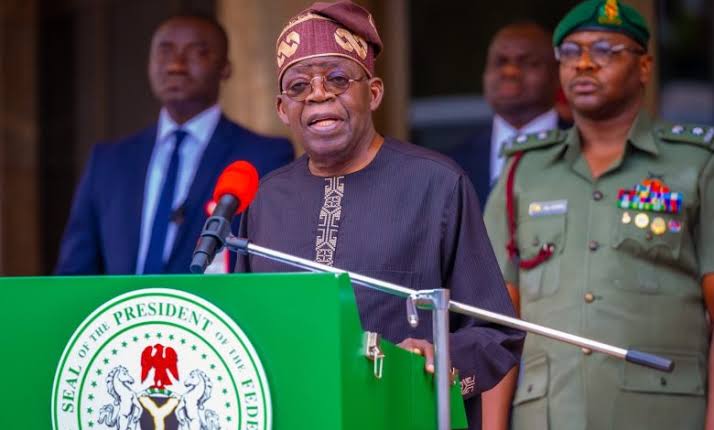
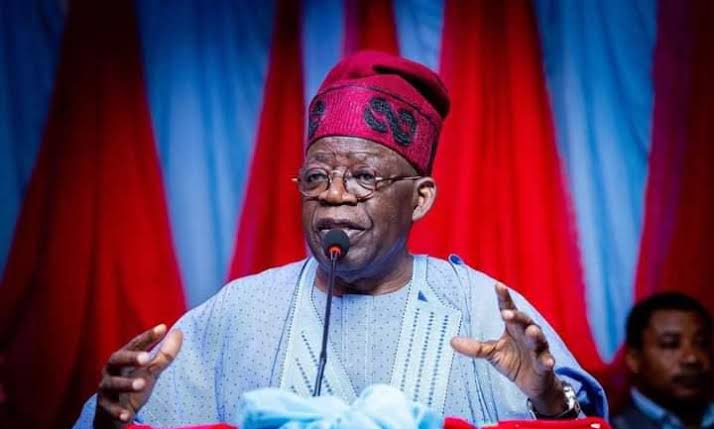
Read president Tinubu’s new year message to Nigerians

Published

on

ADVERTISEMENT
Zoom Ad
ADVERTISEMENT
Zoom Ad

NEW YEAR MESSAGE TO NIGERIANS

Fellow Nigerians,

As we enter 2025, I wish everyone a happy and prosperous New Year. May you be rich in joy, success, and good health.

As the new year dawns, it brings many hopes, aspirations, and prospects for better days. By the grace of God, 2025 will be a year of great promise in which we will fulfill our collective desires.

Advertisement

Though 2024 posed numerous challenges to our citizens and households, I am confident that the New Year will bring brighter days.

Economic indicators point to a positive and encouraging outlook for our nation. Fuel prices have gradually decreased, and we recorded foreign trade surpluses in three consecutive quarters. Foreign reserves have risen, and the Naira has strengthened against the US dollar, bringing greater stability.

The stock market’s record growth has generated trillions of naira in wealth, and the surge in foreign investment reflects renewed confidence in our economy. Nevertheless, the cost of food and essential drugs remained a significant concern for many Nigerian households in 2024.

In 2025, our government is committed to intensifying efforts to lower these costs by boosting food production and promoting local manufacturing of essential drugs and other medical supplies. We are resolute in our ambition to reduce inflation from its current high of 34.6% to 15%. With diligent work and God’s help, we will achieve this goal and provide relief to all our people.

Advertisement

In this new year, my administration will further consolidate and increase access to credit for individuals and critical sectors of the economy to boost national economic output.

To achieve this, the federal government will establish the National Credit Guarantee Company to expand risk-sharing instruments for financial institutions and enterprises.

The Company—expected to start operations before the end of the second quarter—is a partnership of government institutions, such as the Bank of Industry, Nigerian Consumer Credit Corporation, the Nigerian Sovereign Investment Agency, and Ministry of Finance Incorporated, the private sector, and multilateral institutions.

This initiative will strengthen the confidence of the financial system, expand credit access, and support under-served groups such as women and youth. It will drive growth, re-industrialisation, and better living standards for our people.

Advertisement

On a personal note, thank you for placing your confidence in me as your president. Your trust humbles me, and I promise to continue serving you diligently and wholeheartedly.

We will continue to embark on necessary reforms to foster sustainable growth and prosperity for our nation.

I seek your cooperation and collaboration at all times as we pursue our goal of a one trillion-dollar economy. Let us stay focused and united.

We are on the right path to building a great Nigeria that will work for everyone. Let us not get distracted by a tiny segment of our population that still sees things through the prisms of politics, ethnicity, region, and religion.

Advertisement

CITIZENSHIP

To achieve our national goals and objectives, we must become better citizens and uncompromising in our devotion and allegiance to Nigeria.

Citizens’ moral rectitude and faith in our country are fundamental to the success of the Renewed Hope Agenda. In 2025, we will commit to promoting adherence to ethical principles, shared values, and beliefs under the National Identity Project.

I will unveil the National Values Charter, already approved by the Federal Executive Council, in the first quarter of 2025. I will launch an ambitious national orientation campaign that fosters patriotism and love for our country and inspires citizens to rally together. The Charter will promote mutual commitments between the government and citizens and foster trust and cooperation among our diverse population and between the government and the citizens.

Advertisement

As far-reaching and foundational as our reforms are, they can produce the desired outcomes only through shared common values and identities and unconditional love for our country.

The Youth Confab will begin in the first quarter of 2025, a testament to our commitment to youth inclusiveness and investment as nation-builders. The Ministry of Youth will soon announce the modalities for selecting the conference’s representatives from our diverse, youthful population.

Dear Compatriots, I urge you to continue believing in yourselves and keeping faith in our blessed country.

Let me use this New Year’s message to urge our governors and local council chairpersons to work closely with the central government to seize emerging opportunities in agriculture, livestock, and tax reforms and move our nation forward. I commend governors who have embraced our Compressed Natural Gas initiative by launching CNG-propelled public transport. I also congratulate those who have adopted electric vehicles as part of our national energy mix and transition. The Federal Government will always offer necessary assistance to the states.

Advertisement

To all citizens, your sacrifices have not been in vain over the past 19 months. I assure you they will not be in vain even in the months ahead. Together, let us stay the course of nation-building.

The New Year will bring us closer to the bright future we all desire and the Nigeria of our dreams.

God bless you all, and may God bless our beloved country, Nigeria.

Happy New Year and a prosperous 2025 to you all!

Advertisement

Bola Ahmed Tinubu,
President of the Federal Republic of Nigeria

January 1, 2025
News

HoR move to address security challenges, strengthen military architecture

Published

on

ADVERTISEMENT
Zoom Ad
ADVERTISEMENT
Zoom Ad

By Ojomah Austin.


The House of Representatives on Monday commenced a two-day public hearing on a series of defence-related bills aimed at strengthening Nigeria’s military architecture, improving the welfare of service personnel and retirees to combat security challenges.

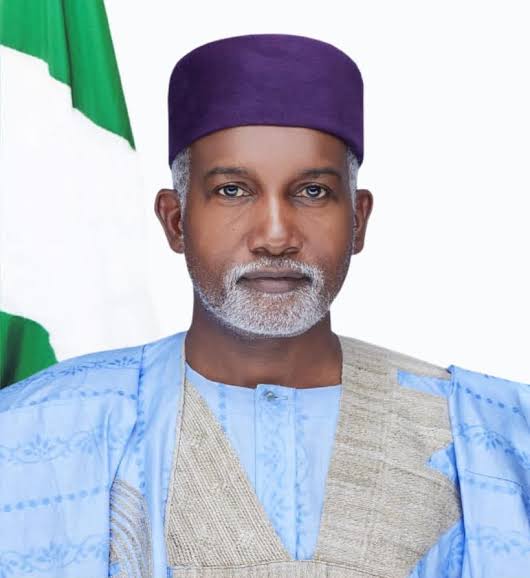
Speaking at the opening of the hearing at the National Assembly Complex, Speaker of the House of Representatives, Abbas Tajudeen, described the proposed legislation as a direct response to Nigeria’s evolving security challenges and a key component of the 10th House Legislative Agenda.

Advertisement

Abbas noted that the country continues to grapple with insurgency in the North-East, banditry and kidnapping in the North-West, farmer-herder conflicts in the North-Central, separatist agitations in the South-East, as well as emerging threats such as maritime piracy, cyber warfare, and organised crime linked to terrorism.

“We cannot pretend that our nation is at ease. Our Armed Forces are stretched, yet they remain our first and last line of defence,” the Speaker said.
He explained that the bills under consideration seek to strengthen the legal and institutional frameworks governing the military, making it more resilient, accountable, inclusive and capable of responding to modern security realities.

Among the bills before the committee are proposals for the establishment of an Armed Forces Farms and Ranches Scheme to promote food security in conflict-prone agricultural areas, legislation to improve gender representation in the Armed Forces, a comprehensive repeal and replacement of the Armed Forces Act through a new Nigerian Military Force Bill, and a bill to establish a Veterans’ Federation of Nigeria to improve support for retired military personnel.

The Speaker stressed that the hearing was not intended as a “rubber stamp” exercise but a platform for robust and evidence-based engagement.
“I give you my word every memorandum will be read, every oral presentation will be noted, and all relevant contributions will be considered and, where applicable, incorporated into the final reports and bills,” Abbas assured stakeholders.

Advertisement

He urged serving and retired military personnel, civil society organisations, gender advocates, legal experts and ordinary citizens to actively participate in the process, emphasizing that legislative innovation was necessary to address the country’s complex security challenges.
Abbas also commended the House Committee on Defence for organising the hearing and expressed confidence in its ability to conduct a transparent and fair process.

“We are here to serve the Nigerian people and to produce legislation that will make our Armed Forces more professional, more accountable, more gender-sensitive, and more effective in protecting lives and property,” he said.
In his welcome address, Chairman of the House Committee on Defence, Babajimi Benson, described the public hearing as a critical democratic exercise designed to ensure stakeholder participation in the lawmaking process.

According to Benson, defence legislation directly impacts national sovereignty, military effectiveness, operational readiness and the safety of Nigerians, making public input essential.
“The importance of public participation becomes even more significant when dealing with matters of defence and national security,” he said.

He explained that the bills address key areas including military education and professional development, joint operational effectiveness, medical training and healthcare support, strategic research and doctrine development, military governance reforms, food security initiatives, veterans’ welfare and inclusiveness within the Armed Forces.

Advertisement

“Collectively, these proposals represent an important effort to build a stronger, more professional, innovative and future-ready military institution,” Benson stated.
The lawmaker encouraged stakeholders to make oral presentations and submit memoranda, assuring them that all submissions would be carefully reviewed by the committee.

He also paid tribute to officers and soldiers of the Armed Forces of Nigeria for their dedication and sacrifices in safeguarding the nation despite difficult operating conditions.

The hearing also witnessed strong reactions from some veterans who expressed reservations about aspects of the proposed Veterans’ Federation of Nigeria Bill.

Supporters of the proposed (VFN) Bill urged lawmakers to adopt a framework they said aligns with international best practices for veterans’ welfare and representation.

Advertisement

In a policy brief submitted to the Committee, G.A Olonisakin speaking on behalf of veteran stakeholders argued that the debate surrounding the bill should focus on facts, global standards and the welfare of Nigerian veterans rather than on institutional sentiments or nomenclature.

The memorandum noted that in countries such as the United States, the United Kingdom, Canada and Australia, veterans’ organisations such as the American Legion, the Royal British Legion and the Royal Canadian Legion operate as non-governmental charitable associations rather than statutory government bodies.

According to the submission, responsibility for veterans’ welfare in those countries rests with dedicated government agencies, including the United States Department of Veterans Affairs, Veterans Affairs Canada, the United Kingdom’s Office for Veterans Affairs and Australia’s Department of Veterans Affairs.

The stakeholders further argued that Nigeria’s current arrangement, in which the Nigerian Legion combines the roles of both an association and a statutory government body, is uncommon internationally.

Advertisement

They maintained that the proposed VFN model would bring Nigeria closer to global standards by creating a government-driven umbrella body for veterans while preserving the identities of existing associations.

“The proposed Veterans Federation of Nigeria follows international practice by creating one umbrella body for all veterans and veterans’ associations, ensuring inclusiveness across Army, Navy and Air Force veterans, strengthening welfare coordination and improving engagement with government,” the memorandum stated.

The submission also sought to allay fears that the bill would undermine the Nigerian Legion, stressing that the federation would not erase the Legion’s history, traditions or identity.

Rather, it said, the Nigerian Legion would continue to exist as one of the recognised constituent bodies within the proposed federation alongside other veterans’ associations.

Advertisement

The position contrasted with concerns raised by some retired personnel who argued that the bill concentrates leadership positions in the hands of senior officers and called instead for the establishment of a standalone Ministry of Veterans Affairs headed by veterans.

The differing perspectives highlighted the intense interest among stakeholders in shaping the future structure of veterans’ welfare and representation in Nigeria, one of the key issues under consideration during the two-day public hearing.

Also a retired non-commissioned officer and legal practitioner, Sadiqe Nwabuezeh who identified himself as a former sergeant in the Nigerian Army, argued that the draft legislation was overly tilted in favour of senior military officers and failed to adequately accommodate the interests of rank-and-file veterans.

According to him, provisions of the bill appeared to reserve key leadership positions for retired senior officers, including the office of the Director-General, which he said was proposed to be occupied by a retired major general.

Advertisement

He urged lawmakers to reject the bill in its current form and instead consider the establishment of a dedicated Ministry of Veterans Affairs that would be managed by veterans themselves.

“The bill was not properly prepared. It was rushed and concentrates power in the hands of senior officers. We want a level playing ground where all veterans, regardless of rank, can participate in leadership and decision-making,” he told the hearing.

The retired soldier further questioned the involvement of serving military personnel and civilians in handling veterans’ affairs, arguing that retired personnel were best positioned to manage issues affecting former service members.

He maintained that veterans should have greater control over institutions established for their welfare and called for reforms that would guarantee broader representation across all ranks of retired military personnel.

Advertisement

The submission added to a range of perspectives presented by stakeholders as lawmakers continued deliberations on proposals aimed at reforming military administration, strengthening veterans’ welfare and enhancing the effectiveness of Nigeria’s defence sector.

The two-day hearing is expected to produce recommendations that will guide the House Committee on Defence in finalising the bills before their consideration by the House of Representatives.

Continue Reading

News

Just in: Nigeria’s inflation rises in three consecutive months

Published

on

ADVERTISEMENT
Zoom Ad
ADVERTISEMENT
Zoom Ad

By Ojomah Austin.


Nigeria’s inflation rose for the third consecutive month to 15.93 percent in May 2026 from 15.69 percent recorded in April.

The National Bureau of Statistics disclosed this in its Consumer Price Index and inflation data released on Monday.

Advertisement

This means that in May, the country’s inflation rose on a month-on-month basis by 1.75 percent.

Also, the report showed that food inflation also skyrocketed to 16.96 percent in May, up from 16.06 percent recorded the previous month.

“In May 2026, the headline inflation rate on a month-on-month basis was 1.75 percent, which was 0.39 percent lower than the rate recorded in April 2026 (2.13 percent).

On a year-on-year basis, the headline inflation rate rose to 15.93 percent, up from 15.69 percent in April 2026 and down from 26.06 percent in the same month of the preceding year May 2025.

Advertisement

The Food inflation rate in May 2026 on a month-on-month basis was 2.98 percent, down by 0.65 percentage points from April 2026 (3.63 percent). On a year-on-year basis, it was 16.96 percent and stood at 24.55 percent in the same month of the preceding year, May 2025”.

Recall that the headline inflation rate dropped in March and April, respectively.

Recall the Central Bank of Nigeria retained the country’s interest rate 26.50 percent in its 305th Monetary Policy meeting.

Advertisement
Continue Reading

News

Finally, US-Iran deal announced with end to military warefare

Published

on

ADVERTISEMENT
Zoom Ad
ADVERTISEMENT
Zoom Ad


The United States and Iran agreed on a peace deal and an “immediate and permanent” end to military operations on all fronts, including Lebanon, mediator Pakistan said, in the strongest sign yet that more than three months of war in the Middle East is drawing to a close.

Pakistani Prime Minister Shehbaz Sharif posted on X that a peace deal “has been REACHED” and an official signing ceremony will be held on June 19 in Switzerland.

“The Deal with the Islamic Republic of Iran is now complete,” US President Donald Trump swiftly confirmed with his own statement on Sunday, as he marked his 80th birthday.

Advertisement

“I hereby fully authorise the toll-free opening of the Strait of Hormuz and, simultaneously herewith, authorise the immediate removal of the United States Naval blockade. Ships of the World, start your engines. Let the oil flow!”

There was no immediate confirmation from Iran, which just hours earlier had vowed to retaliate against a strike by Israel against Iranian ally Hezbollah in the suburbs of Beirut, which threatened to push back an agreement.

It had declined on Sunday to offer a clear timeline for reaching a peace deal.

But later in the day, Pakistan’s Sharif made the announcement that a deal had been struck, thanking the US and Iran “for finding a diplomatic solution to the conflict.”

Advertisement

Both sides have declared the immediate and permanent termination of military operations on all fronts, including in Lebanon,” Sharif wrote, adding thanks to leaders of Qatar, Saudi Arabia, and Turkey for their support in the mediation effort.

It was a rollercoaster Sunday, with Trump in the morning angrily blaming Israel for delaying its signing with the airstrike on Beirut, which he said had delayed the agreement.

The last time Israel hit the Beirut suburbs, it sparked one of the strongest jolts yet to a ceasefire that has largely held since April, with Iran firing off a retaliatory missile barrage and Israel responding with strikes.

Tehran has long demanded that any agreement to halt the war must include the parallel conflict in Lebanon, where Israel has been pursuing a campaign against Iran-backed Hezbollah.

Advertisement

The war began in late February, with US-Israeli strikes on Iran, which retaliated with attacks on Israel and US allies in the region, and by virtually blocking ship traffic in the Strait of Hormuz, a vital route for global oil and natural gas supplies. The US retaliated to that by blockading ship traffic to Iranian ports.

Continue Reading

Trending

Copyright © 2024 Naija Blitz News