

Connect with us

News

Reps Threaten To Recommend Scrapping Agencies Over Unused Funds

Published

on

ADVERTISEMENT
Zoom Ad
ADVERTISEMENT
Zoom Ad


…as SHESTCO DG Attributes Uncompleted Projects to Envelope Budgeting

By Gloria Ikibah

Advertisement

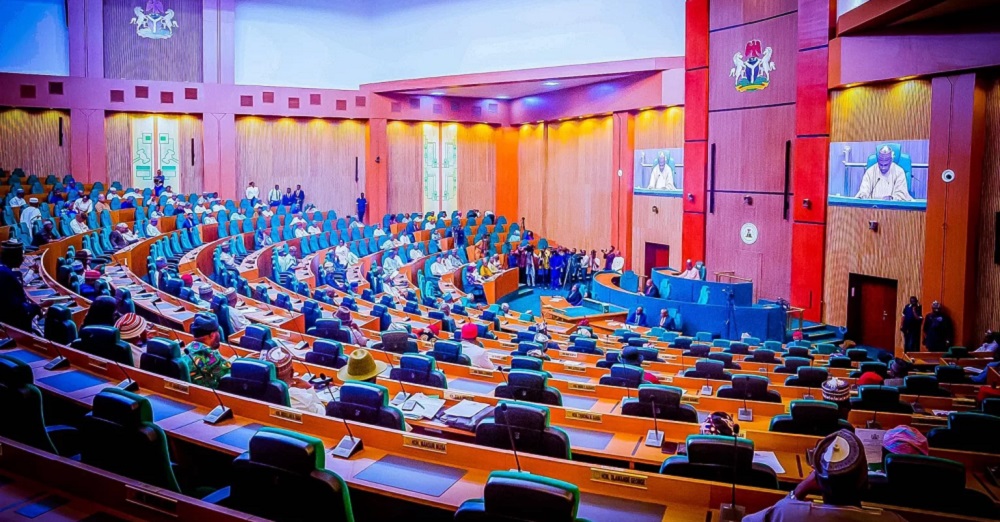
Chairman, House of Representatives Committee on Science and Engineering, Rep. Inuwa Garba, has criticized some government agencies for failing to fulfill their mandates since their establishment. He warned that the Committee might recommend their scrapping.

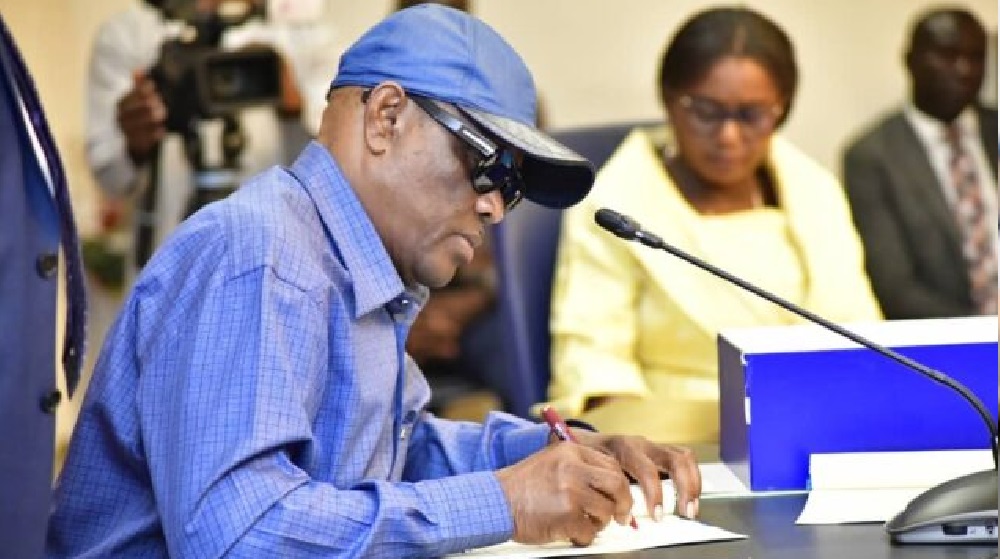
This warning came during the 2024 budget defense and 2025 budget proposal session on Tuesday in Abuja, where the Committee took the Director-General of Sheda Science and Technology Complex (SHESTCO), Paul Onyenekwe, and other officials to task over uncompleted projects and questionable contract awards in Adamawa, Taraba, Bauchi, and Gombe states.

Rep. Garba highlighted discrepancies in the budget presentations of some agencies, stating that these irregularities raise concerns about their effectiveness, and  noted that if such agencies continue to fall short of their responsibilities, the Committee would push for their closure, in line with recommendations from the Steve Oronsaye Report on public sector reforms.

The DG of SHESTCO attributed the challenges faced by the agency to the envelope budgeting system, which he said hampers the completion of critical projects. However, the Committee was unimpressed, insisting on greater accountability and proper utilization of allocated funds.
Advertisement
He said: “Most of their budget is just reputation and to an extent, some don’t even want anybody to know what they are doing. The question you will ask, is different from the answer that you are supposed to get from some of the agencies.
“Though some agencies are very relevant and are up and doing and very effective and supportive to the government policies and programs. When we finish, we are coming out to say our stand as a committee and present our report to the appropriation committee.
“Subsequently, we can make our position and proposal to the House very soon in order to help the government and to help the country”.
Reacting to the agencies involved Inuwa said, “I will not say it now because we are yet to come to a final conclusion. But when we finish, we can call the agencies, call the head of the agencies and say why and how we are making that recommendation.
“If I now come out to call the agency, I’m not doing justice to myself, I’m not doing justice to the committee. I’m only the chairman of the committee. I have other members that are members of the committee.
“A lot of abnormalities is happening in most of the agencies. You can see one budget is repeated 5, 6, 7 years. The money is increasing, some they will say it’s completed and before, in another way they say completion.
“Another year, completion. And they are putting in money. If you go in the same position, the same project, the same agency, only the amount that differs, the same contractor.
“So, honestly, I can’t say I’m comfortable for now. But what we have seen, a lot needs to be done in the budget and procurement process in our agencies, ministries and parastatals, so that we can be able to come up with something that will help the government and the people of this country.
However, Director-General of the Sheda Science and Technology Complex, Onyenekwe blamed the envelope system of budget by the federal government on the non completion of on-going projects in the northern states of the country by the agency.
The DG said that the envelope system of budgeting is to be blamed for non-completion of key projects by the agency.
He informed the Committee that the 2024 budget of the agency was N1.2 billion and that what he did the funds were operationalization of these centres and payment of staff emoluments.
The DG also said that the agency embarked on construction of staff quarters for it’s staff when it discovered that many of them were coming to work in the agency from  very remote areas from the office.
“On the 2024 budget review, he said that the agency got N69,569,607,924 00 as capital, N1,007,665.,803 00 as personnel and N382,552.074.00 as overhead cost.
He also stated that they had embarked on construction of drainages and culverts in four northern states of the country namely Adamawa, Taraba, Bauchi and Gombe states.
speaking also at the budget session, a member of the  committee Hon.Chinedu Ogar (Ebonyi,APC) accused the agency of repeatedly breaching the Act of National Assembly by refusing to remit untilized funds to the federal government.

News

Osun decides: Ahead today’s poll, police dogs deployed to combat thugs

Published

on

ADVERTISEMENT
Zoom Ad
ADVERTISEMENT
Zoom Ad


Ahead of today’s guber poll, the Police has deployed some of its security dogs to Osun state to ensure seurity is not breeched during and after the election.

The police dogs have been prepared to assist security personnel in detecting and confronting potential threats from violent criminals.

Continue Reading

News

Just in: Security operatives take over Osun Assembly Speaker residence

Published

on

ADVERTISEMENT
Zoom Ad
ADVERTISEMENT
Zoom Ad


The Speaker of the Osun State House of Assembly, Hon. Adewale Egbedun, has reportedly been placed under house arrest, with unidentified security operatives in police uniforms surrounding his residence in Osun State.

According to reports, the security personnel arrived at the Speaker’s residence in more than 10 black Hilux vehicles and allegedly cordoned off the premises.

The Imole Campaign Council said it attempted to contact senior police officers and the Police Situation Room to obtain clarification on the development but was unable to reach them.

Advertisement

It also urged security agencies and political actors to ensure that the electoral process remains peaceful and free from intimidation, fear or interference.

The council called on residents and all stakeholders to remain calm, obey the law and await an official explanation from the relevant authorities.

As of the time of filing this report, there had been no official explanation from the police or other security agencies regarding the reported operation at the Speaker’s residence.

Advertisement
Continue Reading

News

FG reserves 33000 hectares for FCT livestock settlements

Published

on

By

ADVERTISEMENT
Zoom Ad
ADVERTISEMENT
Zoom Ad

The Federal Government has earmarked about 33,000 hectares of land in the Federal Capital Territory (FCT) for livestock settlements as part of efforts to curb cattle movement within Abuja and shift livestock production to a more settled, commercially viable system.

Minister of Livestock Development, Idi Mukhtar Maiha, disclosed this on Friday in Abuja during a ministerial press briefing, fielding questions from journalists.

Maiha said the land, captured in the Abuja Master Plan and located outside the city centre, would provide designated areas where livestock could be raised under improved conditions without competing for space with residents in densely populated parts of the capital.

He said the initiative is part of the Federal Government’s broader livestock transformation programme, focusing on settled production, improved animal genetics, better husbandry practices, and the establishment of Livestock Development Centres across the country.

Advertisement

“The city is not designed to co-mingle livestock with people,” Maiha said.

He explained that livestock owners would still be free to conduct their businesses within the city, while their animals would be kept in designated production areas where adequate feed, water, veterinary services, and other facilities would be provided.

The minister said the Federal Government was already engaging the FCT Administration to rehabilitate existing livestock facilities, including the Cow Grazing Reserve, Karshi, Piko, and Kore.

He said improvements had commenced at the Cow Grazing Reserve, where three boreholes and a digital weather station had been provided to enhance livestock production and management.

Advertisement

Maiha added that discussions were ongoing with the FCT authorities to rehabilitate other facilities and integrate them into the government’s proposed settled livestock production system.

The minister said the government was determined to address the practice of moving livestock over long distances in search of pasture and water, describing the system as economically inefficient and detrimental to animal productivity.

According to him, animals that continuously trek long distances expend energy that should ordinarily contribute to weight gain, milk production and other productive purposes.

He described cattle subjected to such movements as “athletes”, stressing that the extensive production system was partly responsible for Nigeria’s low livestock productivity.

Advertisement

Maiha said animals were not roaming for the sake of movement but because the existing production system compelled livestock owners to search continuously for feed and water.

He said the government’s preferred model would keep animals within designated production areas where they could access feed, water, veterinary care, breeding services and other essential inputs.

The minister noted that the approach would not only increase meat and milk production but also reduce waste and some of the social and economic challenges associated with uncontrolled livestock movement.

Maiha also identified low genetic potential and poor animal husbandry practices as major constraints on Nigeria’s ability to meet growing demand for meat, milk and eggs.

Advertisement

He said indigenous livestock breeds were not necessarily inferior but had not undergone the systematic genetic improvement required to substantially increase their productivity.

According to him, some indigenous cattle require several years to reach marketable weight, whereas genetically improved breeds can achieve considerably higher weights in a shorter period.

He also highlighted the disparity in milk production, noting that many indigenous cows produce between 1.2 and two litres of milk daily, compared with significantly higher yields obtainable from improved dairy breeds.

“The rate of growth matters a lot. Serviceability matters a lot,” Maiha said.

Advertisement

He said genetic improvement, better feeding and modern animal husbandry would therefore be critical components of the Federal Government’s livestock development programme.

Maiha said the creation of the Federal Ministry of Livestock Development in July 2024 had begun to trigger institutional reforms at the state level.

Only three states, he said, had dedicated ministries or agencies responsible for livestock when the ministry was established, but the number has since increased to 20 states.

He said this development would strengthen collaboration between federal and state governments in implementing livestock policies and attracting investment into the sector.

Advertisement

The minister, however, cautioned that transforming a sector that had operated largely through traditional systems for decades would take time.

“It’s a gradual process,” he said, adding that the impact of the reforms should not be assessed solely on immediate outcomes.

Under the emerging framework, the Federal Government would provide policy direction, technical and animal health standards, traceability systems, data infrastructure, investor facilitation and regulatory coordination.

State governments would be expected to provide suitable land and local infrastructure, undertake community engagement and security coordination, and mobilise livestock producers.

Advertisement

Private investors and producer organisations would, in turn, finance and operate commercial activities across livestock value chains.

Maiha said the proposed Livestock Development Centres would serve as commercially oriented production clusters rather than government-owned farms.

The centres are expected to accommodate investments in breeding, feed and fodder production, cattle finishing, dairy production and chilling, sheep and goat fattening, poultry production, pig breeding, feedlots, modern abattoirs and meat processing.

Other opportunities include cold-chain facilities, logistics, biogas and organic fertiliser production, and hides, skins and leather processing.

Advertisement

He said states would be encouraged to develop livestock industries based on their comparative advantages, available feed and water resources, agro-ecological conditions, producer populations, and market demand, rather than adopting a uniform model.

For cattle and dairy production, investment opportunities would include irrigated fodder, hay and silage production, feedlots, breeding and artificial insemination, milk collection and chilling, abattoirs and meat packaging.

The poultry value chain would encompass hatcheries, breeder farms, feed mills, broiler and layer clusters, vaccination and laboratory services, egg grading and packaging, processing and cold-chain facilities.

Similar investment opportunities would be developed for sheep and goats, pigs and micro-livestock, including rabbits, grass cutters, snails and bees.

Advertisement

Maiha said the reforms were aligned with the National Livestock Growth Acceleration Strategy (NL-GAS), which seeks to raise the livestock sector’s contribution to the Nigerian economy from about $32 billion to at least $74 billion by 2035.

The minister said the reforms would also reduce the economic and security risks associated with transporting live animals over long distances from major livestock-producing areas to consumer markets.

He noted that although a significant proportion of the country’s livestock population is concentrated in the North, major markets are located elsewhere, resulting in animals travelling more than 1,000 kilometres.

Maiha said developing livestock production, processing and marketing infrastructure across states would reduce dependence on long-distance movement of live animals.

Advertisement

He said the combination of settled livestock production, improved genetics, adequate feed and water, animal health services, processing infrastructure and private-sector investment would enable Nigeria to produce more meat, milk and eggs while creating jobs and strengthening rural economies.

Meanwhile, the National Veterinary Research Institute (NVRI), Vom, presented awards to Maiha and the Permanent Secretary of the Ministry, Dr Chinyere Ijomah Akujobi, in recognition of their contributions to developing the livestock sector.

The Executive Director and Chief Executive Officer of NVRI, Dr Yakubu Gunya Dashe, presented the awards alongside institute officials.

The institute recognised Maiha for service delivery, while Akujobi was honoured for her leadership and supportive role in advancing the ministry’s mandate.

Advertisement

The recognition highlighted the importance of collaboration among government institutions, veterinary research organisations, livestock producers and private investors in building a modern and productive livestock industry.

Continue Reading

Trending

Copyright © 2024 Naija Blitz News