Economy
US oil imports from Nigeria to drop as Trump plans energy emergency order
- /home/naijuinz/public_html/wp-content/plugins/mvp-social-buttons/mvp-social-buttons.php on line 27
https://naijablitznews.com/wp-content/uploads/2024/03/crude-oil-production.jpg&description=US oil imports from Nigeria to drop as Trump plans energy emergency order', 'pinterestShare', 'width=750,height=350'); return false;" title="Pin This Post">
- Share
- Tweet /home/naijuinz/public_html/wp-content/plugins/mvp-social-buttons/mvp-social-buttons.php on line 72
https://naijablitznews.com/wp-content/uploads/2024/03/crude-oil-production.jpg&description=US oil imports from Nigeria to drop as Trump plans energy emergency order', 'pinterestShare', 'width=750,height=350'); return false;" title="Pin This Post">
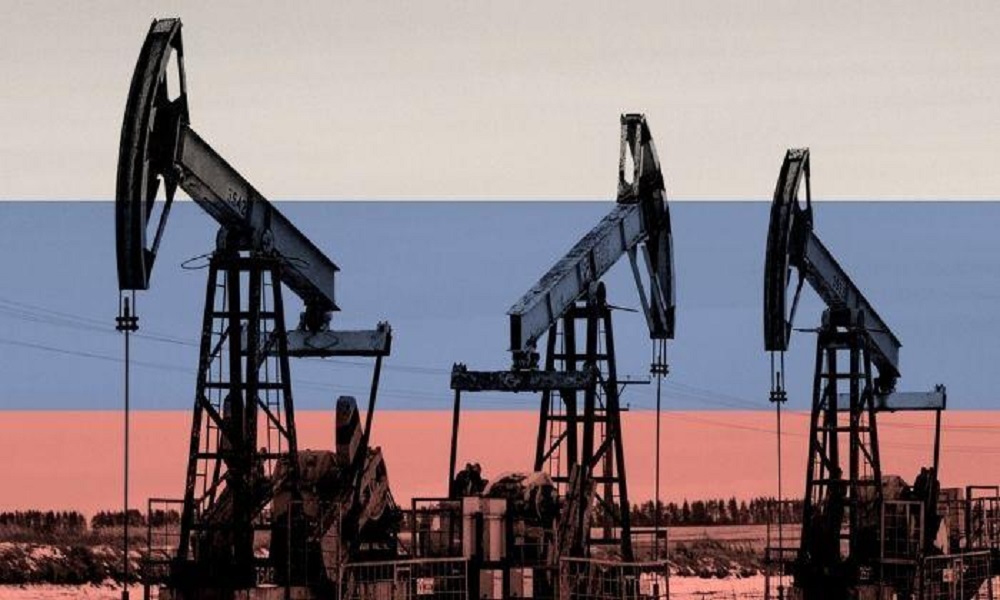
The President Trump planned an executive order and declaration of a national energy emergency, targeted at enhancing the United States oil and gas production could impact on Nigeria’s oil demand and revenue generation.

This was even as prices of oil, including Nigeria’s Bonny Light dropped to $80 per barrel from $83 per barrel, yesterday, as traders await U.S. President-elect Donald Trump’s inauguration in the hope of some clarity on his policy agenda.
However, the United States used to import a bulk of its crude oil from Nigeria, but the commencement of shale oil, deliberate government policy and other factors, reduced the nation’s oil and gas import in recent times.

Despite the reduction, recent data indicated that the United States oil and gas import from Nigeria was worth $4.73 billion in 2023.
According some experts, the revenue would likely decrease in 2025 and beyond following President Trump executive order and declaration of a national energy emergency.
In an interview with Vanguard, yesterday, an economist and Chief Executive Officer, Centre for the Promotion of Private Enterprise, CPPE, Dr Muda Yusuf, said: “Naturally, if investments in oil and gas increase in the United States and the US of course is a major oil producer that will increase the global supply. If global supply increases, energy prices are likely to fall.
“So, if energy prices fall, of course, that has implications for our own revenue. So it’s likely to negatively impact on our oil price, on our oil revenue but it may be positive for businesses because a reduction in crude oil price or commodity or global oil price typically reduces the cost of petroleum products, including the Premium Motor Spirit, PMS, also known as petrol, diesel and jet fuel.
“However, it’s a double-edged sword as changes, if the price increases; it will favour the government and penalize the private sector, who uses energy. If the price drops, it penalizes the government and benefits the citizens and investors because their energy costs will drop.
“That is one implication of the Trump presidency. The second implication is, if he’s able to calm down the situation between Russia and Ukraine. Russia is a major oil producer as well, a major gas producer.
“So, he’s able to calm down Russia and Ukraine and he has the potential to do that because it is part of the commitment that he has made.
“If he’s able to do that, then we are likely to see more production of oil. We are likely to see the lifting of sanctions on Russia and if that happens, oil production will increase and prices will fall. Again, that will affect revenue negatively, but it will benefit businesses because cost of energy will drop.
“So, that is the nexus for me between what is happening with Trump policies and our domestic economy, especially the oil and gas sector.”
On his part, a Port Harcourt-based energy analyst, Dr. Bala Zakka, said: “Major importers from Nigeria, indirectly encourage our nation to be lazy, exporting crude oil instead of processing to add more value to the economy.
“I strongly believe that by reducing importation through his policies, President Trump would encourage increased refining in Nigeria and other African nations. We need to expand our refining capacity to refine more petroleum product and derivatives, capable of adding value to the domestic economy.”
Also, the National President of Oil and Gas Service Providers Association of Nigeria, OGSPAN, said: “Every nation continuously reviews its environment and takes decisions on the best ways and means to grow its economy. Nigeria should do the same in order to reduce dependence on oil and other economies.”
Meanwhile, the Petroleum Products Retail outlets Owners Association of Nigeria, PETROAN, has assured consumers that the coming on stream of the Dangote Refinery and the NNPC Limited owned Port Harcourt refinery would ensure easy flow of petrol during the Yuletide season.
PETROAN in a statement by its National Public Relations Officer, Dr Joseph Obele said the petrol supply agreement reached with the 650,000 barrels per day Dangote Refinery would avert any possible shortage of premium motor spirit during the period.
This, according to Dr Obele, is due to the efforts of PETROAN distribution technical committee incharge of planning and execution of zero-fuel scarcity strategy.
“We are happy that Nigerians are going to travel effortlessly during this period of the year”, the Group added.
Recall that the National President of PETROAN, Dr Billy Gillis-Harry, on Monday 2nd December 2024 led the negotiation team of the association to a fruitful strategic business meeting with the management of Dangote Refinery in Lagos.
PETROAN noted that the “sealing of a transactionary deal with Dangote Refinery was the aftermath of a successful buyer-seller negotiation and agreement secured by PETROAN at the strategic meeting.
“PETROAN National President commended the Vice President of Dangote group & Managing Director of Dangote Refinery, Mr. Devakumar V. G. Edwin, for his cooperation and strategies deployed so far to make petroleum products available to all Nigerians throughout the end of year festivities and beyond.”
Economy
IMF questions Nigeria’s $5bn borrowing structure
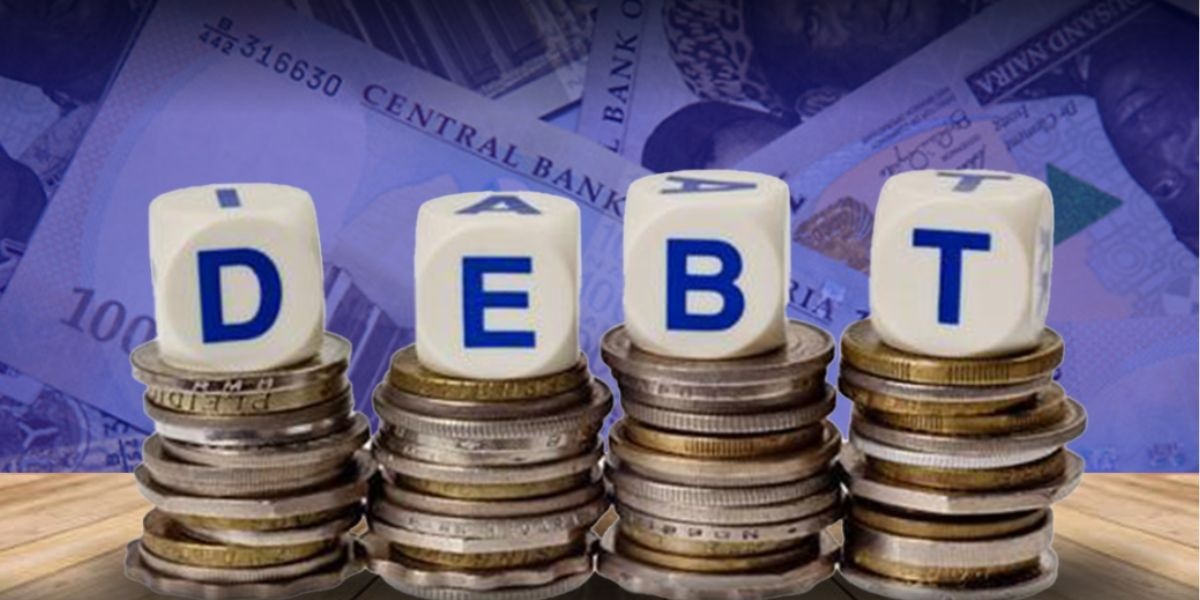
The International Monetary Fund (IMF) has raised concerns over Nigeria’s plan to secure up to $5 billion in external financing through a derivatives-based arrangement with the First Abu Dhabi Bank in the United Arab Emirates.
The warning was issued by Christian Ebeke, the IMF’s resident representative in Nigeria, who told journalists that such financial structures are often complex and lack transparency in their terms.
According to him, similar transactions in other countries have raised red flags due to limited disclosure and difficulty in fully assessing the obligations involved.
“Our view is that the transaction in these types of structures carry risks. Usually they are opaque, so the terms are not always very transparent when we reviewed these instruments across countries,” Ebeke said.
He advised that Nigeria consider more conventional funding options, including Eurobonds or concessional loans, which he said tend to offer clearer terms and lower risk exposure for sovereign borrowers.
The development comes as Nigeria continues to ramp up external borrowing to finance its fiscal needs and infrastructure plans. On March 31, the National Assembly approved President Bola Tinubu’s request for $6 billion in external loans.
As part of the approval process, the president specifically sought backing for a structured Total Return Swap (TRS) arrangement of up to $5 billion with First Abu Dhabi Bank.
The federal government has argued that the funds would support budget implementation, infrastructure development, and the refinancing of more expensive domestic and external debts.
However, the IMF’s comments add to ongoing global scrutiny of complex sovereign financing arrangements, particularly those involving derivatives-based instruments that can obscure the true cost of borrowing.
Nigeria’s public debt stock currently stands at about $110.3 billion (approximately N159.2 trillion as of December 2025), underscoring concerns about debt sustainability as new borrowing plans expand.
Economy
OPEC+ approves fourth oil output increase since Hormuz closure
The Organisation of Petroleum Exporting Countries and its allies, also known as OPEC+, has approved the fourth oil output increase since the Hormuz closure crisis.
The decision followed renewed commitments by Saudi Arabia, Russia, Iraq, Kuwait, Kazakhstan, Algeria and Oman to support market stability.
In a statement issued at the weekend, OPEC stated: “The seven OPEC+ countries, which previously announced additional voluntary adjustments in April and November 2023, namely Saudi Arabia, Russia, Iraq, Kuwait, Kazakhstan, Algeria and Oman, met virtually on June 7, 2026, to review global market conditions and outlook.
“In their collective commitment to support oil market stability, the seven participating countries decided to implement a production adjustment of 188,000 barrels per day from the additional voluntary adjustments announced in April 2023.
“This adjustment will be implemented in July 2026. The additional voluntary adjustments announced in April 2023 may be returned in part or in full, subject to evolving market conditions and in a gradual manner.
“The countries will continue to closely monitor and assess market conditions and, in their continuous efforts to support market stability, reaffirmed the importance of adopting a cautious approach and retaining full flexibility to increase, pause or reverse the phase-out of the voluntary production adjustments, including reversing the previously implemented voluntary adjustments announced in November 2023.
“The seven OPEC+ countries also noted that this measure will provide an opportunity for the participating countries to accelerate their compensation.
“The seven countries reiterated their collective commitment to achieving full conformity with the Declaration of Cooperation, including the voluntary production adjustments, which will be monitored by the Joint Ministerial Monitoring Committee (JMMC).
“They also confirmed their intention to fully compensate for any overproduced volumes since January 2024. The compensation period will be extended until the end of December 2026.”
It added: “The seven OPEC+ countries will hold monthly meetings to review market conditions, conformity and compensation. The seven countries will meet on July 5, 2026.”
Economy
Naira depreciates to N1,397/$ in parallel market
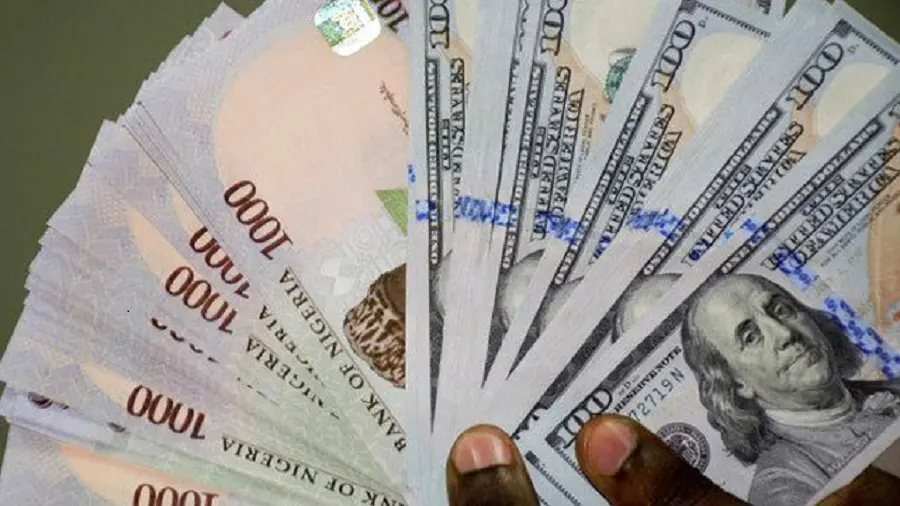
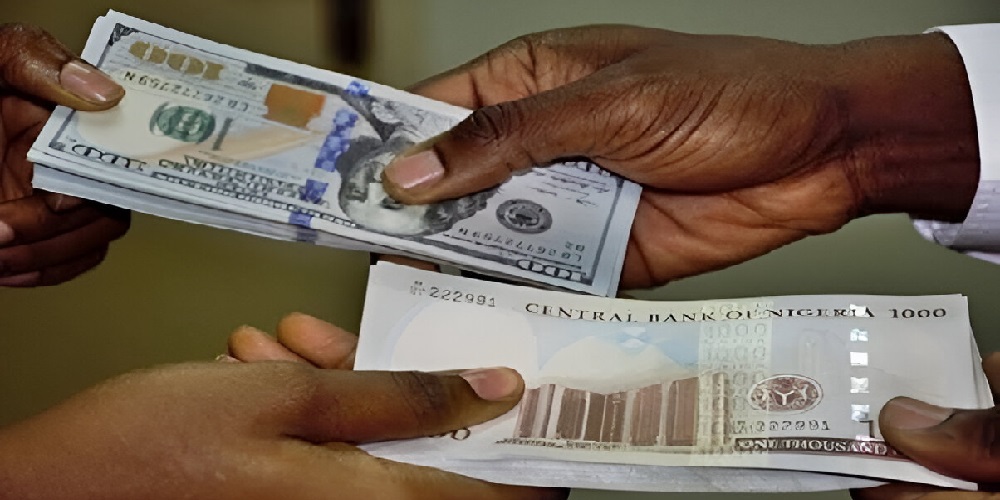
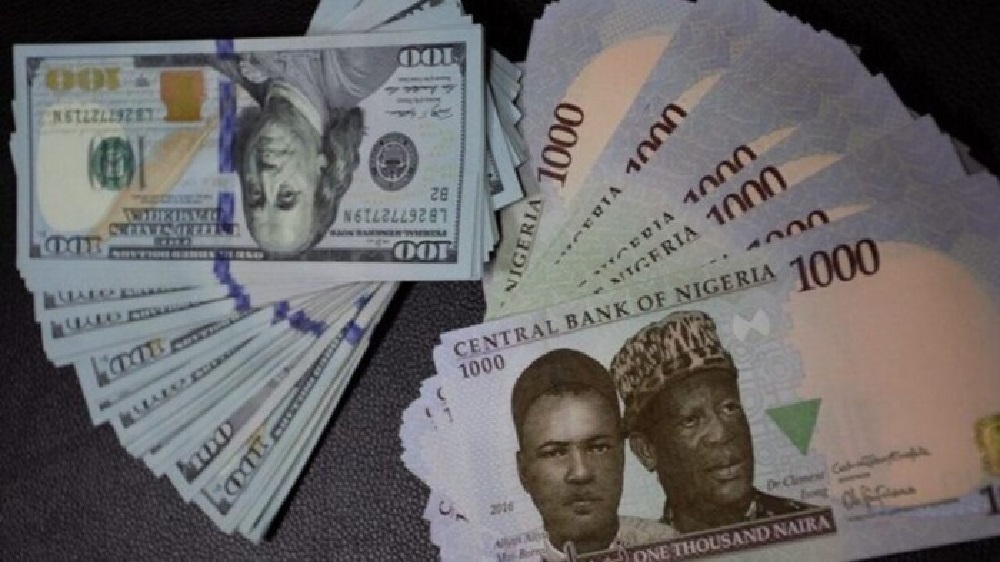
The naira on Friday depreciated to N1,397 per dollar in the parallel market from N1,390 per dollar on Thursday.
Likewise, the naira depreciated to N1,365 per dollar in the Nigerian Foreign Exchange Market, NFEM.
Data from the Central Bank of Nigeria, CBN, showed that the indicative exchange rate for the market rose to N1,365 per dollar from N1,359.75 per dollar on Thursday, reflecting N5.25 depreciation for the naira.
Consequently, the margin between the parallel and official markets widened to N32 per dollar from N30.25 per dollar on Thursday.
The turnover in the interbank foreign exchange market recorded its fourth daily decline by 42.5 per cent to $73.6 million from $128.2 million on Thursday.
This week, the naira strengthened by N1 per dollar in the official market, with turnover in the interbank foreign exchange market climbing to N683.2 million, representing a 76.7 per cent rise compared to N386.54 million recorded the previous week.
However, the local currency weakened in the parallel by N2 against the greenback.
-
News20 hours agoBinani Air Celebrates First Month in the Skies, Eyes Bigger Future
-
News13 hours agoKano Screens 720 Couples for State-Sponsored Mass Wedding Programme
-
News13 hours agoAlleged N2bn scam: EFCC tells Court how Sirika hired Ethiopian Airlines aircraft for three-day exhibition
-
News14 hours agoEx-NNPCL Boss Kyari Challenges Senate Over Arrest Warrant, N210trillion Probe, Cites Medical Trip Abroad
-
News13 hours agoNationwide protest to begin on Democracy Day as insecurity continue to escalate
-
News13 hours agoPastor Kumuyi Explains Why None of His Sons Will Inherit Deeper Life Church
-
Economy13 hours agoIMF questions Nigeria’s $5bn borrowing structure
-
News13 hours ago2027: INEC restores 22 State constituencies in kogi, Benue, Delta, Jigawa

Warning: Undefined variable $user_ID in /home/naijuinz/public_html/wp-content/themes/zox-news/comments.php on line 49
You must be logged in to post a comment Login