
News
FG adds plumbing, hairstyling, tilling,, 12 other trades to basic education curriculum(List)



By Kayode Sanni-Arewa
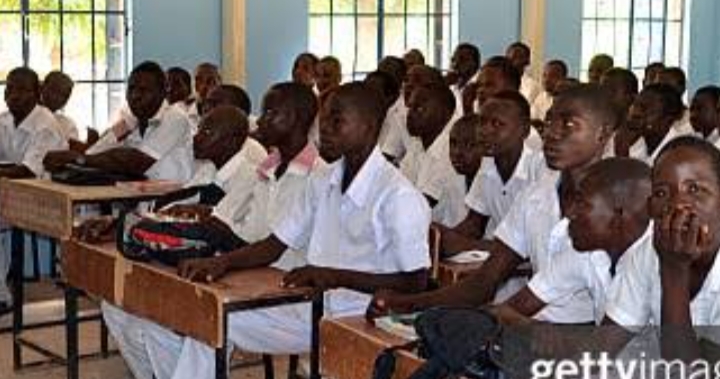
The Federal Government has announced an update to its basic education curriculum, introducing 15 new trades to improve students’ practical skills and employability.
This new curriculum is set to take effect in January 2025 for primary and junior secondary students across the country.
The revised curriculum is expected to improve job prospects for students when it is implemented in January 2025, helping them meet the challenges of a rapidly changing economic environment.
These changes are expected to provide students with a broader range of skills and better prepare them for the job market after completing their education.
New trades introduced in the curriculum
The updated curriculum includes 15 new trades, covering various sectors, including construction, technology, and agriculture. Among the new trades introduced are plumbing, tiling and floor works, and POP (Plaster of Paris) installation.
These skills are expected to give students a foundation for work in the construction and building industries. Additionally, trades like event decoration and management, bakery and confectioneries, and hairstyling have been added to offer students opportunities in the service sector.
The perceived goal is to help students develop skills they can use in their careers, whether they choose to work for a company or start their own businesses,” the National Orientation Agency noted in its post.
The inclusion of these practical skills seeks to meet the growing demand for vocational expertise in Nigeria’s economy.
Preparing students for a changing job market
With these updates, the government aims to make students more competitive in the labour market by equipping them with practical skills. In addition to construction and service-related skills, the curriculum now includes courses on GSM repairs, satellite/TV antenna installation, and CCTV and intercom installation. These technical skills are particularly relevant as technology continues to drive global job markets.
The curriculum also includes a focus on agriculture, with students being taught skills related to crop production, beekeeping, horticulture, and livestock farming, including poultry and rabbit rearing.
These agricultural skills are designed to support the country’s vast agricultural sector, giving students the knowledge to contribute to Nigeria’s food production and rural development.
Incorporating digital literacy and emerging technologies
Another important addition to the curriculum is the inclusion of basic digital literacy, which covers IT and robotics.
The government has prioritized teaching these skills to students from an early age, preparing them for the growing digital economy.
By incorporating IT and robotics into the curriculum, Nigeria drives to foster a new generation of professionals who are well-versed in emerging technologies, ensuring they are ready for the demands of a modern workforce.
The National Orientation Agency highlighted that this update in education will not only provide students with the skills required for current jobs but also prepare them for future opportunities in fields that are rapidly evolving, such as tech and digital services.
Impact on Nigerian youth and employment
The introduction of these vocational skills is also seen as a response to the high unemployment rates in Nigeria, especially among young people.
By teaching students practical trades, the government hopes to reduce youth unemployment by providing more pathways for self-employment and increasing the availability of skilled labor in key industries.
The revised curriculum is expected to improve job prospects for students when it is implemented in January 2025, helping them meet the challenges of a rapidly changing economic environment.
The government’s efforts to provide relevant skills training will hopefully have a long-term impact on Nigeria’s workforce.






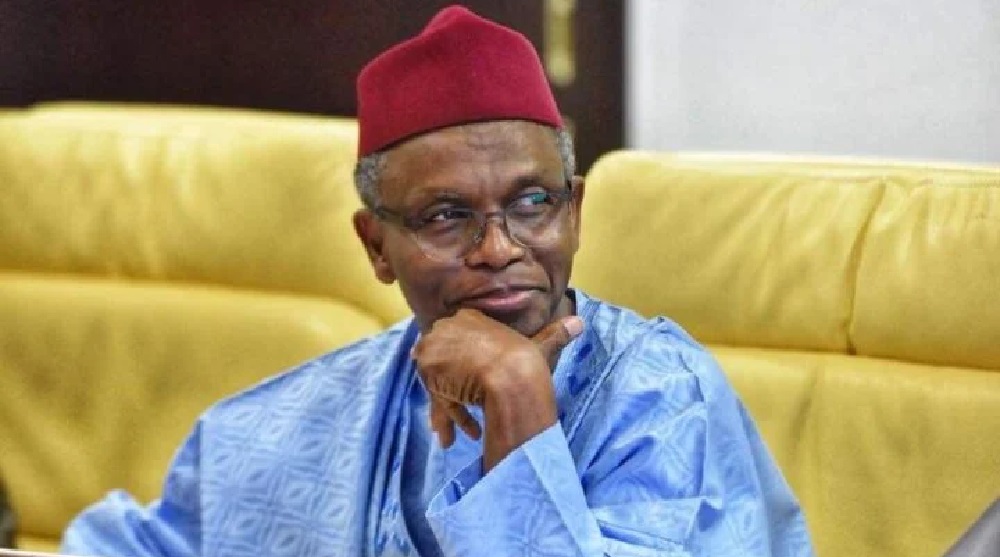
The former Governor of Kaduna State, Mallam Nasir El-Rufai was on Thursday arraigned before the Federal High Court in Abuja by the Department of State Services (DSS) over allegations bordering on unlawful interception of communications and threats to national security.
El-Rufai, who appeared before Justice Joyce Abdulmalik, denied all five counts contained in the amended charge filed against him by the prosecution. The case was brought by counsel to the DSS, Oluwole Aladedoye (SAN), who informed the court that the earlier three-count charge had been replaced with an expanded five-count amended charge dated April 13.
ifeanyi-Okowa-delta
According to the prosecution, the amended charges include allegations that the former governor unlawfully intercepted communications linked to the National Security Adviser, Nuhu Ribadu, without proper authorisation. He was also accused of engaging in activities involving technical systems that allegedly posed risks to public safety and national security.
El-Rufai, however, maintained his not-guilty plea when the charges were read in court.
At the proceedings, his counsel, Oluwole Iyamu (SAN), confirmed receipt of the amended charge and did not oppose its substitution for the earlier filing. The court subsequently struck out the initial three-count charge and proceeded with the new counts.
A key point of contention arose when the prosecution requested that the identities of two witnesses be protected through the use of pseudonyms, citing security concerns. The defence strongly objected, arguing that such a move would undermine the defendant’s constitutional right to fair hearing and to know his accusers.
The defence also challenged the prosecution’s request for consecutive hearing dates, stating that it could limit adequate access to legal representation, especially given El-Rufai’s ongoing custody under the Independent Corrupt Practices and Other Related Offences Commission.
Additionally, the defence informed the court of a pending bail application, noting that an earlier missing affidavit had been recovered and submitted. While the prosecution did not oppose the bail request, it urged the court to dismiss a separate application filed by the defence seeking to quash the amended charge, describing it as lacking merit.
The defence further asked the court to compel the prosecution to disclose its proof of evidence to enable proper preparation for trial, but the request was also opposed.
After listening to submissions from both sides, Justice Abdulmalik adjourned the matter to May 18, 19, and 20 for hearing.

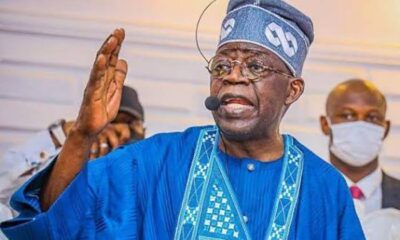
President Bola Tinubu has formally written to the Senate, seeking approval for a $516.3 million foreign syndicated loan to support the construction of the Sokoto–Badagry highway.
In a communication read by the President of the Senate, Godswill Akpabio, on Thursday, President Tinubu requested a resolution in line with Sections 16 and 21 of the Debt Management Office (Establishment) Act, 2011, to enable the Federal Government to secure the financing for Sections 1, Phase 1A, and 1B of the project. The loan facility is to be arranged through Deutsche Bank AG.
President Tinubu explained that the superhighway project is a flagship initiative under his administration’s Renewed Hope Agenda, designed to enhance national connectivity, reduce travel time, and improve the movement of goods across key economic corridors.
The proposed 1,000-kilometre road will link Sokoto, Kebbi, Niger, Kwara, Oyo, Ogun, and Lagos states, connecting Illela to Badagry.
He noted that the financing arrangement will be backed by a partial risk guarantee from the Islamic Corporation for the Insurance of Investment and Export Credit (ICIEC), while the Federal Government will provide counterpart funding of over 265 billion naira for land acquisition, compensation, and related infrastructure.
According to the president, the loan is structured for nine years, including a three-year grace period, with an interest rate pegged at the Chicago Mercantile Exchange SOFR plus 5.3 per cent per annum. The Federal Executive Council has already approved the financing plan.
Following the presentation of the request at plenary, Akpabio referred the matter to the Senate Committee on Local and Foreign Debts, directing it to report back within one week.
Endorsing the move, the Senate President said that it is better to borrow for projects to improve road safety and foster national integration.
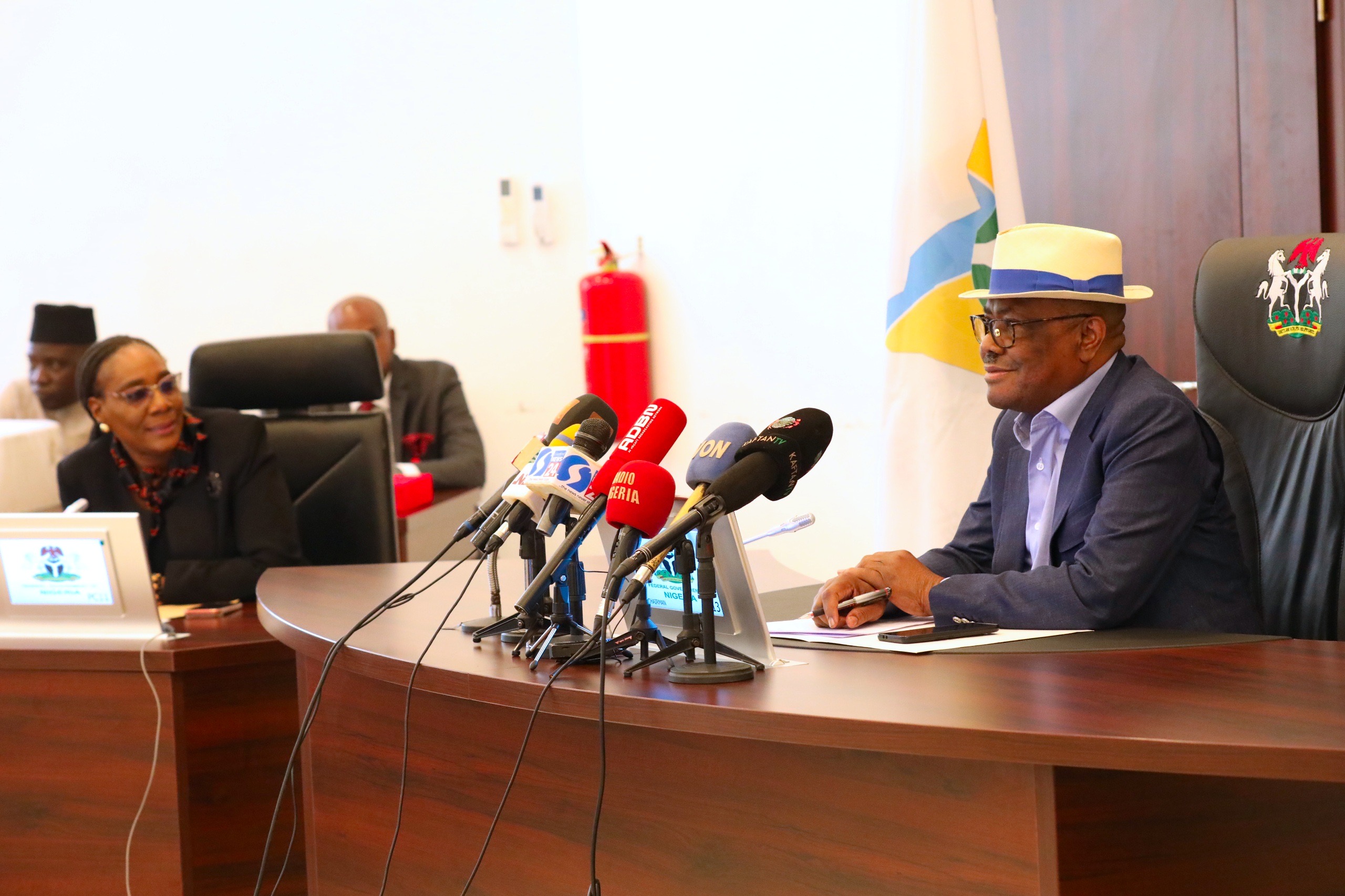
Chairman of the Nigerian Union of Teachers (NUT), FCT chapter, Comrade Abdullahi Shafa, speaking after the meeting of the union leaders with the FCT Minister, Nyesom Wike, today.
He hailed the FCT minister for his quick intervention.
Watch:

Angry El-Rufai Protests Move To Shield Witnesses In NSA Phone-Tapping Case

Tinubu wants Senate’s approval of $516m fresh loan for Sokoto–Badagry Highway

FCT Teachers Strike: NUT Hails Wike Over Intervention In Education Sector(Video)




-

 News24 hours ago
BREAKING: Finally, Power Minister, Adelabu resigns from Tinubu’s cabinet
-
 News14 hours ago
Adeleke inaugurates 52-member campaign council for August guber polls
-

 Economy14 hours ago
FG, states, LGs share N2.036trn March revenue
-

 Sports14 hours ago
Meet New Head Coach As Chelsea Sack Liam Rosenior
-

 Sports14 hours ago
Man City Defeat Burnley To Top EPL Table
-
 Politics14 hours ago
Delta 2027: Warri Leaders Endorse Ereyitomi, Guwor, Calls for massive Support
-

 Metro14 hours ago
British Grandmother Who Went To Ghana To Try Get Her £1m Savings Back From Scammers K!lled In Car Crash
-
 News9 hours ago
Two soldiers wounded, 24 terrorists eliminated as troops repel attack in Yobe-Army reveals
You must be logged in to post a comment Login