Connect with us

News

Marketers may snub Dangote fuel as imported petrol costs N922/litre

Published

on

ADVERTISEMENT
Zoom Ad
ADVERTISEMENT
Zoom Ad

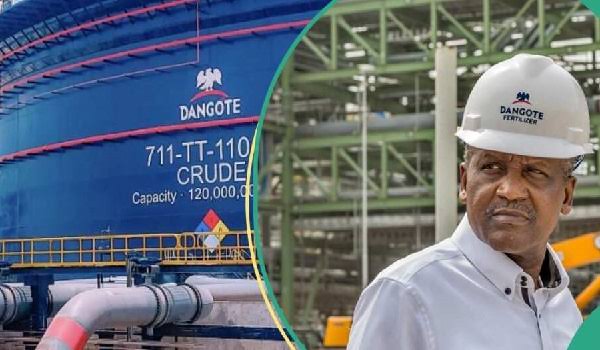
Oil marketers have revealed that the landing cost of Premium Motor Spirit (petrol) as of Friday was N922.65 per litre.


Dealers said this cost factors in various expenses including shipping, import duties, and exchange rates.

The amount is a considerable reduction of N32.35 from the N955 per litre offered at the loading gantry of the Dangote Petroleum Refinery.

This decrease in landing cost is expected to influence the price at which petrol is sold to consumers and could increase marketers’ interest in returning to petrol imports.

Advertisement

“The lower cost of imported petrol is often an incentive to dealers and you won’t blame marketers who import the product,” a major marketer, who spoke in confidence due to lack of authorisation to speak on the matter, stated.

Last Sunday, the Dangote Petroleum Refinery said the rise in petrol price from N899.50 was due to an increase in the cost of crude oil, the major component for refined petroleum products.

However, this latest decline in landing cost, which reflects the price of importing and distributing the product, signals some relief from the pressures of global market fluctuations and supply chain challenges.

But despite this reduction, the retail price of petrol in Nigeria has remained high, with major marketers continuing to sell refined products between N990 and N1,010 per litre in the Federal Capital Territory.

Advertisement

According to the latest competency centre daily energy data released by the Major Energies Marketers Association of Nigeria on Friday and obtained by our correspondent on Sunday, the on-spot estimated import parity into tanks was N922.65 per litre, a reduction of N21 or 2.2 per cent from the N943.75 per litre quoted on Thursday.

The average cost for 30 days rose to N939.52 per litre on Friday, up from N929.07 per litre on Thursday, and N900.74 per litre on Tuesday.

The document also noted that the price of Brent crude was benchmarked at $78.29 per barrel, down from $78.88 per barrel the previous day, with an exchange rate of N1,550 per dollar.

This cost is viewed as an improvement for importers, providing private depot owners and independent marketers with an alternative route to profitability and the opportunity to source cheaper products.

Advertisement

With the average ex-depot price across all locations ranging from N950 to N990 per litre, importers stand a chance to cover costs significantly lower than recent historical averages and generate sustainable margins.

The updated landing costs and aligned ex-depot pricing indicate a more profitable environment for stakeholders in the downstream oil and gas sector. However, it also highlights the ongoing influence of exchange rate fluctuations and freight costs on Nigeria’s energy market.

Further checks by our correspondent while analysing petrol price movements at loading depots for last week showed that the loading cost of the commodity was reduced by N10.

Nipco sold its product at N970 from N965 per litre earlier in the week. Aiteo closed the week at N960, while Sahara made a N20 reduction closing at N960 from N980 earlier in the week. Swift opened at N970 and closed at N960. Wosbab and AA Rano closed the week selling their products at N960 per litre.

Advertisement

In Port-Harcourt, Bulk Strategic Depot opened at N1,005 but closed at N981, indicating a reduction of N24. Also, depots in Delta and Calabar maintained a price range of N972 and N990.

76.84m imported petrol

Meanwhile, fresh findings have shown that oil marketers imported a total sum of 57,301 metric tonnes of fuel between Tuesday, January 21, 202,5 and Wednesday, January 22, 2025.

Going by the conversion rate of 1,341 litres to one metric tonne, it, therefore, implies that the marketers brought in about 76.84 million litres of petrol within two days.

Advertisement

This data sourced from the Nigerian Port Authority also showed that the vessels containing 20,400mt and 36,901mt berthed at the Apapa and Tincan ports in Lagos at 12 midnight and 3:49 pm, respectively. It was handled by Tera Shipping Limited and Peak Shipping Agency Nigeria Limited.

The document also showed that two vessels without documented capacity berthed at the Dangote terminal located at the Lekki Deep Seaport on Sunday.

But commenting on the development, the National President of the Petroleum Products Retail Outlets Owners Association of Nigeria, Billy Gillis-Harry, said there is an agreement by stakeholders against the importation of refined petroleum products.

Gillis-Harry, in an interview on Sunday, said the Nigerian Midstream and Downstream Petroleum Regulatory Authority is supposed to stop the issuance of import licenses for 180 days to prove the production capacity of the Dangote refinery.

Advertisement

He said, “Well, is there anybody that has landed imported fuel?”

The amount of litre imported in two days, the official replied, “I am surprised to hear that. I am very surprised to hear that because NMDPRA is the leader of the non-import agreement. The idea was to give the Dangote refinery 180 days to prove its production capacity.

“So I would be surprised if anybody is importing fuel now. Besides now, we have an industry stakeholder forum that was Inaugurated last week, which will direct happenings in the industry. There was an industry agreement that there should be no import, and Dangote was given a certain number of days to produce a certain quantity daily for us.”

But the National Publicity Secretary of the Independent Petroleum Marketers Association of Nigeria, Chinedu Ukadike, said the non-import directive was a “mutual understanding” and not a binding agreement.

Advertisement

Ukadike, in an interview, stated, “There was no agreement like that, but it was a mutual understanding not to import. It was because, at the time, Dangote products were cheaper than imported ones.

“NMDPRA is supposed to give (licence to) anyone who can import at a cheaper rate. We all are looking at cheaper rates, and that is what is happening.”

News

CJN Kekere-Ekun seeks more women in Judiciary’s leadership positions

Published

on

By

ADVERTISEMENT
Zoom Ad
ADVERTISEMENT
Zoom Ad

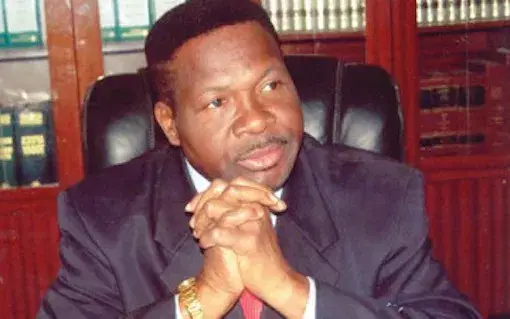
The Chief Justice of Nigeria (CJN), Justice Kudirat Kekere-Ekun, has called for the involvement of more women in the leadership of the nation’s Judiciary.

Justice Kekere-Ekun argued that the involvement of more women would enrich the administration of justice in many ways, including  broadening jurisprudential perspectives, reducing unconscious biases and
strengthening public confidence in legal institutions.

She spoke in Abuja on Tuesday during the opening session of the  2026 African Regional Conference of the International Association of Women Judges (IAWJ), with the theme, “Promoting Excellence in the Administration
of Justice.”

The CJN spoke about a number of factors that could contribute to the attainment of excellence in the administration of justice in any society.

Advertisement

Justice Kekere-Ekun said: “Excellence in the administration of justice also requires a thoughtful examination of the relationship between gender equality and the legal
system.

“The full and effective participation of women within the Judiciary has far-reaching implications for justice delivery.
Over the years, we have witnessed encouraging progress in the representation of women within Judiciaries across the world.

“Nevertheless, while notable gains have been made, particularly at entry and intermediate levels, significant work remains to be done in ensuring equal representation within leadership positions and at the highest levels of judicial decisionmaking.

“The pursuit of gender equality within the Judiciary is not merely a matter of representation; it is fundamentally a matter of institutional legitimacy.

Advertisement

“A Judiciary that reflects the diversity of the society it serves is better positioned to command public confidence and to appreciate the varied experiences that come before it.

“Diversity strengthens judicial deliberation, enriches legal reasoning, and ultimately enhances the quality of justice delivered.

“Ultimately, gender inclusion must be viewed as an indispensable component of the Judiciary’s commitment to fairness, equality, and the rule of law,” the CJN said.

Justice Kekere-Ekun added that excellence in the administration of justice could also be measured by the quality of judicial reasoning, the integrity of judicial officers, the fairness of judicial processes, and the confidence that citizens repose in the courts as impartial arbiters of disputes.

Advertisement

She noted that excellence is ultimately reflected in the ability of the Judiciary to uphold the Constitution, protect the vulnerable, preserve the rule of law, and dispense justice without fear, favour, affection or ill will.

She also identified judicial education as another factor that could contribute to the attainment of excellence in the administration of justice.

The CJN said: “Beyond enhancing professional competence, judicial education reinforces the rule of law, preserves the integrity of legal institutions, and equips judicial officers with the knowledge and skills necessary to address emerging legal challenges.

“Ultimately, continuous judicial training fosters a more responsive, efficient, and impartial justice system capable of sustaining public confidence in democratic governance.

Advertisement

“Professional development is therefore not a luxury but a necessity. It is an indispensable requirement for any Judiciary committed to excellence,” she said.

The First Lady, Senator Oluremi Tinubu, who featured as a special guest, noted that the Judiciary was central to the preservation of the rule of law in every democratic society.

Senator Tinubu urged participants at the event, who are from different African countries, not to relent in building judicial systems that are transparent, compassionate and firmly anchored on the rule of law.

She said: “At a time when societies across the world are advancing through new legal, technological, and social developments, the pursuit of excellence within our justice system remains both an obligation and a moral imperative.

Advertisement

“The Judiciary remains central to sustaining the rule of law in a democratic society, serving as the institution where justice and fairness are upheld, and the rights of citizens are protected.

“The presence of women on the bench adds value to the judicial system by broadening perspectives and deepening understanding in the dispensation of justice.

“Across Africa, women judges have broken through long-standing barriers and, by their resilience and excellence, paved the way for future generations of women in the legal profession.

“As a former Senator of the Federal Republic of Nigeria, I understand the challenges women face while aspiring for leadership positions. This is why I remain committed to initiatives that promote equitable access to opportunities for women and girls and strengthen our democracy.

Advertisement

“I commend the National Association of Women Judges of Nigeria (NAWJN)  for hosting this regional conference. Your sustained commitment to promoting judicial excellence, gender equity, and access to justice continues to inspire both the legal community and the wider society,” the First Lady said.

The Attorney-General of the Federation (AGF) and Minister of Justice, Lateef Fagbemi (SAN) said  the role of women judges extends beyond the courtroom and pledged country’s commitment to advancing judicial reforms that champion gender inclusivity.

Represented by the Solicitor-General of the Federation, Mrs. Beatrice Jedy-Agba, Fagbemi argued that the country had already broken the glass ceiling through the appointment of women into important positions

The President of the Court of Appeal (PCA), Justice Monica Dongban-Mensem (who is also the  President of the NAWJN), said the Judiciary must continue to uphold the highest standards of integrity, competence, fairness, and accountability in a rapidly evolving global landscape characterised by complex legal challenges, technological advancements and increasing public expectations.

Advertisement

Justice Dongban-Mensem added the country’s female judges, whose association is hosting the conference, are firmly committed to advancing judicial capacity, promoting gender equality within the judiciary, and fostering collaboration among women judges across the continent and beyond.

The Minister of the Federal Capital Territory (FCT), Nyesom Wike, said the President Bola Tinubu-led administration will continue to provide basic infrastructure that would not only enhance the justice sector but also lend dignity to the bench.

Wike, who said the Federal Government has built over 400 befitting residences for judges in Abuja, added that the gesture was not politically motivated but done in furtherance of good governance.

Advertisement
Continue Reading

News

Nigeria Begins Evacuation of Citizens From South Africa Amid Xenophobic Attacks

Published

on

ADVERTISEMENT
Zoom Ad
ADVERTISEMENT
Zoom Ad

By Gloria Ikibah

The Federal Government has commenced the evacuation of Nigerian nationals affected by the recent wave of xenophobic attacks in South Africa, with the first group of returnees expected to arrive in Lagos on Thursday morning.

In a statement issued by the Ministry of Foreign Affairs on Tuesday, the government confirmed that the initial batch of evacuees will continue depart Johannesburg’s Oliver Tambo International Airport on Wednesday night aboard an Air Peace flight.

According to the Ministry, the aircraft is scheduled to land at the Murtala Muhammed International Airport in Lagos at approximately 5:00 a.m. on Thursday.

Advertisement

Announcing the operation, the Ministry stated:
“The Ministry of Foreign Affairs wishes to inform that the first batch of Nigerian nationals that will be evacuated from the Republic of South Africa due to Xenophobic attacks will depart the Oliver Thambo International Airport in Johannesburg on Wednesday night, and the expected time of arrival at the Murtala Mohammed International Airport in Lagos is 5.00am on Thursday morning.”

The Ministry disclosed that the evacuation exercise is being carried out by Air Peace Airlines and fully financed by the Federal Government, ensuring that affected Nigerians are returned home without any financial burden.

“The evacuation operation will be undertaken by Air Peace Airlines. The Federal Government of Nigeria has fully funded the evacuation exercise; consequently, all affected Nigerians will be repatriated at no cost to them”, he stated.

Authorities also assured Nigerians that adequate arrangements have been made to receive and support the returnees upon arrival.
Q
The Ministry explained that relevant government agencies have put measures in place to ensure a smooth reintegration process for those being evacuated.

Advertisement

“The Ministry further wishes to assure the public that the Federal Government, through relevant Ministries, Departments and Agencies, has put in place the necessary reception and support arrangements for the returnees.”
It added that the evacuees would undergo documentation and profiling procedures before receiving assistance and being reunited with their families.

“Upon arrival, the evacuees will undergo documentation and profiling procedures and will receive the appropriate assistance and support before being reunited with their families”, it added.

The evacuation follows growing concerns over attacks targeting foreign nationals in parts of South Africa, prompting  calls for the protection of Nigerians living and working in the country.

The Federal Government has repeatedly stated its commitment to safeguarding the welfare of Nigerians abroad and has continued to engage South African authorities over the safety of its citizens.
renewed

Advertisement
Continue Reading

News

SEDC Defends Record Before Senate, Says Less Than 10% of ₦140bn Budget Released

Published

on

ADVERTISEMENT
Zoom Ad
ADVERTISEMENT
Zoom Ad

…highlight major projects, Programme,Regional Development Plans Amid Funding Challenges

By Gloria Ikibah

The South East Development Commission (SEDC) has reiterated its commitment to transparency, accountability and regional development following an oversight session with the Senate Committee on South East Development Commission at the National Assembly.

The interactive session, chaired by the Committee Chairman, Senator Orji Uzor Kalu, formed part of the National Assembly’s constitutional responsibility to oversee the activities of government agencies.

Advertisement

During the engagement, the Commission presented a detailed report of its activities since the inauguration of its Board in February 2025, covering its financial performance, institutional development, procurement processes, staffing, partnerships and ongoing programmes across the South-East.

The Commission also briefed lawmakers on its engagements with state governments, federal institutions, development finance organisations and other stakeholders involved in driving development across the region.

As part of its review, the Senate Committee requested additional documentation relating to certain aspects of the Commission’s operations and programme implementation.
Responding to the request, the Commission welcomed the move and sought a short extension to collate and submit the required materials.

Following discussions, the Committee adjourned proceedings to a later date pending receipt of the requested submissions, which the Commission is expected to provide on or before 23 June 2026.

Advertisement

SEDC used the opportunity to highlight progress recorded despite what it described as significant funding constraints.
According to the Commission, preparatory work has advanced on several major regional projects since the Board was inaugurated, including strategic infrastructure initiatives such as gas pipeline and railway projects designed to drive economic growth and regional integration.

The Commission also disclosed that it had established partnerships with a number of national and international institutions, including the United Nations Development Programme (UNDP), Afreximbank, Rural Electrification Agency, the Bank of Industry, Presidential Initiative on Compressed Natural Gas and Gas Aggregator Company of Nigeria.

It added that extensive consultations had been held with the governments of the five South-East states, federal ministries, development partners, academic institutions and private sector stakeholders to create a coordinated approach to regional development.

One of the major achievements highlighted during the session was the South East Vision 2050 stakeholder consultations, which brought together government officials, development experts, business leaders, academics and civil society groups to develop a long-term blueprint for the economic transformation of the region.

Advertisement

The Commission also spotlighted the successful rollout of the inaugural South East Venture Capital Programme (SEVCP), which it described as a flagship initiative aimed at promoting innovation, entrepreneurship and investment.

According to SEDC, 25 start-ups from across the South-East received equity investments through a transparent and competitive selection process under the programme.

The Commission said the initiative aligns with President Bola Ahmed Tinubu’s Renewed Hope Agenda and reflects efforts to strengthen entrepreneurship, private sector growth and investor confidence.

“Anchored within the South East Investment Company, the Programme represents a strategic effort to move beyond fragmented interventions towards a more structured and credible venture capital ecosystem for the South East, combining capital deployment with venture development, institutional partnerships, and pathways for attracting institutional capital into early-stage, high-growth enterprises across the region,” it stated.

Advertisement

However, the Commission expressed concern over the pace of funding releases, warning that implementation of critical projects could be affected if appropriated funds are not released promptly.

It disclosed that despite the Federal Government and National Assembly approving ₦140 billion for the Commission in the 2026 budget, less than 10 per cent of the allocation has so far been released.

The statement further read: “Of the N140 billion appropriated to the Commission in the 2026 budget, less than 10% has been released to date across all budget lines.”

SEDC stressed that accelerated releases are essential to enable the execution of key infrastructure, agricultural transformation, youth empowerment, economic development and regional security initiatives captured within its mandate.

Advertisement

“The scale of development required across the South East demands sustained funding, institutional coordination, and continued collaboration among all stakeholders,” the Commission noted.

Reaffirming its commitment to openness and accountability, the Commission pledged full cooperation with the National Assembly and all relevant oversight institutions.

“SEDC remains committed to full cooperation with the National Assembly and all relevant oversight institutions. The Commission views accountability, transparency, and constructive engagement as fundamental to the successful delivery of its mandate and will continue to provide all information required to support effective legislative oversight.

“The Commission remains focused on its responsibility to deliver meaningful and measurable impact for the people of the South East through disciplined planning, transparent governance, strategic partnerships, and the effective deployment of public resources. The Commission appreciates the continued support of the National Assembly and looks forward to sustained collaboration in advancing inclusive growth, shared prosperity, and long-term development across the region.”

Advertisement
Continue Reading

Trending

Copyright © 2024 Naija Blitz News