
News
NAHCON’s Hajj Savings Scheme: A Path to Affordable Pilgrimage in Nigeria


- /home/naijuinz/public_html/wp-content/plugins/mvp-social-buttons/mvp-social-buttons.php on line 27
https://naijablitznews.com/wp-content/uploads/2025/01/Screenshot_20250128-171926-626x600.jpg&description=NAHCON’s Hajj Savings Scheme: A Path to Affordable Pilgrimage in Nigeria', 'pinterestShare', 'width=750,height=350'); return false;" title="Pin This Post">
- Share
- Tweet /home/naijuinz/public_html/wp-content/plugins/mvp-social-buttons/mvp-social-buttons.php on line 72
https://naijablitznews.com/wp-content/uploads/2025/01/Screenshot_20250128-171926-626x600.jpg&description=NAHCON’s Hajj Savings Scheme: A Path to Affordable Pilgrimage in Nigeria', 'pinterestShare', 'width=750,height=350'); return false;" title="Pin This Post">


One of the greatest challenges faced by prospective pilgrims is raising the full payment for Hajj straight away. The cost ranges between ₦8.3 million to ₦8.7 million for Nigerian pilgrims in 2025. Instead of taking on debts or liquidating assets to meet these costs, the Hajj Savings Scheme offers an alternative by spreading the financial burden over several years, making it less daunting for participants.
For millions of Nigerian Muslims, the Hajj pilgrimage represents not only a religious obligation but also a lifetime spiritual aspiration. However, the global rising cost of performing Hajj, has made the journey increasingly out of reach for many. Timely enough, the National Hajj Commission of Nigeria (NAHCON) had introduced a promising initiative: the Hajj Savings Scheme (HSS). This scheme offers Nigerian Muslims a structured, long-term planning approach to fund their pilgrimage.
If fully embraced by both the government and the Muslim community, the Hajj Savings Scheme has the potential to make Hajj more affordable, accessible, and financially sustainable for Nigerians in the future.
The Hajj Savings Scheme, developed by NAHCON in collaboration with Jaiz Bank, is designed to help prospective pilgrims save for Hajj gradually over time. Through the scheme, individuals can make regular contributions to a dedicated account, earning interest-free returns while accumulating sufficient funds for the pilgrimage.
The scheme not only addresses the immediate financial pressure of Hajj payments but also promotes a culture of financial discipline and long-term planning within the Muslim community.
Key Benefits of the Hajj Savings Scheme
1. Ease of Financial Planning
One of the greatest challenges faced by prospective pilgrims is raising the full payment for Hajj straight away. The cost ranges between ₦8.3 million to ₦8.7 million for Nigerian pilgrims in 2025. Instead of taking on debts or liquidating assets to meet these costs, the Hajj Savings Scheme offers an alternative by spreading the financial burden over several years, making it less daunting for participants.
2. Stability Amid Rising Costs
Global inflation, exchange rate fluctuations, and increased costs of services in Saudi Arabia have contributed to higher Hajj fares. By saving over time, individuals are less vulnerable to sudden price hikes. Additionally, the scheme allows NAHCON to lock in early contracts with Saudi service providers, potentially securing lower costs for accommodation, transportation, and other services.
3. Subsidy Opportunities Through Government Partnership
If widely adopted, the Hajj Savings Scheme could encourage greater governmental involvement in subsidizing or supporting Hajj costs. Countries like Indonesia and Malaysia have demonstrated how effective savings schemes can make Hajj affordable. In Indonesia, for instance, the government uses funds from its Hajj savings program to provide subsidies for pilgrims, resulting in fares that are significantly lower than Nigeria’s. Nigeria could emulate this model, using contributions from the HSS to negotiate better deals and provide financial relief to pilgrims.
4. Promoting Financial Inclusion
The HSS also aligns with efforts to promote financial inclusion, particularly for low- and middle-income Nigerians. By providing an accessible platform to save for Hajj, it empowers more Muslims to achieve their religious aspirations without facing undue financial hardship.
The Nigerian government has a crucial role to play in ensuring the success of the Hajj Savings Scheme. First, it must provide policy support and incentives that encourage participation. For example, introducing tax benefits for HSS contributors could motivate more people to join.
Second, the government can work with NAHCON to ensure transparency and efficiency in the management of funds. Building public trust in the scheme is critical, as skepticism about financial mismanagement could deter potential participants.
Finally, the government can leverage HSS funds to negotiate more affordable Hajj packages. Bulk purchasing of services such as flights and accommodation would lower costs for Nigerian pilgrims, creating a win-win situation for all stakeholders.
While government support is important, the success of the HSS ultimately depends on the buy-in from Nigerian Muslims. The Muslim community must recognize that the Hajj Savings Scheme is a practical solution to the financial challenges associated with Hajj. Religious leaders, Islamic organizations, and community groups have a significant role to play in raising awareness about the scheme and educating Muslims on its benefits.
Beyond financial savings, the scheme also aligns with Islamic values of planning, discipline, and financial prudence. By adopting the HSS, Nigerian Muslims can not only fulfill their religious obligations but also set an example of responsible financial management for future generations.
A Vision for the Future
If properly utilized, the Hajj Savings Scheme could revolutionize the way Hajj is organized and funded in Nigeria. Over time, it could reduce the financial stress associated with the pilgrimage, enabling more Muslims to participate without compromising their financial stability. Additionally, the scheme could help Nigeria transition toward a more efficient, subsidized Hajj system similar to those in Indonesia and Malaysia.
By embracing the HSS, the Nigerian government and Muslim community can work together to ensure that the Hajj remains a cherished, attainable experience for all. It is time for Nigeria to fully commit to this innovative initiative, paving the way for a more affordable and sustainable future for pilgrims.
Shafii is a staff of NAHCON.





News
ALERT! Terrorists planning attacks on worship centres, schools, NYSC camps – Police issue alert


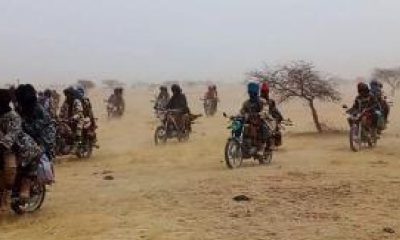
The Nigerian Police Force High Command has placed formations nationwide on red alert over alleged planned terror attacks on worship centres, schools, National Youth Service Corps, NYSC, orientation camps and other public places across the country.
According to Premium Times, the police also revealed that intelligence had shown the movement of armed elements from Katsina through Kaduna towards Plateau State.
The development followed fresh intelligence indicating increased mobilisation of terrorist elements for possible coordinated attacks on places of worship, learning institutions, NYSC orientation camps and other vulnerable targets across the country.
The findings showed that following the intelligence report, the high command has issued an operational order to its formations nationwide on the need to put the criminal elements in check before they will strike.
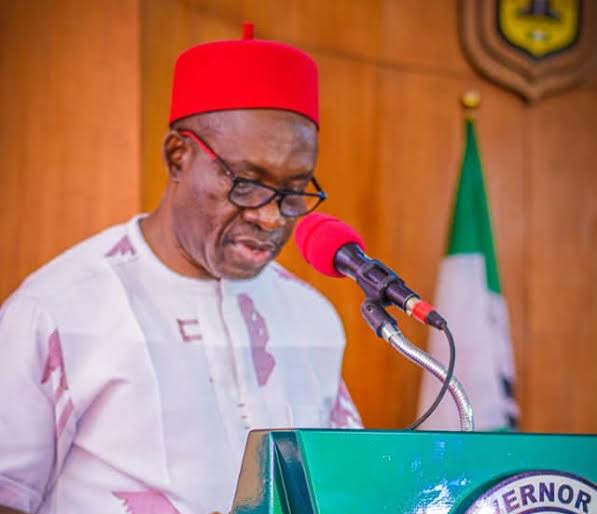
The Anambra State Government has said it is still servicing loans inherited from the administrations of former governors Peter Obi and Willie Obiano, even as it maintains that Governor Chukwuma Soludo has not borrowed from any commercial bank since assuming office.
The Commissioner for Finance, Izuchukwu Okafor, said the state’s debt burden had fallen by more than 83 per cent under Soludo, with the administration also clearing several inherited domestic obligations.
Okafor disclosed this during a Ndi Anambra podcast uploaded by Anambra State New Media on Monday while explaining the state’s finances and debt position.
He said repayments on loans secured by previous administrations continued to be deducted from Anambra’s allocation through the Federation Account Allocation Committee, including obligations dating back to the Obi and Obiano administrations.
“Yes, every month during our FAC meetings, and when you see the schedule of FAC, you will notice there were substantial, significant deductions from our own FAC because of loans previously borrowed by previous administrations,” Okafor said.
“These loans were borrowed, you know, during the time of, even, not the immediate predecessor, even during the time of Peter Obi and Willie Obiano, His Excellency, the past governors,” he said.
According to the commissioner, the Soludo administration had focused on managing the inherited obligations while avoiding new commercial borrowing.
“It’s on record, you know, that this administration has not borrowed a kobo from any commercial bank since the inception of this administration,” he said.
Okafor said the government had also settled a number of legacy liabilities, including unpaid contracts, gratuity and pension arrears, bringing the state’s domestic debt close to zero.
“But I will give you an example for our domestic debt, the control, the legacy, what we call legacy debts, you know, the contracts that were not paid, not owing, the gratuity arrears, pension arrears, we’ve been able to clear all that,” he said.
He added, “In terms of, so, our domestic debt as of today is near-zero balance.”
The commissioner attributed the reduction in the overall debt burden to repayments made by the administration, saying several inherited loans had already been settled.
“But I will also say that Mr Governor has not borrowed a penny. We have been able to manage the debt, the state debt, very well, that we have brought it down by more than 83 per cent as of today. I’ve been able to repay back most of these loans,” he said.
External obligations, however, remain part of the state’s financial commitments. Okafor explained that repayments on some foreign-denominated loans are deducted from the state’s federal allocation under the terms attached to the facilities.
“But following as well, external debts, which is foreign loan-denominated debts, when you look at it, because there are some covenants around the period it will take to pay off these loans, particularly deducted as such when we are doing FAC,” he said.
“Before they limit Anambra’s own allocation, they will deduct it as such, because most of them, World Bank loans and other loans, they committed.”
Okafor also disclosed that the state had recently fully repaid one of its debts.
“There is one debt that we recently paid off, CAGS,” he said.
He said the reduction in inherited liabilities had given the government more room to finance other priorities.
“So, in a nutshell, I’ve been able to, you know, create more fiscal space for Anambra State,” Okafor said.
He added, “This administration has been able to create more by paying off, you know, backlog of numerous debts inherited from previous governments, starting from the time of Peter Obi.”

No fewer than nine passengers were killed when gunmen opened fire on a commercial bus at Dungus Junction in Kuru community, Jos South Local Government Area of Plateau State.
Residents told journalists that the incident occurred when the bus driver parked to allow some passengers alight at the junction.
According to Daily Trust the bus which was heading to Jos was stained with blood and riddled with bullets.
Lawan Suleiman, a neighbor and teacher of one of the victims, confirmed the incident, adding that the attack occurred while the bus was stopped at the junction.
He said, “The driver is Ibrahim and he was my student. Three of them are from our community here in Bukuru. Their bodies have been deposited at the hospital. But relatives are preparing to collect them for burial.”
Spokesman of the Berom Youth Moulders, BYM, Rwang Tengwong, also confirmed the incident saying the victims were passengers travelling to Jos when the attackers opened fire on their vehicle.
“The incident happened around 9.40p.m. The victims were all passengers travelling to Jos when the terrorists opened fire on the vehicle. Among those killed was a member of Operation Rainbow. It is a very sad development and we lament the loss of lives.”
According to him, some of the passengers sustained gunshot wounds and were rushed to hospitals, where some later died.
Plateau state police command is yet to issue a statement regarding the incident as of press. (Daily Trust)

ALERT! Terrorists planning attacks on worship centres, schools, NYSC camps – Police issue alert

JP Morgan Returns Nigeria to Global Bond Index After 11 Years

“Lecturers pledging loyalty to TInubu cannot supervise elections”-Atiku tells INEC




-

 News17 hours ago
They Are Permanently Silent – Ortom Challenges Alia To Account For ₦1.2trn FAAC Revenue Since 2023
-

 Entertainment17 hours ago
Celine Dion Weeps On Stage As She Returns To The Stage After Six Years
-

 Politics16 hours ago
Comparative analysis as Obi lists ten achievements in public office, Tinubu’s ten failures as president
-

 News17 hours ago
2027: Why Igbos May Not Vote APC Despite Governors’ Defection — Party Chieftain
-

 News17 hours ago
Sad! Cross River Commissioner dies in Abuja
-
 News17 hours ago
Army Denies Reports Of Islamic Scholars Abduction In Senator Yariu’s House
-

 Economy16 hours ago
Petrol price hits N1,430 as Dangote raises depot rate
-

 Sports19 hours ago
Alexander Zverev defeats Ben Shelton to claim U.S. Open title
Warning: Undefined variable $user_ID in /home/naijuinz/public_html/wp-content/themes/zox-news/comments.php on line 49
You must be logged in to post a comment Login