Connect with us

News

N11.5bn lost to Shonga rice plantation flooding – Kwara Rep

Published

on

ADVERTISEMENT
Zoom Ad
ADVERTISEMENT
Zoom Ad

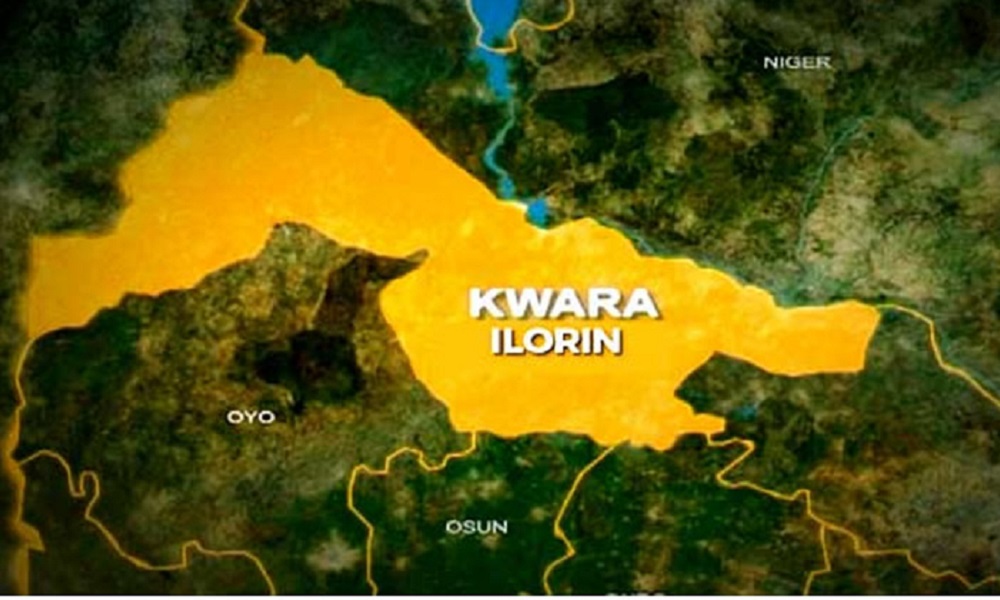
A member of the House of Representatives from Kwara State, Dr. Ahmed Saba, says about 5,000 hectares of rice plantations, worth N11.5bn, were devastated by the recent flooding at Shonga, Edu Local Government Area of the state.

The flood submerged farmlands in several communities across three local government areas of Kwara State.

The unusual flooding, which began on the night of Friday, February 24, 2025, affected communities in the Moro, Edu, and Patigi Local Government Areas.

Saba, who represents the Edu/Moro/Patigi Federal Constituency, visited the site of the disaster in Shonga, Edu LGA, on Saturday and confirmed that other communities were similarly impacted.

Advertisement

“The flooding has ravaged rice plantations in Fonga and Jebba in Moro; Lade, Patigi, and Kpada Districts in Patigi; and Shonga, Bacita, and Lafiagi in Edu LGA,” Saba reported. “Over 5,000 rice farmers have been affected by this incident, which is believed to have been caused by the opening of dams in Jebba and Kanji, Niger State,” he added.

Describing the flood as a major threat to the country’s food security, Saba expressed deep regret over the extent of the damage.

“Farmers who had been engaged in dry season farming were shocked to see their land flooded, as this typically does not happen outside the rainy season,” he said.

Saba further emphasised the high quality of rice produced in the affected areas, highlighting that the rice from Moro, Edu, and Patigi is some of the best in Nigeria and feeds many Nigerians.

Advertisement

“What happened to my people is devastating. We’re used to flooding during the rainy season, but this flood is unlike anything we’ve seen before, especially during the dry season,” Saba lamented. “The opening of the dams in Jebba and Kanji has caused serious harm. Billions of naira have been lost, and many farmers who had invested over the past three months are left in despair.”

Saba added that the flooding was a major food security risk, stressing that the rice produced in these areas is a crucial part of the national food supply.

“The opening of the dams seems suspicious. We need a thorough investigation into why this water was released, especially at this time of year when we’re in the dry season,” he said.

The legislator vowed to raise the issue in the House of Representatives as soon as the Assembly reconvenes from recess. He called on federal agencies to investigate the causes of the flood.

Advertisement

To help mitigate the effects of the disaster, Saba distributed aid to the affected farmers, including 150 bags of NPK fertilizer, 50 knapsack sprayers, 50 bags of rice seeds, 170 liters of pesticides, and 10 solar water pumping machines.

“The House of Representatives is currently on recess, but when we reconvene, we will introduce a motion to address this matter,” Saba said. “We also call on the Ministries of Agriculture and Water Resources to examine what happened and find ways to support the farmers so they can return to their work. At the National Assembly, we are doing our part by providing immediate relief through fertilizers, water pumps, and other supplies.”

Saba acknowledged the efforts of the Kwara State government, which had sent a delegation to the affected areas and provided support to the farmers.

In addition, Gideon Yisa, a member of the Kwara State House of Assembly representing Edu Constituency, expressed his concern for the farmers.

Advertisement

“This is a tragic situation,” Yisa said. “The farmers were not expecting this flood because they had already left their land fallow for the dry season. The dam operators did not warn them about the water release, which has severely impacted the farmers and the local economy. This is a threat to food security.”

Yisa urged the federal government to act swiftly to support the farmers.

“This is a matter of national importance. If nothing is done, it could lead to hunger and insecurity. Many of the issues we face, including insurgency and banditry, are linked to unemployment and lack of opportunities,” he said.

The Emir of Shonga, Dr. Haliru Yahya, also expressed surprise at the flooding during a visit by a state government delegation.

Advertisement

“There has been no rain from here to Ouagadougou in Burkina Faso, Niger, or Mali. The Sahel is dry, so how could there be flooding here?” he questioned. “The source of this flood must be local.”

The Emir confirmed that officials from the Kainji Dam denied any involvement in the flooding, while Jebba Dam authorities admitted to opening the dam and indicated they would soon close it.

He urged for a thorough investigation to prevent a repeat of the disaster.

“We have worked hard for many years to attract people to this area, and we hope this does not happen again, as it would exacerbate food insecurity,” he said.
Advertisement

News

Tinubu’s Remarks On Flyovers Not Directed At Oborevwori – Waive

Published

on

By

ADVERTISEMENT
Zoom Ad
ADVERTISEMENT
Zoom Ad

Member representing Ughelli North, Ughelli South and Udu Federal Constituency in the House of Representatives, Rt. Hon. (Revd.) Francis Ejiroghene Waive, has said President Bola Tinubu’s recent remarks cautioning state governments against constructing unnecessary flyovers were not directed at Delta State Governor, Rt. Hon. Sheriff Oborevwori.

Waive, in a statement, argued that the flyovers completed and those under construction in Delta State were necessitated by persistent traffic congestion in their respective locations, adding that the projects were undertaken after due consideration of the state’s infrastructure needs.

According to him, the Federal Government had, on several occasions, acknowledged Delta State’s strides in road infrastructure and flyover construction, alongside other developmental achievements, before similar projects gained momentum in other states.

He maintained that Governor Oborevwori had pursued infrastructure development without neglecting key sectors of the state’s economy, insisting that the administration had continued to invest in roads, bridges, healthcare, education and social welfare programmes.

Advertisement

“The flyovers constructed and those currently under construction by Governor Sheriff Oborevwori are absolutely necessary. Deltans can testify that they are all located in areas where severe traffic gridlock is a regular occurrence,” Waive said.

The lawmaker dismissed criticisms of the projects by opposition figures, describing them as politically motivated and disconnected from the realities on the ground.

He expressed confidence that the governor’s performance would earn him another term in office, saying residents of the state remained committed to the continuation of the administration’s M.O.R.E. Agenda in synergy with President Tinubu’s Renewed Hope Agenda.

Waive urged Governor Oborevwori to sustain the pace of infrastructure development through the construction of more roads, bridges and flyovers, while expanding social investment programmes aimed at improving the welfare of the people.

Advertisement

He also congratulated the governor in advance on what he described as his expected victory in the 2027 governorship election, expressing optimism that the administration would continue to deliver democratic dividends across the state.

Continue Reading

News

State Police: Sharia council warns FG against rushed constitutional amendment

Published

on

By

ADVERTISEMENT
Zoom Ad
ADVERTISEMENT
Zoom Ad

The officials of the Supreme Council for Shariah in Nigeria (SCSN) have warned against a rushed constitutional amendment to create state police, urging the Federal Government and the National Assembly to ensure wider consultations before taking a final decision on the proposed reform.

The Council, in a statement issued on Sunday and signed by its Secretary General, Nafiu Baba Ahmad, said it had been closely monitoring the ongoing national debate and legislative process on state police, describing the issue as one with far-reaching implications for justice, national unity and the country’s future.

It also stated that Nigeria was facing one of the gravest security crises in its history, with thousands of innocent lives lost, millions displaced and widespread destruction of agriculture, businesses and livelihoods, leaving many communities living in fear.

According to the Council, while every sincere effort aimed at improving national security should be welcomed, state police should not be presented as a quick or magical solution to the country’s security challenges.

Advertisement

The SCSN argued that the failures of the existing security architecture were rooted largely in inadequate funding, corruption, insufficient personnel, poor welfare, weak intelligence gathering, obsolete equipment and ineffective coordination among security agencies.

It further maintained that these structural deficiencies would not disappear simply by transferring policing powers to state governments, insisting that the country’s immediate priority should be the comprehensive reform and strengthening of existing security institutions through better funding, recruitment, modern technology, intelligence gathering, border security, accountability and professionalism.

Besides, Baba-Ahmed also expressed concern over what he called the apparent haste with which constitutional amendments on the issue were being pursued, stressing that changes affecting Nigeria’s security architecture should never be rushed but should instead be subjected to broad national consultations, transparent public hearings and genuine consensus among stakeholders.

He said the Council was disappointed with the proceedings of the National Assembly, noting that many Nigerians believed the process had fallen short of the openness, inclusiveness and thorough consultations expected of such a critical constitutional matter.

Advertisement

The Council, however, commended lawmakers who insisted on due process, wider consultations and the national interest, saying their principled stand reflected the essence of democratic representation and deserved the appreciation of Nigerians.

It further cautioned against any arrangement that could allow state police to become instruments of political intimidation or discrimination, warning that Nigeria’s complex religious, ethnic and political diversity required a policing system that guarantees equal protection for every citizen under the Constitution.

The SCSN therefore called for strong constitutional safeguards, independent oversight institutions, transparent and merit-based recruitment, professional training standards, effective complaints mechanisms, judicial and legislative oversight, sustainable funding and firm guarantees against abuse of power before any state police structure is established.

It urged President Bola Tinubu, the leadership of the National Assembly, state governments and other relevant stakeholders to conclude comprehensive nationwide consultations and adequately address the concerns of Nigerians before proceeding with any constitutional amendment on state police, while praying that Almighty Allah grants the nation’s leaders the wisdom and sincerity to make decisions that will strengthen justice, preserve national unity and restore lasting peace and security.

Advertisement
Continue Reading

News

Tinubu government begins 2026 Tertiary Institutions National Laureate Programme

Published

on

ADVERTISEMENT
Zoom Ad
ADVERTISEMENT
Zoom Ad

● Institutions directed to Constitute Laureate Committees as Nigeria Begins Search for its Finest Academic Research

The Tertiary Institutions National Laureate Committee has formally announced the commencement of the 2026 National Laureate Programme, marking the inaugural edition of what is expected to become Nigeria’s foremost national platform for recognising outstanding student academic research, innovation and scholarly excellence across tertiary institutions.

The launch of the Programme signals a major milestone in the Federal Government’s commitment to promoting research excellence, strengthening the nation’s knowledge economy and placing scholarship at the centre of Nigeria’s development agenda.

The National Laureate Programme, inaugurated by the Federal Government under the leadership of the Honourable Minister of Education, Dr Tunji Alausa, CON, is designed to identify, evaluate, celebrate and reward exceptional undergraduate dissertations, master’s theses and doctoral research produced in accredited Nigerian tertiary institutions.

Advertisement

Supported by an annual research prize fund of ₦365 million, the Programme ranks among Nigeria’s most prestigious academic recognition initiatives and reflects the Federal Government’s determination to encourage original research, innovation and solutions capable of addressing national and global challenges.

Beyond recognising academic excellence, the Prize is intended to strengthen Nigeria’s research ecosystem by promoting innovation, encouraging the commercialisation of research outputs, supporting industrial development, inspiring future researchers and establishing scholarship as a strategic national asset.

As part of the commencement of the 2026 edition, all accredited universities, polytechnics, colleges of education, monotechnics, military institutions and other eligible tertiary institutions are requested to immediately commence internal preparations for participation.

Every eligible institution is expected to constitute an Institutional Laureate Selection Committee made up of experienced academics with proven research records, unquestionable integrity and the capacity to conduct objective evaluations in accordance with the approved National Laureate Programme framework.

Advertisement

Institutions are also required to formally submit the names and designations of the Chairman, Secretary and members of the Committee, after which the Committee will coordinate the institution’s participation in the Programme.

Following the institutional evaluation process, each participating institution is expected to nominate up to eighteen outstanding research works, comprising six undergraduate dissertations, six master’s theses, and six doctoral theses in the case of universities, or their equivalents for polytechnics, monotechnics, colleges of education, and other tertiary institutions, drawn from the six approved thematic areas, such as Agriculture, Teaching Innovation, Medicine and Health Sciences, Engineering, Science, and Technology, Law, Arts and Social Sciences.

The Programme offers Star Prizes of ₦35 million for the undergraduate category, ₦50 million for the master’s category, and ₦100 million for the doctoral category.

In addition, 15 Thematic Laureate Awards, valued at ₦12 million each, will be presented to other outstanding winners.

Advertisement

Institutions are reminded that every nominated research work must first be formally submitted as required under the National Policy for the Nigeria Education Repository and Databank (NERD) and assigned a valid National Document Number (NDN) before it can be considered for the National Laureate Programme.

This requirement reinforces the Federal Government’s commitment to research integrity, proper documentation and the preservation of Nigeria’s academic output within the national knowledge infrastructure.

The Committee further reminds participating institutions that the National Laureate Programme operates a rigorous three-tier evaluation system, comprising Institutional, Regional, also referred to as Zonal, and National assessments.

This multi-layered process has been designed to guarantee transparency, fairness, objectivity and merit in the selection of the country’s finest academic research.

Advertisement

Institutions are therefore encouraged to conduct their internal assessments with the highest standards of professionalism and impartiality, recognising that only the very best research works will progress through the successive stages of evaluation.

The management of every participating institution is responsible for constituting its Institutional Laureate Selection Committee in accordance with the approved guidelines. Once constituted, the institution’s approved NERD Focal Officer (NFO) is required to designate the Committee members through NFO dashboard on NERD.

This formal designation grants authorised members secure access to make entries, evaluate submissions and digitally manage the institution’s participation on the national Laureate Dashboard throughout the Programme.

The National Laureate Committee also calls on Nigerian professional bodies and associations to play an active role in safeguarding the integrity of the Programme by nominating distinguished scholars and subject experts for appointment into the Regional Laureate Selection Committees across the six geopolitical zones of the Federation.

Advertisement

Professional bodies representing agriculture, science, engineering and technology, medicine, law, arts and social sciences, teaching, and related disciplines are encouraged to submit nominations of suitably qualified experts with established records of scholarship, peer review, integrity and professional leadership.

Those appointed will participate in the independent regional evaluation of research submissions before the national assessment. All nominations will undergo rigorous screening based on merit, experience, integrity, diversity and conflict of interest requirements to ensure that the Programme maintains the highest standards of credibility and academic excellence.

Institutions and professional bodies are advised to conclude the selection of committee members and subject matter experts by 15 August 2026 while the submission of institutional entries will continue until the 31st of August 2026.

It noted that submissions would include mandatory digital transmission as provided in the guideline on the National Laureate portal.

Advertisement

Describing the Programme as a landmark national investment in intellectual capital, the Chairman of the National Laureate Committee, Emeritus Professor Abubakar S. Sambo (OON), said the National Laureate Programme was designed to elevate academic excellence to national prominence, encourage world-class research, inspire innovation and recognise scholars whose work has the potential to transform lives, industries and the future of Nigeria.

He encouraged every eligible institution and every relevant professional association to participate actively in ensuring the success of the inaugural edition of the Programme.

Further information, including detailed guidelines, committee manuals and application procedures, is available on the National Laureate Programme website at www.nationalaureate.ng.

Additional guidance may also be obtained through the Committee Guide and the Application Guide available on the website.

Advertisement

Issued by:
Ita Ekpenyong
Spokesperson
National Laureate Committee

Continue Reading

Trending

Copyright © 2024 Naija Blitz News