Connect with us

Health

Nigeria on alert as Uganda confirms Ebola outbreak

Published

on

ADVERTISEMENT
Zoom Ad
ADVERTISEMENT
Zoom Ad

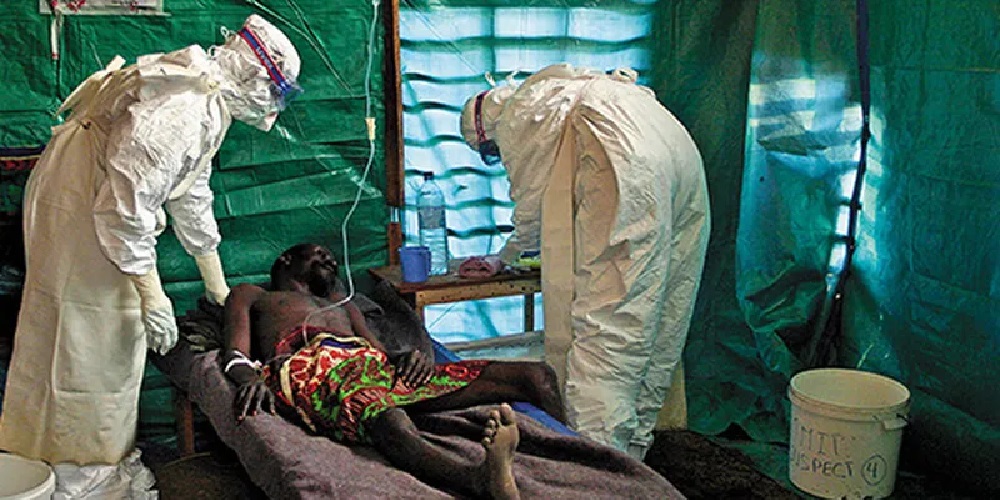
A team from Doctors Without Borders dons protective clothing and equipment as they prepare to treat Ebola patients in an isolation ward of Mbandaka Hospital in Congo. PHOTO: AP


Nigerians have been advised to avoid all but essential trips to Uganda and other countries with confirmed Ebola Virus Disease (EVD) cases.

The advisory followed the January 30 confirmation of the outbreak of the Sudan strain of Ebola virus in Wakiso, Mukono and Mbale City by the Ugandan Ministry of Health.

“Ugandan health authorities are currently tracking 44 contacts to curb further spread,” Idris said.

Advertisement

Swinging into action, the Director-General of the Nigeria Centre for Disease Control and Prevention (NCDC), Dr. Jide Idris said the agency was reinforcing surveillance at entry points, updating emergency response plans and expanding diagnostic capacity in key laboratories.

He however clarified that Nigeria has no recorded cases.

He disclosed that in response to the development, the NCDC has: “Updated its EVD emergency contingency plan. Increased screening at points of entry, particularly international airports.

“Optimised diagnostic capacity for EVD testing in designated laboratories and mobilised Lassa fever testing laboratories, which can be scaled up for Ebola testing if needed.”

Advertisement

The director Director general of NCDC assured Nigerians that proactive steps were being taken to mitigate any risk of an outbreak.

“While there is no immediate cause for panic, we must remain vigilant. The Ebola Sudan strain has no approved vaccine, making early detection and containment critical,” he said.

He urged Nigerians to adhere to the following preventive measures:” Practice good hand hygiene – wash hands regularly with soap and water or use hand sanitisers.

“Avoid contact with persons showing symptoms such as fever, weakness, vomiting, and unexplained bleeding.

Advertisement

“Refrain from consuming bush meat, especially bats and primates.

“Seek immediate medical attention if experiencing symptoms after travelling to an affected country.”

Additionally, he advised health workers to maintain a high index of suspicion, use personal protective equipment (PPE), and report suspected cases immediately.

In the travel advisory yesterday, Dr. Idris noted that while the World Health Organisation (WHO) has not imposed travel restrictions on Uganda, anyone returning from affected areas within the last 21 days who develops fever, muscle pain, sore throat, diarrhea, vomiting, stomach pain, or unexplained bleeding should immediately call 6232 or their state health hotline for assessment.

Advertisement

He advised such travellers to self-isolate and await response teams for further evaluation and possible transport to a treatment center.

The NCDC boss said the public health advisory became necessary because EVD has a 25-90% fatality rate and spreads through contact with infected bodily fluids, contaminated objects, and wild animals like bats, chimpanzees, and monkeys.

Besides, he stressed that while vaccines exist for some strains of the Ebola virus, the approved vaccine for the Zaire strain is not currently available in Nigeria and does not protect against the Sudan strain responsible for the outbreak in Uganda.

Given this, he urged Nigerians to practice good hygiene, avoid bush meat and report symptoms immediately to prevent potential outbreaks.

Advertisement

He also advised healthcare workers to maintain a high index of suspicion, enforce strict isolation for suspected cases, adhere to infection control protocols, and report immediately to health authorities.

Beyond Ebola, Idris said that the country is currently battling outbreaks of Lassa fever, meningitis, diphtheria, Mpox, measles and anthrax.

Idris assured that the NCDC will continue to enhance surveillance, expand diagnostic capacity, and coordinate with global health organisations.

Advertisement

Health

5 infections you can still get even if you use a condom during sex

Published

on

By

ADVERTISEMENT
Zoom Ad
ADVERTISEMENT
Zoom Ad

Condoms are among the most effective tools for reducing the risk of sexually transmitted infections (STIs) and preventing unintended pregnancy. Condoms are recommended because they offer strong protection against many infections spread through semen, vaginal fluids and blood.

However, condoms do not provide 100 per cent protection against every STI. This is because some infections spread through direct skin-to-skin contact and can affect areas that a condom does not cover. As a result, it is still possible to contract certain infections despite using a condom correctly.

Human papillomavirus (HPV)

HPV is the most common sexually transmitted infection globally. It spreads through intimate skin-to-skin contact and can infect areas around the genitals, anus and groin that may not be covered by a condom.

Advertisement

While many HPV infections clear on their own, some types can cause genital warts, while others increase the risk of cervical, anal, penile and throat cancers. Although condoms reduce the risk of transmission, they cannot eliminate it completely.

Genital herpes

Genital herpes is caused by the herpes simplex virus (HSV). It spreads through direct skin contact with an infected area, even when there are no visible sores. Because herpes can affect the skin around the genitals, buttocks or upper thighs, the virus can still spread from areas not covered by a condom. Appropriate condom use lowers the risk but does not completely prevent transmission.

Syphilis

Advertisement

Syphilis is a bacterial infection that often begins with a painless sore. The sore can appear on the penis, vagina, anus, mouth or nearby skin. If the sore is outside the area protected by a condom, the infection can still spread through direct contact during sex.

Early diagnosis and treatment are important because untreated syphilis can lead to serious health complications.

Mpox

Although mpox is not classified as a traditional STI, it can spread during sexual activity through prolonged skin-to-skin contact, contact with body fluids or exposure to infectious skin lesions.

Advertisement

Condoms cannot protect areas such as the thighs, buttocks or other parts of the body where mpox lesions may be present.

Avoiding intimate contact with anyone who has symptoms remains an important preventive measure.

Molluscum contagiosum

Molluscum contagiosum is a viral skin infection that can spread through direct skin contact, including sexual contact in adults. It causes small, smooth, raised bumps that may appear on or around the genitals.

Advertisement

Since these bumps can develop outside the area covered by a condom, transmission is still possible despite condom use.

Continue Reading

Health

Lassa fever: Nigeria records 37 new cases, eight deaths in two weeks

Published

on

By

ADVERTISEMENT
Zoom Ad
ADVERTISEMENT
Zoom Ad

Nigeria recorded 37 new confirmed cases and eight deaths from Lassa fever in epidemiological weeks 29 and 30, taking the cumulative number of confirmed cases in 2026 to 1,000 and fatalities to 237 across 23 States and 116 Local Government Areas (LGAs).

The figures, covering July 13 to 26, 2026, also show a rise in the cumulative case fatality rate (CFR) from 23.5 percent at the end of week 29 to 23.7 percent in week 30, both higher than the corresponding figures recorded in 2025.

In epidemiological week 29, covering July 13 to 19, Nigeria recorded 20 new confirmed cases and two deaths, bringing the cumulative number of confirmed cases to 983 and fatalities to 231.

The CFR stood at 23.5 percent, compared with 18.9 percent recorded during the corresponding period in 2025.

Advertisement

By the end of week 29, the outbreak had spread to 23 States and 114 LGAs, with five States of Ondo, Bauchi, Taraba, Edo and Benue accounting for 86 percent of all confirmed cases.

Ondo recorded the highest proportion of cases at 32 percent, followed by Bauchi at 25 percent, Taraba at 13 percent, Edo at 10 percent and Benue at six percent.

The remaining 14 percent of cases were distributed across 18 other States.

The 21–30 age group remained the most affected, with the median age of confirmed cases standing at 30 years.

Advertisement

Cases were recorded among people aged between one and 93 years, while the male-to-female ratio was 1:0.9.

No new infection among healthcare workers was recorded during week 29.

The situation recorded a further increase in week 30, covering July 20 to 26, when 17 new confirmed cases and six deaths were reported.

The additional cases and deaths pushed the cumulative figures to 1,000 confirmed cases and 237 deaths, while the number of affected LGAs increased from 114 to 116.

Advertisement

The cumulative CFR also rose to 23.7 percent, compared with 18.8 percent during the corresponding period in 2025.

The geographical distribution of the outbreak, as indicated by the report, remained unchanged, with Ondo, Bauchi, Taraba, Edo and Benue still accounting for 86 percent of confirmed cases, at 32 percent, 25 percent, 13 percent, 10 percent and six percent respectively.

Young adults aged 21 to 30 years continued to constitute the most affected age group, with the median age remaining at 30 years.

Unlike the preceding week, the report showed that one new infection among a healthcare worker was recorded in week 30, highlighting the continuing risk of occupational exposure to the disease.

Advertisement

NCDC assured that the National Lassa Fever multisectoral, multi-partner Technical Working Group will continue to coordinate the national response, including surveillance, containment, environmental sanitation campaigns and healthcare logistics.

The agency urged preventive measures aimed at reducing exposure to Mastomys rodents, the primary reservoir of Lassa fever, as well as preventing human-to-human transmission.

Residents were advised to maintain clean surroundings, dispose of refuse properly, eliminate conditions that attract rodents and store food in rodent-proof containers.

They were also advised to seal openings through which rodents can enter homes and avoid handling or consuming wild rodents.

Advertisement

According to the agency, for suspected cases, early detection, immediate isolation and appropriate use of personal protective equipment by healthcare workers and caregivers remain critical to limiting further transmission.

Continue Reading

Health

NMA: 1, 200 doctors serving estimated nine million Ogun residents

Published

on

By

ADVERTISEMENT
Zoom Ad
ADVERTISEMENT
Zoom Ad

The Nigerian Medical Association (NMA) has commended Governor Dapo Abiodun for approving and commencing the payment of the professional allowance table (PAT) and specialist allowance for medical doctors.

The state Chairman, Luqman Ogunjimi, stated this at a news conference heralding the 2026 Annual General Meeting and Scientific Conference of the association in Abeokuta on Thursday.

Mr Ogunjimi described the approval as a demonstration of Mr Abiodun’s commitment to improving doctors’ welfare and strengthening healthcare delivery in the state.

He said the implementation of the professional allowance table followed the approved federal government structure, while the specialist allowance took effect from July.

Advertisement

According to him, the development will boost the morale of medical practitioners and enhance the delivery of quality healthcare services to residents of the state.

He expressed appreciation to Mr Abiodun for what he described as responsive and worker-friendly leadership in addressing the welfare of medical doctors.

He reaffirmed the association’s commitment to sustaining a cordial working relationship with the government in addressing other welfare issues and advancing healthcare services across the state.

He, however, raised fresh concerns over the shortage of medical doctors in the state.

Advertisement

He said only about 1,200 doctors were currently serving an estimated population of nine million people in the state.

“This goes to show that there is currently a ratio of one doctor to about 7,500 residents in the state. Notwithstanding this shortage, the few doctors that have also decided to stay behind and shun the temptation of emigrating abroad are daily faced with unwarranted attacks.

“If you have an estimated population of about nine million in Ogun State and we have only 1,200 doctors working in the state, you know this is a far cry. The 1,200 doctors remaining have decided to stay back to give back to their country.

“It is important for the government and the public to prioritise the welfare of healthcare workers who remained in the state despite the manpower shortage,” he said.

Advertisement

The NMA chairman estimated that the state required between 5,000 and 10,000 doctors to provide adequate healthcare services.

“If we have between 5,000 and 10,000 doctors in Ogun State, it will not be too bad. But those 1,200 doctors who are still here are trying their best,” Mr Ogunjimi said.

(NAN)

Advertisement
Continue Reading

Trending

Copyright © 2024 Naija Blitz News