News
FEC approves N1.04t for Works, FCT projects
- /home/naijuinz/public_html/wp-content/plugins/mvp-social-buttons/mvp-social-buttons.php on line 27
https://naijablitznews.com/wp-content/uploads/2024/07/FEC2-1000x549.jpg&description=FEC approves N1.04t for Works, FCT projects', 'pinterestShare', 'width=750,height=350'); return false;" title="Pin This Post">
- Share
- Tweet /home/naijuinz/public_html/wp-content/plugins/mvp-social-buttons/mvp-social-buttons.php on line 72
https://naijablitznews.com/wp-content/uploads/2024/07/FEC2-1000x549.jpg&description=FEC approves N1.04t for Works, FCT projects', 'pinterestShare', 'width=750,height=350'); return false;" title="Pin This Post">
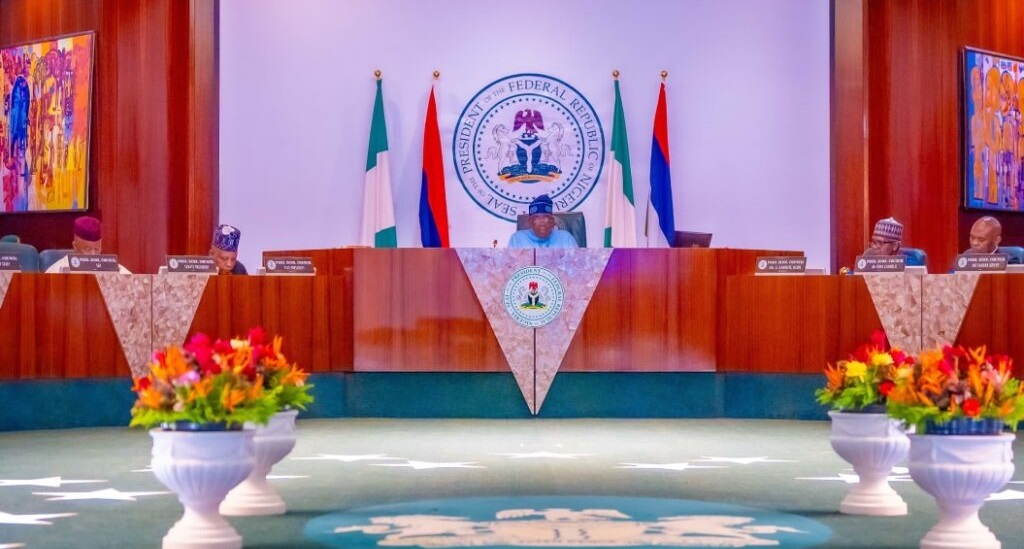
The Federal Executive Council (FEC) has approved N1.04 trillion for critical infrastructure projects nationwide, including major roads and bridges across states and key developments in the Federal Capital Territory (FCT), Abuja.

The approvals, granted during the FEC meeting presided over by President Bola Ahmed Tinubu at the State House, Abuja, yesterday, cover 10 major projects under the Federal Ministry of Works and five significant others in the FCT.
For the Federal Ministry of Works, Council allocated N885 billion for the building and rehabilitation of key highways and bridges across the country.

Minister of Works, David Umahi, announced the approvals, highlighting the government’s commitment to durable road infrastructure, particularly through concrete construction.
One of the largest projects approved is the rebuilding of three sections of the Lokoja-Benin Road, a crucial trade corridor.
The project will be executed in concrete, with Section I (Obajana to Benin) costing N64 billion, Section II (Auchi to Edo) at N110 billion, and Section III (Benin Airport to Edo) at N131 billion.
The total cost for this projects stands at over N305 billion.
Another major project is the Lagos-Calabar Coastal Highway, which will span 130 kilometers of dual carriageway from Calabar through Akwa Ibom.
The highway, valued at N1.334 trillion, has been divided into multiple sections for phased construction, with ongoing work already progressing in Lagos and Ogun states.
The minister also said the Abuja-Kano Highway has been restructured, with N252 billion allocated to its development.
Section 1 extends from the FCT boundary to Niger State with an additional 5.71 kilometers, while Section 3 in Kano State has an expanded scope of 17 kilometers.
The 118-kilometer road will be built using concrete and will feature solar lighting installations.
FEC also approved the reconstruction of access roads to the Second Niger Bridge in Delta and Anambra states.
The Delta section will be constructed in concrete for N470.9 billion, while the Anambra section will cost N148 billion.
Other key approvals include N22 billion for the Onitsha-Owerri Expressway, N18 billion for the Musasa-Jos-Kaduna Road, and N12.75 billion for the rehabilitation of the Abia-Enugu road.
In Lagos, N3.571 billion has been approved for a comprehensive structural evaluation of the Third Mainland Bridge and Carter Bridge.
The assessment will focus on examining underwater piles and determining solutions to prevent deterioration.
Another crucial approval is the continuation of the Lagos-Ibadan Expressway (Phase II, Section I), with a budget of N195 billion.
Umahi reaffirmed the government’s commitment to cost-effective infrastructure, emphasising that transitioning major roads to concrete construction will ensure greater durability and long-term savings.
“By adopting concrete for key sections, we have saved significant costs compared to previous projections,” he said.
He also addressed concerns over delays and road quality, particularly on the Abuja-Lokoja Road, saying that contractors have been directed to fix faulty sections.
“We are not accepting excuses such as high temperatures for road failures. The affected sections are being redone with proper oversight,” he added.
Council has also approved N159.5 billion for five major infrastructure projects aimed at improving road networks, transportation, and estate access across the FCT.
Minister of State for the FCT, Dr Mariya Mahmoud Bunkure, broke the news after the FEC meeting. She emphasised the government’s commitment to enhancing mobility and socio-economic activities in the capital city.
Among the key projects approved is the construction of a bus terminal at Mabushi, located in Cadastral Zone Plot B06, Phase II of the Federal Capital City.
The N30.97 billion contract was awarded to Setraco Nigeria Limited and is expected to be completed in 18 months.
The government has also allocated N62.5 billion for the construction of Arterial Road N1, which will connect Wuye District to Ring Road II.
The project, awarded to Arab Contractors Nigeria Limited, is expected to be completed within 20 months.
Another major approval is the construction of the Kuje-Gwagwalada dual carriageway, a key route connecting satellite towns.
The contract, valued at N7.5 billion, was awarded to Gilmo Engineering Nigeria Limited.
The Council also approved N26.87 billion for the rehabilitation of the Old Keffi Road, a 15-kilometer stretch linking Kado Village to Dei-Dei and connecting to the Outer Northern Expressway Junction.
The contract was awarded to Lubric Construction Company Limited and is expected to be completed in 18 months.
Additionally, FEC approved N31.66 billion for the building of an access road to the Renewed Hope Cities and Estate Project in Karsana West District, Abuja.
Lubric Construction Company Limited will handle the project, which is also scheduled for completion within 18 months.
Bunkure emphasized that these projects will significantly improve connectivity and ease transportation within the FCT, benefiting both residential and commercial areas.
“The projects will enhance mobility, boost socio-economic activities, and provide improved access to residential and commercial developments within the FCT,” she said.
She added that the contracts would be closely monitored to ensure timely completion and adherence to quality standards.

News
FCTA Threatens Sanctions Against Hotels, Event Centres Hosting Illegal Groups
By Gloria Ikibah
The Federal Capital Territory Administration (FCTA) has warned owners of hotels, event centres and other public facilities in Abuja against allowing their premises to be used by unlawful organisations, declaring that violators risk losing their land titles.
The warning was contained in a statement issued on Friday by Lere Olayinka, Senior Special Assistant on Public Communications and Social Media to the Minister of the FCT, Nyesom Wike.
According to the administration, land allocations within the FCT are meant strictly for lawful activities, stressing that authorities would no longer tolerate the use of public facilities for gatherings linked to illegal groups.
The statement read: “In view of the need to further ensure the security of lives and properties in the FCT and sustain the efforts of security agencies in this regard, usage of Event Centres, Hotels and other public buildings will now be closely monitored.
“This is aimed at ensuring that they are not used by illegal organizations for gatherings capable of disrupting the peace of the nation’s capital.”
The FCTA also directed owners and operators of such facilities to properly verify the identities and legitimacy of organisations seeking to rent their venues before approving bookings.
“Owners of these facilities are therefore urged to take cognizance of the legality of organizations seeking to use their facilities and the purpose before letting them out,” the statement added.
The administration further warned that political activities in the build-up to elections must only involve recognised party leadership approved by the Independent National Electoral Commission (INEC).
“For instance, in this political season, owners of Event Centres and Hotels in particular must ensure that they only deal with Independent National Electoral Commission (INEC) recognised leadership of political parties in respect of the use of their facilities, and proper records of transactions must be kept.
“Failure to comply with this directive will result to revocation of the title documents such properties,” the statement further read.
The FCTA maintained that failure to comply with the directive will attract severe consequences.
News
Ebola Alert! FG flags 21 states on lockdown watch, Lagos, FCT, Rivers, Akwa Ibom, Borno, others in high risk zones
The Nigeria Centre for Disease Control and Prevention (NCDC) has placed several states on high Ebola preparedness alert after a fresh risk assessment classified Nigeria’s chances of importing the deadly disease as high amid regional outbreaks.
Dr Jide Idris, Director-General of the NCDC said this in a Thursday statement, stressing that Nigeria had not yet recorded any confirmed Ebola Virus Disease case linked to the outbreak.
He explained that the World Health Organization’s Public Health Emergency of International Concern declaration and increasing Ebola cases in the Democratic Republic of Congo and Uganda required intensified surveillance and preparedness activities across Nigeria immediately.
Idris stated that the NCDC conducted a dynamic risk assessment to guide anticipatory and response measures, concluding that Nigeria faced a high Ebola importation risk because of international travel and regional population movement.
He added that uncertainty surrounding the outbreak’s magnitude and the possibility of delayed recognition were heightened because Ebola symptoms closely resembled common endemic diseases such as malaria and Lassa fever in Nigeria.
According to him, all states and the Federal Capital Territory must maintain Ebola preparedness, although readiness efforts should reflect varying importation and transmission risks identified through the NCDC’s recently developed preparedness classification system.
The agency categorised Lagos, the FCT, Rivers, Kano, Enugu, Borno, Akwa Ibom, Cross River, Taraba, and Adamawa as high-risk states because of international airports, porous borders, and active trade or travel routes.
Idris also identified Ogun, Nasarawa, Kaduna, Plateau, Kogi, Niger, Jigawa, Katsina, Bauchi, Ebonyi, Abia, and Bayelsa as moderate-risk states requiring sustained preparedness efforts against possible Ebola importation and transmission threats.
He said that the WHO declaration underscored the seriousness of the regional threat and highlighted the urgent need for Nigeria to strengthen preparedness measures before detecting any suspected Ebola case domestically.
The NCDC boss explained that national preparedness efforts aimed to ensure every state and the FCT could quickly detect, contain, and respond to suspected Ebola cases while protecting health workers and sustaining healthcare services.
Idris reiterated that Nigeria currently had no confirmed Ebola case linked to the outbreak but warned that increasing regional transmission significantly elevated the country’s importation risk because of population movement and extensive travel networks.
He explained that airports, seaports, porous land borders, informal crossings, trade routes, and overlapping Ebola symptoms with malaria and Lassa fever increased the likelihood of delayed recognition and possible disease spread nationally.
According to him, health authorities in the Democratic Republic of Congo and Uganda had reported 1,077 suspected Ebola cases and 247 deaths, while people aged between 14 and 45 years remained most affected.
He said the outbreak’s case fatality rate stood at 24.6 percent, while both regional and national Ebola risks remained high because of continuing transmission and the absence of approved vaccines for the outbreak sstrain.l
Idris stressed that no approved vaccines or specific treatments currently existed for Bundibugyo Ebola virus disease, making rapid public health interventions critical for containing infections and preventing widespread transmission across vulnerable communities.
He explained that outbreak control depended largely on early detection, prompt isolation of suspected and confirmed cases, strict infection prevention measures, effective contact tracing, safe burials, community engagement, and strong surveillance systems nationwide.
The NCDC Director-General disclosed that suspected Ebola cases had also been reported in India, while Canada suspended travel applications from residents of the DRC, Uganda, and South Sudan because of the outbreak situation.
He added that Uganda recently announced border closure measures, while Nigeria faced significant implications because the current Bundibugyo Ebola virus outbreak lacked licensed vaccines or approved targeted therapeutics for treatment and prevention.
According to him, existing Ebola vaccines and monoclonal antibody treatments primarily targeted the Zaire ebolavirus strain and should not be relied upon as effective countermeasures against the current Bundibugyo outbreak affecting neighbouring ccountries.l
Idris clarified that Ebola Virus Disease was not airborne, explaining that transmission occurred through direct contact with blood, body fluids, contaminated materials, or infected animals associated with symptomatic or deceased infected persons.
He said the Ebola incubation period ranged from two to 21 days, making recent travel and exposure history within the preceding three weeks essential when assessing any suspected infection or potential outbreak case.
According to him, early Ebola symptoms often appeared non-specific and included fever, fatigue, muscle pain, headache, sore throat, vomiting, diarrhoea, abdominal pain, rash, hiccups, unexplained bleeding, bruising, and signs of shock.
Idris warned health workers against waiting for bleeding before suspecting Ebola in patients presenting compatible symptoms alongside relevant travel or exposure histories connected to affected countries experiencing active transmission of the vvirus.l
He added that the absence of strain-specific vaccines and approved therapeutics for Bundibugyo Ebola virus disease made early, aggressive, and optimised supportive care especially important in improving patient survival and treatment outcomes significantly.
The NCDC boss explained that clinical management should include rapid assessment, fluid and electrolyte management, glucose monitoring, treatment of malaria or bacterial co-infections, symptom control, shock management, and humane care in isolation facilities.
He disclosed that the NCDC had activated its national Emergency Operations Centre, currently operating in alert mode while coordinating preparedness activities with relevant federal and state institutions across the country to strengthen response capacity.
According to him, state governments and Commissioners for Health must ensure immediate operational readiness across public and private health systems to effectively manage any suspected Ebola case and prevent possible widespread community transmission.
Idris emphasised that preparedness measures should prioritise early detection, immediate isolation, supportive care, infection prevention and control, safe sample handling, contact tracing readiness, referral systems, workforce protection, and adequate medical countermeasures nationwide.
He urged commissioners to provide leadership for coordinated Ebola readiness efforts across their respective states and the Federal Capital Territory, assuring them of continued technical guidance and national coordination support from the NCDC.
The Director-General also requested commissioners to activate state public health coordination structures for Ebola preparedness and conduct rapid risk assessments focusing on population movement, high-density settings, and facilities receiving suspected cases.
He further advised states to engage public and private healthcare providers to ensure early suspicion, safe separation of suspected cases, immediate reporting through approved channels, and identification of functional isolation or holding facilities.
Idris stressed the importance of strengthening facility readiness for screening, infection prevention, ambulance transfers, safe sample movement, decontamination, and waste management while ensuring frontline workers received adequate protection and psychosocial support during operations.
He also urged intensified traveller monitoring and surveillance in states with airports, seaports, transport hubs, land borders, and migrant corridors while encouraging calm public communication to discourage stigma and promote verified information sharing.
The NCDC boss directed states to maintain essential health services without disruption and submit readiness updates within seventy-two hours while immediately reporting suspected cases, high-risk exposures, unusual febrile clusters, or major preparedness gaps.
(Credit: NAN)
News
JUST IN: Trouble looming as North Central APC Group Wants Nat’l Chairman,Yilwada to Resign
Trouble seems to be looming as the North-Central Forum of the All Progressives Congress (APC) has called on the party’s National Chairman, Prof. Nentawe Yilwatda, to resign within two weeks over allegations of irregularities and monetization of the party’s recently concluded primary elections.
The group accused the Yilwatda-led National Working Committee (NWC) of mishandling the State Assembly, National Assembly, governorship and presidential primaries, claiming that the process was manipulated in favour of preferred aspirants.
In a statement issued on Friday by the Forum’s National Chairman, Alhaji Saleh Zazzaga, the group alleged that results were altered to favour candidates loyal to party officials, while some aspirants who appeared likely to win were screened out of the contests.
According to the Forum, concerns had earlier been raised during the primaries over what it described as the “commercialization” of the exercise. It added that more than half of APC members were dissatisfied with the conduct of the elections.
The group insisted that members of the NWC should be held accountable for allegedly violating the party’s constitution and guidelines.
“We are issuing a two-week ultimatum to the national chairman to resign because of incompetence, violation of the party’s constitution, monetization of the just concluded party primaries and changing the results when it favoured those perceived as not in his camp,” the statement said.
The Forum further alleged that party officials manipulated outcomes of the primaries across the country using their positions within the party structure.
As part of its claims, the group pointed to controversies surrounding the APC presidential primary election results announced by the Chairman of the Presidential Primary Election Committee, former Senate President Pius Anyim.
Anyim had declared President Bola Tinubu winner of the presidential primary with 10,999,162 votes, while his challenger, Stanley Osifo, secured 16,503 votes.
However, the figures have since generated public debate following allegations that the numbers were inflated.
The North-Central APC Forum argued that the results did not correspond with the party’s official membership data.
“The party has eight million registered voters but when they released the result of Mr President in the presidential primary they wrote more than 10 million votes,” the statement said.
“The guidelines stated that only those that are registered are going to vote. So this means that, all over the country, what they did was selection of candidates, not election.”
The Forum also lamented that the controversies surrounding the primaries had weakened the ruling party, leading to defections by aggrieved members.
It cited the resignation of former Deputy Senate President Ovie Omo-Agege from the APC after losing the Delta Central senatorial primary. Omo-Agege has since joined the Nigeria Democratic Congress (NDC), where he was reportedly granted a waiver to contest the election.
The group also referenced the defection of Mustapha Bala Dawaki, a former Chief of Staff to the APC national chairman, who left the party after losing the Dawakin Kudu/Warawa Constituency return ticket in Kano State.
According to the Forum, Dawaki’s resignation further highlighted growing dissatisfaction within the party ranks.
The Forum warned that it would institute legal action against Yilwatda if he failed to resign before June 12, Nigeria’s Democracy Day.
“It is because of these infractions that we are asking the national chairman to resign before two weeks, or we will sue him to court,” the statement added.
The group also faulted the party leadership for allegedly deploying inexperienced officials to supervise the primaries in several states, which it said contributed to the crisis currently rocking the APC.
-
Metro18 hours agoBandits hold abducted Niger State medical doctor despite N20m ransom payment
-
Politics18 hours agoDickson Welcomes Omo-Agege, Ochei to NDC, Grants Senatorial Primary Waivers
-
News17 hours agoIgnore ‘Illogical’ Election Results In Circulation, We’ll Hold Our Primaries Today – NDC
-
Sports17 hours agoUCL final: Thierry Henry to present trophy as Arsenal face PSG
-
Sports17 hours agoSinner Stunned In Paris, Crashes Out Of French Open
-
Entertainment17 hours ago‘I have checked out of marriage,’ says Regina Daniels
-
News17 hours agoConversion Rumours Untrue, President Tinubu Remains A Muslim-Aide
-
News17 hours ago‘Over 80% of ISIS operations now in W’Africa’

Warning: Undefined variable $user_ID in /home/naijuinz/public_html/wp-content/themes/zox-news/comments.php on line 49
You must be logged in to post a comment Login