


Connect with us

Foreign

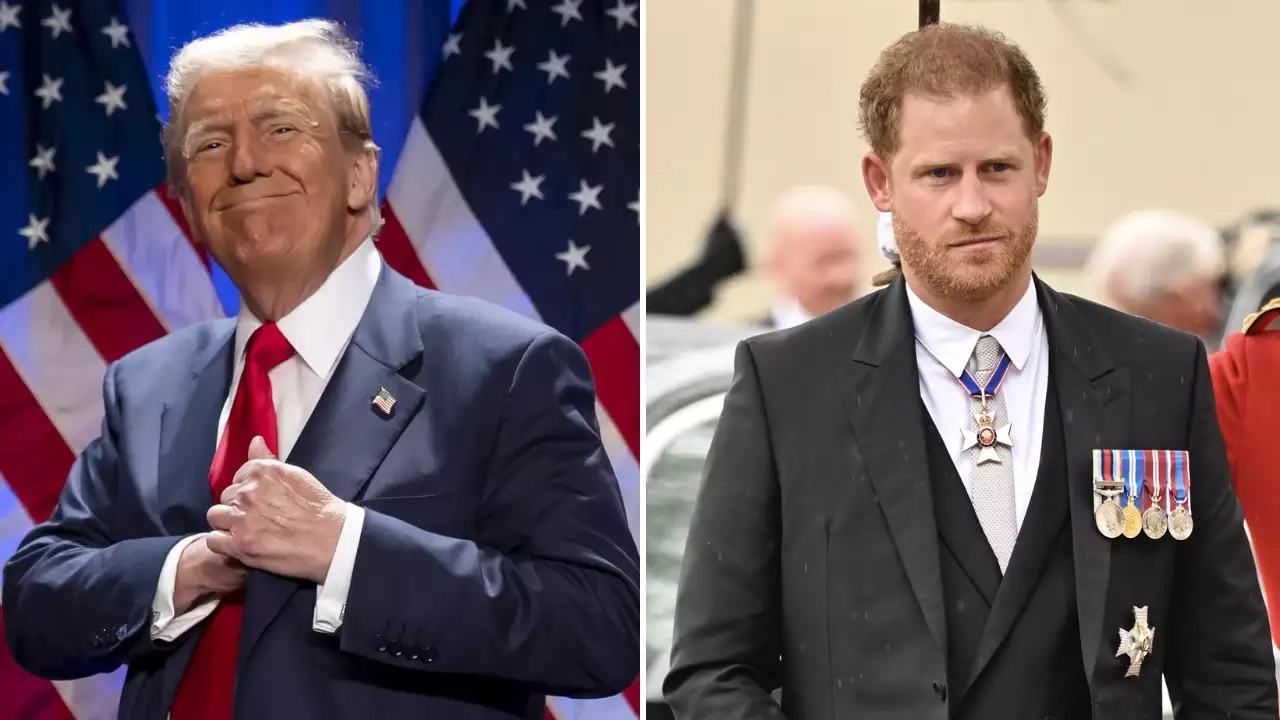
Deportation: Donald Trump opens up on Prince Harry

Published

on

ADVERTISEMENT
Zoom Ad
ADVERTISEMENT
Zoom Ad

Prince Harry can breathe freely in Montecito, because President Donald Trump has ruled out deporting the self-exiled British royal.

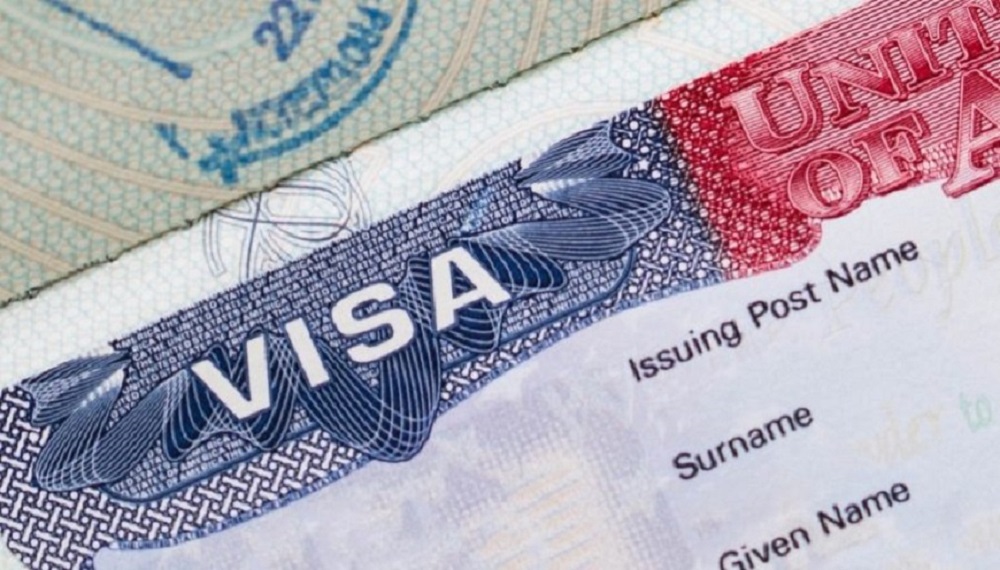
Harry’s immigration status is the subject of litigation in Washington DC, with the Heritage Foundation alleging that he may have concealed past illegal drug use that should have disqualified him from obtaining a US visa.

But the president told The New York Post Friday that he isn’t interested in throwing Harry out of the country.

“I don’t want to do that,” he said. “I’ll leave him alone. He’s got enough problems with his wife. She’s terrible.”

Advertisement

Trump took the opportunity to praise Harry’s estranged older brother William, with whom he met privately in Paris in December during the reopening ceremony of Notre-Dame Cathedral.

“I think William is a great young man,” he said.

The Duke of Sussex and his liberal American wife Meghan Markle have voiced disapproval of Trump over the years, including one outburst in which the Duchess called the president “divisive” and “misogynistic”.

Trump in turn has described Harry as “whipped” by Markle. “I think poor Harry is being led around by the nose.”

Advertisement

Heritage cited Harry’s autobiography “Spare” — in which he admitted to using cocaine, cannabis and psychedelics — when it sued the Department of Homeland Security last year to force the release of his US visa records.

“Anyone who applies to the United States has to be truthful on their application, and it is not clear that is the case with Prince Harry,” Heritage’s Nile Gardiner told the London Daily Telegraph.

The conservative think tank suggests Harry was given preferential treatment by the Biden administration after he and Meghan moved to California in 2020 following their acrimonious “Megxit” split from the royal family.

Advertisement

Foreign

American Man Arrested, Sentenced to 10 Years After Using ChatGPT to Plan Bank Robbery Attack

Published

on

By

ADVERTISEMENT
Zoom Ad
ADVERTISEMENT
Zoom Ad

A 23-year-old Omaha, Nebraska man who used ChatGPT to plan a bank robbery has been sentenced to 121 months in federal prison after he robbed a bank at gunpoint and threatened two employees with death.

Deron Lewis-Payne was sentenced on August 13, 2026, according to the United States Attorney’s Office for the District of Nebraska in a statement published on August 19 and cited by our correspondent on Monday.

The US Justice Department said Lewis-Payne received 37 months for bank robbery and another 84 months for brandishing a firearm during a crime of violence, with the sentences to run consecutively. He will also serve five years of supervised release after his imprisonment.

Advertisement

Advertisement

The incident occurred on February 10, when Lewis-Payne entered i3Bank in Omaha carrying a black semi-automatic handgun and demanded money from two employees.

“He pointed the handgun at the tellers and told them he would kill them if they did not comply,” the Justice Department said, adding that he ordered the employees to empty their cash drawers and warned them “not to include any dye packs with the cash.”

The tellers complied, allowing Lewis-Payne to escape with approximately $`9,175 in cash.

Investigators later used surveillance footage from the bank and nearby residential cameras to identify the suspect and the vehicle allegedly used in the robbery.

Advertisement

“i3 Bank surveillance captured his unmasked face and distinctive outfit, including red Nike slides,” the department said.

It added that residential surveillance cameras also captured the vehicle, including its registration plate and “distinctive features to include a toolbox and particular rust spots.”

The investigation took another turn after officers examined Lewis-Payne’s phone, with investigators finding that he had used ChatGPT while preparing for the robbery.

“Officers examined the contents and determined Lewis-Payne used ChatGPT to plan the robbery,” the department said.

Advertisement

According to the Justice Department, his queries included advice on “law enforcement response times,” how to “strip and repair a Llama Mini-Max .45 handgun” and how to obtain ammunition despite being a felon.

His Google Maps history also showed that he had most recently searched for directions to i3Bank.

After the robbery, investigators said Lewis-Payne went on a shopping spree at Westroads Mall, using cash to purchase shoes and clothing.

When officers later located him near one of his residences, he fled, “abandoning banded cash in his wake,” according to the department.

Advertisement

A search of his residences uncovered another currency band, the vehicle allegedly used in the robbery and most of the clothing he wore during the incident, including the red Nike slides.

Lewis-Payne admitted to driving the vehicle but denied participating in the robbery.

The handgun used in the robbery was never recovered, while investigators recovered $2,397 of the $9,175 stolen from the bank.

The case was investigated by the Federal Bureau of Investigation. The US Justice Department noted that there is no parole in the federal prison system.

Advertisement
Continue Reading

Foreign

Canada insists on Dollar for Dollar tariffs after US trade talks failed

Published

on

ADVERTISEMENT
Zoom Ad
ADVERTISEMENT
Zoom Ad


Canada has suspended trade negotiations with the United States after talks broke down, with Prime Minister Mark Carney warning that Ottawa will respond to new US tariffs with dollar-for-dollar measures.

The decision came shortly before a deadline for reaching a deal, following weeks of negotiations aimed at easing tensions between the two major trading partners.

Mr Carney said significant progress had been made, but it was not enough to meet Canada’s objectives. He criticised last-minute changes to the US proposals, describing them as unfair and economically damaging.

Advertisement

Last-minute changes in the US proposed terms were unfair, uneconomic, and called into question the reliability of any deal,” he said.

The breakdown means a new wave of US tariffs will now affect a range of Canadian products. The 50% levies apply to about 5% of Canadian exports, including wine, dairy products, cement, clothing and hockey equipment.

The new tariffs come on top of existing US duties on Canadian steel, aluminium, cars and lumber.

Canada sends about 70% of its exports to the US, making the country particularly vulnerable to a prolonged trade dispute.

Advertisement

Mr Carney said Canada would impose reciprocal tariffs on American goods, matching the value of the US measures “dollar for dollar”.

The announcement marks a sharp change in tone after officials from both countries had expressed optimism earlier in the week that a trade agreement was close.

US Trade Representative Jamieson Greer accused Canada of backing away from commitments reached during negotiations.

Tonight, Canada declined to finalise the trade deal under the terms agreed earlier this week,” he said.

Advertisement

The negotiations had reportedly included discussions over reducing US tariffs on Canadian steel and aluminium from 50% to 25%, while tariffs on Canadian vehicles could have fallen from 25% to 15%.

In return, the US had sought concessions from Canada, including greater access for American dairy products and the removal of restrictions on US alcohol sales in Canadian provinces.

Canadian businesses have warned that the tariffs could cause significant economic damage.

The Canadian Chamber of Commerce described the new measures as a “body blow to North American competitiveness”, warning that smaller exporters could struggle to maintain orders, payrolls and jobs.

Advertisement

Economists have estimated that Canada could lose about 90,000 jobs if the tariffs remain in place, while financial analysts have projected that the measures could reduce Canada’s gross domestic product by between 0.3% and 0.6%.

Ontario Premier Doug Ford backed the federal government’s response, calling for “tariff for tariff, dollar for dollar”.

The latest dispute adds to growing tensions between the two countries since US President Donald Trump returned to office and introduced a broad programme of tariffs.

Advertisement
Continue Reading

Foreign

Tupac Murder Trial: Witness Tells Duane Davis He Does Not Want to Send Him to Prison

Published

on

By

ADVERTISEMENT
Zoom Ad
ADVERTISEMENT
Zoom Ad

The murder trial of Duane “Keffe D” Davis, who is accused of orchestrating the 1996 killing of legendary rapper Tupac Shakur, has taken an emotional turn after a former associate of Death Row Records co-founder Suge Knight appeared reluctant to provide testimony that could further implicate Davis.

James McDonald, a former associate of Knight and a former security figure at Club 662 in Las Vegas, was called to testify during the trial. However, from the beginning of his testimony, McDonald made it clear that he was uncomfortable discussing events from his past and did not want his evidence to contribute to Davis being sent to prison.

McDonald described himself as a hostile witness and told attorneys that he had only appeared in court because he had been subpoenaed. He indicated that he had moved on from the lifestyle he lived decades ago and was reluctant to revisit events connected to the violence and rivalries of the 1990s.

During questioning, McDonald became increasingly frustrated when attorneys asked him about tensions between different factions in Compton following the shooting of Tupac. He repeatedly declined to answer some questions, saying that providing certain information could hurt Davis.

Advertisement

At one point, McDonald directly addressed Davis in court and said he did not want to send him to prison, despite acknowledging that the two men did not like each other.

The exchange highlighted the difficulty prosecutors face in presenting evidence about a case that dates back nearly three decades. Several people who were connected to the events surrounding Tupac’s death have been reluctant to discuss what they knew, leaving investigators and prosecutors to rely on available testimony and other evidence.

McDonald also told the court that he had changed his life. He said he was now focused on raising his grandchildren and teaching them not to follow the lifestyle he had previously lived.

The witness acknowledged that he was aware of events and tensions that took place in the aftermath of Tupac’s shooting, but he maintained that he did not want to reopen old conflicts.

Advertisement

McDonald was also questioned about the relationship between Death Row Records figures and members of rival groups. He described the atmosphere in Compton after Tupac was shot as tense but indicated that the conflict was primarily connected to individuals rather than something he personally wanted to continue discussing.

He further rejected suggestions that former Death Row security chief Reggie Wright Jr. had coordinated Tupac’s killing, describing such a possibility as impossible. McDonald said he had known Wright for many years and did not believe he was responsible for the rapper’s death.

McDonald also confirmed that he was not present when Tupac was shot in Las Vegas on September 7, 1996. He said he learned about the shooting afterward and recalled that people initially believed Tupac might survive.

The testimony comes as prosecutors attempt to establish their case against Davis, who has pleaded not guilty to the charge. Prosecutors allege that Davis played a role in organising the shooting following an earlier confrontation involving his nephew, Orlando Anderson.

Advertisement

Davis has previously acknowledged being present in the vehicle from which the shooting was carried out, but his defence has argued that statements he made about the incident were not reliable and should not be treated as an admission of guilt.

Tupac was shot in a drive-by attack in Las Vegas in September 1996 and died several days later. His death became one of the most enduring mysteries in music history, with the investigation remaining unresolved for decades.

Davis was eventually arrested and charged in connection with the case years later. His trial has now brought renewed attention to the circumstances surrounding Tupac’s death and the people who were connected to the events at the time.

McDonald’s testimony demonstrates the challenges involved in revisiting a case that has remained unresolved for almost 30 years. His reluctance to provide certain answers also reflects the complicated relationships and history surrounding the people involved.

Advertisement

The trial remains ongoing, and the allegations against Davis have not been established as fact. The court will ultimately determine whether the prosecution has presented sufficient evidence to prove the charge against him.

Continue Reading

Trending

Copyright © 2024 Naija Blitz News