Connect with us

News

Hiccups in 2023 Kogi guber polls won’t stop me to re-contest-Braimoh insists

Published

on

ADVERTISEMENT
Zoom Ad
ADVERTISEMENT
Zoom Ad

…declares it’s a cardinal assignment

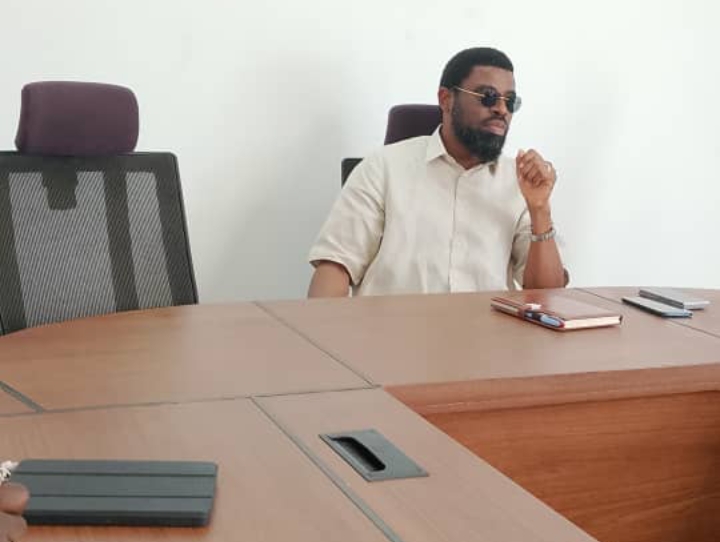
The Action Alliance, AA’s candidate in the 2023 governorship election in Kogi State, Otunba Olayinka Braimoh, has vowed that despite the setbacks encountered in the polls, contesting again is a cardinal assignment.

Braimoh, who said his desire to liberate his people from the shackle of poverty and underdevepment would propel him to step into the ring again, reeled out his agenda to make life comfortable for them.

This was as he lamented the frustration he encountered in his 2023 election outing, recalling with disappointment that those he had set out to rescue ,turned against him when unlike other contestants, he refused to buy their consciences with money on election’s day.

Advertisement

Reaffirming his stand not to engage in vote-buying, the entrepreneur disclosed that he would engage the electorate through conversations this time to change their mindset about engaging in the act of vote-buying or Vote-selling.

Speaking to some journalists in Abuja, on Thursday, on his political experience so far, Braimoh,who challenged his loss to Governor Usman Ododo up to Supreme Court, said he has taken the disappointment in good fate. However, he said he remains undaunted in his quest to vie for the position again with a view to turning the state to what the people have been yearning for since its creation.

He reaffirmed his desire to reposition Kogi State through an agenda he referred to as STAT- Solid minerals;Tourism; Agriculture, and Trade,respectively.

Reflecting on his electoral engagement, Braimoh recalled that he undertook indepth campaigns across the state, giving his candidature high prospect in the election.
Regrettably, he recalled that his staunch principle against engaging in vote-buying turned the people against him.

Advertisement

He said, “For me,I put in my best, there was no local government that I bluffed over,we covered everywhere in the entire state and campaigned the way we should have campaigned. But however, on getting to the field, I realised that few days to elections, people started asking me where is the push money. And I said ‘I told you I’m not buying votes.’

“I had a coordinator that said sir,if you are not going to give us money for push,I would not even go out of my house. Push is vote-buying money. It’s vote-buying money they called push money. They told me that if I would not release money for push,they will not leave their houses. I thought it was a joke and I told them that ‘you know what, I’m not going to buy vote.’

He, however, exonerated the people from their actions, blaming the development on what he referred to as abnormal situation they find themselves in.

“But I realised after the election that if people are living in abnormal situation and you are expecting them to think normally, would you not have to re-examine and realise the situation,because people living in an abnormal situation, do we expect them to think normally?

Advertisement

“So,on election day, as reported, they were distributing fabrics, distributing money, and all of that and I see people saying ‘you know what, even if this is going to last me for two or three days, after all, I know that in the next three to four years, they will not do anything again,let me take this one first. ”

He continued:”We had our call centres, we were calling people and a lot of feedbacks from the call centres,we were talking to people and they would say ‘are you ready to buy my vote? If you are ready to buy my vote, I would vote for you. We know you are good but how much are you going to give me? They have been promising us every four years and nothing, if I know I’m going to have this N10,000 for the next four years, I’m okay with it.’

Describing the situation as ‘a sad story”, he said “but the reality is that people are living in abnormal situation and thinking normally is difficult.”

“That is one of the things that I learnt from that outing, ” he said.

Advertisement

He questioned the authenticity of votes claimed for the All Progressives Congress,APC candidate by the Independent National Electoral Commission, INEC.

“How can one become a governor with results from only three local governments? But we leave that to the judiciary in terms of interpreting the laws. For the INEC, you have 142,000 registered voters from a local government and you are recording over 138,000 votes for a particular candidate! Here,you are talking of 97 percent and there were clear- cut differences in terms of accredited voters and the votes they recorded. But of course, judiciary would latch on technicality and just throw it away. And that was what happened.

” I followed the election all the way to Supreme Court, I challenged the election to Supreme Court and when the Supreme Court ruled, I said okay, after Supreme Court, what do you have to do? You go to supreme being. I just said well,we will move on and go another day.

” It’s not a lifetime office for anybody, so if you are there, it’s four years and that is 48 months.”

Advertisement

Asked if he would contest again, considering his firm stand against vote-buying that has gradually entered the nation’s politics, he responded, “why not? ”

How he intends to navigate his way through this time, Braimoh explained:”We will now engage the minds of our people through conversations, for them to begin to see the possibility because if you cannot see forward, you can’t move forward. The reason for those actions of vote-buying on the part of the electorate is because they have lost hope. They have lost hope in the fact that we can’t have an electoral process that is devoid of riggings and manipulations.In fact, an average person would tell you that ‘don’t waste your money, that the judiciary would not give judgement in favour of you,they will favour whoever is in the ruling party.

“But for me,are we going to stay where we are and say to ourselves, that we are helpless while really we are not helpless? Are we going to say we are helpless and we are not going to do anything about the situation? For every challenge, there is a solution. And a challenge that you don’t confront, how can you conquer? So,it’s a challenge and what we are doing right now is to confront the challenge for us to be able to conquer it.

“There is a danger in conformism and the danger in conformism is death, gradual death. So if we don’t look at it critically, don’t we think that for us not taking any action towards conquering an evil in the land,we are dying gradually? Because it means that we have become conformists.

Advertisement

“There is poverty in the land. If they rigged election, we will adjust, the roads are bad,we will adjust, healthcare is not working, we will adjust but are all of these things not killing us gradually? That is the danger of conformism. Conformism kills,even though gradually. So going again is to refuse to be a conformist. And I believe strongly that once people can see hope, their thinking and their energy will start to gear towards where there is hope as against the case of hopelessness.

He insisted that he intends to break the circle of vote-buying in the state’s politics by engaging the people on conversations.

“One thing we will be doing is engaging the people in conversations, like telling the people that collecting rice is not sustainable, collecting palliatives is not sustainable at all but what is sustainable is empowerment, ” he said.
Advertisement

News

Atiku Condemns Proposed N50,000 WAEC, NECO Examination Fees

Published

on

By

ADVERTISEMENT
Zoom Ad
ADVERTISEMENT
Zoom Ad

Former Vice President Atiku Abubakar has criticised the Federal Government’s decision to approve a uniform N50,000 registration fee for the Senior Secondary School Certificate Examinations (SSCE) conducted by the West African Examinations Council (WAEC) and the National Examinations Council (NECO), warning that the policy could further limit access to education for millions of Nigerian students.

The Federal Government, through the Federal Ministry of Education, approved the adoption of a uniform N50,000 registration fee for WAEC and NECO SSCE internal examinations, effective from 2027.

Under the new arrangement, NECO’s registration fee will increase from N30,000 to N50,000 per candidate, while WAEC’s fee will rise from N27,000 to the same amount.

The approval was contained in a memo dated June 18, 2026, signed by the Director of Senior Secondary Education at the Federal Ministry of Education, Adeniji Ibrahim, on behalf of the Minister of Education. The memo, addressed to the Registrar of NECO, stated that the decision followed a meeting between the ministry and examination bodies held on March 31, 2026, where stakeholders agreed to adopt a harmonised fee structure.

Advertisement

Reacting in a statement issued by his Senior Special Assistant on Public Communication, Phrank Shaibu, Atiku described the planned increase as “cruel, economically insensitive and fundamentally incompatible” with the government’s obligation to make education accessible to every Nigerian child.

He argued that the policy comes at a time when many households are grappling with rising inflation, escalating food and transportation costs, higher electricity tariffs, unemployment and declining purchasing power.

“It is unconscionable that at a time when Nigerian families are battling record inflation, soaring food prices, rising transportation costs, crippling electricity tariffs, stagnant incomes and widespread unemployment, the Tinubu administration has chosen to make education even more expensive,” Atiku said.

The former vice president maintained that education remains one of the most important pathways to social mobility, warning that higher examination fees could force more children out of school and deny qualified students the opportunity to pursue higher education.

Advertisement

“Every additional financial burden imposed on parents translates into another child being denied the opportunity to learn, dream and contribute meaningfully to society,” he said.

He noted that Nigeria already has one of the world’s largest populations of out-of-school children and argued that government efforts should be focused on reducing educational barriers rather than introducing policies that could worsen the situation.

“Nigeria already bears the painful distinction of having one of the largest populations of out-of-school children in the world. Any government confronted with such a national emergency should be investing aggressively to bring these children back into school,” he added.

Atiku further warned that the increase in WAEC and NECO fees, alongside the recent hike in fees for Federal Unity Colleges, would disproportionately affect low- and middle-income families already struggling to meet basic needs.

Advertisement

According to him, many academically qualified students may be unable to sit for the qualifying examinations required for admission into tertiary institutions due to financial constraints.

“The recent increase in WAEC and NECO examination fees represents far more than another financial burden on parents. It is a systemic filter that will inevitably restrict access to tertiary education for thousands of indigent but academically qualified Nigerian students,” he stated.

He also criticised the Federal Government’s reliance on the Nigerian Education Loan Fund (NELFUND), arguing that student loans cannot solve the challenges facing children who are unable to complete secondary education or afford examination fees.

“A university loan offers little comfort to a child who has already been priced out of secondary education or cannot afford the qualifying examination required to secure admission,” he said.

Advertisement

Atiku called on the Federal Government to prioritise investment in educational infrastructure, recruit more qualified teachers, expand the capacity of public tertiary institutions and implement policies that ensure poverty does not determine a child’s access to education.

He urged President Bola Tinubu’s administration to immediately reverse the increase in Unity School fees and the proposed N50,000 WAEC and NECO examination fees, while convening stakeholders to develop sustainable funding mechanisms for public education.

Continue Reading

News

SERAP sues INEC over alleged N800bn APC govs campaign fund

Published

on

By

ADVERTISEMENT
Zoom Ad
ADVERTISEMENT
Zoom Ad

The Socio-Economic Rights and Accountability Project has sued the Independent National Electoral Commission over alleged failure to investigate claims that governors elected on the platform of the All Progressives Congress diverted N800bn for political and campaign activities.

SERAP, in the suit filed before the Federal High Court in Abuja, is asking the court to compel INEC to probe allegations that APC governors have been making monthly contributions from their Federation Account Allocation Committee allocations into a dedicated fund for President Bola Tinubu’s 2027 re-election campaign.

The suit, marked FHC/ABJ/CS/1426/2026, was filed by SERAP’s lawyers, Kolawole Oluwadare and Kehinde Oyewumi.

The organisation is seeking an order of mandamus directing INEC to demand full disclosure from the governors and the APC on the alleged campaign fund, including the identities of contributors and the sources of the funds.

Advertisement

SERAP is also asking the court to compel the electoral body to investigate whether political parties and candidates are complying with the provisions of Section 91 of the Electoral Act on campaign finance limits and transparency.

According to SERAP, the allegations raised concerns about political finance accountability, electoral fairness and the ability of Nigerians to freely participate in the democratic process.

“Opaque political financing remains a major entry point for corruption and a threat to democratic legitimacy.

“Nigerians deserve to know who funds the candidates or political parties of their choice and the sources of any such funding,” SERAP said.

Advertisement

The organisation argued that the alleged use of public resources for political advantage could undermine confidence in Nigeria’s electoral system.

“The abuse of state resources for electoral advantage undermines democratic integrity and public trust. Fairness, transparency, and accountability in political or campaign finance are essential safeguards against corruption, state capture, and undue influence in democratic processes,” it stated.

SERAP maintained that INEC has a constitutional responsibility to monitor political financing and ensure that parties and candidates comply with campaign finance regulations.

“The commission has constitutional and statutory obligations to ensure that no individual or political party exceeds legally prescribed contribution limits, whether directly or indirectly, and to ensure full transparency regarding the origin and quantum of political funding,” the suit read.

Advertisement

The group said allegations involving large financial resources and possible misuse of public funds required urgent intervention by INEC to protect the credibility of the 2027 general elections.

“The allegations of diversion or opaque use of public funds pose a grave risk to the integrity of the 2027 general elections,” SERAP stated.

It argued that any deployment of public funds for political purposes could distort competition among candidates and political parties.

“Where public resources are allegedly diverted or deployed for political and campaign purposes, the result is not merely financial impropriety; it is a direct distortion of electoral competition,” the suit added.

Advertisement

SERAP also relied on provisions of the 1999 Constitution, the Electoral Act, the African Charter on Human and Peoples’ Rights, the International Covenant on Civil and Political Rights and the United Nations Convention Against Corruption.

SERAP argued that Section 14(2)(c) of the Constitution, which guarantees citizens’ participation in government, places an obligation on institutions to protect the integrity of the democratic process.

“The provision also imposes a binding obligation on all institutions, including INEC, to safeguard the integrity of the democratic process.

“Section 15(5) of the Nigerian Constitution requires public institutions to abolish all corrupt practices and abuse of power. Section 13 imposes a clear responsibility on INEC to conform to, observe and apply the provisions of Chapter 2 of the Constitution.

Advertisement

“Article 13 of the African Charter on Human and Peoples’ Rights guarantees every citizen the right to participate freely in government. Similarly, Article 25 of the International Covenant on Civil and Political Rights requires that elections reflect the free expression of the will of the electorate. Nigeria has ratified both treaties.

“Nigeria has made legally binding commitments under the UN Convention against Corruption to ensure accountability in the management of public resources. Articles 5 and 9 of the UN Convention against Corruption also impose legal obligations on the Commission to ensure proper management of public affairs and public funds.

“These commitments ought to be fully upheld and respected. Article 7(3) of the Convention requires institutions, including INEC, to ensure political finance transparency. The provisions aim to prevent corruption in and through elections,” the suit read.

It further stated that the alleged deployment of public resources for political purposes would not only amount to financial impropriety but could distort electoral competition.

Advertisement

“Where public resources are allegedly diverted or deployed for political and campaign purposes, the result is not merely financial impropriety; it is a direct distortion of electoral competition,” it added.

The group said any use of public funds for political advantage would constitute “a grave violation of national and international standards and a threat to electoral credibility.”

The organisation said these legal frameworks impose obligations on public institutions to promote transparency, accountability and fairness in electoral processes.

No date has been fixed for the hearing of the suit.

Advertisement
Continue Reading

News

State police will end insecurity in North, says Barau

Published

on

By

ADVERTISEMENT
Zoom Ad
ADVERTISEMENT
Zoom Ad

The Deputy President of the Senate, Barau Jibrin, has described President Bola Tinubu’s push for the establishment of state police as a “masterstroke” that would significantly strengthen Nigeria’s security architecture and help tackle insecurity, particularly in Northern Nigeria.

Barau stated this during an interview on Hannu Da Yawa, a live Hausa programme on Radio Nigeria, Kaduna.

A statement issued on Sunday by his Special Adviser on Media and Publicity, Ismail Mudashir, said the Deputy Senate President fielded questions from callers across northern Nigeria during the two-hour programme, where he explained the rationale behind the State Police Bill recently passed by the Senate.

According to him, the executive bill, initiated by the President, was the product of extensive consultations involving the Presidency, the National Assembly, the Inspector-General of Police, retired police officers, policing experts, governors, civil society organisations and members of the public.

Advertisement

The chairman of the Senate Committee on Constitution Review said the proposal had also undergone public hearings across the six geopolitical zones and the Federal Capital Territory, with several safeguards incorporated to prevent abuse.

“President Tinubu carefully studied the situation and discovered that while many Nigerians support state police, there are fears that it could be abused or misused for political or ethnic purposes. That is why safeguards have been built into the system,” Barau said.

He explained that state police would complement, rather than replace, the Nigeria Police Force by enhancing community-based policing through officers recruited from their local communities.

“State police operatives, who will be recruited from local communities, know the people, terrain and even the criminals. This will significantly improve our response to banditry, kidnapping and other crimes.

Advertisement

“The North stands to benefit significantly. This initiative is designed to bring lasting peace to the worst-hit areas,” he said while responding to a question from Zubairu Mohammed, a farmer from Kankia Local Government Area of Katsina State.

The Deputy Senate President said the proposed constitutional framework contained adequate legal protections and institutional checks to guard against political interference or abuse.

“If state police are used for intimidation or actions that threaten lives and property, the President has the constitutional authority to intervene and direct the Federal Police to take over,” he said in response to a question from Abubakar Auwal of Sokoto State.

Barau also reassured Nigerians that responsibilities would be clearly defined between the federal and state police services, with the Nigeria Police Force retaining responsibility for national security matters such as terrorism and cybercrime, while state police would focus on internal law enforcement and public order.

Advertisement

Responding to a question from Nazifi Ibrahim of Zaria, Kaduna State, the lawmaker said state police commandants would be appointed through a rigorous process and protected by law from undue political interference.

He also acknowledged concerns over funding and operational capacity, saying the necessary financial frameworks and operational standards would be developed as the constitutional amendment process and enabling legislation progressed.

Barau expressed confidence that state Houses of Assembly would support the initiative and urged Nigerians to embrace the reform as a necessary step towards addressing the country’s security challenges.

“We must re-engineer our security architecture to better protect lives and property while guarding against abuse.

Advertisement

“This is a balanced, consultative initiative built on safeguards and aimed at bringing policing closer to the people,” he said.

The Senate recently passed the Constitution Alteration Bill seeking to create a state police as part of ongoing amendments to the 1999 Constitution.

The proposal, which has generated nationwide debate over its benefits and possible misuse by state governments, is expected to undergo further legislative processes, including consideration by state Houses of Assembly, before it can become law.

Advertisement
Continue Reading

Trending

Copyright © 2024 Naija Blitz News