
News
Send Your Kid To School or get jailed – Gombe govt cautions parents


- /home/naijuinz/public_html/wp-content/plugins/mvp-social-buttons/mvp-social-buttons.php on line 27
https://naijablitznews.com/wp-content/uploads/2025/09/Screenshot_20250922-184935.jpg&description=Send Your Kid To School or get jailed – Gombe govt cautions parents', 'pinterestShare', 'width=750,height=350'); return false;" title="Pin This Post">
- Share
- Tweet /home/naijuinz/public_html/wp-content/plugins/mvp-social-buttons/mvp-social-buttons.php on line 72
https://naijablitznews.com/wp-content/uploads/2025/09/Screenshot_20250922-184935.jpg&description=Send Your Kid To School or get jailed – Gombe govt cautions parents', 'pinterestShare', 'width=750,height=350'); return false;" title="Pin This Post">


By Kayode Sanni-Arewa
The Gombe State government says it would send parents and guardians to jail for not sending their children to schools.
Babaji Babadidi, Chairman, Gombe State Universal Basic Education Board, SUBEB, said this on Monday at the inauguration of the 2025/2026 School Enrolment Campaign at Amada in Akko Local Government Area of the state.
He said that defaulting parents could face a two-month jail term under Section 19(2) of the SUBEB Amendment Law 2021.
Babadidi said the measure was necessary to ensure that every child has access to quality basic education.
“Every parent should ensure that his child or ward attends and completes primary, junior and senior secondary education.
“Any parent, who contravene Section 19(2) of the law commits an offence and is liable, upon conviction, to pay a fine or serve a one-month prison sentence.
“Subsequent convictions also attract a substantial fine or imprisonment for a term of two months,” he said.
Babadidi said prior to this enrolment campaign, the state government adopted a carrot approach by providing free education.
“However, if we fail to meet our target of enrolling 400,000 students into primary schools this session, we will revert to the stick approach by enforcing the law.”
The Commissioner for Education, Prof. Aishatu Maigari, said the state has over 700,000 out-of-school children.
According to Maigari, the North-East region accounts for 15 per cent of Nigeria’s 18.2 million out-of-school children.
“We cannot sit and fold our arms while our children remain out-of-school. We will ensure every child is enrolled. Every child will receive quality education, and also learn a trade, which does not necessarily mean working for the government.
“An educated person can become an employer of labour through skills and entrepreneurship acquired in school,” she said.
By Francesca Hangeior
The World Health Organization voiced concerns Tuesday about potential disease outbreaks in Venezuela with local health services overwhelmed following deadly earthquakes.
“The health services are under extreme pressure now, with facilities operating beyond the capacity,” spokesman Christian Lindmeier told a press conference in Geneva, noting the surge in trauma cases.
By the latest official count, some 1,700 are dead and 5,000 are injured, with no governmental word on the number of missing. Other estimates place these in the tens of thousands.
The WHO also said there were problems with adequately registering casualties and tracking missing persons following the 7.5- and 7.2-magnitude earthquakes on Wednesday.
“There’s an increased risk now of outbreaks of vaccine-preventable diseases” such as measles and diphtheria, said Lindmeier, due to low pre-earthquake vaccination coverage, as well as yellow fever, and other vector- and water-borne diseases, including malaria, dengue, chikungunya and Zika.
He said Venezuela’s interim president Delcy Rodriguez had reported that 38 hospitals had been affected by the twin earthquakes.
As of Saturday, the WHO has gathered data from 21 health facilities across Caracas La Guaira, Miranda and Falcon.
Of those, three are in critical condition; six have structural damage or are only partially functional, while the others remain operational but under “significant strain”, said Lindmeier.
“Preliminary findings reveal chaotic service delivery and patient flow, marked by overcrowding; growing surgical backlogs especially under mainly trauma, orthopedics, and neurosurgery; breakdown in biosafety measures; and severely stressed staff,” he said.
“Critical gaps include the collapse of forensic and morgue services, and inadequate casualty registration and tracking of missing persons.”
UNHCR, the UN refugee agency, warned that community tensions were rising in quake-hit areas due to constrained aid access.
UNHCR said it needs an estimated $14.85 million to scale up protection, and provide core relief items and temporary shelter support for 30,000 earthquake-affected people over the next six months.
And Doctors Without Borders (MSF) said it was planning assistance for thousands of people left homeless.
“As the acute search-and-rescue phase comes to an end, both the number of people killed and the needs of survivors continue to rise.”
It said psychological support services were being scaled up, as the needs in this field were “extremely high”.
News
Ardo Risku: Fear grips Idoma communities as security checkpoints disappear after Fulani leader’s death


By Francesca Hangeior
Residents of several Idoma communities in Benue State are expressing growing fears over what they describe as a significant reduction in security presence along the Agatu–Apa–Otukpo corridor following the killing of the Chairman of the Miyetti Allah Cattle Breeders Association of Nigeria (MACBAN) in Benue State, Alhaji Ardo Risku Mohammed.
Credible sources told NaijaBlitzOnlineNews that several security checkpoints along the corridor have either been dismantled or abandoned in the aftermath of the incident, raising concerns about the safety of residents and travellers.
According to the sources, Mobile Police officers deployed to strategic flashpoints, including Ataganyi, Oweto, Ikobi and Ikor, have either been withdrawn or have left their duty posts, allegedly without the knowledge of higher authorities.
Before the killing of the Fulani leader, there were seven active security checkpoints between Agatu and Otukpo. However, as of Monday, only two checkpoints were reportedly still operational.
The reported reduction in security personnel has heightened anxiety in communities such as Ikobi, Akpete, Ogodumu, Igah and several surrounding villages, where residents fear the area has become increasingly vulnerable to attacks.
Villagers and motorists who spoke on the development expressed concern that the apparent security vacuum could be exploited by armed Fulani ethnic militia to carry out kidnappings or launch attacks on Idoma communities and road users along the corridor.
The residents appealed to both the Federal Government and the Benue State Government to urgently restore the withdrawn security personnel and reinforce security operations in the affected communities before the situation deteriorates.
They also called on security agencies to intensify surveillance along the Agatu–Apa–Otukpo route to prevent any breakdown of law and order.
In addition, the residents appealed to the international community to closely monitor developments in the area and encourage the relevant authorities to strengthen security measures to avert further violence.
By Francesca Hangeior, Abuja
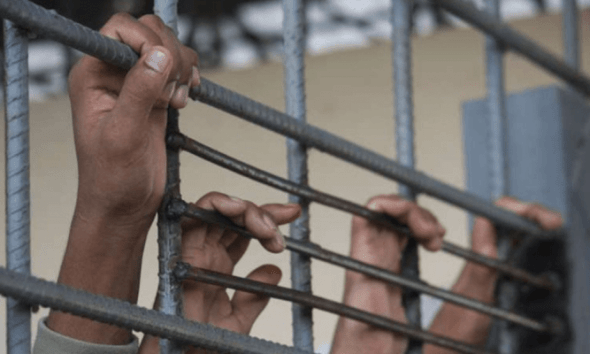
The Federal Government has secured the release and repatriation of 136 Nigerians imprisoned in Ethiopia, nearly two years after an Abuja Federal High Court ordered it to intervene in their prolonged detention.
The breakthrough followed the signing of a Prisoner Transfer Agreement between Nigeria and Ethiopia in Addis Ababa on June 11, 2026, bringing to fruition the November 14, 2024 judgment of Justice Inyang Ekwo.
The agreement was facilitated by the Minister of Foreign Affairs, Bianca Odumegwu-Ojukwu, and her Ethiopian counterpart, Gideon Timothewos. It was signed by the Attorney-General of the Federation and Minister of Justice, Lateef Fagbemi (SAN), and Ethiopia’s Minister of Justice, Hanna Arayaselassie.
The agreement paved the way for the return of the 136 Nigerians, many of whom had spent years in Ethiopian prisons serving sentences for drug-related and immigration offences.
The development marks the implementation of Justice Ekwo’s judgment in Suit No. FHC/ABJ/CS/305/2024, filed by Mmaduagwu Pius Sunday and others against the Nigerians in Diaspora Commission (NIDCOM), the Ministry of Foreign Affairs, the Attorney-General of the Federation, the Senate and the House of Representatives.
Court records showed that more than 270 Nigerians were serving various prison terms in Ethiopia, with many held at the notorious Kaliti and AbaSamuel prisons in Addis Ababa.
Reports of overcrowding, poor medical care, malnutrition and alleged abuse had heightened public concern, especially following the deaths of some inmates, including Chizoba Favour Eze, Uchenna Nwanneneme and Basil Lawrence Ilobi.
In his judgment, Justice Ekwo held that the Ethiopian government’s admission that it lacked the resources to adequately cater for the inmates made intervention by the Nigerian government imperative.
He consequently granted an order of mandamus compelling the Ministry of Foreign Affairs and NIDCOM to facilitate the prisoners’ repatriation.
“The first and second respondents cannot be allowed to argue their way out of their respective statutory functions,” the judge ruled, holding that the applicants had established a compelling case for government intervention.
Despite the judgment, implementation stalled for several months, prompting families of the detainees to petition President Bola Tinubu, the National Assembly and NIDCOM in September 2025, demanding the conclusion of a prisoner transfer arrangement between both countries.
Diplomatic efforts gathered momentum in 2025 and 2026, with Odumegwu-Ojukwu leading negotiations with Ethiopian authorities, including Ethiopia’s Ambassador to Nigeria, Legesse Geremew Haile, to fast-track the agreement.
Speaking during one of the engagements, the minister said: “Our people do not want to hear that another Nigerian inmate has died in an Ethiopian prison,” stressing that Nigeria had fulfilled all the procedural requirements for the transfer arrangement.
The agreement was eventually signed in Addis Ababa earlier this month, with both countries describing it as one “rooted in the principles of humanity, justice and cooperation”, paving the way for the transfer of the 136 Nigerians back home.

WHO warns of disease crisis in quake-ravaged Venezuela

Ardo Risku: Fear grips Idoma communities as security checkpoints disappear after Fulani leader’s death

FG secures release of 136 Nigerians from Ethiopian prisons after Justice Ekwo’s judgment




-
 News22 hours ago
2027: Atiku raises alarm over fresh plot to exclude ADC from ballot
-
 News22 hours ago
SAD: Bandits kill teacher, abduct many NECO candidates while writing exams
-

 Economy9 hours ago
NCC earns 3rd spot in 2026 MDAs ranking
-

 News9 hours ago
FEC Approves Major NYSC Reform, Introduces New Uniform, Graduation Ceremony
-

 Entertainment22 hours ago
Singer Speed Darlington regrets says “I’m close to 60 no wife, no kid to point at as mine”
-
 Metro9 hours ago
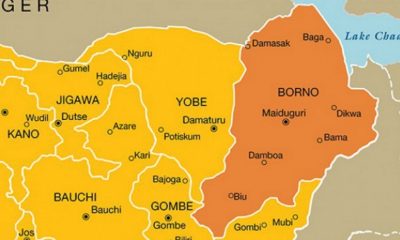
Soldier, CJTF Member Die During Rescue Of Borno NECO Candidates, Teachers – Nigerian Army Confirms
-

 Entertainment9 hours ago
South Africa Begins Deportation Proceedings Against Miss Universe Nigeria Chidimma Adetshina
-

 Sports9 hours ago
Brazil Fight Back to Beat Japan 2-1 as Martinelli’s Late Winner Secures World Cup Last-16 Spot