Health
FG identifies 1,277 persons for monitoring as Lassa fever kills 122
- /home/naijuinz/public_html/wp-content/plugins/mvp-social-buttons/mvp-social-buttons.php on line 27
https://naijablitznews.com/wp-content/uploads/2025/02/Lassa-Fever.jpg&description=FG identifies 1,277 persons for monitoring as Lassa fever kills 122', 'pinterestShare', 'width=750,height=350'); return false;" title="Pin This Post">
- Share
- Tweet /home/naijuinz/public_html/wp-content/plugins/mvp-social-buttons/mvp-social-buttons.php on line 72
https://naijablitznews.com/wp-content/uploads/2025/02/Lassa-Fever.jpg&description=FG identifies 1,277 persons for monitoring as Lassa fever kills 122', 'pinterestShare', 'width=750,height=350'); return false;" title="Pin This Post">
The Nigeria Centre for Disease Control and Prevention has listed 1,277 persons for follow-up over the possibility of being infected with Lassa fever. This follows the centre recording 659 confirmed cases out of 3,779 suspected cases and 122 deaths in 13 weeks (from January to March 30, 2025).

A report obtained from the NCDC on Friday indicated that no fewer than 18 states across the country have recorded Lassa fever cases, with Ondo, Bauchi, and Edo being the most affected.
The report partly reads, “Cumulatively, in week 13 of 2025, 122 deaths have been reported, with a Case Fatality Rate of 18.5%, which is lower than the CFR for the same period in 2024 (18.7%).

“In total for 2025, 18 states have recorded at least one confirmed case across 93 Local Government Areas. Seventy-one per cent of all confirmed Lassa fever cases were reported from these three states (Ondo, Bauchi, and Edo), while 29% were reported from 15 other states with confirmed Lassa fever cases. Of the 71% of confirmed cases, Ondo reported 30%, Bauchi 25%, and Edo 16%.
“The predominant age group affected is 21-30 years (Range: 1 to 94 years, Median Age: 30 years). The male-to-female ratio for confirmed cases is 1:0.8. The number of suspected cases increased compared to that reported for the same period in 2024. No new healthcare worker was affected in week 13. The National Lassa fever multi-partner, multi-sectoral Incident Management System (IMS) was activated to coordinate the response activities at all levels.”
The report shows that the contacts under follow-up number 1,277, while the contacts that have completed follow-up total 1,448.
According to the NCDC, the disease has affected 20 healthcare workers in eight states so far this year.
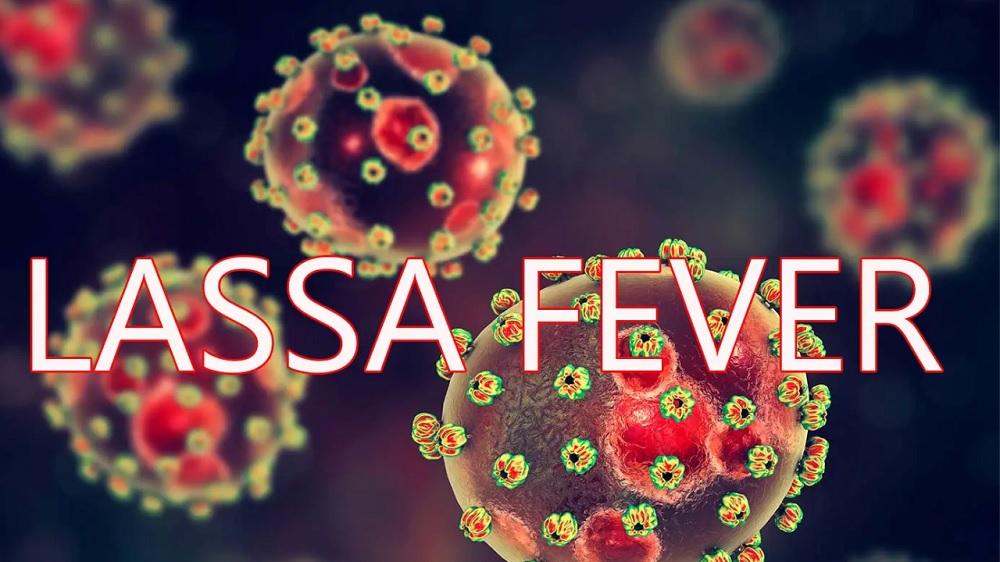
Lassa fever is an acute viral haemorrhagic fever caused by the Lassa virus. The natural reservoir for the virus is the multimammate rat (also known as the African rat), although other rodents can also act as carriers.
The public health institute stated that Lassa fever cases occur year-round, with peak transmission periods typically from October to May.
Health
NAFDAC Blacklists Onifam Laboratories, Directors Over Regulatory Infractions
The National Agency for Food and Drug Administration and Control (NAFDAC) has blacklisted Onifam Laboratories Limited, its Managing Director/Chief Executive Officer, all members of its board of directors, and every affiliated or associated individual and entity found to have participated in regulatory violations, following what it described as extensive investigations into the company’s operations.
The sanction, which takes immediate effect, effectively excludes the company and all affected individuals from participating in any pharmaceutical business regulated by NAFDAC pending further directive from the agency.
In a statement signed on Monday by its Director-General/CEO, Prof. Mojisola Adeyeye, the agency said its investigations established that Onifam Laboratories engaged in regulatory misrepresentation, misuse of NAFDAC approvals and certificates, improper registration and transfer of pharmaceutical products, as well as activities that deliberately circumvented established regulatory procedures.
According to NAFDAC, the alleged infractions compromise product traceability, weaken accountability within the pharmaceutical supply chain and expose the public to significant health risks.
The agency said the company’s actions violate the provisions of the NAFDAC Act, the Food, Drug and Related Products (Registration, etc.) Act, the Drug and Related Products Registration Regulations 2021 and other applicable regulatory guidelines governing pharmaceutical products in Nigeria.
As part of the blacklist, Onifam Laboratories and all affected persons are prohibited from participating, either directly or indirectly, in any pharmaceutical business regulated by NAFDAC.
The prohibition extends to applying for or benefiting from any NAFDAC registration, licence, permit, certificate or approval.
It also bars them from operating as manufacturers, importers, distributors, marketing authorisation holders, agents, representatives, consultants, promoters or sponsors of any product regulated by the agency.
Prof. Mojisola Adeyeye, Director-General/Chief Executive Officer of the National Agency for Food and Drug Administration and Control (NAFDAC), whose agency announced the immediate blacklisting of Onifam Laboratories Ltd, its Managing Director, directors and affiliated entities over multiple regulatory violations/Credit: NAFDAC
The sweeping sanctions equally apply to affiliated companies and associated entities found to have been involved in the regulatory violations.
NAFDAC stated that the blacklist would remain in force until otherwise directed by its management.
The agency further warned that it reserves the right to initiate additional regulatory, administrative, enforcement and legal actions where necessary to protect public health and preserve the integrity of Nigeria’s medicines regulatory system.
It stressed that the action reflects its determination to ensure strict compliance with pharmaceutical regulations and deter practices capable of undermining the safety and quality of medicines available to Nigerians.
Reaffirming its commitment to safeguarding public health, NAFDAC urged all stakeholders in the pharmaceutical sector to comply fully with applicable laws and regulatory requirements.
The agency maintained that only safe, quality-assured and properly regulated medicines should be manufactured, imported, distributed and sold in Nigeria, warning that any attempt to bypass regulatory procedures would attract decisive sanctions.
The blacklist of Onifam Laboratories marks one of the agency’s strongest recent enforcement actions and underscores its resolve to strengthen regulatory oversight, improve accountability within the pharmaceutical industry and sustain public confidence in Nigeria’s medicines regulatory framework.
Health
What is being released to NCDC is a drop in the ocean- Senate C’ttee laments
Poor funding could undermine the ability of the North Central Development Commission (NCDC) to deliver on its mandate, the Senate has said, insisting that the N2.9 billion monthly allocation being released to the commission is only “a drop in the ocean” compared to its N140 billion budget allocation for 2026.
The Chairman of the Senate Committee on the North Central Development Commission, Titus Zam, sounded the warning while briefing journalists after an interactive session between the committee and the commission’s management at the National Assembly on Tuesday.
According to him, the current monthly release would amount to less than half of the commission’s approved budget if maintained throughout the year, expressing optimism that the federal government would increase funding as the commission becomes fully operational.
“If you give someone that has a budget of N140 billion, N2.9 billion per month, in 12 months, it won’t be up to half of the entire budgetary sum,” Zam said.
“I suppose that is just a temporary package. When the commission finally comes to fruition, much more funds will be released. So we thank Mr President and the Executive for dropping something now, but we look forward to more.”
The lawmaker, however, assured that the Senate Committee would ensure the prudent utilisation of the funds already released by providing effective oversight and guiding the commission on areas of priority.
He urged the commission to focus its interventions on agriculture, security and rural development, stressing that the North Central region is largely agrarian and continues to face serious security challenges.
“North Central is mostly an agricultural land. We have arable land, we have good rainfall and vegetation. There is policy for agriculture. We need the department of NCDC to take agriculture very seriously.
“We also have a challenge of insecurity. The commission is advised to support the security forces and state governments to complement their efforts towards mitigating the tide of insecurity within the region.
“We also ask them to take rural development very seriously because we are also rural in nature,” Zam said.
Health
NCDC records rise in Lassa fever cases, death toll hits 221
The Nigeria Centre for Disease Control and Prevention (NCDC) says Nigeria recorded an increase in confirmed Lassa fever cases during epidemiological week 26 of 2026, with 31 new infections reported, up from 22 the previous week.
The new confirmed cases were recorded in Bauchi, Ondo, Taraba and Benue states, according to the latest NCDC Lassa fever situation report released by the public health agency on Friday.
The report showed that 221 deaths have been recorded cumulatively in 2026, with a Case Fatality Rate (CFR) of 24.0 per cent, higher than the 18.7 per cent reported in 2025.
It stated that 23 states had reported at least one confirmed Lassa fever case across 111 Local Government Areas, indicating the continued geographic spread of the disease nationwide in 2026.
According to the report, 85 per cent of all confirmed cases originated from Ondo, Bauchi, Taraba, Edo and Benue states, while the remaining 15 per cent were reported elsewhere.
The report said Ondo accounted for the highest proportion of confirmed cases at 30 per cent, followed by Bauchi with 26 per cent, Taraba with 14 per cent, Edo with nine per cent, and Benue.
It revealed that people aged between 21 and 30 years remained the most affected group, although confirmed cases ranged from one to 93 years, with a median age.
The report also showed that the male-to-female ratio among confirmed cases stood at 1:0.9, suggesting nearly equal infection rates between males and females across affected states.
Health authorities noted that both suspected and confirmed Lassa fever cases increased compared with the corresponding period in 2025, while one healthcare worker was infected during week 26.
The report added that the National Lassa Fever multi-partner, multi-sectoral Incident Management System remains activated to coordinate surveillance, case management, risk communication and response activities nationwide.
-
Metro15 hours agoPolice Return Stolen Toyota Highlander to Owner 5 Years After Theft
-
News15 hours agoGumi Questions Why No One Has Visited Boko Haram, Bandits to Negotiate Peace
-
Foreign15 hours agoIranian Commander Issues “One-for-One” Threat to US Over Citizen Deaths
-
Entertainment15 hours agoNigeria’s Education Threshold Should Be Beyond Akara & Kuli Kuli – Seyi Awolowo
-
News14 hours agoAbacha didn’t die on top of a woman – Al-Mustapha
-
News15 hours agoINEC Insists CVR Ends Today
-
Foreign16 hours agoBiya’s Long Absence Raises Fresh Questions In Cameroon
-
News14 hours agoTroops neutralise suspected female terrorist spy, nab 14 suspects nationwide

Warning: Undefined variable $user_ID in /home/naijuinz/public_html/wp-content/themes/zox-news/comments.php on line 49
You must be logged in to post a comment Login