Connect with us

News

Reps Mull Reserved Seats for Women, Persons with Disabilities in Constitution Review

Published

on

ADVERTISEMENT
Zoom Ad
ADVERTISEMENT
Zoom Ad

…as House record surge in legislative activity, over 2,200 bills introduced

By Gloria Ikibah

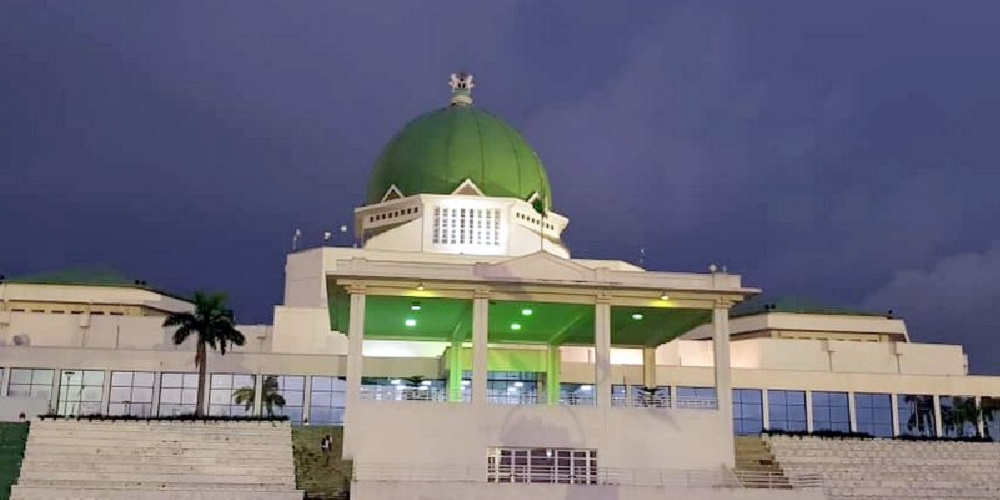
In a significant move under the ongoing constitution amendment process, the Speaker of the House of Representatives, Rep. Tajudeen Abbas, has revealed that the 10th House is actively considering allocating 10% of elective seats to women and 5% to persons with disabilities in the National Assembly.

Speaking during the second Legislative Open Week, Abbas explained that this initiative, once enacted into law, would result in an additional 82 lawmakers—comprising 55 in the House of Representatives and 28 in the Senate.

Advertisement

He emphasised that those occupying the reserved seats would have full legislative rights, including equal access to privileges and committee assignments, ensuring their seamless integration into the nation’s legislative framework.

He said: “We are considering 109 amendment bills across various sectors, including electoral, judicial, legislative, and inclusive governance. Twelve electoral reform bills address the scheduling of all general elections on a single day, establish independent candidacy, and create a dedicated commission for local government elections. Judicial reforms encompass 21 bills designed to streamline appellate processes and strengthen judicial independence”.
Speaker Abbas  said further that a central feature of the House’ inclusive governance proposals is the introduction of constitutionally guaranteed reserved seats for women and persons with disabilities.
He added: “Under the draft amendment, ten per cent (10%) of seats in both the Senate and the House of Representatives would be set aside for women, apportioned by state to ensure regional balance.
“These seats would be filled through direct elections on separate ballots, with staggered terms to promote continuity and mentorship. Five per cent (5%) of seats would be reserved for persons with disabilities, with candidates nominated by accredited disability advocacy organisations.
“Historical data underscores the urgency of this reform. At independence in 1960, women occupied less than one per cent of seats in the National Assembly. By 1990, their share rose only to two per cent. With the restoration of democracy in 1999, women held 3.9 per cent of House seats and four per cent of Senate seats. Today, despite constituting half the population, women’s representation has barely moved beyond these levels.
“International experience shows the impact quotas can have. Rwanda and Senegal utilised constitutional provisions to increase female representation from under 5% to over 30% in a single cycle. South Africa’s voluntary party quota has delivered steady gains, though its success depends on enforcement. By embedding reserved seats into our Constitution, we will break the cycle of stagnation.
“This mechanism will accelerate progress towards gender parity, enrich our legislative debates with diverse perspectives, and ensure that the National Assembly truly reflects the people it serves. The 10th House will pursue vigorous collaboration with the State Houses of Assembly and all stakeholders to ensure that the Bill on the reserved seat is passed and becomes part of our constitution”.

The Speaker disclosed that within its first two sessions, the 10th House introduced a total of 2,263 bills—demonstrating a marked rise in legislative engagement. Of these, 1,478 have progressed to second reading, 135 await further House action, 339 are under review by Standing Committees, while five have been rejected during debates.

He noted that the overwhelming majority—2,204—were sponsored by individual members, alongside 26 Executive bills and 33 from the Senate seeking concurrence. According to him, these figures underscore a consistent growth in the National Assembly’s legislative capacity since 1999.

As of June 30, 2025, 237 bills had been passed and forwarded for presidential assent, with 55 already signed into law. Among the key legislative achievements are the recently enacted Tax Reform Laws—including the Nigeria Tax Act, Nigeria Tax Administration Act, Nigeria Revenue Service Act, and the Joint Revenue Board Act—which aim to streamline tax processes and unify revenue collection at all government levels.

Advertisement
“The Electricity Act (Amendment) 2023 transfers electricity to the Concurrent Legislative List, empowering both federal and state governments to legislate on power generation, transmission, and distribution. The Student Loans (Access to Higher Education) Act 2024 establishes the Nigerian Education Loan Fund (NELFund) as an independent body to expand access to tertiary education among others.
The Speaker said the House has received 621 petitions from citizens on wrongful terminations, rights violations and other grievances, adding that 24 of the petitions have been fully treated, with reports ready, 30 dismissed for lack of merit while the remaining 567 are at various stages of the hearing and investigation process.
Speaker Abbas said the House will continue to advance security reform with bills for state policing and the devolution of powers over natural resources and infrastructure, adding that the House is considering 14 bills aim to strengthen institutions, enforce fiscal accountability, and improve governance frameworks. Citizens’ rights feature in four human rights bills that align domestic law with international standards.
Speaking on ​Executive–legislative cooperation which he said remains essential, the Speaker thanked the President for always consulting the National Assembly on key policy matters, and for respecting the input throughout the legislative process.
According to Abbas, the 10th House recognise the challenges before Nigerians such as economic constraints, high turnover rate, and public expectations for immediate improvements which require resilience.
He added that, “his willingness to engage with our debates and incorporate our recommendations has strengthened governance and reinforced the balance of powers that underpins our democracy.
“We will continue to balance fiscal realities in our budget appropriations, prioritise critical sectors, and ensure that we deliver fully on our legislative agenda. Similarly, we will continue to invest in research support, modern library facilities, and peer-learning initiatives to strengthen the institution”.
The President of the Senate, Senator Godswill Akpabio commended the House for the achievement in the past two years and for opening their House for the Nigerians people, assuring that the Senate will follow the footstep of the House, while plans are on to organize a joint open week with the Green chambers.
Akpabio said the event was necessary to educate the Nigerian people on the functions of the lawmakers as a way of reducing the large turnover rate in the parliament, adding that in the Senate, about 80 percent of Senators ad new to the parliament.
He said this huge turnover rate of lawmakers affects institutional memories in the legislature and even the effective performance of their functions.
According to hm, many Nigerians are unaware of the actual function of the legislator and has often piled pressure on them to build roads, provide employment and other activities meant for the executive, adding that when the lawmaker fail to deliver on these areas, they are regarded by their constituents as failures, thereby affecting their efforts at returning to the National Assembly.
Akpabio said further that because the current is not at loggerhead with the Executive, but choose to engage in dialogue in arriving at definite positions does not mean that the Assembly is a rubber stamp Assembly, adding that together with the Executive, they have always put the interest of the Nigerian people first.
Former Speaker, Rt. Hon. Yakubu Dogara Charged the lawmakers to continue to promote the spirit of transparency and accountability, saying it is only when you are accountable that you can hold others accountable.
Another former Speaker, Rt. Hon. Patricia Ette reminded the lawmakers of the need to constantly return to their constituencies to engage with the people, adding that there was the need to take a cue from the open week because their main office is not in Abuja, but in their constituencies.
Continue Reading
Advertisement
Click to comment

Warning: Undefined variable $user_ID in /home/naijuinz/public_html/wp-content/themes/zox-news/comments.php on line 49

You must be logged in to post a comment Login

Leave a Reply

News

Uganda’s Museveni Sworn In for Seventh Term After Controversial Election Victory

Published

on

By

ADVERTISEMENT
Zoom Ad
ADVERTISEMENT
Zoom Ad

Ugandan President Yoweri Museveni has officially been sworn in for a seventh consecutive term after securing victory in the country’s disputed January elections, extending his nearly four-decade rule.

Tight security was observed across Kampala ahead of the inauguration ceremony, with armoured vehicles and security operatives deployed around key areas. Authorities said the measures were put in place to maintain order during the event.

Museveni, 81, was declared winner of the presidential election with more than 70 percent of the vote and is expected to remain in office until 2031. His main challenger, Bobi Wine, rejected the outcome, alleging widespread electoral malpractice including ballot stuffing. Electoral officials denied the accusations and maintained that the poll was credible.

Bobi Wine, whose real name is Robert Kyagulanyi Ssentamu, later fled Uganda, claiming he feared for his safety and accusing the government of targeting opposition figures.

Advertisement

Museveni first took power in 1986 after leading a rebel movement and has since remained one of Africa’s longest-serving leaders. Analysts believe this latest term could potentially be his last, although he has not publicly indicated any plans to step down.

Attention has also turned to Museveni’s son, Muhoozi Kainerugaba, who is widely seen as a possible successor. However, the military chief has faced criticism over controversial social media posts directed at opposition politicians.

Continue Reading

News

Nigerian Military Airstrike ‘Killed at Least 100 Civilians’ — Amnesty International

Published

on

By

ADVERTISEMENT
Zoom Ad
ADVERTISEMENT
Zoom Ad

At least 100 civilians were killed in a Nigerian military airstrike on a crowded market in Tumfa, Zurmi Local Government Area of Zamfara State, northwest Nigeria, Amnesty International said on Tuesday.

The strike hit the remote market on Sunday, May 10, 2026, with many victims reportedly being women and girls.

This is now the second deadly airstrike on a crowded market in northern Nigeria within the past one month, following a similar incident in April that reportedly killed more than 100 people.

Amnesty International has called on Nigerian authorities to immediately open an independent and thorough investigation into the incident.

Advertisement
Continue Reading

News

Nigeria, Jordan Sign Defence, Intelligence-Sharing Agreement

Published

on

By

ADVERTISEMENT
Zoom Ad
ADVERTISEMENT
Zoom Ad

Nigeria has signed a Memorandum of Understanding with Jordan on defence cooperation and intelligence sharing.

According to the Minister of State for Defence, Bello Matawalle, the agreement was signed in Amman, Jordan, during a meeting with the Chairman of the Joint Chiefs of Staff of the Jordanian Armed Forces, Major General Yousef A. Alhnaity.

Matawalle said that the partnership is aimed at strengthening collaboration between both countries in tackling evolving security threats, especially crimes and attacks that are asymmetric and cross-border in nature.

He added that the agreement reflects the commitment of President Bola Ahmed Tinubu’s administration to promoting peace, security, and stability across the country through strategic

Advertisement
Continue Reading

Trending

Copyright © 2024 Naija Blitz News