Connect with us

News

Constitution review: Kaduna gov seeks true federalism

Published

on

ADVERTISEMENT
Zoom Ad
ADVERTISEMENT
Zoom Ad

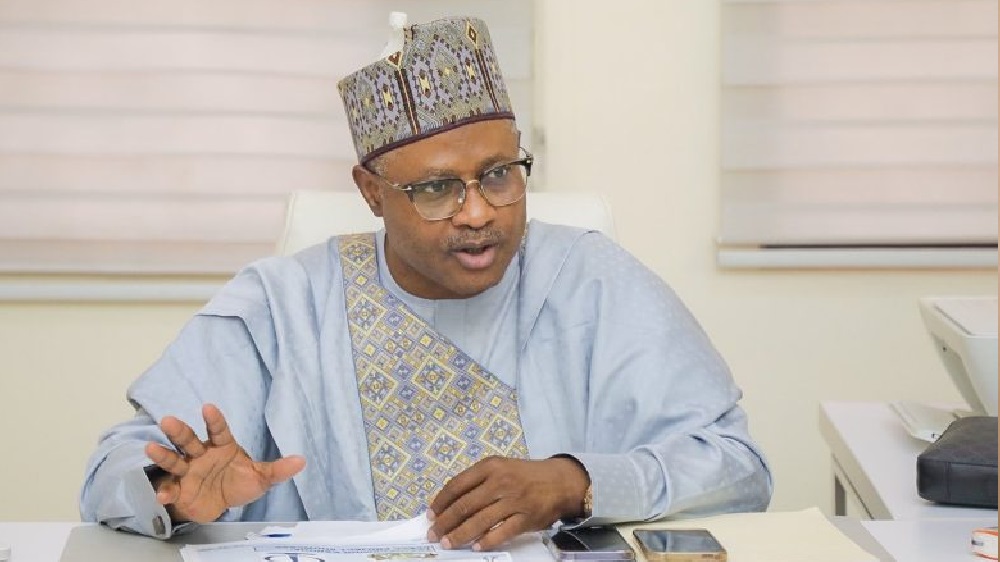
Kaduna State Governor, Uba Sani, has sought a constitutional reform that will allow the states to control the natural resources within their territories.


He said the country required true federalism that would ensure a balance fiscal control between the federal and federating units.

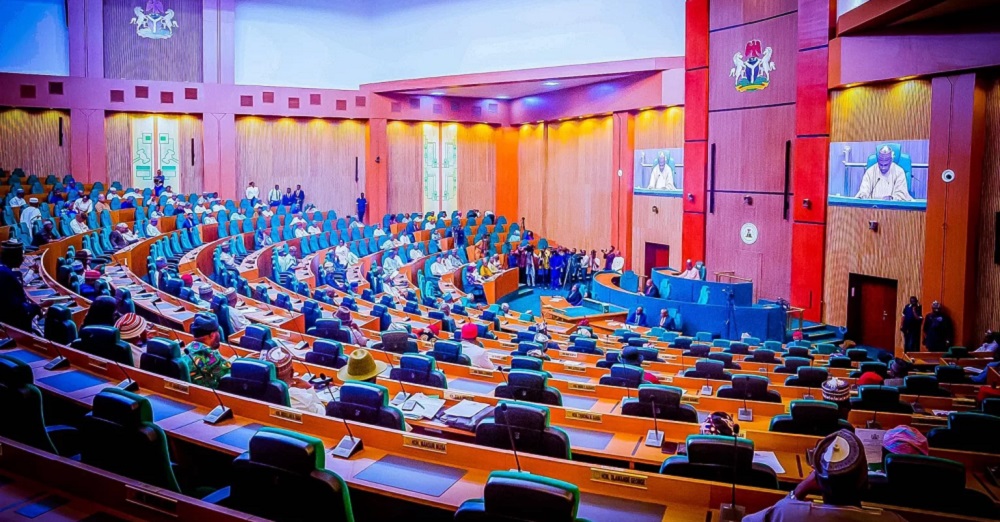
The state positions were presented at the North West Zonal Public Hearing of the Constitution Review process held on Saturday at the late Gen. Hassan Katsina House, Kawo Kaduna.

Speaking through his deputy, Dr. Hadiza Balarabe, Sani stated that the country’s current centralised federal system had not only stifled innovation but also alienated citizens from governance.

Advertisement

He said the imbalance in fiscal control and legislative power has exacerbated agitations and instability.

“Our current federal arrangement does not sufficiently reflect the principle of subsidiarity, where powers and responsibilities are devolved to the level of government closest to the people.

“States must be empowered not only to legislate on local matters but also to control and directly benefit from the resources found within their jurisdictions, while making constitutionally defined contributions to national development,” he said.

The governor described fiscal federalism as a constitutional necessity, not a favour to states, saying that “ignoring these genuine yearnings could continue to undermine Nigeria’s unity.”

Advertisement

He also reiterated his advocacy for the establishment of state police, noting that bills he sponsored in the 9th Senate were stalled due to political disagreements.

“Security cannot be national if it is not local. Kaduna is ready to support constitutional amendments that will institutionalise state police and improve our collective security architecture,” he said.

Sani further advocated the constitutional independence of critical institutions like the judiciary, INEC, and anti-graft agencies, and called for affirmative measures to promote women’s participation in governance.

He also urged for stronger roles and constitutional recognition for traditional rulers as governance partners at the grassroots level.

Advertisement

Similarly, Kano State demanded the creation of a new state out of its current territory and the establishment of 26 additional local government areas, to raise the number from 44 to 70.

Presenting Kano’s position, the Deputy Governor of the state, Aminu Gwarzo, said the demands were rooted in a rigorous, participatory process involving citizens across the state.

“Kano identifies with the yearnings of various communities for restructuring and supports the creation of new states, provided such moves comply with Section 8 of the Constitution,” Gwarzo stated.

“We also strongly advocate the creation of 26 additional local governments to meet the developmental aspirations of our people,” Gwarzo stated.

Advertisement

The Kano memorandum, signed by Governor Abba Kabir Yusuf, also demanded full constitutional recognition and autonomy for local governments, proposing amendments to Sections 2(2), 7, and 162(5) to solidify their status as the third tier of government.

On security, Kano backed the call for state police but stressed the need for clear demarcation of responsibilities between state and federal police forces to prevent operational conflict.

The state also proposed a National Council of Traditional Rulers, comprising chairpersons of state traditional councils, to advise the Federal Government on national issues. It pushed for constitutional protection of the appointment process of traditional rulers to guard against political interference.

In the fiscal arena, Kano proposed a revision of the revenue allocation formula—reducing the Federal Government’s share from 52.68% to 40%, increasing state allocations to 35%, and raising LGAs’ share to 25%.

Advertisement

“This will ensure fiscal justice, empower states and LGAs to fulfil their constitutional responsibilities and foster balanced development,” the memo read.

Kano also threw its weight behind the National Assembly’s gender equity agenda, pledging support for legislative reforms that would increase women’s representation in politics and governance.

“The memorandum we submitted today reflects the collective will of Kano people. We urge the National Assembly to give our modest proposals the serious consideration they deserve,” Gwarzo said.

Meanwhile, Katsina State presented a position paper delivered by its Governor, Dikko Umar Radda, describing the constitution review process as a critical national assignment.

Advertisement

The Governor said the memorandum from Katsina reflected deep stakeholder consultations and prioritised fiscal federalism, institutional reforms, and inclusive governance.

The Governor, who was represented by the Attorney General of the State and Commissioner for Justice, Fadila Mohammed Dikko, said, “As we gather here today, we are reminded of the significance of this moment. The Constitution is the foundation of our democracy, and it is our collective responsibility to ensure that it is robust, inclusive, and responsive to the needs of all Nigerians.

“The position paper that I present to you today is the result of extensive consultations with stakeholders across Katsina State.

“It reflects our commitment to the unity, stability, and progress of Nigeria. We believe that the proposed amendments should prioritize the devolution of powers, fiscal federalism, and the strengthening of institutions.

Advertisement

“We also believe that the Constitution should promote inclusive governance,

social justice, and human rights. The position paper outlines our stance on key issues, including local government reforms, electoral reforms, judicial reforms, and security and policing.”

He pledged Katsina’s commitment to a united and prosperous Nigeria and called on all stakeholders to approach the amendment exercise with sincerity and patriotism.

“Let us work together to build a Nigeria that is just, equitable, and prosperous for all,” he urged.

Advertisement

Earlier in his opening remarks, the Chairman of the House of Representatives Sub-Committee on Constitution Review for North West Centre ‘A’, Rt. Hon. Madaki Aliyu Sani, assured that the National Assembly was committed to an inclusive and transparent review process.

“We are not just revising words on paper; we are refining the tools of nation-building,” Madaki, who is also the Deputy Minority Leader of the House, declared.

He said the process would examine 86 bills across 13 thematic areas, including security, devolution of powers, gender inclusion, traditional institutions, and fiscal reforms.

“No voice will be too small, no idea too radical, and no region too remote to be heard,” he assured.

Advertisement

The event attracted participants from Kano, Katsina, and Jigawa states, alongside professional bodies, traditional councils, women’s groups, and civil society organizations, all eager to contribute to what many described as a historic opportunity to reshape Nigeria’s constitutional framework.
Continue Reading
Advertisement
Click to comment

Warning: Undefined variable $user_ID in /home/naijuinz/public_html/wp-content/themes/zox-news/comments.php on line 49

You must be logged in to post a comment Login

Leave a Reply

News

Fresh Crisis: Atiku, Malami, Others Fingered As EFCC Begins Fresh Probe Of Mambilla Power Deal

Published

on

ADVERTISEMENT
Zoom Ad
ADVERTISEMENT
Zoom Ad


The Economic and Financial Crimes Commission (EFCC) has constituted a team to investigate individuals named in alleged questionable dealings linked to the Mambilla Hydroelectric Power Project, following a recent ruling by the International Chamber of Commerce (ICC) in Paris, France, in favour of Nigeria.

Sources familiar with the development told Premium Times that the investigative team is being supervised by the Chairman of the EFCC, Ola Olukoyede.

The investigation comes days after the ICC tribunal dismissed major claims brought before it by Sunrise Power and Transmission Company Limited against Nigeria over the 3,960-megawatt Mambilla Hydroelectric Power Project in Taraba State.

Advertisement


The company had made a claim against the Federal Republic of Nigeria, demanding $680 million as a settlement sum and interest in respect of another arbitration in which it is claiming over $2.7 billion in compensation and interest.

Delivering its verdict on Thursday, the tribunal directed Sunrise and its promoter to refund Nigeria’s legal fees of $11.8 million. It also rejected Sunrise’s claim for an order that Nigeria should pay the company $400 million in satisfaction of the settlement sum of $200 million and the default sum of $200 million.

The tribunal insisted that Leno Adesanya, the promoter of Sunrise, is bound by the arbitration agreement with Nigeria pursuant to the settlement agreement, adding that it has jurisdiction over Nigeria’s counterclaim against him and his firm.

Advertisement

According to sources, EFCC investigation will focus on individuals mentioned in the tribunal’s findings over payments and transactions that the panel described as raising concerns or ‘red flags.’

The tribunal revealed that many Nigerian politicians and individuals who held public offices were named as associates or officials who had dealings with Adesanya

The officials include former Vice President Atiku Abubakar, his then-wife Jennifer Douglas, Abubakar Malami, Olu Agunloye, Sambo Dasuki, his son Abubakar Dasuki, Abdullahi Yola, and Dere Awosika.

Malami, a former Attorney-General of the Federation (AGF), was severely criticised by the tribunal for acting against Nigeria’s national interest. He was accused of maintaining an “inappropriate relationship” with Adesanya, and entering into a corrupt deal. Already, Mr Malami is facing trial after the EFCC accused him, his wife, and son of conspiring to conceal, disguise and retain about N8.7 billion proceeds of unlawful activities.

Advertisement

Atiku, former vice president of Nigeria, was named by the tribunal in its review of a $500,000 payment made by Adesanya on 30 January 2003 from the Swiss bank account of his offshore company, China Castle Investments Ltd, to a US bank account belonging to Ms Douglas, Atiku’s ex-wife.

The payment was made less than four months before the Mambilla BOT contract was purportedly awarded to Sunrise by then Minister of Power and Steel, Olu Agunloye. Mr Adesanya told the tribunal that the money was part of a foreign-exchange transaction carried out for Atiku through his bureau de change business.

But the tribunal said that the explanation was not supported by documentary evidence. It said Adesanya did not produce records showing the underlying naira payment, the exchange rate applied, instructions from Atiku or his aides, correspondence concerning the transaction or documentation establishing its commercial purpose.

The tribunal also noted that neither Atiku nor Ms Douglas provided a witness statement or declaration supporting the explanation.

Advertisement

It noted that Atiku had led a Nigerian government delegation to Beijing in July 2002, which included Adesanya, during which the Nigerian government and the Chinese state-owned NCPEC signed a memorandum of understanding covering, among other projects, the Mambilla project.

However, Atiku has denied being indicted by the tribunal and said he was not responsible for awarding the contract.

Agunloye, a former minister of Power and Steel, was linked to payments he described as part of “medical expenses”. He is currently standing trial over charges relating to the Mambilla power project.

The tribunal also questioned payments of $1.74 million made to Abubakar Dasuki, the son of Sambo Dasuki, a former National Security Adviser (NSA), adding that the transaction raised “considerable red flags.”

Advertisement

The tribunal said Dasuki failed to substantiate his claim that the payment was a loan, citing inconsistencies in his evidence, the absence of a loan agreement and the lack of records showing how the transaction was accounted for by Sunrise.

Yola and Awosika were also named among those involved in alleged bribery and the receipt of controversial payments.

Sources told Premium Times that the EFCC may invite Atiku and his ex-wife, Douglas, for questioning in the coming days or weeks.

Advertisement
Continue Reading

News

Atiku Challenges Tinubu Over Third Straight UNGA Absence, Questions ‘American Baggage’

Published

on

ADVERTISEMENT
Zoom Ad
ADVERTISEMENT
Zoom Ad

Former Vice President Atiku Abubakar has demanded an explanation from President Bola Ahmed Tinubu over his decision to stay away from the United Nations General Assembly for the third consecutive year.

Atiku’s criticism followed the Presidency’s announcement that Vice President Kashim Shettima would represent Tinubu and lead Nigeria’s delegation to the 81st Session of the UNGA in New York. The 2026 General Debate is scheduled for September 22 to 28.

In a statement issued on Sunday by his Senior Special Assistant on Public Communication, Phrank Shaibu, Atiku said Tinubu had been absent from the 79th UNGA in 2024, the 80th in 2025 and would again not attend the 81st session in 2026.

Atiku, the presidential candidate of the African Democratic Congress, said the repeated delegation of the Vice President could no longer be regarded as routine diplomatic representation.

Advertisement

He argued that the UNGA provides heads of government with an important platform to advance their countries’ interests, hold bilateral meetings, attract investments, pursue trade opportunities and engage development partners.

According to him, while Shettima could effectively represent Nigeria, the Vice President’s participation could not completely substitute for the President’s personal presence and visibility at a major international diplomatic gathering.

Atiku further argued that Nigeria could lose opportunities for investment and development financing when the President is absent from such high-level engagements.

“The cost is eventually transferred to ordinary citizens: fewer investments mean fewer businesses and fewer jobs,” he said.

Advertisement

The former vice president also questioned reports that Nigeria’s Permanent Representative to the United Nations, Jimoh Ibrahim, had secured a seat for Tinubu close to United States President Donald Trump during the General Assembly.

“The seat was secured, but the President disappeared,” Atiku said.

He also questioned reports that the Tinubu administration had spent up to $9 million on American lobbyists, asking why Nigeria would commit such funds to lobbying efforts in the United States while the President repeatedly stayed away from the UN gathering in New York.

“What exactly did Nigerians purchase with that money?” Atiku asked.

Advertisement

Questions over Tinubu’s US legal history

Atiku subsequently raised questions about Tinubu’s past legal proceedings in the United States, citing Case No. 93 C 4483 before the US District Court for the Northern District of Illinois.

He referred to the forfeiture proceedings involving funds held in accounts in Tinubu’s name and those of associated companies, alleging that US court documents linked the funds to narcotics trafficking and money laundering.

Atiku said the proceedings ultimately resulted in the forfeiture of approximately $460,000 to the US government.

Advertisement

However, he stressed that he was not claiming Tinubu was legally barred from entering the United States.

“We are not asserting that Tinubu is legally prohibited from entering the United States. The Presidency has announced no such restriction,” Atiku said.

He nevertheless questioned whether Tinubu’s past legal history in the US had any connection with his repeated absence from the UNGA.

“Nigerians are therefore entitled to ask whether Tinubu’s three consecutive UNGA absences have anything to do with this documented American history,” he said.

Advertisement

Atiku called on the Presidency to explain the reason for Tinubu’s absence if there was no legal, diplomatic, medical or personal impediment preventing him from attending.

“Has one man’s personal history become a burden on Nigeria’s diplomatic engagement?” he asked.

He also questioned whether the President’s absence could affect Nigeria’s diplomatic engagement with the United States and other countries.

Atiku concluded by demanding greater transparency from the Presidency over the decision to send Shettima to the UNGA for a third consecu

Advertisement
Continue Reading

News

2027: Tinubu Moves to Give Wike Rivers, FCT Campaign Control Amid APC Governors’ Clash

Published

on

ADVERTISEMENT
Zoom Ad
ADVERTISEMENT
Zoom Ad

President Bola Ahmed Tinubu is moving to give Minister of the Federal Capital Territory (FCT), Nyesom Wike, a clearly defined role in his 2027 presidential re-election campaign, with the former Rivers State governor expected to coordinate campaign activities in Rivers and the FCT.

The emerging arrangement, reported by THISDAY on Monday, is designed to harness Wike’s political network in the two territories without formally placing him within the hierarchy of the All Progressives Congress (APC), despite his prominent support for Tinubu’s re-election.

Wike remains a member of the Peoples Democratic Party (PDP) and has repeatedly stated that he has no intention of joining the APC to support Tinubu’s second-term bid.

The reported arrangement comes amid growing tensions between Wike and some APC governors over the structure and control of political mobilisation ahead of the 2027 elections.

Advertisement

Wike to Coordinate Rivers, FCT

Wike has consistently maintained that he does not need to belong to the APC or occupy the position of Director-General of Tinubu’s campaign council before supporting the President’s re-election.

Instead, the FCT minister has publicly declared that his objective is to deliver Rivers State and the FCT for Tinubu in 2027.

During a media interaction in Port Harcourt earlier this month, Wike described himself as the “General Commander of the Political Infantry” in Rivers and the FCT.

Advertisement

“You do not need to be governor before you can be in charge. I am the General Commander of the Political Infantry; therefore, I am in charge. So also in FCT. I owe the President to give these two,” Wike said.

The proposed campaign arrangement would give a formal framework to the political responsibility Wike has already publicly claimed in the two territories.

The reported move comes after Tinubu constituted the APC Presidential Campaign Council in August, with former Zamfara State Governor Abdulaziz Yari appointed Director-General.

Imo State Governor Hope Uzodimma was named secretary, while Tinubu serves as chairman. Vice President Kashim Shettima and APC National Chairman Nentawe Yilwatda were named vice-chairmen.

Advertisement

Senate President Godswill Akpabio, House of Representatives Speaker Tajudeen Abbas and Yobe State Governor Mai Mala Buni were also assigned deputy director-general roles.

However, the emerging campaign structure is not expected to operate strictly through a single chain of command. According to the report, Akpabio and Deputy Senate President Jibrin Barau are expected to operate with distinct responsibilities rather than directly reporting to Yari.

The arrangement is reportedly intended to accommodate the different political blocs and influential figures expected to play roles in Tinubu’s re-election campaign.

Why Wike’s Role Is Different

Advertisement

Wike presents an unusual political situation for the Tinubu campaign.

Although he remains a PDP member, he has become one of the President’s most prominent political allies outside the APC.

His relationship with Tinubu became particularly significant during the 2023 presidential election, when Wike and four other PDP governors known as the G5 refused to support the party’s presidential candidate, Atiku Abubakar.

Wike subsequently supported Tinubu while remaining in the PDP.

Advertisement

After the election, Tinubu appointed him Minister of the FCT, making him one of the most prominent opposition-party politicians serving in the APC-led Federal Government.

Since then, Wike has repeatedly defended the Tinubu administration and declared his support for the President’s 2027 re-election bid.

The reported campaign arrangement comes against the backdrop of disagreements between Wike and APC governors over his proposed Rainbow Coalition.

Wike has described the coalition as a cross-party platform designed to mobilise support for Tinubu’s presidential re-election.

Advertisement

Thisday

Continue Reading

Trending

Copyright © 2024 Naija Blitz News