By Prosper Olayiwola


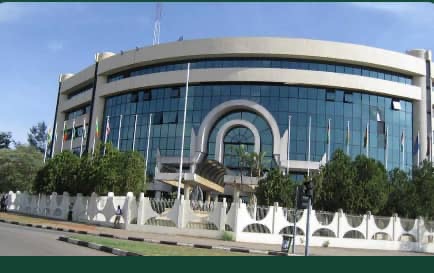
The Economic Community of West African States (ECOWAS) says plans are underway by the regional bloc to activate a 260,000-member counter-terrorism brigade.
President of ECOWAS, Omar Alieu Touray, stated this at the 2025 African Chiefs of Defence Staff summit in Abuja. The summit’s theme was, “Combating contemporary threats to regional peace and security in Africa: the role of strategic Defence collaboration.” 
Touray, who was represented by ECOWAS commissioner for political affairs, peace and security, Amb. Abdel-Fatau Musah, said this was part of the efforts to reduce the scourge of terrorism and other forms of insecurity in the sub-region. He said besides the counter-terrorism effort, the bloc is also pursuing the operationalization of its integrated maritime security, adding that no region in Africa is spared the scourge of terrorism, civil and predatory wars, organized crime, and underdevelopment.
The Economic Community of West African States (ECOWAS) says plans are underway by the regional bloc to activate a 260,000-member counter-terrorism brigade.
President of ECOWAS, Omar Alieu Touray, stated this at the 2025 African Chiefs of Defence Staff summit in Abuja. The summit’s theme was, “Combating contemporary threats to regional peace and security in Africa: the role of strategic Defence collaboration.”
Touray, who was represented by ECOWAS commissioner for political affairs, peace and security, Amb. Abdel-Fatau Musah, said this was part of the efforts to reduce the scourge of terrorism and other forms of insecurity in the sub-region. He said besides the counter-terrorism effort, the bloc is also pursuing the operationalization of its integrated maritime security, adding that no region in Africa is spared the scourge of terrorism, civil and predatory wars, organized crime, and underdevelopment.
He disclosed that the regional bloc required $2.5 billion for the activation of the counter-terrorism brigade in order to provide logistics and financial support to frontline troops in states facing terrorism. According to him, while the various crises may be local, they require a coordinated continental response, with the African Union serving as the glue and the ultimate coordinating hub for these endeavors.
He said, “There is no denying that West Africa, in particular the Sahel sub-region, has emerged as the epicenter of global terrorism, with several analytical surveys indicating that the Sahel accounted for 51% of global terrorism deaths in 2024 alone.
On the directive of the ECOWAS’ Heads of Government, the organization is in the process of activating a 260,000-strong rapid deployment counter-terrorism brigade and to provide logistics and financial support to frontline states facing terrorism.
“While ECOWAS remains firmly committed to raising its 5,000-man brigade under the auspices of the African Peace and Security Architecture and more particularly the Continental Standby Force, the activation of this rapid deployment force has become a necessity given the asymmetric security dynamics in the region.
“We are conscious of the fact that this bold initiative requires the necessary financial resources and capabilities to make it a reality. To this end, ECOWAS will be hosting a meeting of the Ministers of Finance and Defense to agree on country funding modalities to raise an annual budget of $2.5 billion for the activation of the regional counter-terrorism brigade.”
Touray further disclosed that the ministers will be meeting this coming Friday in Abuja to finalize modalities on how to raise the funds.
“By this initiative, ECOWAS is also throwing the gauntlet to bilateral and multilateral partners to complement this daring regional initiative. In particular, we hope that this summit will, through the African Union, send a clarion call to the United Nations to redeem the pledge made under United Nations Security Council Resolution 2719 of December 2023 to fund 75% of African-led peace support operations,” he said.
Take ownership of your security architecture, UN tells African leaders
The United Nations, on Monday, charged African leaders to take full ownership of the continent’s security, warning that violent extremism, cyber warfare, and climate change are already reshaping Africa’s stability.
It specifically said Africa today has become the epicenter of global terrorism deaths, with attacks in West Africa’s coastal states surging by 250 percent in just two years.
The Deputy Secretary-General of the UN, Amina Mohammed, while speaking at the summit, specifically called on the Defence Chiefs in Africa to be directly involved in taking ownership of the security architecture of the continent. She described the summit as “the birth of a new era in African security cooperation,” saying it was a rare opportunity to connect “the boots on the ground with the policies that shape our collective future.”
Africa today is the epicenter of global terrorism deaths. Attacks in West Africa’s coastal states have surged by 250 percent in just two years,” the Deputy UN chief said.
Speaking further, Mohammed, who was a former Nigerian Minister of Environment, also highlighted new and emerging threats.
“By the end of last year, 14,000 schools were closed in the Sahel due to conflict. We risk losing an entire generation,” the Deputy UN chief warned.
She added, “Cyberspace today is a battlespace. Once it was the radio that carried messages of hate and incited genocide. Today, it is social media, amplifying division at terrifying speed,” she said.
On artificial intelligence, Mohammed cautioned that while AI can help predict food insecurity and detect landmines, it also “raises profound risks for human rights, dignity, and the rule of law. According to her, algorithms are already being used to make life-or-death decisions — a responsibility that must remain human.
She equally underscored the role of climate change in fueling insecurity, adding that the shrinking waters of Lake Chad alone have displaced over three million people.
“The evidence is overwhelming, and the consequences are undeniable,” she said, adding that African leaders need to act collectively. She stated: “Security cannot be pursued in isolation, it is inseparable from development, human rights, and climate resilience. Above all, Africa will not be a bystander. Africa will take ownership of its security, harness technology for peace, and protect its people. Nearly 1.5 billion Africans are counting on us to rise to this moment,” she said.
Tinubu calls for united African defence strategy
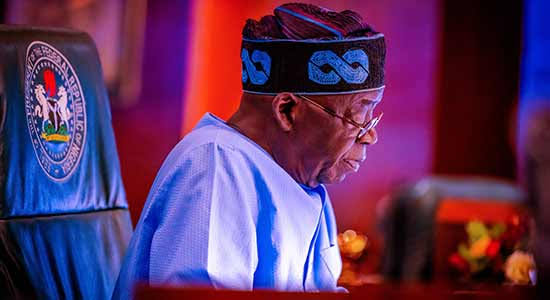
In the meantime, President Bola Ahmed Tinubu has emphasized the urgent need for collective action and cooperation among African nations to effectively tackle terrorism, cybercrime, transnational crime, and other security threats across the continent.
Tinubu, who was represented by his Vice President, Kashim Shettima, urged defence chiefs to develop a new continental defence doctrine. He said the strategy must be anchored on trust, shared intelligence, and coordinated action to effectively address the growing security challenges facing the African continent, adding that the scale of threats on the continent demanded a united response.
“From the deserts where insurgency festers, to the high seas where piracy prowls, from the silent corridors of cybercrime to the ruthless networks of transnational criminals, none of these tragedies respects borders,” Tinubu said.
He emphasized that in the face of such widespread threats, African nations must not respond in isolation, adding, “neither should our response.”
“This is the moment to reassess our military objectives in the collective aspiration to make Africa safe.”
Highlighting Africa’s interconnectedness, Tinubu described the continent as a family whose shared geography and destiny demanded mutual defense. “In this family, defense is the first expression of love each member can promise the other,” he added.
He proposed the establishment of a permanent African Chiefs of Defence Staff Forum, which would serve as a platform for continuous dialogue, strategic planning, and operational coordination.
“This summit must not end with applause. Let it become a cornerstone of Africa’s new security architecture,” he said.
Tinubu reaffirmed Nigeria’s long-standing commitment to regional peace and cooperation through peacekeeping missions, counterterrorism, and humanitarian efforts. He urged African countries to invest in cyber defense, artificial intelligence, and indigenous military innovation, adding that Africa must move beyond merely consuming technology to becoming creators and owners of security tools.
“Africa cannot remain merely a consumer of technology; we must be creators, innovators, and owners of the tools that secure our tomorrow,” he declared.
He also called for partnerships with the private sector to drive investment in defense innovation and capacity building. Paying tribute to fallen soldiers, Tinubu said their legacies must be honored through the institutions, values, and partnerships that secured Africa’s future.
Over 1,000 insurgent groups operating in Africa, says Buhari’s ex-CoS
Earlier, Prof. Ibrahim Gambari, a former Chief of Staff to late President Muhammadu Buhari, revealed that over 1,000 insurgent groups are currently operating within the African continent, the majority of whom he said were deadly. He, therefore, called on the African leaders to strengthen Defence industries and own its technologies in order to address the threats, saying it was high time for the African nations to design and build their own security architecture that guarantees human security.
Gambari, also a former Minister of external affairs and former Nigeria’s permanent representative to the United Nations, called on African nations to first secure their various nations before securing the region and continent at large.
Mali, Burkina Faso, and others absent from summit
Checks by our correspondent, who covered the summit, showed that out of the 54 African countries that were invited to participate, 36 were represented. Notably, Niger Republic representatives honored the invitation, but Mali and Burkina Faso were conspicuously absent. Their absence might not be unconnected with the political tension between the countries and the regional bloc, ECOWAS.
Speaking, a former Prime Minister of the Republic of Guinea, Lansana Kouyate, urged African leaders to pursue collective security, stressing that peace remains the foundation of sustainable development on the continent. Kouyaté said the gathering of defence chiefs from all 54 African countries signaled a historic step in confronting terrorism and insecurity.
“For the first time, the Chiefs of Defence of the whole continent are together. This shows how important the subject is — without peace, there is no development,” he said.
The former Prime Minister noted that Africa is too often perceived as a single country rather than a continent of diverse nations, a legacy of both history and colonization. He said he would further present ideas on innovative financing for security through public-private partnerships during the forum’s sessions.
He disclosed that the regional bloc required $2.5 billion for the activation of the counter-terrorism brigade in order to provide logistics and financial support to frontline troops in states facing terrorism. According to him, while the various crises may be local, they require a coordinated continental response, with the African Union serving as the glue and the ultimate coordinating hub for these endeavors.
He said, “There is no denying that West Africa, in particular the Sahel sub-region, has emerged as the epicenter of global terrorism, with several analytical surveys indicating that the Sahel accounted for 51% of global terrorism deaths in 2024 alone.
“On the directive of the ECOWAS’ Heads of Government, the organization is in the process of activating a 260,000-strong rapid deployment counter-terrorism brigade and to provide logistics and financial support to frontline states facing terrorism.
“While ECOWAS remains firmly committed to raising its 5,000-man brigade under the auspices of the African Peace and Security Architecture and more particularly the Continental Standby Force, the activation of this rapid deployment force has become a necessity given the asymmetric security dynamics in the region.
“We are conscious of the fact that this bold initiative requires the necessary financial resources and capabilities to make it a reality. To this end, ECOWAS will be hosting a meeting of the Ministers of Finance and Defense to agree on country funding modalities to raise an annual budget of $2.5 billion for the activation of the regional counter-terrorism brigade.”
Touray further disclosed that the ministers will be meeting this coming Friday in Abuja to finalize modalities on how to raise the funds.
“By this initiative, ECOWAS is also throwing the gauntlet to bilateral and multilateral partners to complement this daring regional initiative. In particular, we hope that this summit will, through the African Union, send a clarion call to the United Nations to redeem the pledge made under United Nations Security Council Resolution 2719 of December 2023 to fund 75% of African-led peace support operations,” he said.
Take ownership of your security architecture, UN tells African leaders
The United Nations, on Monday, charged African leaders to take full ownership of the continent’s security, warning that violent extremism, cyber warfare, and climate change are already reshaping Africa’s stability.
It specifically said Africa today has become the epicenter of global terrorism deaths, with attacks in West Africa’s coastal states surging by 250 percent in just two years.
The Deputy Secretary-General of the UN, Amina Mohammed, while speaking at the summit, specifically called on the Defence Chiefs in Africa to be directly involved in taking ownership of the security architecture of the continent. She described the summit as “the birth of a new era in African security cooperation,” saying it was a rare opportunity to connect “the boots on the ground with the policies that shape our collective future.”
“Africa today is the epicenter of global terrorism deaths. Attacks in West Africa’s coastal states have surged by 250 percent in just two years,” the Deputy UN chief said.
Speaking further, Mohammed, who was a former Nigerian Minister of Environment, also highlighted new and emerging threats.
“By the end of last year, 14,000 schools were closed in the Sahel due to conflict. We risk losing an entire generation,” the Deputy UN chief warned.
She added, “Cyberspace today is a battlespace. Once it was the radio that carried messages of hate and incited genocide. Today, it is social media, amplifying division at terrifying speed,” she said.
On artificial intelligence, Mohammed cautioned that while AI can help predict food insecurity and detect landmines, it also “raises profound risks for human rights, dignity, and the rule of law. According to her, algorithms are already being used to make life-or-death decisions — a responsibility that must remain human.
She equally underscored the role of climate change in fueling insecurity, adding that the shrinking waters of Lake Chad alone have displaced over three million people.
“The evidence is overwhelming, and the consequences are undeniable,” she said, adding that African leaders need to act collectively. She stated: “Security cannot be pursued in isolation, it is inseparable from development, human rights, and climate resilience. Above all, Africa will not be a bystander. Africa will take ownership of its security, harness technology for peace, and protect its people. Nearly 1.5 billion Africans are counting on us to rise to this moment,” she said.
Tinubu calls for united African defence strategy
In the meantime, President Bola Ahmed Tinubu has emphasized the urgent need for collective action and cooperation among African nations to effectively tackle terrorism, cybercrime, transnational crime, and other security threats across the continent.
Tinubu, who was represented by his Vice President, Kashim Shettima, urged defence chiefs to develop a new continental defence doctrine. He said the strategy must be anchored on trust, shared intelligence, and coordinated action to effectively address the growing security challenges facing the African continent, adding that the scale of threats on the continent demanded a united response.
“From the deserts where insurgency festers, to the high seas where piracy prowls, from the silent corridors of cybercrime to the ruthless networks of transnational criminals, none of these tragedies respects borders,” Tinubu said.
He emphasized that in the face of such widespread threats, African nations must not respond in isolation, adding, “neither should our response.”
“This is the moment to reassess our military objectives in the collective aspiration to make Africa safe.”
Highlighting Africa’s interconnectedness, Tinubu described the continent as a family whose shared geography and destiny demanded mutual defense. “In this family, defense is the first expression of love each member can promise the other,” he added.
He proposed the establishment of a permanent African Chiefs of Defence Staff Forum, which would serve as a platform for continuous dialogue, strategic planning, and operational coordination.
“This summit must not end with applause. Let it become a cornerstone of Africa’s new security architecture,” he said.
Tinubu reaffirmed Nigeria’s long-standing commitment to regional peace and cooperation through peacekeeping missions, counterterrorism, and humanitarian efforts. He urged African countries to invest in cyber defense, artificial intelligence, and indigenous military innovation, adding that Africa must move beyond merely consuming technology to becoming creators and owners of security tools.
“Africa cannot remain merely a consumer of technology; we must be creators, innovators, and owners of the tools that secure our tomorrow,” he declared.
He also called for partnerships with the private sector to drive investment in defense innovation and capacity building. Paying tribute to fallen soldiers, Tinubu said their legacies must be honored through the institutions, values, and partnerships that secured Africa’s future.
Over 1,000 insurgent groups operating in Africa, says Buhari’s ex-CoS
Earlier, Prof. Ibrahim Gambari, a former Chief of Staff to late President Muhammadu Buhari, revealed that over 1,000 insurgent groups are currently operating within the African continent, the majority of whom he said were deadly. He, therefore, called on the African leaders to strengthen Defence industries and own its technologies in order to address the threats, saying it was high time for the African nations to design and build their own security architecture that guarantees human security.
Gambari, also a former Minister of external affairs and former Nigeria’s permanent representative to the United Nations, called on African nations to first secure their various nations before securing the region and continent at large.
Mali, Burkina Faso, and others absent from summit
Checks by our correspondent, who covered the summit, showed that out of the 54 African countries that were invited to participate, 36 were represented. Notably, Niger Republic representatives honored the invitation, but Mali and Burkina Faso were conspicuously absent. Their absence might not be unconnected with the political tension between the countries and the regional bloc, ECOWAS.
Speaking, a former Prime Minister of the Republic of Guinea, Lansana Kouyate, urged African leaders to pursue collective security, stressing that peace remains the foundation of sustainable development on the continent. Kouyaté said the gathering of defence chiefs from all 54 African countries signaled a historic step in confronting terrorism and insecurity.
“For the first time, the Chiefs of Defence of the whole continent are together. This shows how important the subject is — without peace, there is no development,” he said.
The former Prime Minister noted that Africa is too often perceived as a single country rather than a continent of diverse nations, a legacy of both history and colonization. He said he would further present ideas on innovative financing for security through public-private partnerships during the forum’s sessions.