
News
Presidential jet still unsold four months after listing




The Presidential Boeing 737-700 Business Jet, listed for sale by the Nigerian government in July 2025, remains unsold nearly four months after it was uploaded on an international aircraft sales platform.
This was confirmed through email exchanges between our correspondent and the marketing firm handling the listing, JetHQ, based in the United States.
In response to an inquiry, the company’s Market Research Assistant, Marinell Nuevo, confirmed that the aircraft “remains available.”
However, she referred further correspondence to the firm’s Market Research Manager, Ms Laurie Barringer, who declined to provide additional information on the sale.
“We do not provide this kind of information to anyone but the direct owner of the aircraft. This is considered proprietary information. I hope you can understand. The only data that we can provide you is that the aircraft remains available for sale,” Barringer stated in her reply.
A follow-up message demanding accountability, stating that the jet was bought and maintained with taxpayers’ money, has yet to be responded to as of press time.
The aircraft, a Boeing 737-700 Business Jet, is being managed by AMAC Aerospace, a Switzerland-based company specialising in maintenance and aircraft sales.
According to details on the listing, the aircraft has undergone partial refurbishment and multiple inspections at AMAC’s Basel facility in July 2024 — including full refurbishment of the first-class seats, replacement of cabin carpets, and completion of major C1–C2 inspections.
The listing describes the aircraft as “one owner since new, always hangared,” with a 33-passenger configuration and eight crew members, totalling 41 seats.
According to data from aircraftcostcalculator.com, a website that provides aircraft valuation estimates, a pre-owned Boeing 737 BBJ has an average market value of $56m, depending on its specifications and maintenance history.
“Depending on numerous factors, the average price for a pre-owned Boeing BBJ is $56,000,000. A $28,000,000 loan over 120 months, including $116,667 per month in interest, equates to a $1,404,024 per, period payment. Based on 450 annual owner – operated hours and $6 – per, GAL fuel cost, the Boeing BBJ has total variable costs of $3,900,915, total fixed costs of $1,301,481, and an annual budget of $5,202,396. This breaks down to $11,561 per hour,” it stated.
The operational cost for such a jet averages about $11,561 per flight hour, with an estimated annual ownership cost exceeding $5.2 million, including fuel, maintenance, and crew expenses.
The PUNCH had reported that the aircraft was originally purchased in 2005 for $43m under the administration of former President Olusegun Obasanjo. Since then, it has been part of the Presidential Air Fleet.
In July 2025, the President Bola Tinubu administration decided to put the aircraft up for sale as part of a broader cost-cutting and fleet rationalisation effort, amid rising public scrutiny over government expenditure and the maintenance cost of multiple presidential aircraft.
Four months later, however, the sale has not been finalised — a situation that raises questions about global market interest, pricing, and the ongoing maintenance cost of the aircraft bought and maintained with taxpayers’ money.

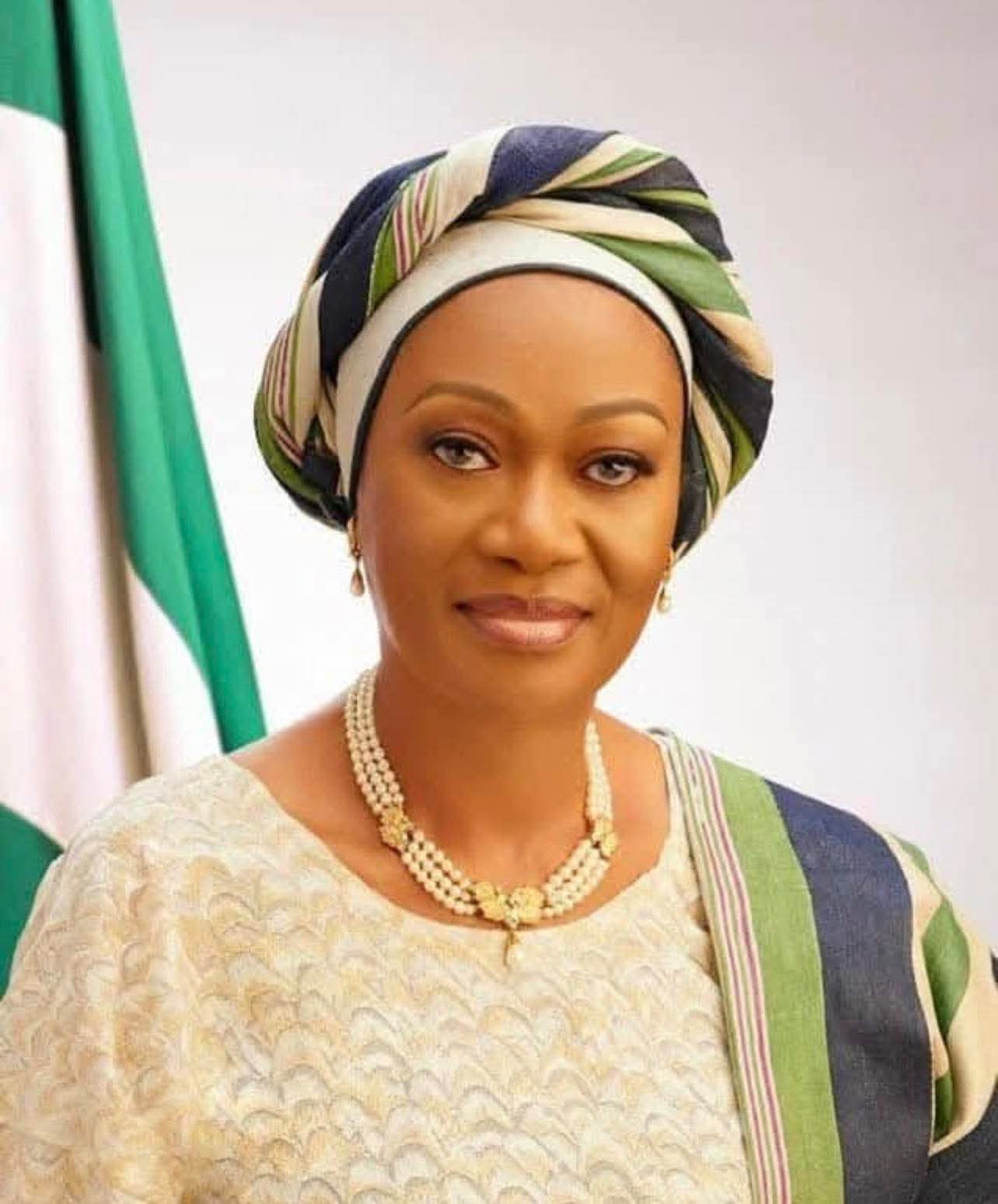
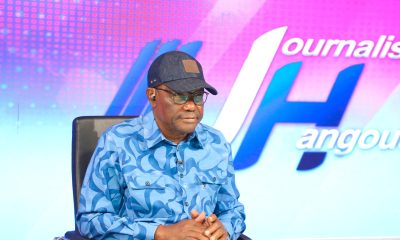
The Federal Capital Territory (FCT) Minister, Nyesom Wike, has described the First Lady of Nigeria, Senator Oluremi Tinubu, as a major pillar of support for President Bola Tinubu in particular and Nigerians, especially the vulnerable ones in general.
The FCT Minister, in a goodwill message to the First Lady on her 66th birthday, commended her for the transformation of the Abuja City Gate, saying “the roles the First Lady played in transforming the Abuja City Gate into how it is today, is a manifestation of her commitment to the success of her husband’s administration.”
In a statement by his Senior Special Assistant on Public Communications and Social Media, Lere Olayinka, the Minister also hailed the First Lady’s Renewed Hope Initiative, noting that it has brought succor to several vulnerable Nigerians in the last three years.
Wike said; “At 66, the simple way of life of the First Lady, Mrs Oluremi Tinubu, CON, has remained an inspiration to women in the country, and it is my prayer that God will continue to uphold her.
“Most importantly, this new age is a confirmation of God’s love for her, and I pray that the good Lord will continue to grant her good health.
“I celebrate and rejoice with our ever caring and development oriented First Lady on the attainment of this significant age in her life and wish her many more years of service to our country, Nigeria.”

The Joint Admissions and Matriculation Board, JAMB, has sacked one of its staff members for allegedly extorting unsuspecting candidates.
The Board made this known on Monday in its bulletin, stating that the action was part of its renewed efforts to eliminate fraudulent practices within the admission and examination system.
According to JAMB, the sanction against the unnamed staff member showed that its fight against exploitation was not limited to external fraudsters but also applied to employees found abusing their positions.
“The Joint Admissions and Matriculation Board, JAMB, has terminated the appointment of one of its staff members for extorting unsuspecting candidates, in further demonstration of its renewed commitment to flushing out bad eggs from the system,” the board stated.
It further cautioned its employees against engaging in activities capable of undermining its credibility or exploiting candidates and members of the public.
The Board stressed that any staff members found guilty of misconduct would face severe consequences in line with established regulations.
“The Board noted that the action sends a clear and unequivocal message that its zero-tolerance policy on corruption and misconduct applies to everyone, irrespective of status or position,” it added.
The tertiary examination body reiterated that it would not shield any employee who abuses the trust placed in them by candidates or members of the public.
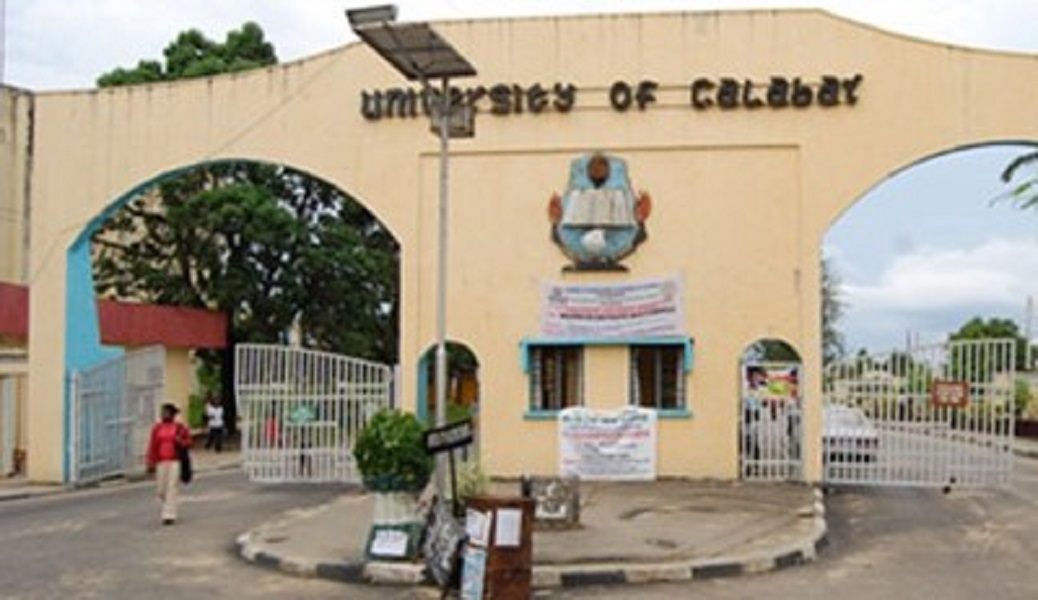
The Senate of the University of Calabar (UniCal) has suspended nine students for one academic session over their involvement in examination misconduct.
According to a statement by the university’s public relations unit and made available in Calabar on Monday, the suspension was conveyed to the affected students in letters signed by the registrar, Chukwuka Icha.
The action, the university said, followed approval by the Senate following recommendations by its Examination Misconduct Committee (SEMC).
“The affected students have been suspended for the 2026/2027 academic session and are expected to resume their studies in the 2027/2028 academic session.
“Five of the affected students are from the Department of Theatre and Media Studies, Faculty of Arts,” it said.
The others are in the Department of Human Nutrition and Dietetics, Faculty of Basic Medical Sciences; the Department of Geology, Faculty of Physical Sciences; the Department of Pharmacology, Faculty of Basic Medical Sciences; and the Department of Sociology, Faculty of Social Sciences,” the statement said.
The university directed the acting chief security officer, deans, heads of departments, and other relevant units to take note of the suspension and ensure full compliance with the directive.
(NAN)

Wike Hails First Lady Oluremi Tinubu At 66, Says “She’s a pillar of support for Nigerians”

*WHEN PRIVACY BECOMES CONTENT*

JAMB sacks staff member over extortion of candidates




-
 News23 hours ago
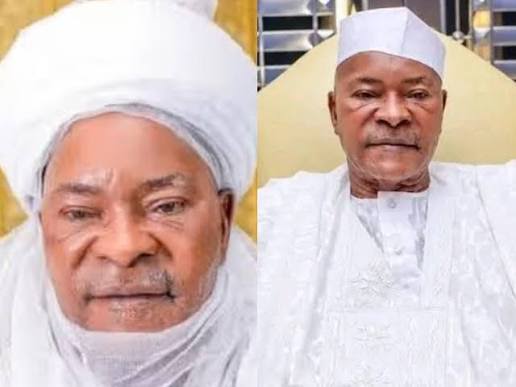
Tinubu mourns former Kogi governor, Ibrahim Idris
-

 News20 hours ago
Kalu hails Oluremi Tinubu at 66, Praises Support for Women, Vulnerable Nigerians
-
 News21 hours ago
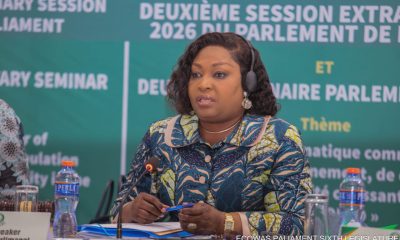
ECOWAS Parliament Seeks Urgent Action as Climate Change Fuels Displacement, Insecurity
-
 News17 hours ago
FCT minister Wike’s words on marble
-
News17 hours ago
2027: Wike Reveals Why APC Governors Are Opposing Rainbow Coalition
-

 News23 hours ago
Forest guards in Borno undergo counter-terrorism training under army’s supervision