
News
Forum of Retired Oil Workers Commends NUPRC’s Bold Reforms, Rising Output Under Komolafe

- /home/naijuinz/public_html/wp-content/plugins/mvp-social-buttons/mvp-social-buttons.php on line 27
https://naijablitznews.com/wp-content/uploads/2024/03/crude-oil-production.jpg&description=Forum of Retired Oil Workers Commends NUPRC’s Bold Reforms, Rising Output Under Komolafe', 'pinterestShare', 'width=750,height=350'); return false;" title="Pin This Post">
- Share
- Tweet /home/naijuinz/public_html/wp-content/plugins/mvp-social-buttons/mvp-social-buttons.php on line 72
https://naijablitznews.com/wp-content/uploads/2024/03/crude-oil-production.jpg&description=Forum of Retired Oil Workers Commends NUPRC’s Bold Reforms, Rising Output Under Komolafe', 'pinterestShare', 'width=750,height=350'); return false;" title="Pin This Post">


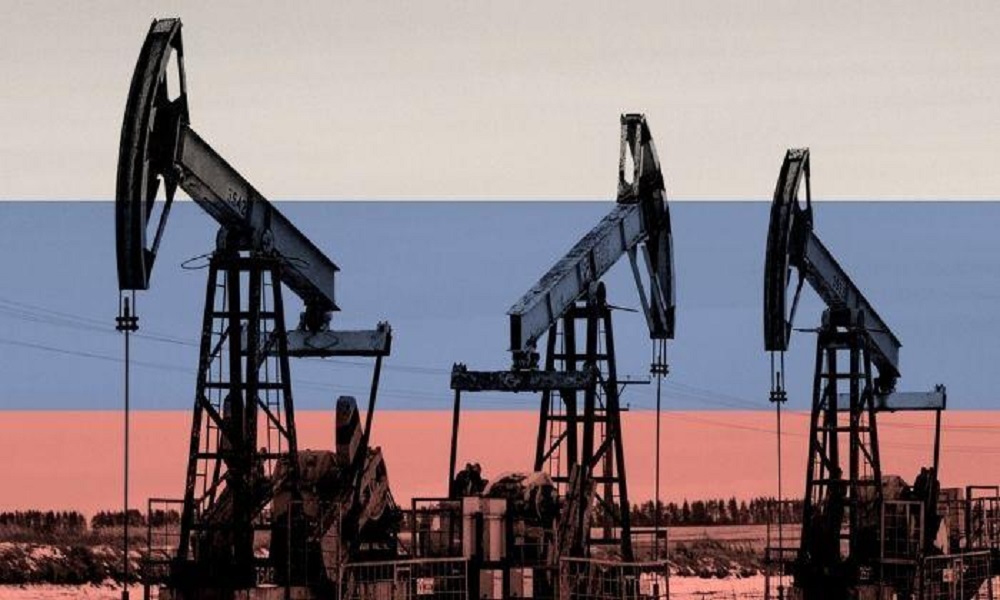
The Forum of Retired Oil Workers has commended the Nigerian Upstream Petroleum Regulatory Commission (NUPRC) for its bold reforms, transparency drive, and renewed investor confidence under the leadership of its Chief Executive, Gbenga Komolafe.
In a statement on Monday signed by its president, Richard Jackson, the forum described Komolafe’s leadership as “visionary, reform-driven, and deeply aligned with President Bola Tinubu’s agenda to reposition the oil and gas sector for sustainable growth and global competitiveness”.
The group said the series of policy initiatives and operational reforms introduced by the NUPRC since the enactment of the Petroleum Industry Act (PIA) have revived investor trust, improved production output, and repositioned Nigeria as an attractive energy investment hub in Africa.
“The Commission’s approach under Engr. Gbenga Komolafe represents a decisive shift from bureaucracy to performance. By focusing on regulatory clarity, transparency, and accountability, the NUPRC has restored credibility to the upstream sector and demonstrated that Nigeria remains open for responsible and profitable investment,” the statement reads.
The forum noted that the 28 Field Development Plans (FDPs) approved by the Commission in 2025 alone, projected to deliver 600,000 barrels of oil per day and more than 2 billion standard cubic feet of gas daily, underscore a strategic turnaround for the industry.
“These are not mere figures; they represent renewed life in an industry once bogged down by uncertainty and underinvestment. An additional 1.4 billion barrels of oil and 5.4 trillion cubic feet of gas unlocked in one year shows that the reforms are not cosmetic; they are delivering measurable results,” Jackson added.
According to the forum, Komolafe’s regulatory model has not only driven production but also attracted significant capital inflows, with over $18 billion in new investment commitments recorded this year.
The retired oil workers said this scale of investor response was proof that the Commission’s transparent licensing rounds and fiscal stability measures were being recognised globally.
“From the 2022 Petroleum Prospecting Licences to the 2024 deep offshore bid round, every process has been transparent and benchmarked to international standards. That is the type of leadership and accountability we had always hoped to see in Nigeria’s oil industry,” the group observed.
The forum particularly praised the Commission’s collaboration with host communities and its emphasis on decarbonisation and energy transition through measurable frameworks that balance economic growth with environmental responsibility.
“Komolafe has brought a pragmatic approach to energy transition; one that recognises the need for cleaner energy while protecting Nigeria’s economic stability,” Jackson said.
“The Decade of Gas initiative, complemented by the Commission’s Decarbonisation Framework, shows that the regulator understands both the global conversation and local realities.”
The retired oil professionals also lauded the Commission’s enforcement of 24 new regulations aligned with the PIA, describing them as “a solid foundation for a predictable, investor-friendly operating environment”.
“Rig activity rising from just 8 in 2021 to 70 today, alongside rising oil output to 1.8 million barrels per day, are strong indicators that the NUPRC’s strategies are working,” the statement said.
The forum urged the Commission to sustain its reform momentum, deepen stakeholder engagement, and continue to hold operators accountable to global safety, governance, and transparency standards.
“We believe the NUPRC is writing a new chapter in Nigeria’s oil and gas history. Under Komolafe’s stewardship, the sector is becoming more efficient, responsible, and profitable. That is the best tribute to decades of work by Nigerians who built this industry,” the statement added.


By Our Correspondent.
Leading fintech company, OPay Digital Services, has dismissed as false and malicious a viral social media publication claiming that the company would embark on a prolonged break from September 1, 2026, urging its customers to withdraw or move their funds.
The fabricated publication, which gained traction across social media platforms on Sunday, purportedly warned OPay customers that the fintech would shut down its operations for an extended period beginning September 1.
However, OPay, in an official response published across its verified social media platforms, described the claim as false, assuring customers that the company remains fully operational.
In a statement titled, “This is FALSE!”, the fintech said: “OPay is not going on break by September. We’re here, and we’re going nowhere! 💚”
The company further urged its customers and members of the public to scrutinise the viral publication for inconsistencies and rely only on its verified communication channels for authentic information.
“True OPay users know how to identify our official communications. Take a closer look at the viral post and you’ll spot the red flags.
“Always verify before you share. Filter the noise! Follow our official pages for authentic OPay updates,” the company stated, ending the message with the hashtag, #OPayIsOkay.
Also reacting to the development, the Vice President, Public and Government Affairs, OPay Digital Services, Dr. Maxwell Loko, described the viral publication as “false, malicious and misleading.”
Loko said OPay was not shutting down and cautioned customers against taking any action based on the fabricated information.
“This post is false, malicious and misleading. OPay is not shutting down, and customers should not be misled into withdrawing their funds based on fabricated information,” he said.
He urged members of the public to disregard the publication and depend exclusively on OPay’s verified platforms for official announcements.
“We urge the public to disregard this post and rely only on OPay’s verified communication channels for official information,” Loko added.
The OPay executive further warned that deliberate attempts to spread false information capable of creating panic or undermining confidence in a financial institution could attract legal consequences.
“The deliberate spread of false information designed to cause panic or undermine confidence in a financial institution is a serious matter and may have legal consequences,” he said.
The development has also raised concerns over the growing use of fabricated digital content to damage the reputation of financial technology companies and potentially trigger unnecessary panic among customers.
While speculation has circulated in some quarters that the publication could be linked to competitive interests seeking to undermine OPay’s growing market position, no evidence has been publicly established to substantiate such claims.
OPay therefore advised its customers to exercise caution and verify financial or operational announcements through its authenticated communication channels before acting on them.
The company’s clarification effectively puts to rest the viral claim that it would cease or suspend operations from September 1, 2026, with OPay reaffirming that its services remain available to customers.
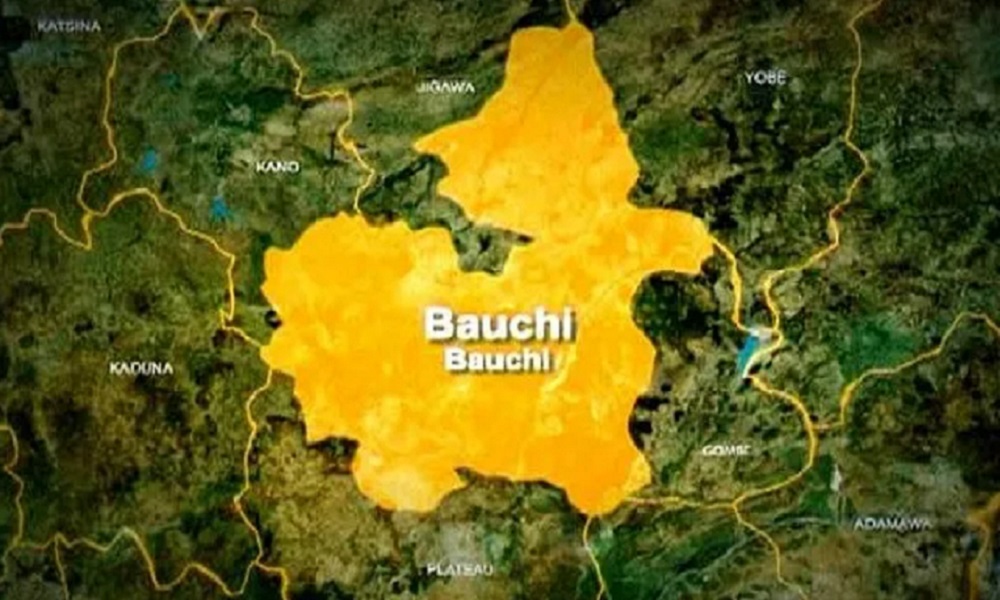
The Bauchi State Police Command has arrested a 70-year-old man, Usman Abubakar, over the alleged defilement of an eight-year-old girl in the Tsakanin Bayara area of Bauchi metropolis.
According to a statement issued by the Command’s Police Public Relations Officer, Superintendent of Police (SP) Nafiu Habib, the suspect was arrested following a complaint lodged at the ‘E’ Division, Yelwa, by the victim’s 48-year-old father on Wednesday, August 26, 2026.
According to the police, the father alleged that the suspect, who resides in the same area, lured his daughter to an uncompleted building on Sunday, August 24, where he allegedly sexually assaulted her.
The Command said its operatives immediately commenced action after receiving the report and arrested the suspect.
The police further stated that the suspect allegedly confessed to the offence during interrogation.
Following the incident, the victim was taken to the Police Clinic for medical examination and necessary care.
The Commissioner of Police, CP Sani-Omolori Aliyu, condemned the alleged offence and assured members of the public that the matter would be thoroughly investigated.
The case has been transferred to the State Criminal Investigation Department (SCID), Bauchi, for discreet investigation and prosecution, according to the Command.
The police reiterated their zero tolerance for sexual violence and child abuse, while urging parents, guardians and members of the public to remain vigilant and report suspicious activities to the nearest police station.
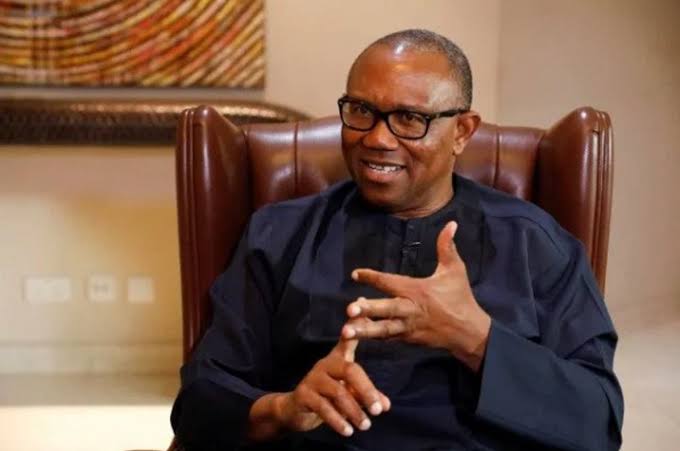
Nigeria Democratic Congress, NDC presidential candidate, Peter Obi, has expressed sympathy with traders and business owners affected by the fire that gutted Eda Plaza in Jabi, Abuja, on Sunday.
Obi, in a statement posted on his X handle on Sunday, said the incident highlighted the need to strengthen Nigeria’s emergency-response systems, particularly the capacity of fire services.
A fire outbreak destroyed shops and goods reportedly worth millions of naira at the plaza, a building materials market opposite Chida Hotel in Jabi.
An eyewitness told the Nigerian Television Authority that the alarm was raised around 3am after a trader received a distress call about the fire.
The eyewitness said the fire destroyed one of his brother-in-law’s two shops and a packing store, with roofing materials worth more than N20m reportedly lost in the blaze.
There were no reported casualties.
Reacting to the incident, Obi said his “heart goes out to the traders, artisans, workers, families and business owners whose goods, investments and livelihoods may have been affected by this unfortunate incident.”
He noted that the losses suffered by the traders represented more than merchandise, noting that they included years of savings, borrowing and sacrifice.
“As a country, we cannot continue to lose businesses and livelihoods repeatedly to preventable disasters. Each time this happens, we gradually lose our productive capacity,” he said.
The former Anambra State governor said small businesses were “the backbone of our economy” and that losses suffered by traders could affect their families, workers and communities.
Obi urged authorities to strengthen emergency-response systems, particularly by ensuring that fire services were properly equipped and adequately staffed.
“As we grieve what has happened at Jabi Market, let us not wait for another market to burn before we act. Let this tragedy become a reason to strengthen our emergency-response systems, especially by ensuring that our fire service is properly equipped, adequately staffed and capable of responding swiftly to emergencies.”
“We must protect our small businesses and ensure that Abuja, and indeed Nigeria, becomes a safer place to live, work and invest,” he added.
Obi also prayed for those affected by the incident and emergency responders.
“May God comfort every person affected by this disaster, restore the livelihoods that have been lost, and grant our emergency responders the strength and wisdom required at this difficult moment,” he said.

OPay Rubbishes Viral Shutdown Rumour, Warns Against Fake Publication

Zamfara 2027 governorship battle: Group salutes PDP candidate for scaling INEC hurdle, pledges mobilisation support

British Nigerian heavy weight boxer, Moses Itauma discharged from hospital




-

 Politics18 hours ago
Kwara 2027: Zakari Mohammed, Kale Kawu, Speaker Danladi, Apaokagi Make The List As INEC Displays Names, Details Of Guber Candidates
-

 News18 hours ago
Power Mystery: FG probes missing 100MW, N120bn revenue loss
-

 News18 hours ago
I Won’t Ever Forgive APC – El-Rufai’s Son
-
 News14 hours ago
Rep Chinda, others make INEC list as gubernatorial candidates for Rivers
-

 Metro18 hours ago
Sokoto Hisbah denies imposing restrictions on Christian worship
-

 News18 hours ago
How to apply for FG’s N10bn TETFund research grant
-

 Metro18 hours ago
25 terrorists killed as troops repel attack on Borno community
-

 News14 hours ago
BREAKING: Nigerian British heavyweight boxer Itauma carried out on stretcher after being knocked out in world title bout