News
Nigeria and South Africa Deepen Bilateral Ties, Commit to Stronger Cooperation Across Key Sectors
- /home/naijuinz/public_html/wp-content/plugins/mvp-social-buttons/mvp-social-buttons.php on line 27
https://naijablitznews.com/wp-content/uploads/2025/10/FB_IMG_1761084880469-1000x600.jpg&description=Nigeria and South Africa Deepen Bilateral Ties, Commit to Stronger Cooperation Across Key Sectors', 'pinterestShare', 'width=750,height=350'); return false;" title="Pin This Post">
- Share
- Tweet /home/naijuinz/public_html/wp-content/plugins/mvp-social-buttons/mvp-social-buttons.php on line 72
https://naijablitznews.com/wp-content/uploads/2025/10/FB_IMG_1761084880469-1000x600.jpg&description=Nigeria and South Africa Deepen Bilateral Ties, Commit to Stronger Cooperation Across Key Sectors', 'pinterestShare', 'width=750,height=350'); return false;" title="Pin This Post">
By Gloria Ikibah
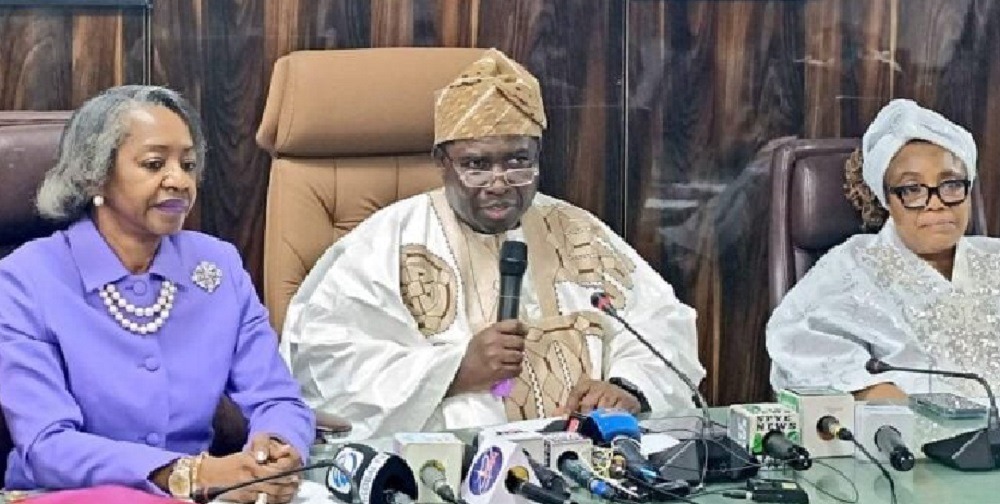
Nigeria and South Africa have restated their commitment to strengthening bilateral relations through deeper cooperation in trade, investment, defence, energy, and cultural exchange.
Both countries made this pledge during a high-level political consultation held in Abuja on 21 October 2025.

The meeting, which marked the inaugural session under a Memorandum of Understanding (MoU) on Political Consultations, was co-chaired by Nigeria’s Minister of State for Foreign Affairs, Ambassador Bianca Odumegwu-Ojukwu, and South Africa’s Deputy Minister of International Relations and Cooperation, Thandi Moraka.
The consultations were held within the framework of the Bi-National Commission (BNC), which serves as the highest bilateral mechanism between the two nations. The discussions focused on strengthening the longstanding friendship, cooperation, and solidarity between both countries, in line with the directives of Presidents Bola Ahmed Tinubu and Cyril Ramaphosa.
Both delegations engaged in extensive discussions on political, economic, and social developments within their countries, across Africa, and globally. The meeting provided a platform to review progress on previously agreed commitments and to address areas that require renewed attention.
According to the communiqué, the two sides reaffirmed their shared commitment to multilateralism, pledging continued cooperation within the United Nations (UN), the African Union (AU), and other international organisations. Both nations also agreed to support each other’s candidatures in multilateral institutions and to jointly advance African positions on global issues.
Among the highlights of the meeting was the review of progress made in key bilateral agreements. The parties noted the April 2025 visit of South Africa’s Minister of Mineral and Petroleum Resources, Gwede Mantashe, to Abuja, during which he signed a partnership agreement with Nigeria’s Minister of Solid Minerals, Dele Alake. The agreement aims to boost investment, share knowledge, and promote technology transfer between the two countries’ mining sectors.
On visa liberalisation, both sides agreed to fast-track simplified visa procedures for businesspersons to ease mobility and enhance trade.
The communiqué also emphasised the strength of cultural collaboration, noting the ongoing Nigeria–South Africa Audio-Visual Cooperation Agreement, which facilitates co-productions, skills transfer, and investment in the film industry.
In the transport sector, the meeting expressed satisfaction with the Memorandum of Understanding (MoU) signed in January 2025 between South Africa’s Air Traffic and Navigation Services (ATNS) and Nigeria’s Airspace Management Agency (NAMA).
However, the two sides also acknowledged delays in finalising the MoU on Standards and Standardisation between Nigeria’s Standards Organisation (SON) and the South African Bureau of Standards (SABS). It was noted that the document remains under review by Nigeria’s Ministry of Justice, prompting South Africa to express concern over the delay through diplomatic channels.
The communiqué further revealed that the two countries plan to operationalise the Joint Ministerial Advisory Council on Industry, Trade and Investment (JMACITI) before the end of 2025 to accelerate economic cooperation and resolve market access challenges.
Both nations welcomed the conclusion of the MoU on the Early Warning Mechanism, describing it as a vital tool for addressing consular and migration issues. They agreed that the 3rd Consular and Migration Forum (CMF) should take place in Pretoria during the first quarter of 2026 to review progress in these areas.
In defence and security, the meeting commended the work of the Defence and Security Working Group, which convened the 6th Session of the Defence Committee (DEFCOM) in Abuja in September 2025 to assess progress on BNC decisions. Other working groups were encouraged to intensify their efforts to ensure timely delivery of all agreed commitments.
To ensure effective follow-up, both parties announced the establishment of a Joint Implementation Committee (JIC), which will serve as a monitoring and evaluation mechanism for all bilateral commitments. The JIC will meet quarterly, primarily through virtual sessions, to track implementation of decisions taken during the last two BNCs and the current consultations.
The two countries also expressed strong support for the upcoming G20 Africa Outreach Meeting on Industrialisation and Agriculture, scheduled to take place in Abuja on 3 November 2025, describing it as an opportunity to amplify Africa’s voice in global economic discussions.
Ambassador Bianca Odumegwu-Ojukwu, speaking on behalf of the Nigerian government, commended the South African delegation for its commitment and constructive engagement during the talks, which she said led to “fruitful and forward-looking outcomes.”
Both parties agreed to hold the next round of political consultations in 2026, preceded by a mid-term review meeting, with dates to be determined through diplomatic channels.
The Abuja meeting underscored the shared resolve of Nigeria and South Africa to deepen collaboration, promote regional stability, and advance Africa’s collective development agenda through mutual respect, partnership, and strategic engagement.
News
“Greatest Threat Is Misinformation, Not Technical Glitch” – INEC Chairman Tasks Media On Osun Poll Coverage
The Chairman of the Independent National Electoral Commission, INEC, Prof. Joash Amupitan, SAN, has described misinformation and disinformation as the greatest threat to the August 15 Osun State Governorship Election, urging the media to prioritize verified and ethical reportage.
He made the call on Saturday in Osogbo during an interactive session with media executives, describing journalists as the “Fourth Estate of the Realm” and critical stakeholders in the democratic process.
“However, your role as the Fourth Estate is critical to the survival of the process. In this final day window, the greatest threat we face is not technical failure, but the pathology of misinformation and disinformation,” the INEC Chairman said.
“Fake news, manufactured election-day panics, and the unauthorized declaration of parallel results are direct assaults on our public peace and democratic stability.”
He said the Commission has accredited field reporters through its dedicated portal “because we want you to see everything,” and in return demanded “a commitment to verified, ethical, and dispassionate reporting.”
“Verify your facts before you broadcast. When a glitch occurs in a single polling unit, do not report it as a systemic failure across the entire state,” Prof. Amupitan charged.
“Use your channels to educate voters: remind them that No PVC means No Voting, and that vote-buying remains a criminal offense that our partners at the EFCC and ICPC have been mandated to curb.”
Giving an update on readiness, the Chairman said the just-concluded mock accreditation proved the resilience of the BVAS.
“The Bimodal Voter Accreditation System (BVAS) demonstrated optimal field resilience. On average, it took between 30 seconds to 2 minutes to successfully verify a voter using either their fingerprints or facial recognition,” he stated.
“As a result, we have increased the total number of BVAS for the election from 4,427 to 5,130 so as to service split polling units in large PUs in Ife East, Irewole, Egbedore, Ede North, Osogbo. In the process, we increased the number of back-ups from 664 to 1,328 for quick intervention in case of any malfunction.”
Prof. Amupitan also addressed insecurity, saying INEC has moved “from reactive monitoring to proactive prevention” through ICCES. He listed hotspot LGAs to include Atakumosa East and West, Boripe, Ede North and South, Ife Central, Ifedayo, Ila, Osogbo, Ifelodun, and Oriade.
On inclusivity, he reaffirmed the Commission’s commitment to vulnerable voters.
“Democracy is incomplete if it excludes vulnerable populations. The Commission has integrated practical assistive devices across polling locations based on our disability mapping in Osun State. We have provisions for braille ballot guides for visually impaired voters; magnifying glasses for voters with albinism and low vision; EC40H poster manifests for hearing-impaired citizens and Priority Voting Queues for Persons with Disabilities (PWDs), pregnant women, nursing mothers, and the elderly,” he said.
The Chairman said 32,000 NYSC members have been engaged as ad-hoc staff via the INECPRES portal and that training for Supervisory Presiding Officers has been concluded.
“We do not care who wins the election; we only care how they win. Our sole job is to ensure that the process is clean, that every valid vote counts, and that the declaration reflects nothing but the true sovereign will of the Osun electorate,” Prof. Amupitan concluded.
The session had in attendance National Commissioners, the Osun REC Barrister Oluwatoyin Babalola, NUJ and BON leadership, Bureau Chiefs, Editors and other senior media executives.
News
Coalition want explanation over alleged BVAS failure in Osun mock accreditation exercise
A group, aegis of Coalition of Concerned Nigeria Citizens (CCNC), has called on the Independent National Electoral Commission (INEC) to immediately explain the alleged widespread failure of the Bimodal Voter Accreditation System (BVAS) during Saturday’s mock accreditation exercise conducted ahead of the August 15 Osun State governorship election.
The group alleged that the mock accreditation, designed to test the commission’s readiness for the election, experienced significant technical challenges after commencing in selected polling units across the state, raising concerns about INEC’s preparedness for the governorship poll.
In a statement signed by its spokesperson, Comrade Raufu Sodiq, popularly known as “Oluomo Success,” the coalition claimed that although the exercise was scheduled to begin at 8:30 a.m., it started behind schedule in some polling units. It further alleged that less than 40 minutes after the exercise commenced, many BVAS machines stopped recognising fingerprints, facial features and Permanent Voter Cards (PVCs), preventing the successful accreditation of voters in the affected locations.
Describing the development as disturbing, the group said a mock accreditation exercise should ordinarily boost public confidence in the electoral process, adding that the reported malfunction of the accreditation devices during the test exercise had instead raised questions about the commission’s level of preparedness.
The coalition argued that accreditation remains the foundation of every credible election because it determines voter eligibility and protects the integrity of the electoral process. According to the group, any failure at that stage could undermine public confidence in the outcome of the election if not urgently addressed.
CCNC also queried why such challenges allegedly occurred despite what it described as years of preparation and substantial public investment in electoral technology. It called on the Osun Resident Electoral Commissioner and the national leadership of INEC to provide a comprehensive explanation on the cause of the reported BVAS malfunction and disclose measures being taken to prevent a recurrence during the August 15 governorship election.
Among its demands, the coalition asked INEC to clarify whether the reported glitches resulted from software, hardware or configuration problems, explain its contingency plans for the 3,763 polling units across Osun State, replace any faulty BVAS machines and consider conducting another mock accreditation exercise before the election to restore public confidence.
“We believe in strong democratic institutions and do not want to see INEC fail. However, public confidence must be built on competence, transparency and accountability. The people of Osun deserve an election where every eligible voter can cast their vote without avoidable technological failures,” the statement read.
The group further urged the Chairman of INEC to personally address Nigerians before the governorship election by explaining the outcome of the mock accreditation exercise, outlining corrective measures and assuring voters that all identified technical challenges would be resolved before Election Day.
INEC had organised the mock accreditation exercise to assess the functionality of the BVAS and other electoral processes ahead of the governorship election scheduled for August 15 across the state’s 3,763 polling units.
News
Why I Don’t Beg for Support – Remi Tinubu
Nigeria’s First Lady, Oluremi Tinubu, has given reasons why she does not beg for support, stressing that she only works with what God provides while encouraging young Nigerians to embrace contentment, hard work and patience.
She made the remarks on Friday at the State House in Abuja while receiving the leadership of the All Progressives Congress (APC) National Youth Wing. During the meeting, she presented brand-new buses to the youth leaders to support their activities ahead of the 2027 general elections.
She explained that the vehicles were donated by individuals who support her initiatives and decided to hand them over to the APC National Youth Wing to enhance their operations.
The First Lady commended the APC youth leaders for their conduct, noting that they had never approached her office with requests for personal assistance.
She described their attitude as selfless and said she was pleased to support them because the buses would assist them in carrying out their responsibilities.
Mrs Tinubu also advised Nigerian youths against pursuing quick wealth, emphasizing that lasting success is built on diligence, integrity and perseverance rather than shortcuts.
She urged young people to remain disciplined, patient and committed to hard work, noting that laziness does not produce success.
Using the eagle as an example, the First Lady encouraged the youths to develop resilience and determination in the face of challenges.
She urged them to remain focused on their personal goals instead of comparing themselves with others or becoming discouraged by the achievements of their peers.
-
News9 hours agoJust in: After Hugh Backlash, FIFA finally Scrap Infantino’s £15B World Cup Private Investment Proposal
-
News9 hours ago‘Stop complaining about Buhari, others for your failures,’ Atiku slams Tinubu
-
News9 hours agoColonel Behind Alleged Tinubu Coup Plot Admits Failed Promotion Pushed Him, Reveals How He Was Lured By Army Chiefs
-
News8 hours agoHow Prison Inmate on D*ath Row Livestreamed On TikTok, Earned Money From Ogun Prison
-
News8 hours agoINEC Rejects PDP’s Submission Of Jonathan As 2027 Presidential Candidate
-
News8 hours agoSAD: FRSC Enugu Sector Commander Is Dead
-
News7 hours agoUK PM Burnham slams Infantino, says he’s the ‘wrong man’ to lead FIFA
-
News5 hours agoPresidency reacts to Onaiyekan’s comment, says he’s not speaking for Christians, insists Catholics supporting Obi