
News
Fed Govt seeks $150m World Bank support to deepen research

- /home/naijuinz/public_html/wp-content/plugins/mvp-social-buttons/mvp-social-buttons.php on line 27
https://naijablitznews.com/wp-content/uploads/2024/02/World-Bank.jpg&description=Fed Govt seeks $150m World Bank support to deepen research', 'pinterestShare', 'width=750,height=350'); return false;" title="Pin This Post">
- Share
- Tweet /home/naijuinz/public_html/wp-content/plugins/mvp-social-buttons/mvp-social-buttons.php on line 72
https://naijablitznews.com/wp-content/uploads/2024/02/World-Bank.jpg&description=Fed Govt seeks $150m World Bank support to deepen research', 'pinterestShare', 'width=750,height=350'); return false;" title="Pin This Post">


The Federal Government said it was banking on funding support to the tune of $150 million from the World Bank for the implementation of the Africa Centres of Excellence (ACE) Innovate Project.
The innovate project is aimed at sustaining cutting-edge research and innovation in Nigerian universities, and is the next phase of the World Bank-funded ACE project.
Executive Secretary of the National Universities Commission (NUC), Prof Abdullahi Ribadu, disclosed this on Monday in Abuja, during the official launch of the ACE Alliance and the unveiling of a four-volume Compendium of Key Achievements and Impacts of the ACE project in Nigeria.
Ribadu said the Minister of Education, Dr Maruf Alausa, had formally written to the Federal Ministry of Finance to engage the World Bank for the funding, which would drive the next phase of the ACE initiative.
According to him, the request for $150 million in new World Bank support, signals Nigeria’s determination to consolidate the gains of the ACE Project and institutionalise excellence in research, innovation, and postgraduate education.
The NUC chief noted that the ACE Project represents one of the most transformative initiatives in the history of higher education in sub-Saharan Africa as over the past decade, 17 Nigerian universities, hosting 20 Centres of Excellence have produced world-class research, postgraduate training, and innovations that address national and regional development priorities in health, agriculture, ICT, education, and engineering.
Ribadu added that the new ACE Innovate Project would build on these achievements while expanding collaboration with other development partners, including the African Development Bank, Islamic Development Bank, and the Arab Bank for Economic Development in Africa, to ensure sustainability beyond donor cycles.
He stated: “We will continue to engage other development partners to explore new collaborative frameworks that can build on the lessons of the ACE Project and the NUC’s goal of ensuring a university system that is at par with its contemporaries globally.
“Some of these partners we are currently in talks with include the African Development Bank, the Islamic Development Bank, and the Arab Bank for Economic Development in Africa. This is important because we aim to sustain excellence, expand opportunities, and ensure that the structures and systems established under ACE continue to thrive beyond the project’s lifecycle.
“We also remain committed to institutionalising the ACEs within their host universities, ensuring they remain engines of innovation, policy influence, and capacity building for generations to come.”
The NUC boss also inaugurated an interim steering committee for the newly formed ACE Alliance, chaired by Prof. Emenike Ejiogu of the University of Nigeria, Nsukka, to drive collaboration, research exchange, and policy engagement among Nigeria’s Centres of Excellence.
He expressed confidence that the project will deepen research collaboration, and advance Nigeria’s competitiveness in higher education.
Also speaking, the Minister of Education, Alausa, noted that the ACE Project, funded by the World Bank and co-financed by the French Development Agency, AFD, has significantly strengthened Nigeria’s position as a leader in African higher education, in line with President Bola Tinubu’s Renewed Hope Agenda, which prioritises education as the bedrock of national development.
The minister said recognising the immense impact of the ACE Project to the Nigerian University System (NUS) he did not hesitate when NUC requested for approval to approach key development partners such as the African Development Bank, AfDB, the Islamic Development Bank, IsDB, and the Arab Bank for Economic Development in Africa, BADEA, to mobilise additional support for the Blueprint for the Rapid Revitalisation of University Education in Nigeria.
On the Compendium of key achievements of the ACE projects, a landmark documentation of the ACE journey, the minister said it captures over 2,000 peer-reviewed publications, a directory of scholars and equipment, and a comprehensive record of innovations achieved by Nigerian universities under the World Bank-supported project.
He noted that with the ACE Alliance and the Innovate Project, Nigeria is poised to transform its universities into engines of growth, innovation, and sustainable development.
Alausa said: “One of the most remarkable achievements of the ACE Project is its contribution to the internationalisation of education. From the report before me, the Nigerian ACEs have attracted students and faculty from across Africa, fostering cross-border knowledge exchange and positioning Nigeria as a regional hub for excellence.
“This aligns with our broader agenda to integrate Nigeria into global education data systems, ensuring that our institutions are recognised and ranked among the best worldwide. The ACE Project has, therefore, positioned Nigeria not only as a consumer but also as a provider of high-quality transnational education, and through the ACE Alliance, our Centres can continue to forge stronger partnerships with leading institutions worldwide, promoting joint degrees, faculty exchanges, and collaborative research that benefit students and faculty alike.
“To remain competitive, however, we must continue to benchmark our systems against global standards, leveraging robust data to guide policy, planning, and performance improvement.”
He also stated that by fostering excellence in research, teaching, and innovation, the ACEs are helping to shape the skilled workforce and knowledge base our nation needs to compete in a dynamic global economy.
National Coordinator of the ACE Project in Nigeria, Dr Joshua Atah, described the launch of the ACE Alliance Project as “a celebration of visionary investment, innovation, partnership, and transformation” that has reshaped the nation’s higher education landscape since the project’s inception in 2014.
Atah noted that Nigeria has led the continent in the implementation of the project under ACE I, in 2014, with 10 Centres of Excellence, and later under ACE Impact, in 2019, with 17 Centres supported by the World Bank and Agence Française de Développement, AFD.
“Over the past decade, Nigeria’s ACEs have evolved into engines of innovation and excellence. Collectively, they have attracted over $145 million in performance-based funding and mobilised additional resources exceeding N3.9 billion, $46 million, €1.78 million, and £2.6 million from diverse sources, all reinvested into research, infrastructure, and capacity building,” he said.
According to him, the Centres have enrolled more than 45,000 students, including participants from over 15 African countries, and produced over 6,600 graduates, among them 1,596 PhDs.
He added that their faculty and students have published more than 4,200 peer-reviewed papers and established over 625 partnerships with industries and research institutions across the world.
Apart from the figures, Atah said, the impact of the ACEs is evident in their response to real-world challenges.
“During the COVID-19 pandemic, two Nigerian Centres were designated by the World Health Organisation (WHO) as testing laboratories—a testament to the relevance of their research infrastructure,” he stated.
He explained that ACE Alliance represents the next phase of the initiative, a bold step toward sustainability and a collaborative platform to consolidate the gains of the past decade, deepen partnerships, influence policy, and attract new investments for innovation and regional development.
“As we look ahead, the ACE story is proof that with vision, partnership, and persistence, African universities can compete globally and contribute meaningfully to the continent’s transformation,” he said.
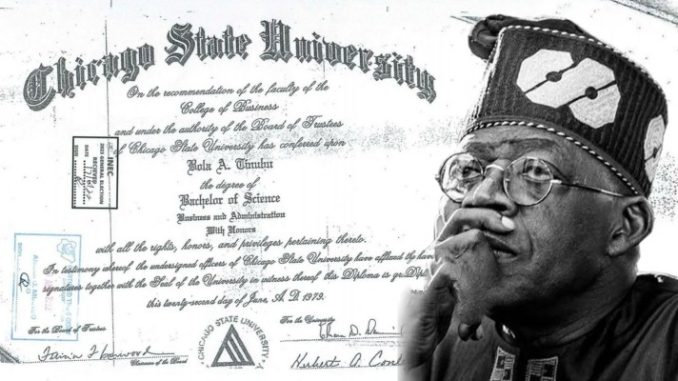
Electoral Commission has begun the public display of the personal particulars and academic credentials of presidential candidates for the 2027 general election.
The exercise, which took off on Saturday, features documents submitted by President Bola Tinubu of the All Progressives Congress and running mate, Vice President Kashim Shettima.
Copies of Tinubu’s Form EC9 sighted showed his Bachelor of Science degree in Business Administration from Chicago State University, United States, which his transcript indicated was awarded “with honours” on June 22, 1979.
The form also carried his National Youth Service Corps discharge documents, which showed he served in Oyo State from December 1982 and was demobilised in November 1983.
His work history, as listed in the form, showed three employers: Mobil Nigeria Limited, where he worked from 1983 to 1992 and left on account of “advancement”; the Lagos State Government, where he served from 1999 to 2007 until the “legal end of tenure”; and the Federal Government of Nigeria, where he has worked from 2023 till date.
The years listed against his primary and secondary school attendance in the same form were entered as “0000,” with only his university qualification, a B.Sc obtained in 1979, indicated.
The President’s personal information section listed his date of birth as March 29, 1952, and his age as 74.
It also listed his birthplace as Lagos, his residential address as No. 4, Queen’s Drive, Ikoyi, and his occupation as “politician.”
For Shettima, the displayed documents traced his education from primary school.
His Certificate of Primary Education, issued by the Ministry of Education, North-Eastern State, showed he attended Lamisula I Primary School between 1972 and 1978, finishing second out of 22 pupils in his final year, with English, History and Religious Knowledge listed as his strongest subjects.
His West African Examinations Council result, obtained at Government Secondary School, Potiskum, in June 1983, showed six credits and passes, including a distinction in Religious Knowledge and Economics.
He proceeded to the University of Maiduguri, where records showed he bagged a Second Class Upper Division degree in Agriculture in August 1989, before earning a Master of Science in Agricultural Economics from the University of Ibadan.
His NYSC discharge certificate indicated he served from October 1989 to October 1990.
The display, contained in Form EC9, is a statutory requirement under Section 29(3) of the Electoral Act, 2026, which mandates INEC to publish candidates’ particulars within 21 days of receipt.
In a statement, the commission explained Form EC9 contains the credentials, personal particulars and affidavits submitted by candidates.
“Form EC9 contains the credentials, personal particulars and affidavits submitted by candidates sponsored by political parties,” INEC stated.
The documents were displayed at INEC offices nationwide, including its Lagos State office in Sabo-Yaba and Local Government Area offices within affected constituencies.
The Electoral Act empowers members of the public to apply to INEC for certified true copies of nomination forms and other documents submitted by candidates, and to seek legal redress over allegations of false declaration or forgery.
Campaigns for the presidential and National Assembly elections are scheduled to begin on August 19, while those for governorship and state assembly elections will follow later, in line with the commission’s revised timetable.

Richest man globally, Elon Musk has said Nigeria alone had four million more births than the entire European Union.
Musk made the claim on his X account on Saturday, citing his artificial intelligence chatbot, Grok, as the source of the information.
“Nigeria alone had 4 million more births than the entire EU last year,” he wrote on X.
Musk’s remarks highlight Nigeria’s high birth rate compared with the European Union.
Available data from Musk’s Grok showed that Nigeria recorded an estimated 7.8 million births in 2025, while the European Union had 3.5 million births.
This means Nigeria recorded approximately four million more births than the EU.
Recall that in February 2026, the United Nations Children’s Fund, UNICEF, said 14 million Nigerian children had their births officially registered over the previous two years, marking significant progress in legal identity coverage.
Africa’s most populous country continues to record a high birth rate, placing further strain on its already fragile economy.
World Bank data showed that Nigeria’s poverty rate stood at 63 percent in 2025 amid rising economic hardship fueled by the skyrocketing cost of living.
Meanwhile, the Emir of Kano, Muhammadu Sanusi II, said at the 31st Nigerian Economic Summit that, for the first time, the country’s economy was growing faster than its population, which is estimated at 250 million.
Daily Post
News
Presidency reacts to Onaiyekan’s comment, says he’s not speaking for Christians, insists Catholics supporting Obi

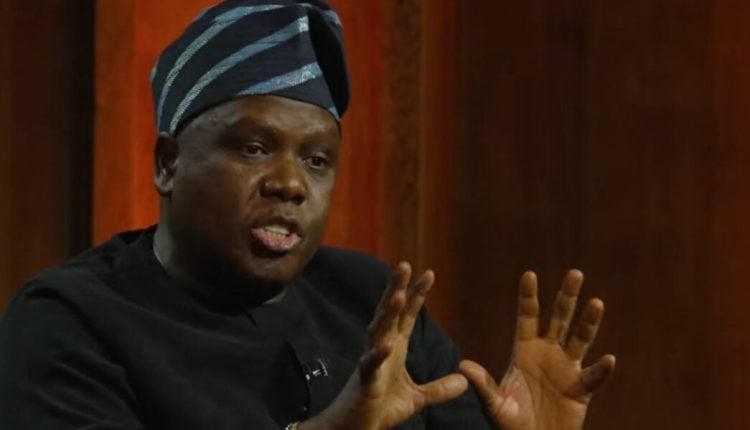
The Presidency has rubbished comments by Cardinal John Onaiyekan criticising the administration of President Bola Tinubu, insisting that the Catholic cleric was expressing a personal and political opinion rather than speaking on behalf of Christians in Nigeria.
Daniel Bwala, Special Adviser to the President on Policy Communication, made the remarks in a post on his X account on Saturday.
Bwala’s comments came in response to Onaiyekan’s criticism of the Tinubu administration after the recent visit of the Catholic Bishops’ Conference of Nigeria, CBCN, to the President.
The cardinal had accused the government of being more focused on winning by all means than addressing the country’s challenges.
Reacting, Bwala alleged that Onaiyekan was speaking for the Catholic Church and not the entire Christian community, claiming that the institution largely supported Labour Party presidential candidate, Peter Obi, during the 2023 election.
He argued that the cardinal’s comments were political rather than spiritual, adding that not all Catholics supported Obi during the election.
According to Bwala, President Tinubu was within his rights to disagree with the bishops’ assessment of Nigeria’s economy, maintaining that the administration’s position was backed by “facts, statistics and numbers.”
The presidential spokesman also contended that there is a broader Christian body comprising different denominations, including the Catholic Church and the Catholic Bishops’ Conference, whose position, he said, should remain neutral rather than political.
Bwala said: “Cardinal Onaiyekan, wasn’t speaking for Christian’s, he was speaking for Catholics, the very institutions rooting for Peter Obi @PeterObi infact likely the institution where Peter Obi also said in 2022 “take back your country “.
“Therefore , Cardinal is more political than spiritual. And not all catholic members are supporting peter Obi. The president @officialABAT was well within his right to disagree with their assertion as regards Nigeria’s economy based purely on facts, stats and numbers factored into context.
“Ironically, the same priest would rebuke their members if the members said “we are suffering or we are poor” they would tell them to rather say “we are doing great and or we are rich even when they are suffering or poor”
“There is a body comprising all Christian’s including the Catholics and catholic bishops conference and that body’s position is neutral and should be so, otherwise it is political.”

INEC showcases Tinubu, Shettima’s personal details ahead of 2027 elections

Elon Musk reveals Nigeria had four million more births than EU

Presidency reacts to Onaiyekan’s comment, says he’s not speaking for Christians, insists Catholics supporting Obi




-

 News23 hours ago
Ban on sale of sachet alcoholic drinks remains – NAFDAC
-

 Entertainment23 hours ago
Portable, Okocha set for celebrity boxing battle today
-
 News5 hours ago
Just in: After Hugh Backlash, FIFA finally Scrap Infantino’s £15B World Cup Private Investment Proposal
-

 News5 hours ago
‘Stop complaining about Buhari, others for your failures,’ Atiku slams Tinubu
-

 News5 hours ago
Colonel Behind Alleged Tinubu Coup Plot Admits Failed Promotion Pushed Him, Reveals How He Was Lured By Army Chiefs
-
 News23 hours ago
Catholic Priest lifeless body found in Kogi
-

 News4 hours ago
How Prison Inmate on D*ath Row Livestreamed On TikTok, Earned Money From Ogun Prison
-
 News4 hours ago
INEC Rejects PDP’s Submission Of Jonathan As 2027 Presidential Candidate