Connect with us

News

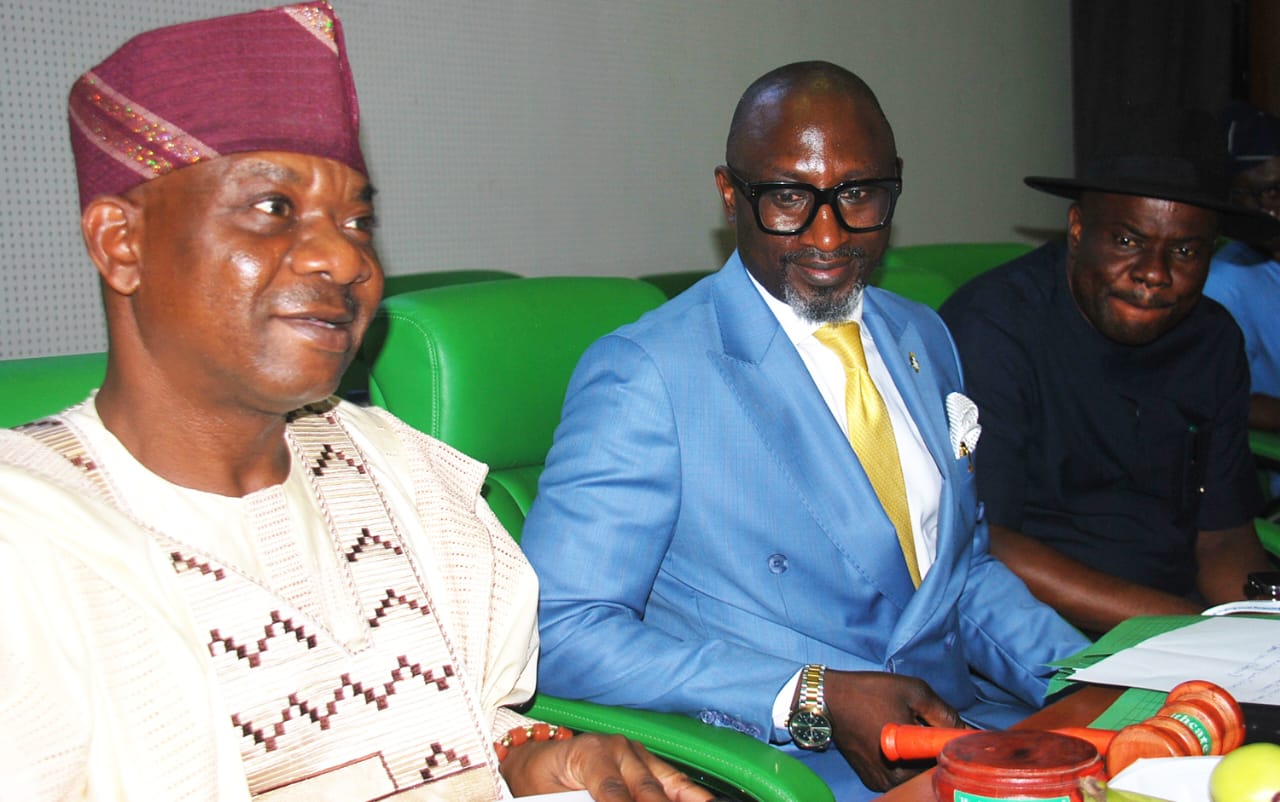
Reps Probe N12trn Development Funds as Lawmakers Tackle DFI Accountability

Published

on

ADVERTISEMENT
Zoom Ad
ADVERTISEMENT
Zoom Ad

By Gloria Ikibah

The House of Representatives has launched a sweeping investigation into the management of more than N12 trillion injected into Nigeria’s Development Finance Institutions (DFIs) over the past seven years.

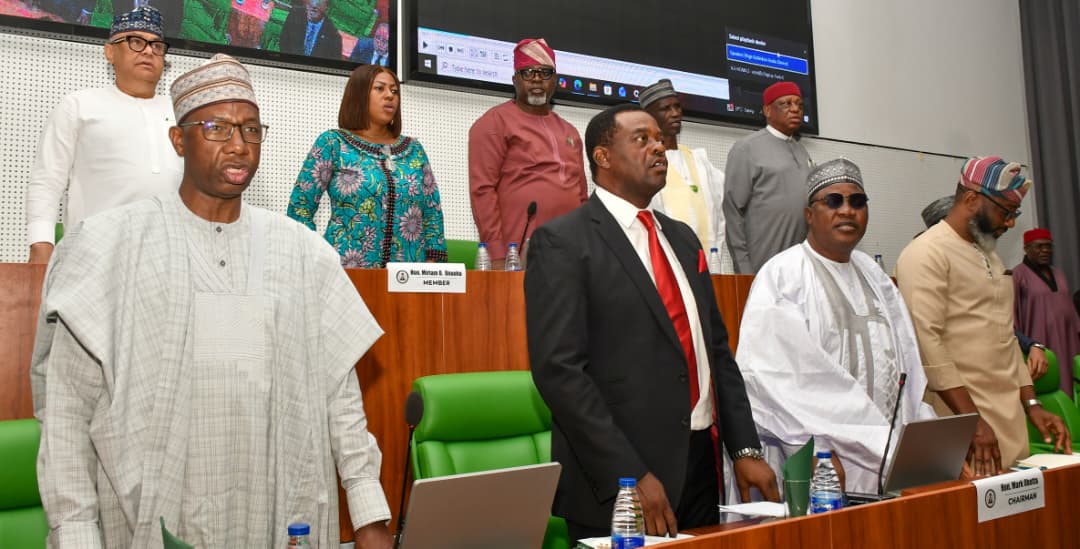
At the inauguration of an Ad-Hoc Committee on the Operations, Funding and Performance of DFIs, lawmakers signalled their intention to unravel how vast sums of public money—earmarked for industrialisation, agriculture, small business growth and infrastructure—have been used.

The Committee, Chairman, Rep. Chidi Obetta,  said the panel will scrutinise inflows from government capital injections, budgetary allocations, bond issuances, concessional loans, and donor funds channelled to institutions such as the Bank of Industry, Bank of Agriculture, NEXIM Bank, Infrastructure Bank, NIRSAL, and the Development Bank of Nigeria.

Advertisement

“Together, let us work to ensure that our Development Finance Institutions become truly effective instruments for inclusive growth, poverty reduction, and sustainable national development. They must become models of transparency, efficiency, and impact—institutions that truly empower Nigerians and help lay the foundation for a stronger, more resilient economy,” Obetta said.

Preliminary reports suggest that inflows to the DFIs exceed N12 trillion, though this figure remains subject to verification. The committee is expected to obtain audited records from each institution to determine how funds were applied and whether they reached the intended beneficiaries.

The intervention of the House follows mounting public concern over the transparency, efficiency and impact of the DFIs, which were established to close funding gaps left by commercial banks and to drive inclusive growth.

The committee will examine whether the DFIs’ investments have translated into tangible economic benefits—such as job creation, industrial expansion, and improved livelihoods—and whether systems for loan recovery and fund recycling are effective.

Advertisement

The probe, according to Rep. Obeta, is not intended as a punitive measure but as a fact-finding and reform-driven exercise aimed at strengthening the institutions’ capacity and accountability.

The committee will engage widely with stakeholders, including DFI management teams, the Central Bank of Nigeria, the Federal Ministry of Finance, development partners, industry experts and project beneficiaries.

Members of the committee have pledged to approach the assignment with transparency, fairness and patriotism, stressing that Nigerians expect both answers and action.

The House leadership said the investigation marks part of its broader commitment to ensuring that public funds deliver measurable results and that the country’s financial institutions function as true engines of sustainable development.

Advertisement

Inaugurating the committee, Speaker of the House, Rt. Hon. Tajudeen Abbas, lamented the poor performance of Nigeria’s Development Finance Institutions (DFIs), as he said that many of them have failed to achieve the objectives for which they were established despite receiving trillions of naira in public funds.

Speaker Abbas, who was represented by the Deputy House Leader, Repq. Halims Abdullahi, said it had become clear that the DFIs have not significantly improved Nigeria’s Multidimensional Poverty Index, and their impact on the performance of small and medium enterprises “leaves much to be desired.”

According to him, these institutions, which were supposed to fill the financing gaps left by commercial banks, have instead been bogged down by lack of transparency, political interference, and an unwillingness to innovate or take on more risk-driven ventures.

“In a period when economic reforms are being pursued to ensure more inclusive and shared growth, the inadequacies of these development finance institutions have become untenable, That is why this review is both timely and necessary,” Abbas said.

Advertisement

The Speaker explained that the House set up the Ad-Hoc Committee to conduct a detailed and objective review of the DFIs’ operations, funding, and performance over the past seven years.

He said the investigation was expected to clarify how these institutions function, how they utilise public funds, and whether they have delivered on their core mandates of stimulating growth in key sectors such as agriculture, manufacturing, exports, and small businesses.

Speaker Abbas emphasised that given the critical role DFIs play in national development, all public funds allocated to them must be managed with discipline, transparency, and a clear sense of purpose.

He therefore cautioned that the House will no longer support future budgetary allocations to any institution that fails to show proof of responsible financial conduct, sound risk management, and measurable economic impact.

Advertisement

“The era of funding without clear justification, public benefit, or performance evaluation must come to an end. This committee must insist that every development finance institution operating with public funds demonstrates measurable results that directly support national economic growth, job creation, and enterprise development. Any institution that cannot justify its allocation through verifiable outcomes will be subject to legislative intervention,” he said.

He also noted that public financing intended for development must be accessible to the productive sectors and citizens it was created to serve, warning against the diversion of funds to questionable ventures or their entrapment in bureaucratic bottlenecks.

“This investigation will ensure that funding frameworks are transparent, fair, and structured to reach productive sectors rather than support dubious ventures or remain trapped in bureaucracy,” he added.

Abbas further stated that the “findings of this investigation will help the House improve the performance of development finance institutions and expand their impact on the national economy”.

Advertisement

Governor of the Central Bank of Nigeria (CBN), Yemi Cardoso, pledged full cooperation with the Ad-Hoc Committee, as he assured that the bank will provide every necessary support to ensure the success of the probe.

Represented by a Director of the bank, Ibrahim Hassan, Cardoso said the committee’s work comes at a crucial time in Nigeria’s economic development and expressed optimism that its findings would help reposition the DFIs to deliver greater impact in line with their founding mandates.

He explained that the Central Bank of Nigeria is responsible for the regulation and supervision of the nation’s development finance institutions, including the Bank of Industry (BOI), Bank of Agriculture (BOA), Nigeria Export-Import Bank (NEXIM), Federal Mortgage Bank of Nigeria (FMBN), Infrastructure Bank, Development Bank of Nigeria (DBN), and the Nigeria Mortgage Refinance Company (NMRC).

According to him, the CBN conducts routine examinations of these institutions to ensure that they comply with laid down prudential standards and maintain sound financial conditions.

Advertisement

The supervision, he said, focuses on key indicators such as capital adequacy, asset quality, management efficiency, liquidity, and the level of non-performing loans, among others, in order to safeguard their stability and effectiveness.

Hassan commended the 10th House for setting up the Ad-Hoc Committee, noting that the decision reflects the commitment of the National Assembly to ensuring that development finance institutions fulfil their mandates of promoting inclusive economic growth.

He assured the lawmakers that the CBN will offer every necessary technical and institutional support to enable the committee carry out its work effectively and produce outcomes that would strengthen the development finance system.

The Managing Director of the Nigerian Export-Import Bank (NEXIM), QQAbba Bello, expressed strong support for the investigation, describing it as timely and essential to repositioning the institutions for economic growth.

Advertisement

He noted that Nigeria’s economy is currently at a crossroads, making it imperative for the country’s development finance institutions to deliver on their mandates more effectively.

According to him, DFIs such as NEXIM Bank are meant to serve as engines that power growth, create jobs, and expand economic opportunities across sectors.

“I am very pleased that this assignment has been given to this committee by the House of Representatives. The DFIs in Nigeria should be the engines that will propel the growth of the economy. Nigeria’s economy is at a crossroads now, and the performance and operations of these institutions have become very critical”, Bello said.

He also stressed the importance of measuring the performance of DFIs not only by their internal metrics but by their tangible contributions to job creation, industrial expansion, and foreign exchange earnings.

Advertisement

“What matters most is our impact on the economy, the jobs we help create, the industries we support, and the export proceeds we generate for the country,” he added.

He assured the committee that NEXIM Bank would provide all necessary information and documentation required to aid its investigation.

Continue Reading
Advertisement

News

2026 Appropriation Act: Ilori-Diamond Unveils $25m Investment Fund, Maps Out Nigeria’s Next Wealth Corridors

Published

on

ADVERTISEMENT
Zoom Ad
ADVERTISEMENT
Zoom Ad

…urge investors to closely track government spending 

alleged a senior FCDA official demanded bribe to approve project

By Gloria Ikibah

The Chairman of Dar Global Financials, Kunle Ilori-Diamond, on Wednesday unveiled a $25 million acquisition fund targeted at Nigeria’s microfinance banking and real estate sectors, while urging investors to closely track government spending under the 2026 Appropriation Act to identify emerging opportunities.

Advertisement

Speaking at a world press conference in Abuja, Ilori-Diamond argued that the most successful investors are often distinguished not by privileged access but by their ability to interpret public information before others.

Drawing parallels with recent moves by major business figures, he noted that investment decisions often signal future economic trends.

He said: “The difference between people who actually go ahead in business and investment, and people who don’t, is the kind of information that they pay attention to.

“If someone takes a lot of fortune to invest in a power-generating company ahead of a certain year, and that happened in the last quarter of 2025, it means there’s something going to happen in 2026 that we don’t know about, that he does know about.”

Advertisement

N3.48 Trillion Roads Budget Holds Investment Clues
Ilori-Diamond pointed to the Federal Government’s allocation of N3.48 trillion for road construction, describing it as one of the clearest indicators of where future wealth creation could occur.

He explained that infrastructure projects frequently transform land values and commercial prospects.

According to him, major opportunities exist along strategic corridors earmarked for federal investment, including the Calabar-Maiduguri Road Corridor, the Maiduguri-Sokoto Corridor, and several presidential legacy projects.

“If N3.48 trillion is being allocated to road construction in Nigeria, all you need to know is where those roads are going to be.

Advertisement

“Government is simply telling you where it wants to spend its money. That is where you can gamble yours as well, because government is playing big in that aspect.

“The budgetary emphasis is locked into concluding critical multi-regional mega highways. Anything that is a presidential legacy project happening around a certain place is a good place to invest in”, he noted.

Abuja Expansion Set to Create New Property Hotspots
The investment banker also highlighted Abuja’s growing real estate potential, citing what he described as a substantial allocation towards urban road infrastructure.

He specifically identified locations around the airport corridor and expanding satellite towns as areas likely to benefit from government-backed growth.

Advertisement

“Anywhere that is a corridor in Abuja is going to blow up because there is N1.6 trillion allocated to just roads.

“If I had a lot of money, I would be investing massively in Kuje, in airport corridors like Kyami, in Lugbe and along the frontier between Abuja and Kaduna”, he emphasised

Agriculture Remains a Goldmine
Turning to agriculture, Ilori-Diamond said investors should align their business decisions with sectors receiving substantial government support.

He noted that the Ministry of Livestock Development had received an allocation of N81.8 billion, while the Federal Ministry of Agriculture and Food Security was backed by a capital budget of N1.3 trillion.

Advertisement

He therefore urged Nigerians to study government priorities before committing capital.

“The kind of business that can thrive is the one that the government is already doing, because the government doesn’t want to fail.

“If the Ministry of Livestock is trying to stabilise livestock feeds, then all you need to do is find money and start producing livestock feeds because it is in alignment with the budget”, he stated.

The Dar Global Financials chairman also identified Niger State as a key destination for agribusiness investments.

Advertisement

“If government allocates N420 billion to Niger State and wants to succeed, they will create roads, power and security around that investment. If you want to start a food processing firm, that is where you should be looking”, he added.

Launches of $25m Acquisition Drive
At the centre of the conference was the formal launch of Dar Global Financials’ $25 million acquisition fund, which will focus on purchasing struggling microfinance banks and real estate development firms across Nigeria.

According to him, the strategy will involve restructuring and scaling acquired businesses rather than dismantling them, adding that founders who wished to retain a stake in their businesses would be accommodated.

“A couple of investors and investment bankers came together and put a capital of $25 million into a pool to invest in Nigeria.

Advertisement

“We are trying to acquire microfinance banks and real estate development firms that already have established brands across Nigeria.

“If there is any microfinance bank that is not really doing well and they are looking at liquidating or selling it off, we are looking at buying it from them.

“If you don’t want to sell entirely, we can structure it so that you still retain up to 15 per cent of the company while we take over operations,” Ilori-Diamond announced.

Mortgage Revolution Planned
Ilori-Diamond further disclosed that Dar Global intends to integrate acquired microfinance banks with its real estate investments to expand access to housing finance.

Advertisement

He argued that existing mortgage systems remain inaccessible to many Nigerians, particularly workers in the private sector.

“What we want to do in the market now is disrupt it.”
“Everybody can get access to a mortgage. We finance the house, you move into your house, and then you pay over a period of years.

“A simple civil servant cannot even afford to get a house comfortably under the current structure”, he asserted.

Calls for Stronger Public-Private Partnership
Responding to questions from journalists, Ilori-Diamond called on government to strengthen collaboration with private investors.

Advertisement

“One of the reasons this press conference is happening is for government to see the need to partner with the private sector.

“Partnership with the private sector is not only about funding or resources; it is also about connections, approvals and getting things done on time”, he said

On insecurity, he advised investors to focus on locations where government has committed significant resources.

“If government is spending in a particular place, they will want to make that place safe because their own money is there. Just follow their money and you might be lucky”, he noted.

Advertisement

Corruption Allegation Against Development Official
In one of the most dramatic moments of the conference, Ilori-Diamond alleged that a senior development control official demanded a bribe in exchange for approving a project.

The businessman said such practices discourage investment and undermine economic development.

“There is a certain development control official who said if I don’t pay him N100 million, he would not approve it.

“I stayed abroad for many years. I decided to come back because I believe in Nigeria and I am putting my money in Nigeria. We have people in offices who are frustrating that kind of investment,” he alleged.

Advertisement

He called on authorities to investigate allegations of corruption within development control agencies and ensure swift action where wrongdoing is established.

“If we don’t stop such people, they will do it to everybody. People who are struggling to put up a business will feel Nigeria is not a good place to invest”, he added.

‘Performance Must Matter’
Ilori-Diamond also urged the Federal Government to hold public officials accountable for budget implementation.

“If two times in a row you cannot prove something tangible that you’ve done, you should be relieved”, he said.

Advertisement

He praised the use of ministerial scorecards and called for stricter performance assessments across government agencies.
Dar Global Financials officially opened applications from microfinance banks and real estate firms seeking acquisition, partnership or restructuring under the newly launched investment fund.

Continue Reading

News

Emadeb E&P Reaffirms Commitment to Host Communities Development Trust Under PIA Framework

Published

on

ADVERTISEMENT
Zoom Ad
ADVERTISEMENT
Zoom Ad

● _Company engages Board of Trustees, traditional rulers in Akwa-Ibom on Ibom Field operations on PPL 236_

L-R: Head, Human Resources Unit, Emadeb Energy, Mrs Uduak Ugbodaga, Managing Director, Emadeb E&P, Dr Segun Ogunsanya, Chief Executive Officer, Emadeb Energy Group, Mr Debo Olujimi, Paramount Ruler of Eastern Obolo Local Government, HRM, Chief Harry John Etetor, Chairman, Board of Trustees of Emadeb-Eastern Obolo-Ibeno Host Communities Development Trust, Mr Dominic Ekpe, and Legal Adviser, Emadeb Energy Group, Mr Jerry Achonwa during the Emadeb management team’s visit to Akwa-Ibom, Monday

Uyo, Akwa Ibom State | 23 June 2026 – Emadeb Exploration and Production Limited, a subsidiary of Emadeb Energy Group, has reaffirmed its commitment to fulfilling all obligations to the Emadeb-Eastern Obolo-Ibeno Host Communities Development Trust in line with the Petroleum Industry Act, 2021, as it advances stakeholder engagement on its Ibom Field operations on PPL 236.

The assurance was given on Monday in Uyo by the Chief Executive Officer of Emadeb Energy Group, Mr Debo Olujimi, and the Managing Director of Emadeb E&P, Dr Segun Ogunsanya, during an inaugural engagement with members of the Board of Trustees of the Host Communities Development Trust.

The seven-member Board of Trustees, chaired by Mr Dominic Ekpe, was inaugurated in April 2026 pursuant to the provisions of the Petroleum Industry Act. The meeting marked Emadeb E&P’s first formal engagement with the Trust since its establishment.

Speaking during the session, Mr Olujimi said Emadeb E&P would conduct its operations responsibly and in the best interest of the host communities of Eastern Obolo and Ibeno, Akwa Ibom State, and the Federal Republic of Nigeria.

Advertisement

He pledged that the company would engage the Trust with integrity, transparency and an open mind, and sought the Board’s cooperation in strengthening the Trust’s administrative structures as the company finalises the requirements of its operational licence.

“We know that what we have come to do in Eastern Obolo and Ibeno communities is for the betterment of these communities, Akwa Ibom State and Nigeria,” Mr Olujimi said. “I want you to rest assured that Emadeb E&P will do the needful. Deep offshore exploration is a highly technical and capital-intensive endeavour, and by God’s grace we have successfully completed that phase. It is now time to work together in line with the plans we had already emplaced. We are all fully on board.”

Fourth from left: CEO of Emadeb Energy Group, Mr Debo Olujimi, in a group photograph with his management team and members of the Board of Trustees of Emadeb-Eastern Obolo-Ibeno Host Communities Development Trust at the end of their engagement in Uyo, Monday


Emadeb E&P reiterated that the Host Communities Development Trust remains central to its community relations strategy and said it would continue to work closely with the Board of Trustees and host communities to ensure sustainable development and shared prosperity.

The Chairman of the Board of Trustees, Mr Dominic Ekpe, expressed appreciation to the Chief Executive Officer of Emadeb Energy Group for prioritising the engagement. He requested the company’s support for the Trust’s operational take-off, including the provision of administrative infrastructure and requisite funding.

As part of the stakeholder engagement, the Emadeb E&P delegation also paid separate courtesy visits to His Royal Majesty, Chief Harry John Etetor, Paramount Ruler of Eastern Obolo Local Government Area, and His Royal Majesty, Owong Amb. Prof. Effiong Bassey Archianga, Akwaha Owong Ibeno, Paramount Ruler of Ibeno Local Government Area.

Mr Olujimi assured both traditional institutions that Emadeb E&P would remain responsive to its corporate social responsibility commitments and would discharge every obligation stipulated under the Petroleum Industry Act for host communities. The monarchs commended the delegation for the visit and offered prayers for the success and safety of the company’s operations in their domains.

Advertisement

■ About Emadeb Exploration and Production Limited

Emadeb Exploration and Production Limited is the upstream subsidiary of Emadeb Energy Group, focused on the exploration and development of oil and gas assets in Nigeria. The company holds interests in PPL 236, a shallow-water marginal field located about 30 kilometres offshore in a water depth of roughly 20 metres, and is committed to responsible operations, environmental stewardship, and value creation for host communities and stakeholders.

■ For media inquiries
Emadeb Energy Group
+234 803 189 3290

Advertisement
Continue Reading

News

Sokoto High Court slams death sentence on 3 men, including foreign national for terrorism , arms trafficking

Published

on

ADVERTISEMENT
Zoom Ad
ADVERTISEMENT
Zoom Ad

Justice Muhammad Bello of a High Court sitting in Sokoto State has sentenced three men, including a foreign national, to death by hanging, following their conviction on charges bordering on terrorrism and arms proliferation.

The convicts identified as Yusuf Muhammad (alias Sallau), a Nigerien; Jabbi Alhaji Yalle; and Kabiru Muhammad, were apprehended on June 13th, 2025, by the Department of State Services (DSS) Counter Terrorism Unit in connection with cross-border criminal activities bordering on arms trafficking and terrorrism.

Delivering judgment in the case marked SS/45c/2026, Justice Bello found all three defendants guilty as charged and sentenced them to death by hanging. The court also ordered the forfeiture of all monetary exhibits recovered from the convicts to the Federal Government.

“The conviction is the latest in a series of successful prosecutions by the DSS in its sustained operations against terrorism and organised cross-border criminal networks across Nigeria,” Justice Bello said

Advertisement
Continue Reading

Trending

Copyright © 2024 Naija Blitz News