News
Senate Proposes Death Penalty For kidnappers
- /home/naijuinz/public_html/wp-content/plugins/mvp-social-buttons/mvp-social-buttons.php on line 27
https://naijablitznews.com/wp-content/uploads/2024/09/Senate.jpg&description=Senate Proposes Death Penalty For kidnappers', 'pinterestShare', 'width=750,height=350'); return false;" title="Pin This Post">
- Share
- Tweet /home/naijuinz/public_html/wp-content/plugins/mvp-social-buttons/mvp-social-buttons.php on line 72
https://naijablitznews.com/wp-content/uploads/2024/09/Senate.jpg&description=Senate Proposes Death Penalty For kidnappers', 'pinterestShare', 'width=750,height=350'); return false;" title="Pin This Post">
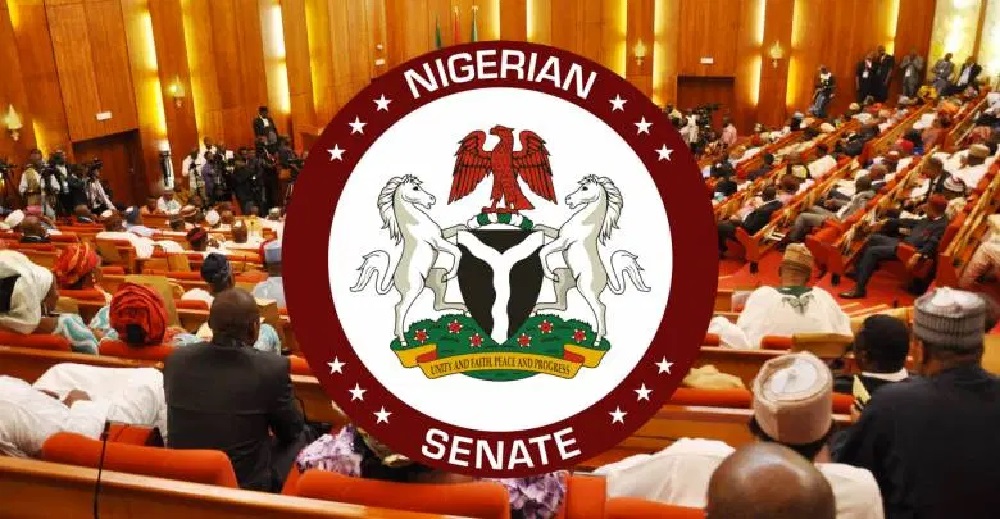
The Senate on Wednesday took a firm stance against the country’s worsening insecurity, declaring kidnapping a form of terrorism and recommending the death penalty for offenders, without the option of fines or judicial discretion to reduce sentences.
The resolution followed hours of tense debate triggered by the November 18 attack on Christ Apostolic Church, Eruku, in Ekiti Local Government Area of Kwara State, where gunmen killed two worshippers and abducted 38 others.
Although all victims were later rescued in joint operations involving the army, police, DSS agents, and local vigilantes, lawmakers said the incident exposed the alarming southward drift of insurgent cells and the collapse of security in rural communities.

The decisions stemmed from a motion by Senator Yisa Ashiru (Kwara South) titled “Urgent Need to Address Escalating Insecurity in Kwara, Kebbi, and Niger States and Strengthen National Security Frameworks,” which opened a floodgate of concerns over attacks on schools, worship centres, highways, and entire communities.
Senators noted that the frequency of school abductions had forced the shutdown of all schools in local governments across Kebbi and Niger states, five LGAs in Kwara, and all 47 Federal Unity Colleges nationwide.
Senator Issa Jibrin (Kogi East) decried the country’s critical manpower deficit in security services, warning that Nigeria’s entire military, police, and paramilitary personnel “do not total one million,” compared to Egypt’s 1.5 million.
He pushed for urgent equipment upgrades, better intelligence coordination, and a reserve force to support overstretched troops.
Other senators raised concerns that banditry was creeping closer to Osun through Ekiti-linked communities around Eruku–Isapa–Koro — areas where a retired Army General and a traditional ruler were recently killed.
Lawmakers also blamed attacks on bad roads that enable criminals to escape easily, directing the Federal Ministry of Works to immediately begin reconstruction of the Idofian–Omu-Aran–Eruku–Egbe–Kabba corridor.
Amid rising brutality and ransom-driven networks, senators resolved that kidnapping had evolved into full-fledged terrorism and must attract the severest punishment. “Capital punishment must apply,” several lawmakers argued, insisting that no judge should have the power to reduce the sentence for convicted kidnappers.
The Senate further urged President Bola Tinubu to “further rejig the nation’s security architecture,” a call that prompted Senator Ali Ndume to warn that such language could be misread, given the recent confirmation of service chiefs.
The chamber, however, clarified that its demand focused on improving coordination, technology, intelligence, and rapid deployment.
In a rare show of institutional self-critique, the Senate dissolved its Committee on National Security and Intelligence and its Committee on Air Force with immediate effect, directing all other security-related committees to submit written oversight reports and brief the chamber behind closed doors within one week.
Lawmakers also moved to strengthen registered vigilante groups with federal support and ordered a review of the firearms law to permit controlled arming of responsible citizens.
Wednesday’s decisions followed a rowdy plenary that saw senators openly clash over the escalating wave of kidnappings and mass attacks across several states.
Earlier, the chamber had adopted a separate motion by Senator Asiru Yisa (Kwara South) commending President Tinubu and security agencies for the rescue of dozens abducted in Kwara and Niger.
The motion also called for the creation of a Joint Task Force for the Kwara–Kogi corridor, a notorious escape route for bandits.
The confrontation intensified as lawmakers discussed the abduction of schoolchildren in Kebbi, mass kidnappings in Niger, and the Eruku church attack. Ashiru told colleagues the chamber was “deeply disturbed” by the raid on the CAC church and raised concerns over credible reports that soldiers withdrew from the Kebbi school hours before bandits struck.
Deputy Senate President Barau Jibrin argued that Nigeria must widen its search for solutions.
“We should seek assistance from overseas, urging collaboration with global partners to stem the crisis,” he said.
Senate Leader Opeyemi Bamidele described the current threats as defining.
While acknowledging the rescue of victims, he queried why security agencies had given no breakdown of terrorists neutralised.
He also warned colleagues against grandstanding and urged internal reforms.
“If we are calling on the President to rejig the security architecture, we must also look into our own arrangement. I am not impressed with our Committee on Security and Intelligence. We should rejig it ourselves,” he stated.
Senator Enyinnaya Abaribe pushed back against attempts to blame previous administrations, insisting that the current government must accept responsibility.
He cited reports of troop withdrawal before the Kebbi school attack, saying, “Who asked them? Nobody knows. If I were the Commander-in-Chief, I would demand answers.”
Senate President Godswill Akpabio raised concerns over intelligence compromises, recalling incidents in which the location of a brigadier general killed in Borno was allegedly leaked.
He said it was troubling that bandits could still strike despite warnings issued to schools in Kebbi.
Tempers flared when Senator Seriake Dickson warned that Nigeria was “losing prestige and integrity,” accusing the majority caucus of massaging the issues.
The comment triggered protests from APC senators, forcing Akpabio to mute his microphone.
Senator Adams Oshiomhole later rose to defend President Tinubu and demanded an investigation into the troop withdrawal.
“Who ordered the military to withdraw? That person should be tried for terrorism,” he said — a call the Senate adopted. He also questioned sentencing inconsistencies in terrorism cases before renewing the push for the death penalty for kidnappers.
News
Just in: Andy Burnham Emerges as UK PM
Veteran British politician Andy Burnham has emerged as the new leader of the United Kingdom’s governing Labour Party, clearing the way for him to become the country’s next Prime Minister following the resignation of Keir Starmer.
Burnham was confirmed as Labour leader on Friday after no other candidate secured the required nominations to challenge his bid during a special Labour Party conference, effectively handing him the leadership unopposed. The outcome was officially announced by the UK’s Interior Minister, Shabana Mahmood, who declared Burnham the duly elected leader of the Labour Party.
“There being no other eligibly nominated candidate, it is therefore my honour to declare that the duly elected leader of the Labour Party is Andy Burnham,” Mahmood told party delegates.
Burnham’s emergence comes at a pivotal moment for the Labour Party, which has been grappling with internal uncertainty following Starmer’s decision to step down as party leader amid mounting pressure from within the party. A seasoned politician, Burnham has held several senior ministerial positions under previous Labour governments.
He later became Mayor of Greater Manchester, where he built a strong national profile through his advocacy for greater regional autonomy, improved public services, and increased investment in local communities.
His tenure as mayor earned him widespread recognition, particularly during periods of national crisis when he repeatedly called for increased financial support and greater decision-making powers for local authorities. Burnham is expected to complete the constitutional process and formally assume office as the United Kingdom’s Prime Minister on Monday.
In his acceptance speech, the incoming Labour leader pledged to reunite the governing party after a period of internal divisions and restore public confidence in government.
He also promised to devolve more powers from central government to local authorities, arguing that local communities should have greater control over decisions affecting their economies and public services.
Among his key priorities are strengthening the National Health Service (NHS), improving public transport, stimulating economic growth, and expanding opportunities across every region of the United Kingdom. Political analysts believe Burnham’s administration will focus heavily on regional development, investment in public infrastructure, and reforms aimed at reducing economic inequalities across the country.
His confirmation has already drawn reactions from political leaders, Labour members, and supporters, many of whom expressed optimism that his leadership could mark the beginning of a new chapter for both the Labour Party and the United Kingdom. Attention is now expected to shift to the formation of Burnham’s cabinet and the policy agenda his government intends to pursue during its first weeks in office.
News
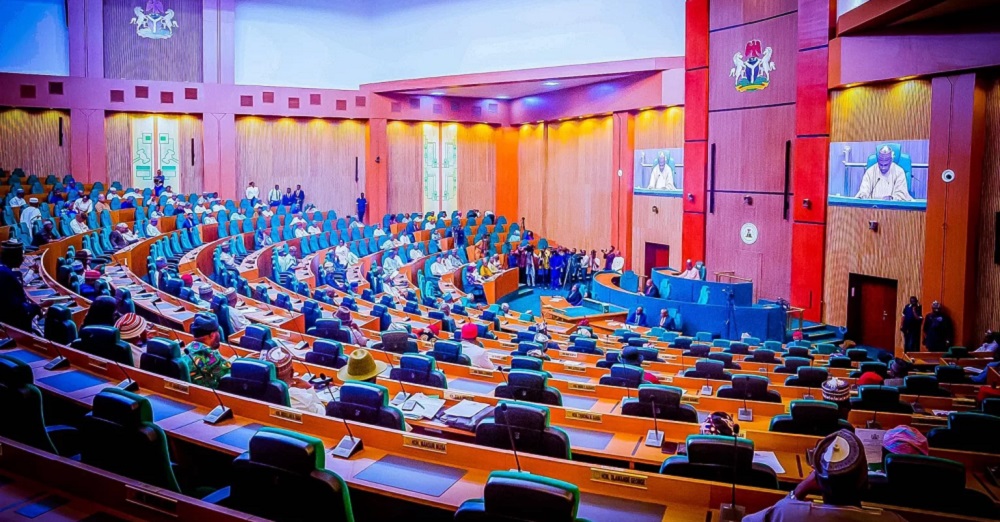
Senate moves to amend archaic provisions in Petroleum Laws
The Chairman of the Senate Committee on Petroleum (Upstream), Senator Williams Eteng, has revealed that the National Assembly is moving to amend Nigeria’s petroleum laws to align them with current economic realities, describing many of the existing provisions as obsolete.
Speaking with journalists after the committee’s meeting, the Cross River Central lawmaker said the committee’s priority is to strengthen the petroleum sector by improving infrastructure, increasing crude oil production and providing a legal framework capable of supporting sustainable growth.
“We are looking at ways of improving the petroleum sector, strengthening infrastructure, and increasing crude oil production. That is our major focus,” Eteng said.
The senator disclosed that the committee had already received a proposal seeking amendments to the principal petroleum laws, noting that several penalties and fines currently contained in the legislation have remained unchanged for decades.
“A presentation has been made for us to amend the principal petroleum laws. The penalties are old and outdated. Some of the fines were enacted in 1951, while others date back to 1962. There is a need to bring these laws in line with present-day realities,” he stated.
According to him, reviewing the laws has become imperative to ensure they adequately reflect modern economic conditions and provide an effective regulatory framework for the petroleum industry.
“Laws are made to serve society, and they must be amended from time to time to reflect current economic realities,” he added.
Eteng also addressed reports suggesting that the Nigerian National Petroleum Company Limited (NNPCL) delegated a junior officer to appear before the committee, dismissing the claim as inaccurate.
He clarified that the official seen at the committee meeting was merely the company’s liaison officer to the National Assembly and not a representative appearing on behalf of the NNPCL management.
“There was no junior officer representing NNPCL before the committee. The person you saw is the liaison officer between the National Assembly and NNPCL. Please get that right. NNPCL requested an excuse, and another date will be fixed,” he explained.
The chairman reaffirmed the committee’s commitment to engaging relevant stakeholders as it advances legislative reforms aimed at modernising Nigeria’s petroleum industry, enhancing regulatory efficiency and creating an enabling environment for increased investment and production.
News
Ex-Miss Universe Nigeria Chidimma Adetshina appears in South African court to fight deportation
Ex-Miss Universe Chidinma Adetshina, returned to the Cape Town Regional Court on Thursday, July 16, 2026 as she continued her legal fight against deportation after her arrest for allegedly being in South Africa illegally.
Proceedings resumed shortly after 2pm, when the former Miss South Africa contestant was expected to submit an affidavit detailing the steps she says she has taken to regularise her immigration status.
According to an update from eNCA reporter Nobesuthu Hejana, the affidavit forms part of her effort to challenge the Department of Home Affairs’ deportation case.
Adetshina was arrested on 6 June and first appeared in the Cape Town Regional Court on 9 June.
She was released on warning while the matter was postponed to allow the legal process to continue.
The Department of Home Affairs alleges that she and her minor son were living in South Africa without lawful immigration status and is seeking her deportation through the courts.
Court documents previously filed by immigration officials state that authorities believe Adetshina entered South Africa while prohibited from doing so.
Those allegations remain before the court and have not been tested at trial.
Speaking outside court, Nobesuthu Hejana reported: ‘After 14H00 she will present an affidavit on steps she’s taken to regularise her status in the country.’
The court is expected to consider the affidavit alongside the Department of Home Affairs’ submissions before deciding on the next steps in the deportation proceedings.
The court proceedings mark the latest development in the immigration dispute surrounding the beauty queen, whose nationality became the subject of intense public debate during her participation in the 2024 Miss South Africa pageant.
Adetshina, who was born in Soweto, South Africa, to a Nigerian father and a Mozambican mother, had initially contested for the Miss South Africa 2024 crown before withdrawing from the competition amid controversy surrounding her family’s citizenship status.
Her withdrawal followed an investigation by South African authorities into allegations concerning her mother’s identity and citizenship documentation.
The controversy also sparked widespread social media attacks directed at Adetshina because of her Nigerian heritage, despite the fact that she was born in South Africa and had met the eligibility requirements for the beauty pageant.
In August 2024, the South African government stated that Adetshina’s mother, at the time the contestant was a finalist in the Miss South Africa competition, may have been involved in identity theft.
Adetshina was later accepted an invitation to compete in the Miss Universe Nigeria pageant, and emerged as the winner, earning the opportunity to represent Nigeria at the global Miss Universe competition.Africans & Diaspora
At the 73rd Miss Universe pageant held in Mexico City, Adetshina, finished as the first runner-up and was also crowned Miss Universe Africa and Oceania.
-
News20 hours agoFinally, Umahi opens up over Mary Habila’s mysterious death in his house
-
News20 hours agoExcited Ex-President Jonathan celebrates son Ariwera’s graduation
-
News21 hours agoCourt Sentences Father To 30 Years’ Imprisonment For Impregnating Daughter
-
News21 hours agoMan Bags Life Imprisonment Over Death Of Close Friend At Birthday Party
-
Metro21 hours agoTroops Foil Kidnap Attempt In Benue, Recover Three Motorcycles
-
News21 hours ago2027: Court Denies Ordering Deregistration Of NDC
-
Entertainment17 hours agoChioma is my lifeline she manages my finances – Davido reveals
-
News20 hours agoAppeal Court Restores INEC’s Timetable For 2027 General Elections