By Gloria Ikibah


The House of Representatives has directed the Central Bank of Nigeria (CBN), NIRSAL Microfinance Bank, and the Federal Ministry of Finance, to immediately suspend all deductions on COVID-19 intervention loans, while granting total waiver on the outstanding COVID-19 intervention loans owed by vulnerable households and micro-businesses.
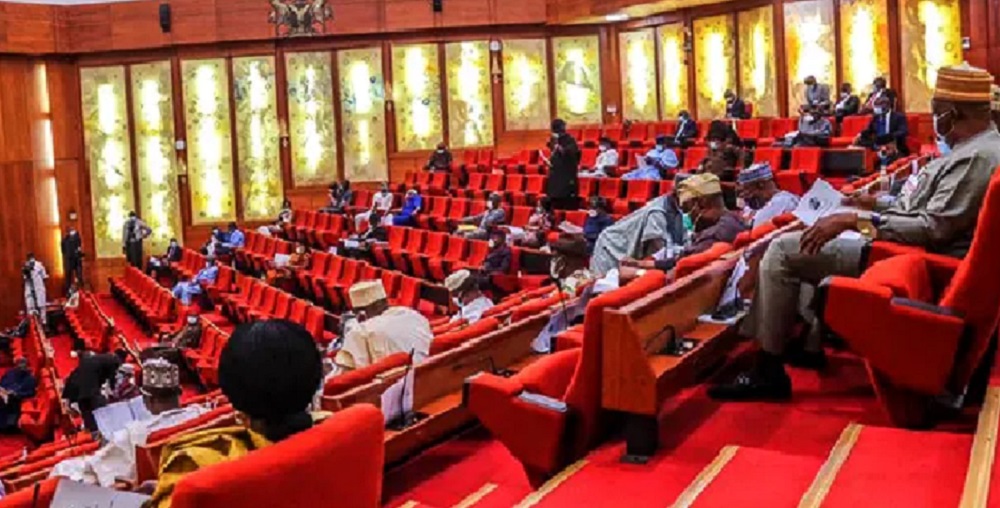
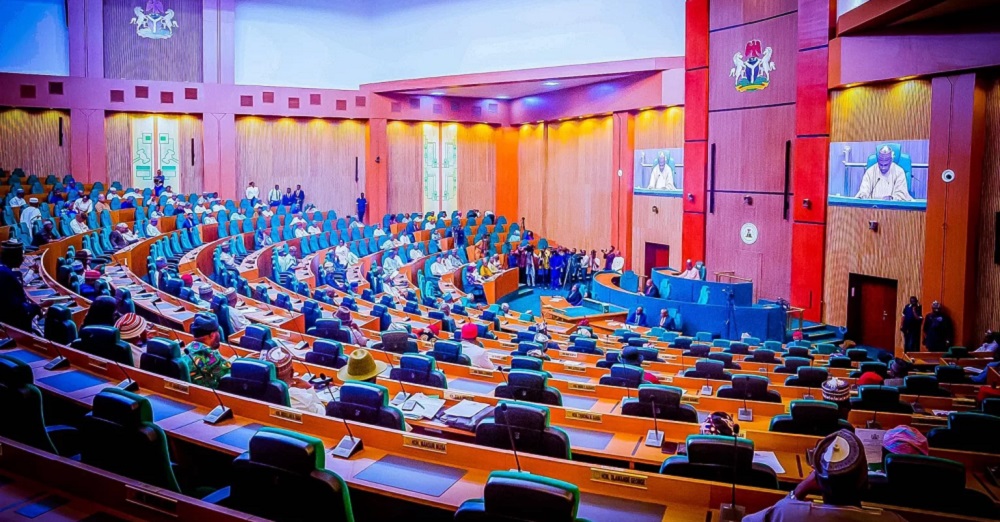
This resolution was sequel to a motion of urgent public importance, by Deputy Chairman Committee on Finance, Rep. Saidu Musa Abdullahi on Wednesday at Plenary. 
The House also asked the relevant agencies of government to put into consideration the inability of Nigerians to pay back the loan due to current harsh economic conditions.
It further directed the CBN, NIRSAL Microfinance Bank, and Small and Medium Enterprises Development Agency of Nigeria (SMEDAN) to restructure repayment terms for SMEs by extending moratoriums, reducing interest rates, and spreading repayment over longer timelines, in order to safeguard jobs and prevent business collapse.
In his lead debate, Rep. Abdullahi said the Federal Government, through the Central Bank of Nigeria (CBN) and NIRSAL Microfinance Bank, introduced the COVID-19 Targeted Credit Facility (TCF) during the pandemic, disbursing N419.42 billion to households, micro, small, and medium enterprises to cushion the devastating socioeconomic impact of the global lockdown.
The motion read: “The programme reached 792,936 beneficiaries nationwide; 674,972 households and 117,964 small businesses with women accounting for 45% of beneficiaries (about 330,128 women supported with N159.21 billion).
“The TCF was credited with creating or sustaining about 1,585,872 jobs, underscoring its significant impact on livelihoods and enterprise stability during and after the pandemic.”
He expressed worries that as at September 2023, the sum of N261.07 billion which is about 62 percent of the loans remained unpaid, while N378.03 billion was classified as outstanding reflecting widespread inability to repay among vulnerable households and micro-enterprises.
“Recent CBN surveys show rising default rates across household and enterprise lending in Q4 2024 and Q2 2025, driven by inflation above 24%, severe food insecurity, loss of purchasing power, business closures, and shrinking household incomes.
“Despite the high default figures reported in 2023, substantial recoveries have been made through the unplanned automatic deductions from beneficiaries’ bank accounts between late 2023 and December 2025; This suggests that the current outstanding exposure may be significantly lower and therefore fiscally manageable for a structured waiver.
“The COVID-19 TCF was fundamentally a survival support loan, not a conventional business facility as many households used the funds for essential needs such as food, shelter, healthcare, and school fees during the lockdown, making repayment unrealistic for those who have not recovered economically.
“Nigeria has a strong domestic precedent of leniency in the Anchor Borrowers Programme, where despite its commercial nature and a default rate exceeding 50%, the federal government has repeatedly provided restructuring and partial waivers”, the motion further read.
He further stated that the loan waivers for pandemic-era support align with international best practices; countries such as the United States, Canada, Germany, South Africa, and India forgave or waived significant portions of their COVID-19 relief loans or adopted extended moratoriums, recognising the humanitarian context of the pandemic.
The Deputy Chairman said the continued automatic debits and aggressive recoveries are inflicting severe hardship on vulnerable Nigerians, risking the collapse of small businesses, worsening unemployment, and heightening social instability.