News
President Tinubu Presents N58.18trn ‘Budget of Consolidation’, declares armed gangs terrorists
- /home/naijuinz/public_html/wp-content/plugins/mvp-social-buttons/mvp-social-buttons.php on line 27
https://naijablitznews.com/wp-content/uploads/2025/03/IMG-20241227-WA0347-800x445-1.jpg&description=President Tinubu Presents N58.18trn ‘Budget of Consolidation’, declares armed gangs terrorists', 'pinterestShare', 'width=750,height=350'); return false;" title="Pin This Post">
- Share
- Tweet /home/naijuinz/public_html/wp-content/plugins/mvp-social-buttons/mvp-social-buttons.php on line 72
https://naijablitznews.com/wp-content/uploads/2025/03/IMG-20241227-WA0347-800x445-1.jpg&description=President Tinubu Presents N58.18trn ‘Budget of Consolidation’, declares armed gangs terrorists', 'pinterestShare', 'width=750,height=350'); return false;" title="Pin This Post">
…revenues set at N34.33trn, capital spend hits N26.08trn

…as President promises tougher discipline, security overhaul and job-rich growth
By Gloria Ikibah

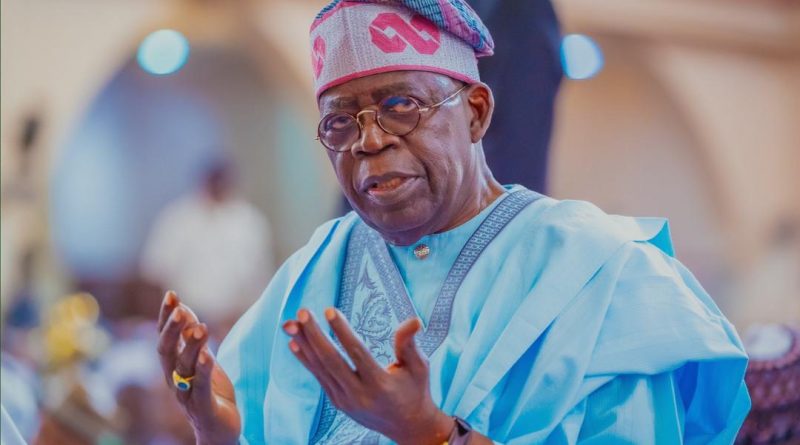
President Bola Ahmed Tinubu on Friday laid before a joint sitting of the National Assembly a N58.18 trillion 2026 Appropriation Bill, pitching it as a turning point from painful reforms to improved living standards, while unveiling a sweeping new security doctrine that classifies all armed groups operating outside state authority as terrorists.
Presenting what he titled the “Budget of Consolidation, Renewed Resilience and Shared Prosperity”, the President said the proposal was designed to lock in macroeconomic stability, deepen competitiveness and ensure growth delivers “decent jobs, rising incomes, and a better quality of life across our Federation”.
He acknowledged the strain that reforms had placed on households and businesses.
Tinubu said: “This is a defining moment in our national journey of reform and transformation. Over the last two and a half years, we made a deliberate choice: to confront long‑standing structural weaknesses, stabilise our economy, rebuild confidence, and lay a durable foundation for a more resilient, inclusive, and dynamic Nigeria.
“These reforms were necessary — and they have not been painless. Families and businesses have faced pressure; established systems have been disrupted; and budget execution has been tested. I acknowledge these difficulties plainly, and I assure Nigerians that their sacrifices are not in vain. The path of reform is seldom smooth, but it is the surest route to lasting stability and shared prosperity”.
President Tinubu anchored the budget on what he described as early signs of stabilisation. He cited 3.98 per cent GDP growth in the third quarter of 2025, eight consecutive months of easing inflation, down to 14.45 per cent in November from 24.23 per cent in March, rising oil output, stronger non-oil revenues and foreign reserves at a seven-year high of about $47 billion.
“With stabilising food and energy prices, tighter monetary conditions, and improving supply responses, we expect the disinflationary trend to persist—so that inflation continues to decline further over the 2026 horizon, barring major supply shocks.
“Oil production has improved, supported by enhanced security, technology deployment, and sector reforms.
“Non‑oil revenues have expanded significantly through better tax administration —not excessive taxation.
“Investor confidence is returning, reflected in capital inflows, renewed project financing, and stronger private‑sector participation.
“Our external reserves rose to a 7‑year high of about US$47 billion as at 14 November 2025, providing more than 10 months of import cover and a stronger buffer against shocks.
“These outcomes are not accidental. They reflect difficult but deliberate policy choices. Our task now is to consolidate these gains—so that stability becomes prosperity, and prosperity becomes shared prosperity,” he said.
Reviewing 2025 budget performance, the President admitted execution pressures during the transition, with N18.6 trillion in revenue (61 per cent of target) and N24.66 trillion in spending (60 per cent) by the third quarter. Capital releases lagged as government prioritised completion of 2024 projects.
“Let me be clear: 2026 will be a year of stronger discipline in budget execution. I have issued directives to the Honourable Minister of Finance and Coordinating Minister of the Economy, the Honourable Minister of Budget and Economic Planning, the Accountant‑General of the Federation, and the Director‑General of the Budget Office of the Federation to ensure that the 2026 Budget is implemented strictly in line with the appropriated details and timelines.
“We expect improved revenue performance through the new National Tax Acts and the ongoing reforms in the oil and gas sector—reforms designed not merely to raise revenue, but to drive transparency, efficiency, fairness, and long‑term value in our fiscal architecture.
“I will also be unequivocal about Government‑Owned Enterprises. Heads of all GOEs are hereby directed to meet their assigned revenue targets. To support this, we will deploy end‑to‑end digitisation of revenue mobilisation—standardised e‑collections, interoperable payment rails, automated reconciliation, data‑driven risk profiling, and real‑time performance dashboards—so leakages are sealed, compliance is verifiable, and remittances are prompt.
“These targets will form core components of performance evaluations and institutional scorecards. Nigeria can no longer afford leakages, inefficiencies, or underperformance in strategic agencies. Every institution must play its part”, he warned.
Under the proposal, expected revenue stands at N34.33 trillion against projected expenditure of N58.18 trillion, including N15.52 trillion for debt service.
Capital spending rises to N26.08 trillion, while the deficit of N23.85 trillion represents 4.28 per cent of GDP. The framework assumes oil at $64.85 a barrel, output of 1.84 million barrels a day and an exchange rate of N1,400 to the dollar.
“These numbers are not just accounting lines. They are a statement of national priorities. We remain firmly committed to fiscal sustainability, debt transparency, and value‑for‑money spending”, he noted.
The budget allocates N5.41 trillion to defence and security, alongside N3.56 trillion for infrastructure, N3.52 trillion for education and N2.48 trillion for health. But it was Tinubu’s security declaration that drew the sharpest lines.
He announced a new national counterterrorism doctrine anchored on unified command and intelligence, listing bandits, militias, armed gangs, kidnappers and their financiers, facilitators and protectors, including political and community leaders, as falling under the designation.
“Security remains the foundation of development. The 2026 Budget strengthens support for: modernisation of the Armed Forces; intelligence‑driven policing and joint operations; border security and technology‑enabled surveillance; and community‑based peacebuilding and conflict prevention.
“We will invest in security with clear accountability for outcomes—because security spending must deliver security results. To secure our country, our priority will remain on increasing the fighting capability of our armed forces and other security agencies by boosting personnel and procuring cutting-edge platforms and other hardware.
“We are also pursuing a new era of criminal justice system to stamp out terrorism, banditry, kidnapping for ransom and other violent crimes. Our administration is resetting the national security architecture and establishing a new national counterterrorism doctrine—a holistic redesign anchored on unified command, intelligence, community stability, and counter-insurgency.
“This new doctrine will fundamentally change how we confront terrorism and other violent crimes that have become existential threats to our corporate survival and have heightened anxiety among our people.
“To secure our country, our priority will remain on increasing the fighting capability of our armed forces and other security agencies.
“Henceforth, and under this new architecture, any armed group or gun-wielding non-state actors operating outside state authority will be regarded as terrorists,” the President declared.
On human capital, Tinubu said education and health spending would be strengthened, highlighting support for over 418,000 students through the Nigerian Education Loan Fund and noting that healthcare investment accounts for six per cent of the budget net of liabilities. He also announced more than $500 million in anticipated US grant funding for targeted health interventions.
Agriculture and food security feature prominently, with funding for mechanisation, irrigation, storage and agro-value chains.
“Food security is national security,” he said, arguing the measures would cut post-harvest losses and raise smallholder incomes.
“The greatest budget is not the one we announce. It is the one we deliver,” Tinubu concluded, setting out commitments to better revenue mobilisation, sharper spending priorities and tougher accountability.
Laying the bill before lawmakers, he appealed for unity between the Executive and Legislature.
“I commend the understanding, sacrifice, and resilience of our people. My administration remains committed to easing the burdens of transition and ensuring that the benefits of reform reach households and communities across the Federation.
“With unity of purpose between the Executive and the Legislature—and with the resilience of the Nigerian people—we will deliver the full promise of the Renewed Hope Agenda.,” he said.
As debate begins, the essence of the 2026 budget is clear: consolidate hard-won stability, spend big on capital and security, enforce discipline across government, and convert recovery into gains Nigerians can feel. Whether that promise is realised will depend not on rhetoric, but on execution.
News
India-Nigeria Trade Hits $9bn as New Delhi Seeks Deeper Partnership in Energy, Health, Defence
By Gloria Ikibah
India has revealed that its bilateral trade with Nigeria rose to $9 billion in the 2025/2026 financial year, as it pushed for stronger cooperation in energy, healthcare, defence, technology and agriculture.
Speaking during a maiden media parley in Abuja, the Indian High Commissioner to Nigeria, Abhishek Singh, described the relationship between both countries as one of the most promising partnerships in the Global South.
According to him, the trade volume increased from $7.13 billion in the 2024/2025 financial year to $9 billion in 2025/2026, reflecting growing economic ties between both countries.
He said: “When you talk about India-Nigeria relations, you always talk about the huge volumes of bilateral trade, the diverse basket of trade and the ever-growing interest both in India and Nigeria to increase the bilateral trade.
“Very happy to report that the trade for the financial year 25-26 stands at around US dollar 9 billion, which is up from US dollar 7.13 billion in the financial year 24-25”.
The envoy disclosed that more than 200 Indian companies are currently operating in Nigeria across sectors such as pharmaceuticals, manufacturing, power, construction, consumer goods, healthcare and services.
He noted that many of the companies had established production facilities in Nigeria, creating employment opportunities for nearly 100,000 Nigerians.
“I am told that over 200 Indian companies are active in Nigeria and they relate to sectors like pharmaceuticals, manufacturing, power, construction, consumer goods, healthcare and services.
“And a very important aspect is that they are also making in Nigeria. They are producing in Nigeria. They have set up plants in Nigeria.
“And this has translated into close to one hundred thousand brothers and sisters from Nigeria being deployed and employed by these companies. And that makes these Indian companies the second largest employer of Nigerian people after the Federal Government of Nigeria,” Singh said.
On energy cooperation, Singh said crude oil and liquefied natural gas remained important areas of engagement, while India was also interested in Nigerian investments in oil and gas, pipeline security, compressed natural gas conversion and liquefied petroleum gas infrastructure.
“We strongly believe that both our countries can mutually benefit from greater cooperation in the field of energy security.
“As you are aware, India is the most populous country in the world with 1.4 billion people, while Nigeria is the sixth largest country by population, with around 230 million people.
“So, naturally, the consumption of energy is going to be very high. All the more reason that the two great democracies, India and Nigeria, should cooperate more in the field of energy security,” he said.
The High Commissioner also highlighted growing collaboration in defence and maritime security, revealing that a Nigerian naval delegation was preparing to travel to India for bilateral discussions.
He said the partnership between both countries in the defence sector was long-standing and included support for the establishment of the National Defence Academy in Kaduna and the Naval College in Port Harcourt.
According to him, both countries share common security concerns, including terrorism, piracy, organised crime and illicit trafficking.
“This cooperation includes intelligence sharing, counter-terrorism, defence training and maritime security, especially in the Gulf of Guinea. Defence sales are also an important area of our collaboration,” Singh said.
The envoy further disclosed that India had extended concessional lines of credit worth $395 million to Nigeria while providing extensive capacity-building opportunities through the Indian Technical and Economic Cooperation (ITEC) programme.
“We have shared our strengths in affordable medicine, digital public infrastructure, agriculture, skills development and space applications.
“And these align very well with Nigeria’s priorities.
“In this line, we have extended concessional lines of credit worth US$395 million and also provided substantial training through the ITEC programme, including civilian and defence slots,” he added.
Singh noted that approximately 100 Nigerian military personnel participate annually in defence training programmes at leading Indian institutions.
He also highlighted the contributions of the estimated 60,000 Indians living in Nigeria, many of whom are second and third-generation residents.
“I want to thank Nigerian society and the government for embracing them and giving them the ecosystem and the level playing field so that they can succeed in their respective fields.
“These Indians consider India as their motherland, but they rightly also consider Nigeria as their fatherland.
“And these 60,000 Indians have acted as bridges in the educational, cultural, medical and commercial sectors and have also provided a social foundation for our relationship,” he said.
The High Commissioner also confirmed that President Bola Tinubu had been invited to attend the BRICS Summit scheduled for 12 and 13 September in New Delhi, expressing optimism that the Nigerian leader will head a high-powered delegation to the event.
“We are very hopeful that the Honourable President of Nigeria will be leading a high-powered delegation for the BRICS summit very soon.
“As Africa’s largest economy and one of the most populous nations in the world, Nigeria, as a partner country, brings immense strategic, demographic and economic weight to the BRICS bloc.
“Its participation in the earlier edition enriched the deliberations and strengthened the voice of the Global South,” he said.
Singh also announced that India had received Nigeria’s support for its bid for a non-permanent seat on the United Nations Security Council and had, in turn, endorsed Nigeria’s candidature.
Describing India-Nigeria relations as a partnership built on equality, he said: “When I talk about India-Nigeria relations, in my view, it is one of the most promising relationships of the Global South.
“It’s a win-win relationship. It’s a partnership. And when I say partnership, it means a handshake between two equal partners.
“This relationship is based on complementarities and, most importantly, on trust, understanding and mutual respect. I see a great future for India-Nigeria relations based on the progress that we have already made.”
Also speaking, the Deputy High Commissioner of India, Ms Vartika Rawat, highlighted India’s progress in healthcare and explained how the country’s public health achievements can strengthen cooperation with Nigeria.
She said India’s latest National Family Health Survey (NFHS-6), which covered 679,000 families across 719 districts, was the largest household health survey ever conducted anywhere in the world.
According to her, the survey showed that antenatal care now reaches 96 per cent of pregnant women, while institutional deliveries have risen to 90.6 per cent.
“Safer childbirth is no longer the exception in India. It is fast becoming the norm.
“Antenatal care now reaches 96 per cent of pregnant women. Institutional deliveries have climbed to 90.6 per cent, moving the country ever closer to universal coverage,” she said.
Rawat added that full immunisation among children aged 12 to 23 months had increased from 83.8 per cent to 87.1 per cent, while vaccine coverage remained above 96 per cent nationwide.
She also revealed that stunting among children under five had declined from 35.5 per cent to 29.3 per cent, representing nearly 30 million children lifted out of long-term nutritional deprivation.
On healthcare financing, she said household coverage under health insurance schemes had risen from 4.9 per cent in 2005 to 60.2 per cent, while internet usage among women had nearly doubled from 33.3 per cent to 64.3 per cent.
She stressed that India’s health achievements had direct implications for its partnership with Nigeria.
“The very achievements of the National Family Health Survey, that is expanding immunisation, affordable maternal and child care and wider financial protection in healthcare, are the same pillars on which our health partnership with Nigeria is built.
“India today supplies roughly 40 per cent of Nigeria’s pharmaceutical imports and, for certain categories of medicine, over 90 per cent.
“Our pharmaceutical exports to this country reached 315 million US dollars in the financial year 2024-2025, while Indian companies have invested heavily, around four billion US dollars, in local pharmaceutical manufacturing in Nigeria.
“This is what it means in practice for India to be the pharmacy of the world. It means not only affordable medicines reaching Nigerian homes but also manufacturing medicines in Nigeria for Nigerian homes.
“As Nigeria charts its own path towards universal health coverage, India believes the Ayushman Bharat model and other Indian policy models offer a template well worth exploring together.
“These are not two separate stories. They are one and the same story of two nations, once united in the struggle against colonialism and now united in the pursuit of health, dignity and shared prosperity for our people,” she said.
News
Just in: Finally, Fadahunsi leaves police CID after hours of grilling over k!ll Accord party members outburst
Senator Francis Fadahunsi has finally left the Osun State Police Command’s Criminal Investigation Department (CID) in Osogbo after honouring an invitation over a viral video in which he was allegedly heard threatening members of the Accord Party.
It was observed that Fadahunsi, who represents Osun East Senatorial District, departed the police facility on Wednesday afternoon after spending time with investigators.
The senator, dressed in a white outfit and a baseball cap bearing symbols associated with President Bola Tinubu, was accompanied from the police station to his vehicle by his aide and some loyalists.
It was not immediately clear whether Fadahunsi was released unconditionally or whether the police imposed any conditions as part of his release.
Efforts to reach the state police command spokesperson for further details on the circumstances surrounding the senator’s release were unsuccessful as of the time of filing this report.
The senator, dressed in a white outfit and a baseball cap bearing symbols associated with President Bola Tinubu, was accompanied from the police station to his vehicle by his aide and some loyalists.
It was not immediately clear whether Fadahunsi was released unconditionally or whether the police imposed any conditions as part of his release.
Efforts to reach the state police command spokesperson for further details on the circumstances surrounding the senator’s release were unsuccessful as of the time of filing this report.
The invitation followed a viral video from an All Progressives Congress (APC) campaign programme in Ilesa, Osun State, where Fadahunsi was heard making threatening remarks against members and supporters of the Accord Party.
In a letter dated August 11, 2026, the police directed the senator to appear before the State Criminal Investigation Department (SCID) in Osogbo at 11:00 a.m. on Wednesday.
The invitation was signed by Samuel Etaifo Erale, Commissioner of Police in charge of elections in Osun State.
According to the police, Fadahunsi was invited to clarify the circumstances surrounding remarks allegedly made during his address at the APC campaign programme in Ilesa on Tuesday.
“The invitation is premised on information in possession of the Nigeria Police alleging that during your address at the aforementioned programme, you made statements considered to be threatening, inciting and intimidating in nature, and the statement has already been in circulation on various electronic and social media platforms,” the police said in the letter.
The command said his appearance was necessary to enable it to establish the circumstances surrounding the remarks and determine their implications.
The media had earlier reported that Fadahunsi was heard in the viral video allegedly calling on APC supporters to attack members of the Accord Party ahead of the Osun governorship election scheduled for Saturday, August 15.
“If we hear of Accord Party again in Ilesa here for the election coming up on Saturday, you can record me and say it anywhere,” he was heard saying.
He allegedly went on to tell APC supporters that they should kill Accord Party members seen in the area before the election.
“So we are here now to tell you that till the day of the election, if we see any Accord Party members, we’ll kill them,” he was heard saying.
“We cannot be watching.”
Fadahunsi also warned that Accord Party members who intended to vote would not be allowed to do so, while making threats against traditional rulers whom he accused of supporting the opposition party.
He vowed that Ijesa land would not contain such chiefs and declared that, henceforth, it would be “an eye for an eye or an eye for anything.”
The remarks have sparked concerns among political stakeholders as campaigns intensify ahead of the August 15 governorship election, with fears that inflammatory statements by political actors could heighten tensions and contribute to electoral violence.
Fadahunsi is a serving senator representing Osun East Senatorial District and a member of the APC.
News
FG plans digital registration of cattle to tackle rustling
The Federal Government has concluded plans to introduce a digital registration system for cattle and other livestock as part of measures to curb cattle rustling and improve livestock management across the country.
Under the proposed system, cattle and other four-legged livestock will be fitted with electronic ear tags containing unique identification details, geolocation information and proof of ownership.
The Minister of Livestock Development, Idi Maiha, disclosed this on Tuesday after briefing President Bola Ahmed Tinubu on the activities of his ministry and the implementation of the National Ranching Policy at the State House, Abuja.
Maiha said the electronic identification system would form part of a national livestock database designed to enable authorities to identify, monitor and track animals across the country.
According to him, the technology would help establish ownership and make it easier to trace livestock that stray or are stolen.
He described the initiative as part of the Federal Government’s non-kinetic strategy for addressing insecurity in rural communities, particularly cattle rustling.
Beyond its security benefits, the minister said the digital registration system would contribute to the modernisation of Nigeria’s livestock sector by moving production away from traditional practices towards a more organised and technology-driven system.
Maiha explained that the electronic identification programme was being developed alongside the government’s plan to rehabilitate 417 grazing reserves and transform them into integrated livestock communities.
He said the ranching programme would commence with a pilot project in Plateau State before being extended to Benue, Nasarawa, Kaduna and Adamawa states, as well as the Federal Capital Territory.
The minister said the locations were prioritised because of their history of farmers-herders conflicts.
He explained that the ranching strategy was designed to reduce the movement of large herds by providing livestock owners with access to pasture, water, veterinary services and other essential infrastructure within designated settlements.
Maiha noted that the traditional system of livestock production had become increasingly difficult to sustain due to the disappearance of grazing routes as a result of agricultural expansion, urbanisation and infrastructure development.
“Large number of cattle on the move is crisis-prone because, number one, the grazing routes have disappeared. Farms, large farms have come up, aggressive urbanisation, demand for land for infrastructure development, so many other things have made nomadism not sustainable,” he said.
He said the proposed grazing reserves would be developed as economic communities rather than places where cattle would merely be confined.
According to him, the planned settlements would include residential facilities, primary schools, healthcare centres, veterinary clinics, solar power installations and earth dams for irrigation and pasture production.
The government also expects the concentration of livestock within the reserves to attract private investment into milk production, dairy processing, meat processing and other areas of the livestock value chain.
Maiha said the ministry was promoting improved livestock breeds and commercial pasture cultivation to boost productivity.
He explained that improved breeds would enable pastoralists to maintain smaller herds while producing higher quantities of milk and meat.
He added that pasture would either be cultivated within the livestock settlements or harvested from other locations and transported to ranches.
The minister said the government was also working to modernise other aspects of livestock production, including veterinary services, dairy production, abattoirs, fodder cultivation and vaccine storage.
He disclosed that seven model veterinary clinics had already been established, while the long-term objective was to establish at least one model veterinary hospital in every state.
Maiha further said the government was developing off-grid cold-chain facilities for animal vaccines to ensure that they were properly stored and transported under the required conditions.
He expressed confidence that the combination of digital livestock identification, ranching, improved breeds, better veterinary services and modern infrastructure would help reduce conflicts associated with cattle movement while strengthening Nigeria’s livestock economy.
-
News19 hours agoFormer President, Goodluck Jonathan Gets Chieftaincy Title In Bauchi
-
News19 hours agoShehu Sani Reacts As Davido Appeals To Trump Over Osun Election
-
News19 hours agoOsun Poll: Adeleke Demands Fadahunsi’s Arrest Over Alleged Killings Threat Against Accord Members
-
Foreign19 hours agoTrump Hid In Catering Truck During Secret Plane Swap Over Iran Threat – Report
-
News19 hours agoOsun 2026: ‘Trump’s People Have Reached Out’ — Davido
-
News19 hours agoOkpebholo Sacks SUBEB Chairman
-
News19 hours agoASUU declares indefinite strike in Ondo varsities
-
News19 hours agoKatsina deploys 23 APCs, drones, 200 patrol vans against banditry