News
Military names mastermind of suicide bombing network in North-East
- /home/naijuinz/public_html/wp-content/plugins/mvp-social-buttons/mvp-social-buttons.php on line 27
https://naijablitznews.com/wp-content/uploads/2024/10/nigrian-army-bagins-massive-recruitment.jpg&description=Military names mastermind of suicide bombing network in North-East', 'pinterestShare', 'width=750,height=350'); return false;" title="Pin This Post">
- Share
- Tweet /home/naijuinz/public_html/wp-content/plugins/mvp-social-buttons/mvp-social-buttons.php on line 72
https://naijablitznews.com/wp-content/uploads/2024/10/nigrian-army-bagins-massive-recruitment.jpg&description=Military names mastermind of suicide bombing network in North-East', 'pinterestShare', 'width=750,height=350'); return false;" title="Pin This Post">
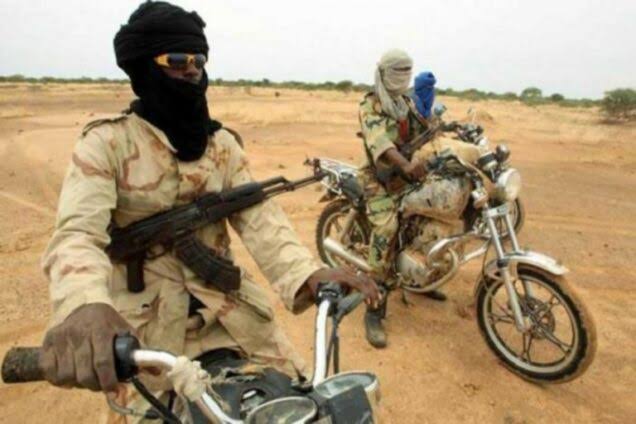
The Nigerian military has identified one Shariff Umar, also known as Yusuf, as the suspected principal coordinator of a suicide bombing network linked to recent deadly attacks in the North-East.

This also included the December 24 bombing at the Gamboru Market Mosque in Maiduguri.
This, according to the military, followed intelligence-led operations by troops of the Joint Task Force North East, Operation Hadin Kai (OPHK), which culminated in the arrest of multiple suspects believed to be connected to suicide bombing activities.

In a statement issued on Saturday in Maiduguri, Sani Uba, Media Information Officer of OPHK, said the breakthrough came after a series of cordon-and-search operations conducted in the Kalmari area of Maiduguri on December 31, 2025. During the operation, 14 suspects were arrested.
According to the statement, subsequent investigations enabled troops to unravel the structure, roles and operational linkages of the terror cell behind recent attacks.
“This development followed intelligence-led cordon-and-search operations conducted at the Kalmari area of Maiduguri on 31st December 2025, during which 14 suspects linked to suicide bombing activities were arrested. Subsequent detailed identification and investigative processes established the structure, roles, and operational linkages of the terror cell,” the statement said.
The military said a detained suspect, Ibrahim Muhammad, identified as a would-be suicide bomber, provided critical information during interrogation, directly implicating Shariff Umar as the ringleader and coordinator of the network.
“During the investigation, a suspected suicide bomber currently in custody, Ibrahim Muhammad, unequivocally identified Shariff Umar (also known as ‘Yusuf’) as the ringleader and coordinator of the terror network,” it noted.
According to the statement, investigations revealed that Umar allegedly played a central role in recruiting, preparing and deploying suicide bombers, as well as coordinating logistics and the supply of improvised explosive device (IED) components.
“According to consistent and corroborated statements, Shariff Umar was responsible for recruiting, preparing, directing and dispatching suicide bombers to assigned targets, as well as coordinating logistics and delivery of IED components,” the statement noted.
The military further alleged that Umar personally coordinated the December 24 suicide bombing at the Gamboru Market Mosque, in which an accomplice identified as Adamu, now deceased, detonated a suicide vest.
Umar was also accused of organising a foiled suicide bombing attempt in Damaturu, Yobe State, where he allegedly handed over IED components to a suicide bomber in Maiduguri before the planned attack was disrupted.
The military also uncovered additional links within the network, including the alleged involvement of his wife, Yagana Modu. His stepdaughter, Amina, also reportedly provided corroborating information.
“Additional links within the network were established, including the involvement of Shariff Umar’s wife, Yagana Modu, and the confirmation by his stepdaughter, Amina, who admitted to previously seeing the suspect bomber within their residence,” the statement added.
The military said all suspects remain in custody and are undergoing intensive, multi-layered investigations aimed at dismantling the network, identifying additional collaborators and recovering any remaining explosives or logistical assets.
The military also called on residents of the North-East to continue supporting security operations by providing timely and credible information, stressing that community cooperation remains vital in preventing attacks.
“This success once again highlights the critical importance of effective collaboration between security forces and the civil populace.
“Terrorist networks often survive by hiding within communities, exploiting silence, fear or misplaced loyalty,” it said.
It added that timely information from law-abiding citizens remains one of the most effective tools for disrupting terror plots and saving lives.
News
FCT Projects Commissioning: Tinubu Urges Abuja Residents to pay Ground Rent, Other Taxes To Enjoy More Developmental Projects(Photos)
President Bola Ahmed Tinubu has urged residents and business owners in the Federal Capital Territory (FCT) to fulfil their civic obligations by paying taxes, land charges and ground rents, saying such compliance would enable government to deliver more infrastructure projects across the territory.

Tinubu made the call on Wednesday during the commissioning of the full-scope development of Arterial Road N5 (Obafemi Awolowo Way), stretching from Life Camp Junction to Ring Road III in Dape District, Abuja.
Represented by Vice President Kashim Shettima, the President said infrastructure development must be driven by a partnership between government and citizens.

“To the residents and business owners enjoying this transformation, I urge you to meet your obligations. Pay your taxes. Clear your land fees and ground rents. Your compliance gives the FCT Administration the strength to build more roads like this one,” he said.
The President described the newly completed road as a critical economic corridor that would ease traffic congestion, improve connectivity and unlock investment opportunities within the nation’s capital.
Recalling the commissioning of the Gwarinpa I District section of the road in June 2025, Tinubu said his administration had fulfilled its promise to complete the remaining section.
“On that day, we made a pledge to you. We promised not to leave this vital artery half-done. Because the Renewed Hope Agenda is not about abandoned projects; it is about delivery from start to finish.
“And so today, we are back. We are back to close the circle. We are back to commission the Dape District Section of Arterial Road N5, from Life Camp Junction to Ring Road III,” he stated.

The President stressed that the project was conceived, funded and completed under his administration, noting that it was awarded to Julius Berger Plc with a strict 15-month completion timeline after it was flagged off in October 2024.
According to him, the era when major infrastructure projects lingered for years without completion is over.
“We conceived it, we funded it, and we delivered it. In the past, projects like this became permanent budget lines ten, fifteen years of excuses. Not under this administration,” Tinubu declared.

He commended the Minister of the Federal Capital Territory, Barr. Nyesom Wike, describing him as the administration’s “Engine of Execution” and applauded Julius Berger for delivering quality work within schedule.
“Minister Wike, you and your team have shown what happens when political will meets accountability. We fund projects to see results, not to listen to grammar,” he added.
Tinubu noted that the completion of the N5 corridor would significantly reduce travel time for commuters and provide seamless connectivity among Dape, Karmo, Gwarinpa I, Kado, Idu and Mbora districts.
He further explained that the road would provide direct access to the Idu Industrial District, thereby lowering logistics costs, attracting investments and creating jobs.
“Beyond that, this road opens a direct gateway to the Idu Industrial District. That means lower logistics costs for businesses, new investment, and more jobs for our people,” he said.
The President also called on traditional rulers, community leaders and residents to protect public infrastructure from vandalism and ensure proper maintenance of drainage systems and streetlights.
Earlier, FCT Minister Barr. Nyesom Wike said the commissioning marked the second day of a 31-day project inauguration programme organised to commemorate the third anniversary of the Tinubu administration.
According to him, the scale of infrastructure delivery in the FCT has increased steadily since the administration came into office.
“On June 24, 2024, when we had the first-year anniversary of Mr. President, we took nine days of commissioning of projects. In the second year anniversary, we took 19 days. To the glory of God, in this third year, we are touching 31 days of commissioning of projects,” Wike said.
The minister credited Tinubu for providing the political support needed to transform the FCT, saying the Renewed Hope Agenda had translated into visible infrastructure development across Abuja and the satellite towns.
“For the first time, development has been taken to the satellite towns in the Federal Capital Territory. This is unprecedented. Before this period, satellite towns did not know what they call government. Today, they can feel the impact and presence of government,” he stated.
Wike praised Julius Berger for completing both sections of the project within record time, revealing that the Gwarinpa section was delivered within seven months.
He also defended the FCT Administration’s handling of compensation issues during the road construction, insisting that all affected property owners whose structures were demolished were duly compensated.
“We paid. If you are saying that because you are from that place and development has passed and government did not dash you money, we don’t dash money when we are carrying out development,” he said.
The minister dismissed protests by some individuals at the event, insisting that infrastructure projects across the territory had demonstrated the administration’s commitment to governance and development.
Earlier in her remarks, Minister of State for the FCT, Dr. Mariya Mahmoud, described the project as another milestone under the Renewed Hope Agenda and a reflection of President Tinubu’s commitment to improving connectivity, stimulating economic growth and enhancing residents’ quality of life.
Mahmoud paid tribute to Wike for what she described as his purposeful leadership and unwavering commitment to transforming Abuja through the delivery of critical infrastructure.
She also thanked traditional rulers, community leaders and residents of Life Camp, Dape District and neighbouring communities for their cooperation throughout the execution of the project.
The minister expressed confidence that the newly commissioned road would improve transportation, boost commercial activities and support sustainable urban development in the Federal Capital Territory.
News
INSECURITY: Vice principal two others killed as bandits invade Kogi community, attempt to kidnap WAEC candidates
Panic engulfed Iluke Bunu, a community in Kabba-Bunu Local Government Area of Kogi State, on Wednesday morning after suspected bandits launched a deadly attack that left three people dead, including a school vice principal.
The bandits, who reportedly invaded the community in large numbers, were said to have targeted students sitting for the ongoing West African Senior School Certificate Examination (WASSCE), sparking fears of a mass abduction.
According to local sources, the gunmen stormed the area in the early hours of June 10, unleashing gunfire that sent residents and students scrambling for safety. The incident disrupted normal activities in the community and created widespread panic among residents.
A community member who spoke about the attack described the situation as terrifying, revealing that the sound of sustained gunfire echoed across the area as people fled to avoid being caught in the violence.
He said we woke up to heavy gunfire this morning. The bandits entered the community and there was confusion everywhere.
Residents were running in different directions for safety, while students writing their WAEC examinations became terrified,” the source said.
The source further revealed that the attackers appeared determined to abduct students and school personnel but were thwarted by the swift intervention of security operatives and local vigilantes.
According to him, soldiers stationed at a nearby military formation responded quickly after receiving distress calls and engaged the gunmen in a fierce exchange of gunfire.
He explained that if not for the prompt response of the soldiers and local vigilante groups, many students could have been kidnapped.
The security forces confronted the attackers and eventually forced them to retreat.
During the attack, three people reportedly lost their lives. Among the victims was Mr. Gani Anifowose, Vice Principal of Government Secondary School, Aharha-Bunu. Two other individuals were also killed in the violence, although details about their identities were not immediately available.
Another resident expressed concern over the deteriorating security situation in the area, noting that many community members remain traumatised by the incident.
According to him, our community is facing serious security challenges. The gunshots lasted for a long time, and people are still searching for some residents whose whereabouts remain unknown,” the resident said.
Sources within the community stated that troops from the Nigerian Army formation in Suku-Kiri Bunu led the response operation.
The soldiers reportedly engaged the attackers in a gun battle, preventing them from carrying out their mission.
During the confrontation, one of the suspected bandits was allegedly shot dead, while several others escaped into nearby forests and bushes.
The attack has renewed concerns over insecurity in parts of Kogi State, particularly in rural communities where residents have repeatedly faced threats from armed criminal groups. It has also raised fresh questions about the safety of students and educational institutions amid ongoing national examinations.
Residents have called on the government and security agencies to strengthen security presence in vulnerable communities and take decisive action to prevent future attacks on schools and innocent civilians.
News
Reps Move to Modernise Price Control Law, as Bill Pass Second Reading
By Gloria Ikibah
The House of Representatives on Wednesday pushed forward sweeping reforms to Nigeria’s price control regime, as lawmakers approved key bills for second reading amid spirited debate on parliamentary procedure.
Leading debate on the Bill to amend the Price Control Act, Ahmed Munir, declared that the 1977 legislation had become obsolete and ineffective in the face of present-day economic realities.
“The original intent of the 1977 Act was global, to protect ordinary Nigerians from hoarding, price gouging and artificial scarcity. However, the mechanisms it put in place and the list of commodities it covered are completely out of sync with the economic realities of 2026.
“As it stands today, the Price Control Act is blindly a dead letter law,” he said.
He criticised the existing penalties as “laughably low” and faulted the Act for failing to define essential goods in line with the needs of modern households.
He stressed that the amendment would not amount to a return to rigid price-fixing.
“While inflation has external and structural drivers, we cannot ignore the local menace of unscrupulous middlemen, artificial hoarding and predatory price-fixing by cartels, taking advantage of the vulnerability of our people. The current 1977 Act fails us in two major ways — obsolete penalties and vague and outdated definitions.
“This amendment does not seek a return to archaic, heavy-handed price-fixing, which we know destroys businesses. Rather, it introduces a smart, balanced and realistic regulatory framework.
“This bill is not about suffocating the free market. It is about putting a civilised guardrail on it. It ensures that while businesses make legitimate profits, the desperate situation of our citizens is not weaponised against them by cartels,” Munir argued.
According to him, the proposal will “bring transparency to supply chains and give teeth to the regulatory bodies like the Federal Competition and Consumer Protection Commission”.
He urged colleagues to back what he described as “this vital, people-centred bill.”
When put to a voice vote by the presiding officer, Speaker Tajudeen Abbas, the House unanimously adopted the motion and referred it to the Committee on Commerce for further legislative action.
-
News12 hours agoNECO to recruit 22,000 supervisors, cautions applicants against fake recruitment portals
-
News13 hours agoOtti woos investors to Abia medical city, industrial park, others
-
News24 hours agoTinubu Commissions OSEX Main Carriageway, Vows End To Era Of Abandoned Projects(Photos)
-
News12 hours agoUmahi gives Abuja-Lokoja highway contractors 72 hours to mobilise
-
News23 hours agoINEC Parleys With Parties, Defends Decision To Appeal Court Ruling On Primary Deadlines
-
News21 hours agoSEDC Defends Record Before Senate, Says Less Than 10% of N140bn Budget Released
-
News12 hours agoSenate Calls For Total Ban On Importation Of Textile Materials
-
Opinion9 hours agoPolitical Tourists Can’t Derail PDP-Akpodiete Rejects Cheap Blackmail Over Archived Photo