Connect with us

News

NYSC reforms: Corps members to wear Adire instead of khaki — FG

Published

on

ADVERTISEMENT
Zoom Ad
ADVERTISEMENT
Zoom Ad

By Francesca Hangeior

The federal government has confirmed that the National Youth Service Corps (NYSC) will replace its iconic khaki uniform with Adire fabric as part of sweeping reforms recently approved for the 53-year-old scheme.

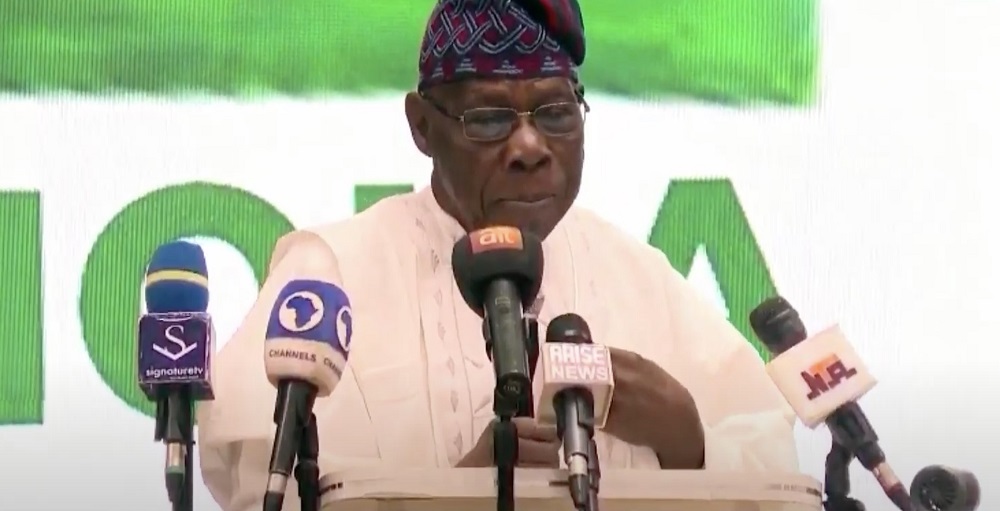
Minister of Youth Development, Ayodele Olawande, disclosed this on Thursday during an appearance on Channels Television’s The Morning Brief, saying the move is aimed at promoting local production and ensuring government spending supports the Nigerian economy.

Recall that on Monday the Federal Executive Council (FEC) approved a comprehensive reform of the National Youth Service Corps (NYSC) since it was established in 1973.

Advertisement

Responding to questions on whether the new uniforms would be produced locally, Olawande said the Adire fabric would be sourced from Nigerian textile producers.

“It’s Adire. Adire is being produced in Nigeria. We have them in Ogun; we have them in Kwara; we have textile industries. Let’s put our money back into the country,” he said.

The minister also announced that corps members would, under the new reforms, increasingly be posted according to their academic qualifications and career paths rather than through the existing general deployment system.

He explained that graduates trained as teachers, for instance, would be posted to schools after undergoing relevant training during the orientation camp.

Advertisement

“After leaving camp, you are not just posted to a school because NYSC wants you there but because of the process you followed in camp. That will determine where you are posted,” Olawande said.

On security, the minister said the government is reviewing the deployment policy to allow more corps members to serve in areas where they studied or are familiar, particularly in states facing security challenges.

According to him, the arrangement would reduce the need for redeployment while addressing concerns raised by parents and prospective corps members.

He said, “If we have a particular area that is having insecurity, instead of probably forcing people or parents to start talking, we must also give them an opportunity that ‘okay, who are those in that area, that schooled in that area, that know much about that area?’ Not just somebody, for example, let me say from South-West to North-East.

Advertisement

“If you have interest that you want to go to the North-East why not, but if you don’t have interest, instead of redeploying you, paying people for camp, doing all those funny things, we said no, let us look at it and say who are those in that area, that can reside in those geographical areas and still give us the kind of number we are looking for since we are saying NYSC should be more impactful. So, that is what we are talking about,” he said.

He also dismissed reports suggesting the military would be removed from the NYSC scheme, describing such claims as a misconception.

Olawande clarified that although the scheme’s operational leadership would be headed by a civilian, the military would continue to play its traditional role in ensuring the security of corps members.

“Military is not taken away, there is no how you can take the military away. It is just saying that we are moving away from military mobilisation to civilian mobilisation,” he said.

Advertisement

Under the new framework, the orientation course has been expanded to six weeks with greater emphasis on entrepreneurship, vocational skills, civic responsibility and employability.

On Wednesday, President Bola Tinubu said the reforms are aimed at equipping young Nigerians with practical skills and preparing them for national development.

Continue Reading
Advertisement

News

Mixed reactions trail FG’s decision to replace NYSC khaki with Adire

Published

on

ADVERTISEMENT
Zoom Ad
ADVERTISEMENT
Zoom Ad

By Francesca Hangeior

The federal government’s decision to replace the National Youth Service Corps (NYSC) khaki uniform with Adire fabric has sparked mixed reactions, with many Nigerians divided over whether the move promotes local industry or undermines one of the scheme’s strongest national symbols.

Minister of Youth Development, Ayodele Olawande, confirmed the change on Thursday during an appearance on Channels Television’s The Morning Brief, saying the initiative was designed to boost local textile production and keep government spending within the country.

“It’s Adire. Adire is being produced in Nigeria. We have them in Ogun; we have them in Kwara; we have textile industries. Let’s put our money back into the country,” the minister said.

Advertisement

The announcement follows Monday’s approval by the Federal Executive Council (FEC) of the most extensive reforms to the NYSC since the scheme was established in 1973.

However, the proposed uniform change has generated widespread debate on X, with opinions sharply divided.

Opposing the proposal, @totematthew wrote: “Adire? Reforms should be thoroughly reviewed and deliberated before being presented to the public. Adire is a cultural heritage of the Yorubas. How then do you translate same to a uniform.

Echoing that sentiment, @skood009 said: “I’m Yoruba, and I honestly don’t think picking Adire alone reflects the full diversity of Nigerian culture. Adire is specifically Yoruba heritage. They should have chosen something that represents the Yoruba, Igbo, and Hausa cultures collectively, or better still, have three different attires representing each major ethnic group equally.”

Advertisement

For @ennyola0015, the issue was preserving the NYSC tradition. “People resist change, and this is one of the few changes I will vehemently resist. Replacing the iconic khaki with Adire as the NYSC uniform is unnecessary. Instead, Adire should be reserved for special occasions such as Passing Out Parades, cultural events, and community service activities.”

@OlajideAlabi1 also argued for retaining the existing uniform. “Naah, I do not think this is a good idea, it can be used for special occasions within the service year, but I think the NYSC uniform should be retained for continuity… it’s iconic.”

Others questioned whether the proposal addressed the scheme’s most pressing challenges

@mrkaydeed wrote, “You mean a committee sat down, reviewed the challenges facing NYSC, and decided that replacing khaki with Adire was the best use of their time? What are they smoking in this administration?”

Advertisement

In a similar vein, @nailzbyjae posted: “Peak governance: solve problems nobody complained about. If changing khaki to Adire is the biggest youth development idea on the table, then we’re in bigger trouble than we thought.”

Another user, @omonoile, criticised the proposal, saying: “The way Tinubu monopolized Lagos and everybody started doing whatever they like, is the same thing he is doing right now in Nigeria. What do you mean NYSC uniform will change to Adire.”

Others, however, defended the reform

@btunddej argued: “For over 50 years, Nigerian graduates have proudly worn a uniform whose origins lie in colonial India through the British Empire… If Nigerians could embrace a fabric with Indian and colonial origins as a national symbol, perhaps we can at least give a Nigerian-made textile with Yoruba origins an opportunity to earn that same status.”

Advertisement

He added: “The question is not whether Adire is Yoruba in origin; it clearly is. The real question is… what indigenous alternative comes closer in function and practicality? Not every national symbol begins as national.”

Supporting the government’s economic argument, @ImanaGodwin wrote: “This is actually a good idea. We need to start patronizing made in Nigeria product. It boost our economy there by strengthen the naira. The only issue is Adire belongs to Yoruba people.”

Also welcoming the proposal, @jpremewwcoin said: “From khaki to Adire is one reform nobody saw coming. If implemented, it would be one of the biggest visual changes in NYSC history. After decades of the same look, corps members might finally have a uniform that reflects a bit more Nigerian culture and identity.”

Advertisement
Continue Reading

News

Why there is heavy security presence in Abuja — Security agencies

Published

on

ADVERTISEMENT
Zoom Ad
ADVERTISEMENT
Zoom Ad

By Francesca Hangeior

Security agencies on Thursday explained the reason behind the heavy deployment of security personnel and barricades across parts of Abuja’s city centre.

They assured residents and visitors that the measures are routine and aimed at maintaining law and order amid increasing protests in the Federal Capital Territory.

The barricades, which have been mounted at strategic locations in the city centre in recent days, have caused gridlock and delays for thousands of motorists, civil servants and other workers moving to and from offices in the Federal Capital Territory.

Advertisement

Responding to concerns over the security measures during a joint media briefing by security and intelligence agencies, Force Public Relations Officer, CSP Anietie Iniedu, assured residents that there was no security threat warranting panic.

“It is a joint operation. There is no cause for alarm at the moment,” Iniedu said.

He explained that the security agencies had observed an upsurge in protests within the city centre and had consequently intensified security deployments to ensure public safety.

“We’ve noticed that there has been an upsurge of protests in the city centre, and we’re trying to maintain law and order as is our basic and primary responsibility. The deployments are basically deployments with movement from one location to the other to ensure that our city centre is safe,” he said.

Advertisement

The police spokesman stressed that the heightened security presence was particularly important because Abuja serves as Nigeria’s capital city and hosts diplomatic missions, government institutions and foreign investors.

“Remember, we’re in the capital, and there’s a lot that has to be done to ensure confidence in those in the city centre and also for our foreign investors,” he added.

Speaking further, Iniedu said the Nigeria Police Force had expanded its security strategy beyond intelligence-led policing to what he described as “intelligence-led community collaborative policing.”

He said the approach recognises that intelligence gathering alone is insufficient to tackle emerging security threats and therefore places greater emphasis on collaboration with local communities.

Advertisement

“We’ve seen that intelligence alone won’t help us. We have gone far to create collaborative processes with our communities,” he said.

Also speaking, Kingsley Amako of the National Coordination Office of the Nigerian Financial Intelligence Unit said security agencies had continued to strengthen intelligence gathering and financial surveillance to combat terrorism financing.

“We have very robust intelligence-gathering mechanisms. As they are evolving into new tricks and changing their tactics, we are also evolving with them,” Amako said.

He noted that while some security operations could not be disclosed publicly, agencies were working collaboratively to counter evolving threats and urged the media to engage security institutions whenever clarification was required.

Advertisement
Continue Reading

News

Sad commentary: ‘Go and cry now’ – Moroccan star mocks Senegal after Belgium defeat

Published

on

ADVERTISEMENT
Zoom Ad
ADVERTISEMENT
Zoom Ad

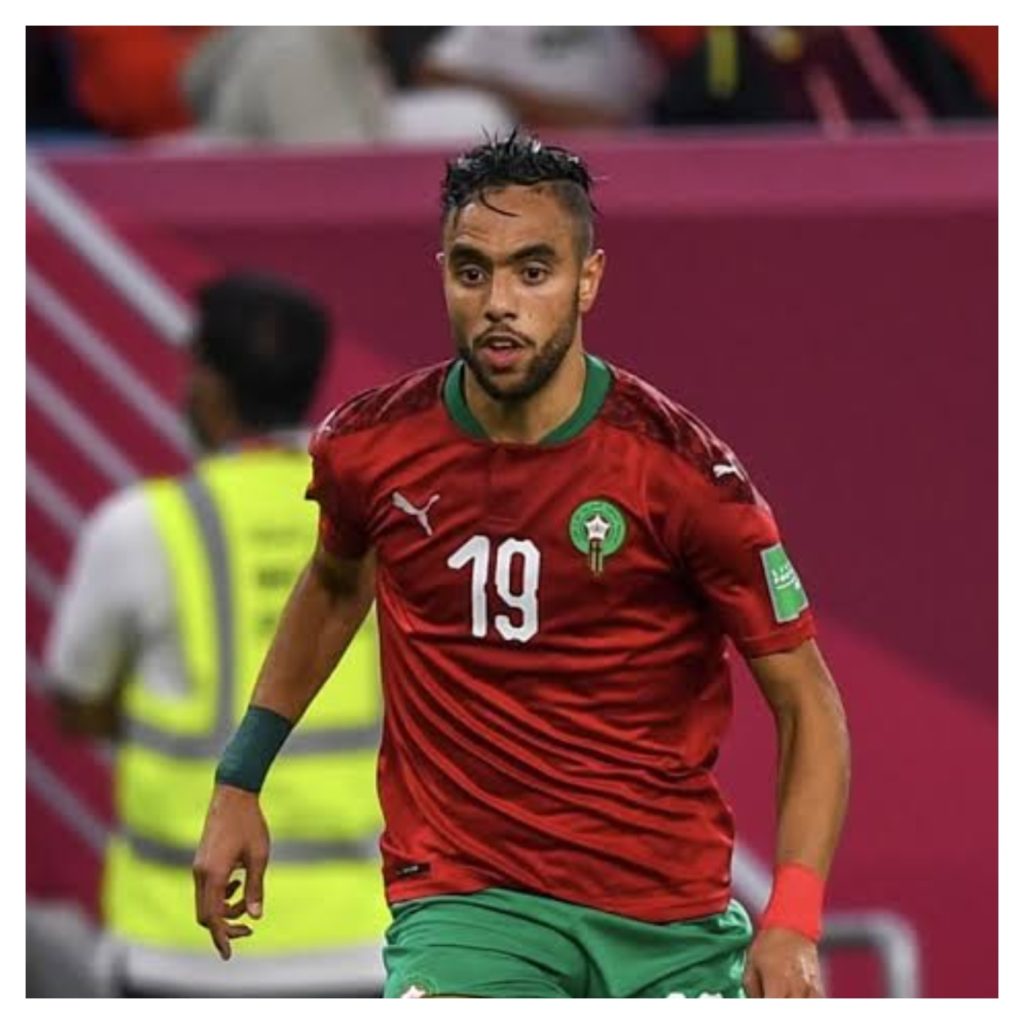
Moroccan international Mohamed Chibi has mocked Senegal on Instagram after the West Africans’ exit from the 2026 tournament.

Senegal squandered a two-goal lead, ultimately losing 3-2 to Belgium during the extra-time of their Round of 32 match on Wednesday.

Chibi, who was not selected for Morocco’s 2026 squad by head coach Mohamed Ouahbi, seized this moment to mock Senegal.

He posted what seems to be a video clip from the match, displaying the final score, along with the caption: “go and cry now.”

Advertisement

The animosity may be rooted in the contentious Africa Cup of Nations final held on January 18, 2026, where Senegal and Morocco faced off. During this match, Senegal’s players left the field in protest over a disallowed goal and a VAR decision made in stoppage time.

The Lions of Teranga returned approximately 14 minutes later, and Edouard Mendy successfully saved Brahim Diaz’s penalty, resulting in a 0-0 score at full-time. However, as the match progressed into extra-time, Pape Gueye scored for Senegal, leading them to win the AFCON title.

Due to their temporary withdrawal from the game, Senegal was later stripped of their title, with Morocco being declared the champions, although Senegal has appealed this decision to the Court of Arbitration for Sport.

Chibi’s Instagram story, which takes a jab at Senegal, clearly indicates that the rivalry between the two teams remains intense. Morocco has advanced to the Round of 16 after defeating the Netherlands on penalties, while Senegal is heading home following a devastating defeat to Belgium.

Advertisement
Continue Reading

Trending

Copyright © 2024 Naija Blitz News