News
Makinde Announces Ladoja, Chairman, Oyo Council of Obas
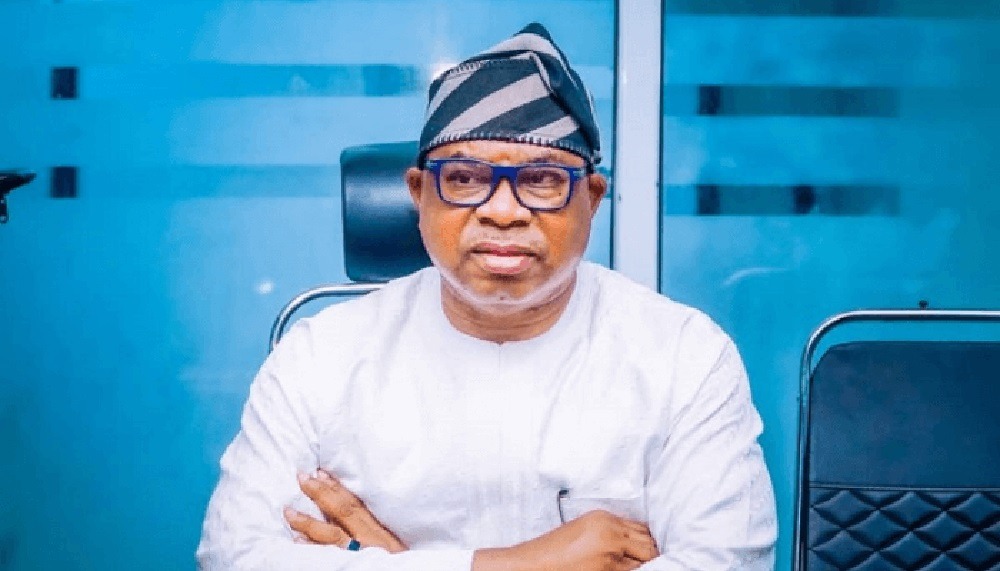
The Olubadan of Ibadanland, Oba Rashidi Adewolu Ladoja, has been inaugurated as the Chairman of the Oyo State Traditional Council of Obas and Chiefs under a newly approved rotational system.

Oyo State Governor, Seyi Makinde, has inaugurated the Oyo State Council of Obas and Chiefs, ending 15 years of inactivity of the statutory traditional council, with the Olubadan of Ibadanland, Oba Rashidi Adewolu Ladoja, emerging as its pioneer chairman.
The historic inauguration, held at the House of Chiefs, Parliament Building, Secretariat, Ibadan, was, however, marked by the absence of the Alaafin of Oyo, Oba Abimbola Owoade.

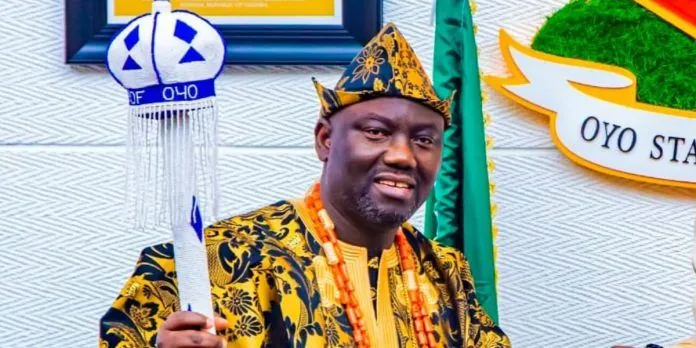
Addressing the gathering, Makinde announced that the chairmanship of the council would operate on a rotational basis among the three foremost traditional rulers in the state, namely the Olubadan of Ibadanland, the Alaafin of Oyo, and the Soun of Ogbomosoland, with each monarch expected to serve a two-year term.
He explained that the rotational arrangement was designed to foster unity, mutual respect and cooperation among the traditional institutions, while allowing each of the royal fathers to contribute meaningfully to governance and development in the state.
According to the governor, the agreement among the trio was that the rotation would commence with the Olubadan of Ibadanland, hence his emergence as chairman.
Makinde recalled that the council last convened in 2011, describing its prolonged inactivity as unhealthy for a pace-setting state like Oyo, especially given the critical role traditional rulers play in governance, peace-building and grassroots intelligence.
In his acceptance remarks, the Olubadan of Ibadanland, Oba Rashidi Ladoja, said the inauguration signified the beginning of responsibility rather than an accomplishment, urging residents to place confidence in the council’s mandate.
He stressed that the council was not established to promote rivalry or personal ambitions among traditional rulers, noting that public trust would deepen after its first sitting, as people would realise that members were united in purpose and not in competition.
Oba Ladoja explained that the council’s foremost responsibility was to promote peace and safety within their domains, while also contributing to the overall progress and stability of Oyo State.
MEANWHILE, Oba Ladoja has said that hard times await land grabbers who are giving Ibadan a bad reputation.
Oba Ladoja said this at the Olubadan Palace, Oke Aremo, Ibadan, while inaugurating a five-member committee of legal practitioners charged with the task of tackling the problem of land grabbing from the legal perspective.
The committee comprises Niyi Akintola (SAN), Musibau Adetunbi (SAN), Yinka Okunade, Rahman Abiodun AbdulRaheem and Tunji Thomas.
They were charged by Oba Ladoja to co-opt anybody from any profession, including town planning, survey, security agencies, the bar and bench, who could assist in giving them sufficient greenlight to fight the scourge.
Oba Ladoja stated that both the Oyo State Government and the Olubadan-in-Council were on the same page in ridding Ibadan of the menace of land grabbing.
According to him, land grabbing is like an interlocking web of complex connections involving diverse interests that need to be unravelled.
In his remarks, the Balogun of Ibadanland, Oba Tajudeen Ajibola, corroborated Olubadan’s position, saying it had become desirable for Ibadan to take stringent action against the menace of land grabbing because it has constantly put our people in harm’s way.
Speaking on behalf of the committee, Chief Niyi Akintola expressed the members’ gratitude to Olubadan and Olubadan-in-council for giving them the privilege to serve their fatherland.

News
2027: Akiolu Endorses Tinubu 2nd Term Bid, Declares No Vacancy in Aso Rock
The Oba of Lagos, Rilwan Akiolu, has endorsed President Bola Ahmed Tinubu’s bid for a second term in office, declaring that there will be “no vacancy” in the Presidential Villa, Abuja for the next four or five years.
Oba Akiolu gave the support when the Director-General of the All Progressives Congress (APC) Presidential Campaign Council, Senator Abdulaziz Yari, led members of the council on a courtesy visit to his palace in Lagos on Monday.
The monarch urged politicians to approach the 2027 General Elections with responsibility and ensure that the electoral process is peaceful and serves the interests of Nigerians.
Oba Akiolu cautioned members of the campaign council against actions capable of undermining the peace and stability of the country, even as he urged them to uphold honesty and shun the Machiavellian principle that the end justifies the means.
Speaking, the Director-General of the Campaign Council, Yari, said the delegation was in Lagos to seek the monarch’s blessings, prayers and counsel as the council begins its nationwide campaign activities ahead of the 2027 polls.
Yari said the APC believed President Tinubu deserved a second term to consolidate his administration’s efforts in the areas of the economy, security and infrastructure.
The Campaign D-G, while acknowledging the economic difficulties facing Nigerians, appealed for continued support for the president, saying APC leaders from the North would work to secure strong backing for Tinubu’s re-election across the region.
Receiving the delegation, Lagos State Governor, Mr. Babajide Sanwo-Olu, described the visit as significant, noting that the council had made the Oba’s palace one of its early stops following its engagement with the Sokoto Caliphate.
Governor Sanwo-Olu said the visit underscored Lagos’ strategic importance to Nigeria’s political process, describing the state as the country’s commercial and economic nerve centre as well as a major political hub.
The visit was attended by Lagos APC leaders, local government chairmen, members of the National Assembly, state lawmakers and other party stakeholders.
News
Former FIRS Chairman, Mani, Picks PDP Guber Ticket in Niger
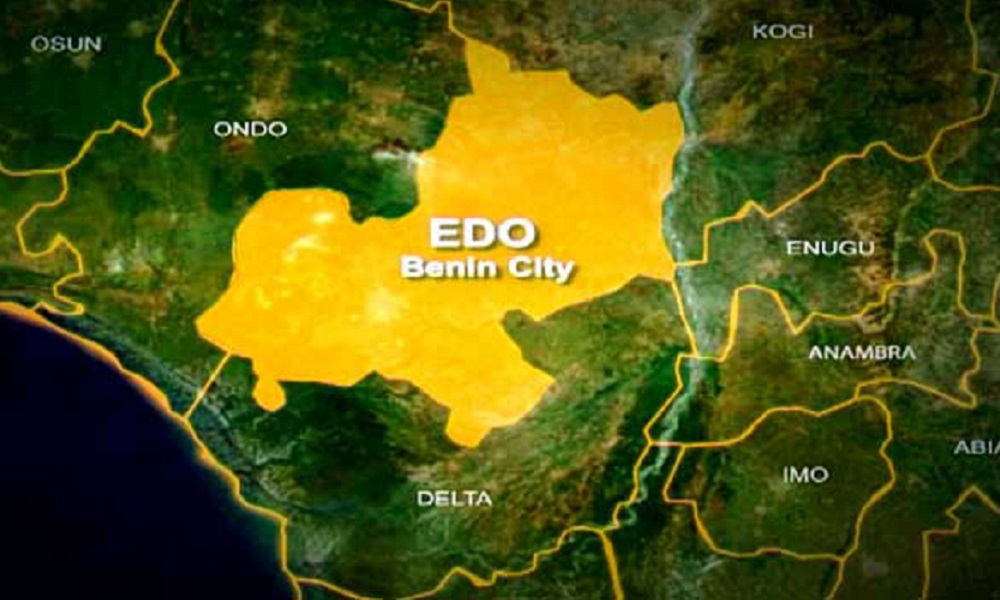
Former Chairman of the Federal Inland Revenue Service (FIRS) Alhaji Mohammed Mani, has been endorsed as the governorship candidate of the Peoples Democratic Party PDP in Niger state
Alhaji Mani replaces Abubakar Sulaiman, who was elected at the PDP primary last May.
Sulaiman voluntarily withdrawn from the position in the interest of the peace unity and progress of the party.
The endorsement of the former FIRS boss for the governorship contest was made by PDP stakeholders from across the state at the state party secretariat.
Addressing the stakeholders, Alhaji Mani promised to deliver the state to the PDP in next year’s election and solicited the support of party faithful for the realisation of the objective.
The new PDP candidate had earlier contested for the governorship ticket of the All Progressives Congress(APC) which Governor Mohammed Umaru Bago got by “ consensus.”
He was among the APC aspirants who lost in the primary election and recently defected to the PDP.
News
ICPC, NFIU open stocktake on financial intelligence, asset recovery
The Independent Corrupt Practices Commission (ICPC) a has commenced a three-day stocktake meeting focused on converting financial intelligence into prosecutions and asset recovery.
The ICPC Chairman, Dr Musa Aliyu, SAN, said this at the opening of the exercise, held in preparation for Nigeria’s Financial Action Task Force (FATF) 3rd Round Mutual Evaluation Exercise.
The meeting was organized in conjunction with the Nigerian Financial Intelligence Unit (NFIU)
Represented by the Commission’s Secretary, Mr Clifford Oparaodu, Aliyu said the exercise would test how effectively ICPC investigations were converting financial intelligence into prosecutions, asset recovery and stronger enforcement outcomes.
He said the stocktake provided an internal mirror to measure performance under the Money Laundering (Prevention and Prohibition) Act 2022, POCA 2022 and POCR 2024 regulations.
According to him, the Commission had in recent years made parallel financial investigations mandatory in every corruption case to strengthen the tracing of illicit funds and recovery efforts.
While stating that previous reviews focused largely on laws and policies, he said the stocktake would drill deeper into operational performance and assess Nigeria’s enforcement effectiveness.
He listed five Immediate Outcomes as benchmarks, emphasising that the exercise focused on FATF Immediate Outcomes 1, 2, 6, 7 and 8 for institutional assessment.
He said these included risk understanding, international cooperation, financial intelligence use, effectiveness of money laundering investigations and asset recovery, adding that participants would assess operational implementation.
On corruption risks, he said participants would assess whether the ICPC and sister agencies were aligning investigations with Nigeria’s national risk profile and identified priority threats.
“We must show that our operations reflect where the real threats are, including bribery and grand corruption,” he said.
For cross-border crime, he said the team would review formal Mutual Legal Assistance channels and informal intelligence networks to assess Nigeria’s capacity for international cooperation.
The goal, according to him, was to demonstrate that Nigeria could swiftly share information, support investigations and secure convictions through effective cooperation with international partners.
“A major focus will be on financial intelligence under Immediate Outcome 6. The question before the room: are agencies not just generating reports, but actually using them to trace illicit flows and freeze assets before they disappear?”
He said enforcement would receive significant scrutiny under Immediate Outcomes 7 and 8, with Nigeria expected to demonstrate results from relevant money laundering laws and regulations.
“That means convictions, confiscations, and proper management of recovered assets,” he said, urging institutions to provide verifiable evidence of operational effectiveness during the stocktake exercise.
He urged visiting Country Experts to be blunt in their assessment, saying their feedback would help Nigeria close gaps, clean up statistics and sharpen strategies before the main evaluation.
He said the commission had aligned with the NFIU’s strategy by making parallel financial investigations mandatory in every corruption case handled by its investigators.
He added that the ICPC now leveraged the Corporate Affairs Commission Beneficial Ownership Register to expose corporate shells and strengthened systems for managing recovered assets.
He, however, warned that laws alone would not secure a good rating, stressing that effective implementation and measurable enforcement outcomes remained critical to Nigeria’s assessment.
“Technical compliance is only half the battle. What ultimately safeguards our financial system is demonstrating high operational effectiveness across these Immediate Outcomes,” he said.
He charged ICPC investigators and prosecutors to be candid and data-driven, while welcoming country experts to provide objective feedback that would help close gaps before the evaluation.
Speaking, the Chief Executive Officer of NFIU, Hajia Hafsat Bakari, said the exercise was designed to measure how effectively anti-corruption agencies converted financial intelligence into concrete enforcement outcomes.
Represented by Dr Emmanuel Sotande, an NFIU official, Bakari said the exercise was not about fault-finding but about assessing institutional preparedness ahead of Nigeria’s next FATF assessment.
“We want to be able to see how well the information and investigation lead to prosecution, seizure of assets and whether there’s a deterrent mechanism in place,” she said.
According to her, the core objective was to track the full value chain of intelligence use, from information supplied by the NFIU to enforcement outcomes.
“That includes how data supplied by the NFIU is consumed by the ICPC and other agencies, and whether it translates into convictions, asset recovery, and stronger deterrence against illicit financial flows.”
The NFIU boss emphasised that the timing was critical, noting that Nigeria was preparing for its 3rd Round Mutual Evaluation 2027 and needed institutional readiness.
“This is not a witch-hunt exercise but to ensure that we prepare for the next evaluation, which is going to be taking place next year.
“We want all institutional agencies and systems in Nigeria to be ready for the FATF assessors that will be coming from all parts of the world,” she said.
She explained that the framework for the stocktake was developed by the NFIU specifically to enable agencies to evaluate their preparedness and identify areas requiring improvement before assessment.
She said that assessors would demand detailed data and evidence, much of which the ICPC already held, making inter-agency coordination essential to Nigeria’s preparedness.
“It is in that context that the CEO of NFIU deems it fit to put the framework of the stocktake exercise in place for us to evaluate ourselves before the assessors will come,” she added.
She called for stronger collaboration, warning that the goal was to ensure Nigeria did not slip back onto the FATF grey list when the evaluation was concluded in 2027.
“The assessors will be asking for a lot of information, which I am sure the ICPC already have and it is only pertinent for us to work together,” she said.
-
News24 hours agoI’Ve Nothing To Hide, Nothing To Fear – Senator Buba On Banditry Allegations
-
News24 hours agoUCH Ibadan Emerges As Nigeria’s Top Health Institution In 2026
-
Economy24 hours agoDangote Refinery IPO Rush Overwhelms Two Investment Sites
-
News24 hours agoI Don’t Want To Be Called The Richest Man In Africa — Dangote
-
News18 hours agoKaru Residents Hail Tinubu, Wike As Road Project Ends Years Of Traffic, Flooding Woes(Photos)
-
Metro24 hours agoKidnappers Abandon Victim, Flee At Police Checkpoint In Anambra