News
South East Residents Should Appreciate Tinubu for transforming the region– Umahi
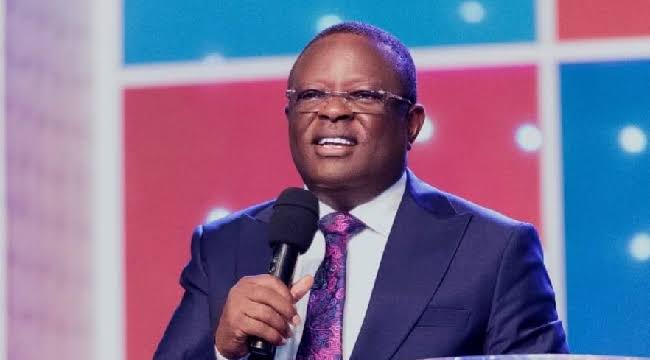
The Minister of Works, David Umahi, has urged residents of the South-East to appreciate President Bola Tinubu for what he described as unprecedented infrastructural transformation in the region, particularly in road construction and rehabilitation.

Umahi said many federal roads in the zone were death traps before President Tinubu assumed office, but are now receiving massive attention, with several projects completed and many others ongoing.
The minister spoke during a press briefing with journalists in Enugu on Saturday evening, with contractors handling various federal road projects in attendance.

Umahi, a former governor of Ebonyi State, described President Tinubu as the “Biafra” that many people in the South-East have been agitating for, insisting that the President’s infrastructural interventions speak louder than political rhetoric.
“It is interesting to note that all the nightmares on the roads will come to an end. And who is the one doing it? President Bola Tinubu.
“Will we continue to say that South-East people should be very grateful to him because that which has been expected has come to pass.
And for me, that’s the Biafra we’re looking for. And that is President Bola Tinubu. What he’s doing in the South-East, in fact, you need to open your eyes to see what he’s doing.
“But even if you are in darkness, you will definitely feel it because the roads are probably being paved,” he said.
The minister disclosed that the Federal Government has banned mining activities within bridge corridors across the country to prevent structural damage and enhance public safety.
According to him, patrol boats will be deployed to enforce the ban around bridges, while two operational vehicles will be provided to the police for highway surveillance.
Umahi added that the Ministry of Works would support the maintenance of the vehicles with a monthly allocation of ₦3m.
Reiterating the Federal Government’s commitment to safer highways, Umahi said CCTV cameras and solar lighting installations would be extended beyond bridges to cover federal highways nationwide.
“We have already commissioned CCTV installations at Tomei Land Bridge and the Second Niger Bridge.
“Our commitment in deploying solar light and CCTV to monitor the bridges and the surroundings is not limited to bridges. It is what we are going to have in all our federal highways,” he said.
He revealed that the CCTV project at Tomei Land Bridge alone cost ₦480m, describing it as part of broader efforts to improve road surveillance and security.
Providing updates on key road projects, Umahi said the 48-kilometre Asaba Heartland Road rehabilitation project, valued at $48bn, has recorded significant progress.
He explained that the road features reinforced concrete pavement and extensive drainage infrastructure.
“Mr President gave us an intervention fund of about ₦50bn, which we paid the contractor. We raised concerns about slow pace, but we are satisfied with the quality,” Umahi said, directing the contractor to introduce night shifts to speed up work.
The minister confirmed that China Civil Engineering Construction Corporation is handling the 17.5-kilometre bypass at a cost of ₦179bn, with 30 per cent payment already made.
He said the ministry plans to have 50 per cent of the project commissioned by President Tinubu by April 20.
Describing the Enugu–Onitsha road as “very troubling”, Umahi commended the President for reviving the long-neglected 107-kilometre dual carriageway.
He noted that the project, originally awarded to MTM under a tax credit arrangement valued at ₦202bn, had been de-scoped due to economic realities, adding that MTM has completed works worth about ₦50bn.
The first phase of the project, being executed by MTM, Nigercat and RCC, is expected to be completed by April 28, while solar lighting installation on the first five kilometres should be ready within two weeks.
Umahi expressed concern over delays by CCCC on the Second Niger Bridge bypass section, attributing them to inadequate supervision.
He said the ministry would issue a formal notice to the company, copying its bankers, demanding improved performance within 60 days or risk contractual sanctions.
He added that CCCC has completed 61 kilometres of the Enugu–Port Harcourt Expressway and is finalising additional sections.
Issuing a firm directive, the minister said, “No place in the country should asphalt be removed from our road again,” ordering new designs to include concrete shoulders and cement-stabilised stone bases to prevent premature failures.
Umahi disclosed that the Enugu-Ebonyi road is being reconstructed by the Federal Government, while the Enugu State Government is dualising part of the corridor from the airport junction to the state boundary.
The ₦180 billion project will be executed in phases, with the first phase expected to be completed this year and the second phase running into 2026.
He also mentioned the Bini-Asaba corridor, noting that the project is still at the conception stage, with a report and site visit expected before the end of the month.
Responding on behalf of stakeholders, the Senior Special Assistant to President Tinubu on Community Engagement for the South-East, Mrs Chioma Nweze, praised the administration’s interventions, saying they have improved travel, boosted economic activities and restored federal presence in the region after decades of neglect.
She described the projects as transformative and thanked the President for renewing hope in the South-East.
News
Primate Ayodele, set to commission Mosque on Saturday
The Leader of INRI Evangelical Spiritual Church, Primate Elijah Ayodele, has concluded plans to commission a mosque, which he single-handedly built, on Saturday, February 14, 2026.
The commissioning will also commemorate his 21-day annual thanksgiving programme, which began in January and will end on Sunday, February 15, 2026.
The mosque building, which the prophet announced plans for last year, is the first of its kind, as there has never been a prominent Christian leader reported to have built a mosque before now.
According to Primate Ayodele, his decision to build the mosque is not because he wants to change his religion, but rather a representation of a direction given to him by God many years ago.
He explained that his church has been home to Muslim faithful, and at different times, he has been invited to preach at Muslim gatherings. Therefore, building a mosque was not difficult, especially after receiving divine direction regarding it.
“My decision to build a mosque is not because I want to become a Muslim, but a direct representation of what God told me to do. I have Muslims attending my church, I attend Muslim programmes to preach when I am called upon, and I have several Muslim friends, so following the God-given instruction was not too hard for me.”
Primate Ayodele also noted that building a mosque as a Christian cleric sends a message of religious tolerance across the globe and further showcases his love for humanity, regardless of differences.
“Beyond being a divine instruction, this is a message of religious tolerance across the globe. If we can resolve the issue of religion in the world, it would definitely be a better place for all of us. I love everyone, regardless of their religion or tribe, and building a mosque further showcases that. God created everyone equally; we should not celebrate things that further divide us.”
Speaking on the operations of the mosque, Primate Ayodele explained that he would be handing it over to the Islamic community without any form of interference in its administration.
“By God’s grace, the mosque will be named after the late mother of President Tinubu, and we will be handing over its operations to the Islamic community without any interference.”
It is worth noting that Primate Ayodele has both privately and publicly supported other churches, especially financially. He has donated funds for church buildings, empowered individuals who are not members of his church, and raised funds for churches other than his own.
News
Scary: CRS records 1,459 cases in five years
Cross River State recorded 1,459 cancer cases between 2018 and 2022, with women accounting for over two-thirds of the total, data from the Calabar Cancer Registry have shown.
Director of the Registry, Prof. Ima-Obong Ekanem, disclosed this at a two-day capacity workshop for Cancer Registrars held at the University of Calabar Teaching Hospital, UCTH.
The training was organised by the National Institute for Cancer Research and Treatment, NICRAT, in collaboration with Linkwell Dynamic Concept.
Of the total cases, 984 (67.4 per cent) were females and 475 (32.6 per cent) males, giving a male-to-female ratio of 1:2. An average of 292 cases was recorded annually — a 51 per cent rise compared to 2009–2013.
Ekanem, also Chief Consultant Pathologist at UCTH, said the report covered only three of the state’s 18 local government areas and excluded benign tumours, in line with global standards.
Among men, prostate cancer led with 149 cases (33.4 per cent), followed by lymphoma, colorectal, breast, mouth and pharynx, larynx, lung, bladder, leukaemia and thyroid cancers.
For women, breast cancer topped the chart with 397 cases (40.3 per cent), followed by cervical cancer with 170 (17.3 per cent). Ovarian, uterine, colorectal and lymphoma cases were also recorded.
In children, 90 cases were documented, with retinoblastoma and lymphoma the most frequent.
Ekanem said over one-third of cancers are preventable through reduced exposure to risk factors and vaccination against Hepatitis B and Human Papilloma Virus, which are linked to liver and cervical cancers.
She urged healthy diets, regular exercise, avoidance of tobacco and excessive alcohol, and reduced sugar and salt intake. She also cautioned against harmful practices such as skin bleaching.
Men above 40, she advised, should undergo annual prostate checks, while women should carry out monthly breast self-examinations and periodic Pap smear and HPV DNA tests.
She noted that screening services remain unaffordable for many, stressing the need for a stronger health system to guarantee access to diagnosis and treatment.
Ekanem cited funding and logistics gaps as major challenges facing the registry and called for support.
NICRAT Director-General, Prof. Usman Malami Aliyu, represented by Bashir Mustapha, said accurate cancer data are vital for planning, budgeting and effective control programmes nationwide.
News
FG Suspends Sachet Alcohol Ban, Tells NAFDAC to Stand Down
The Federal Government has again reaffirmed the suspension of all enforcement actions relating to the proposed ban on sachet alcohol and 200ml PET bottle alcoholic products, warning the National Agency for Food and Drug Administration and Control (NAFDAC) to desist forthwith from further sealing of factories and warehouses.
This renewed directive follows a joint intervention by the Office of the Secretary to the Government of the Federation (OSGF) and the Office of the National Security Adviser (NSA), both of which have raised serious concerns over the security implications of continued enforcement actions in the absence of a fully implemented National Alcohol Policy.
According to OSGF and NSA, the National Alcohol Policy has now been signed by the Federal Ministry of Health in line with the directive of President Bola Ahmed Tinubu. However, they stressed that until the policy is fully implemented and further policy direction is issued by the Office of the SGF, NAFDAC must refrain from all enforcement measures, including factory shutdowns, warehouse sealing, and public emphasis on the sachet alcohol ban.
The SGF and NSA jointly warned that the continued sealing of warehouses and de facto banning of sachet alcohol products, without a harmonised policy framework, is already creating economic disruptions and poses a growing security threat, particularly given the impact on employment, supply chains, and informal distribution networks across the country.
This position reinforces an earlier directive issued by the Office of the Secretary to the Government of the Federation in December 2025, which formally suspended all actions relating to the proposed ban pending consultations and a final government decision.
In a statement issued by the Special Adviser on Public Affairs to the SGF, Terrence Kuanum, the OSGF disclosed that it had received an official correspondence from the House of Representatives Committee on Food and Drugs Administration and Control, dated November 13, 2025. The letter, referenced NASS/10/HR/CT.53/77 and signed by the committee’s Deputy Chairman, Hon. Uchenna Harris Okonkwo, raised concerns over NAFDAC’s proposed enforcement actions and drew attention to existing resolutions of the National Assembly on the matter.
The OSGF explained that, in line with its statutory role as Chairman of the Cabinet Secretariat, it is currently reviewing all legislative resolutions, public health considerations, economic implications, and national interest factors surrounding the issue.
“Accordingly, all actions, decisions, or enforcement measures relating to the ongoing ban on sachet alcohol are to be suspended pending the final consultations and implementation of the National Alcohol Policy and the issuance of a final directive,” the statement emphasized.
The Office further clarified that any enforcement action carried out by NAFDAC or any other agency without due clearance and resolution from the Office of the Secretary to the Government of the Federation is invalid and should be disregarded by the public until an official position is formally communicated.
With the latest intervention by the Office of the National Security Adviser, the Federal Government has now elevated the matter beyond regulatory concerns, stressing that premature enforcement without coordinated policy implementation could destabilize communities, worsen unemployment, and trigger avoidable security challenges.
The SGF and NSA reiterated that the warning stands, and that NAFDAC is expected to cease forthwith from further enforcement actions or public emphasis on the sachet alcohol ban until the National Alcohol Policy is fully operationalized and further directives are issued by the appropriate authorities.
The Federal Government assured Nigerians and industry stakeholders that a final, balanced, and lawful decision would be communicated in due course, following comprehensive consultations and inter-agency coordination in the overall interest of public health, economic stability, and national security.
-
News24 hours agoOccupy NASS: PDP, ADC, everybody should come out – Amaechi calls for mass protest over e-Transmission of election results
-
News20 hours agoSenate rescinds earlier decision, amends Electoral Act to accommodate electronic transmission of results with conditions
-
News8 hours agoAtiku, Makinde Hold Closed-Door Meeting With IBB
-
Metro8 hours agoOwo Massacre: Amotekun Officer Identifies 2nd Defendant As Gunman
-
News20 hours agoFinally, Senate Rescinds Decision on Electoral Act Amendment Bill
-
News8 hours agoNRS targets ₦40.7trn revenue in 2026
-
News20 hours agoVideo/Photos: Wike confirms Tinubu’s intervention in Rivers crisis, fervently hope it’ll be the last
-
News23 hours agoMarwa mourns fallen officer as NDLEA nabs 6 suspects in bloody Bonny Island raid (Photos)