
Foreign
Countries safe to reside if World War Three breaks out

- /home/naijuinz/public_html/wp-content/plugins/mvp-social-buttons/mvp-social-buttons.php on line 27
Warning: Trying to access array offset on value of type bool in /home/naijuinz/public_html/wp-content/plugins/mvp-social-buttons/mvp-social-buttons.php on line 27
&description=Countries safe to reside if World War Three breaks out', 'pinterestShare', 'width=750,height=350'); return false;" title="Pin This Post">
- Share
- Tweet /home/naijuinz/public_html/wp-content/plugins/mvp-social-buttons/mvp-social-buttons.php on line 72
Warning: Trying to access array offset on value of type bool in /home/naijuinz/public_html/wp-content/plugins/mvp-social-buttons/mvp-social-buttons.php on line 72
&description=Countries safe to reside if World War Three breaks out', 'pinterestShare', 'width=750,height=350'); return false;" title="Pin This Post">


US President Donald Trump confirmed that American forces had launched “major combat operations” against Iran, with airstrikes reported across multiple cities. Iranian officials say they are responding with counterattacks against regional targets. Iran’s Supreme Leader Ali Khamenei was reportedly the target of the initial US-Israeli strikes on Tehran, triggering a wave of retaliatory missile and drone launches.
UK Prime Minister Keir Starmer, in a joint statement with the leaders of France and Germany, urged restraint and said Iran must “refrain from indiscriminate military strikes”. Meanwhile, as Russia continues its offensive in Ukraine, Volodymyr Zelensky suggested the conflict has already crossed a historic threshold. He told the BBC: “I believe that Putin has already started it. The question is how much territory he will be able to seize and how to stop him. Russia wants to impose on the world a different way of life and change the lives people have chosen for themselves.”
Fears of a wider global conflict are mounting as the United States and Israel intensify airstrikes on Iran, prompting retaliation from Tehran and raising concerns about the potential for a broader war.
As tensions rise, analysts and commentators have speculated about which regions of the world might be least exposed in the event of a global conflict.
ANTARCTICA
Antarctica, the planet’s southernmost continent, is often cited due to its extreme remoteness and distance from nuclear-armed states. With more than 14 million square kilometres of landmass, it is geographically isolated, though its harsh climate would present significant survival challenges.
ICELAND
Iceland, which consistently ranks highly on the Global Peace Index, has never participated in a full-scale war or invasion. Its remote North Atlantic location could shield it from conventional European conflict, although nuclear fallout from the mainland could still reach its shores.
NEW ZEALAND
New Zealand, ranked second on the Global Peace Index, maintains a largely neutral stance in global conflicts. Its mountainous terrain and relative isolation in the South Pacific are frequently highlighted as factors that could enhance defensive resilience.
SWITZERLAND
Switzerland, long associated with political neutrality, is protected by mountainous terrain, landlocked geography and extensive civil defence infrastructure, including nuclear shelters. The country has refrained from direct military involvement in recent conflicts.
INDONESIA
Indonesia has traditionally pursued a “free and active” foreign policy, acting independently in international affairs and emphasising global peace.
TUVALU
Tuvalu, a small Pacific island nation located between Hawaii and Australia, has limited infrastructure and natural resources, making it an unlikely strategic target despite its vulnerability to climate change.
BHUTAN
Bhutan declared itself neutral in 1971 after joining the United Nations. Landlocked and surrounded by mountainous terrain, it has historically avoided entanglement in major conflicts.
CHILE
Chile’s 4,000-mile coastline and diverse agricultural output, combined with comparatively advanced infrastructure within South America, are cited as potential advantages in a crisis scenario.
FIJI
Fiji, located roughly 2,700 miles from Australia, ranks highly on the Global Peace Index. With dense forests and marine resources, it is geographically distant from major power blocs.
SOUTH AFRICAN
South Africa, with fertile land, fresh water supplies and modern infrastructure, is also occasionally referenced as a location with resources that could support population survival in prolonged instability.
While experts stress that the prospect of a global war remains uncertain, the rapid escalation between major powers has reignited public anxiety about the scale and reach of modern conflict. Governments across Europe and beyond continue to call for de-escalation as military operations intensify across the Middle East and Eastern Europe.
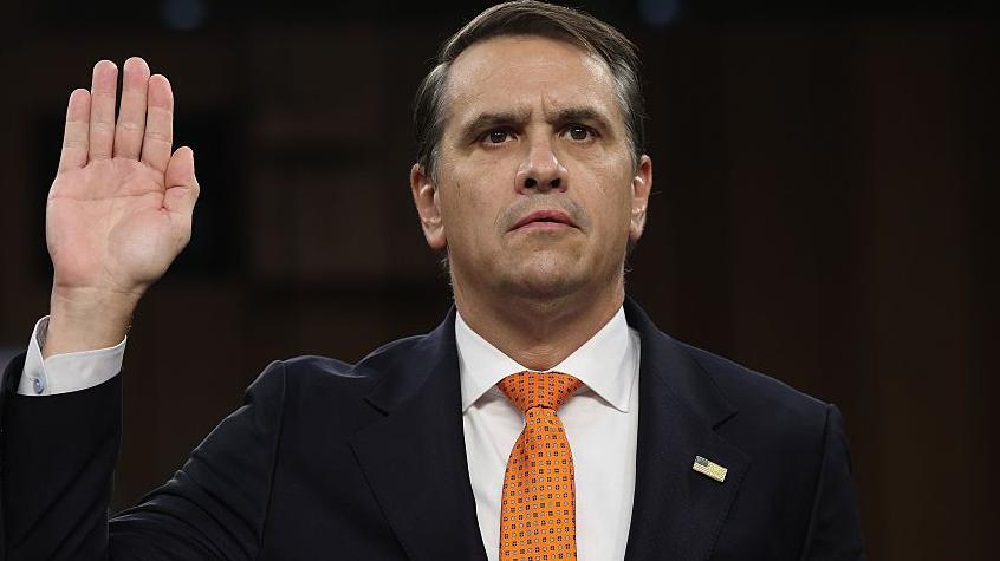
President Donald Trump’s former personal lawyer Todd Blanche took a key step on Tuesday towards becoming the top US law enforcement officer after a Senate panel approved his nomination to head the Justice Department.
The 12-10 vote in the Senate Judiciary Committee was along party lines and came after two Republican senators dropped their opposition to Blanche’s nomination.
Blanche’s Senate confirmation had been held up by concerns from senators John Cornyn and Thom Tillis over a $1.8 billion fund for alleged victims of politically motivated prosecution and a tax audit immunity deal with the Republican president.
Blanche issued a written order over the weekend scrapping the so-called “anti-weaponization fund” and said the audit immunity agreement with Trump, his two eldest sons and the Trump Organization would only apply “retroactively” to past tax years and not future filings.
The full Senate, where Republicans hold a majority, is expected to vote later this week to confirm Blanche as attorney general. He has been serving as acting attorney general since Trump fired Pam Bondi in April.
Senate Democrats have been united in their opposition to Blanche amid concerns he has treated the Department of Justice as an extension of the Republican president’s legal team.
“Todd Blanche has no business serving as our nation’s chief law enforcement officer,” Senator Dick Durbin, the ranking Democrat on the Senate Judiciary Committee, said before Tuesday’s vote.
“The attorney general is supposed to be the people’s lawyer,” Durbin said. “Mr Blanche continues to operate as the president’s personal lawyer, treating the Justice Department like a law firm serving one client — the president.”
– ‘Retribution’ campaign –
Vice President JD Vance, in a post on X following the committee vote, said Blanche “will continue to serve the American people and the Trump Administration loyally, and he will make a great Attorney General.”
Blanche has been closely tied to what Democrats have dubbed a “retribution” campaign by the president against his perceived political enemies and he helped negotiate the extraordinary legal settlement between Trump and the government he controls.
The out-of-court settlement stems from Trump’s $10 billion lawsuit against the Internal Revenue Service (IRS) over the illegal disclosure of his tax records by an agency contractor.
It proposed immunity from audits for past tax years and a $1.776 billion fund for people who say they were unfairly targeted by the Department of Justice, potentially including Trump supporters convicted over the January 6, 2021 attack on the US Capitol.
Federal judges have separately blocked the fund and condemned the tax settlement, which according to US press reports could help the president avoid past liabilities of up to $100 million.
Blanche has also come in for criticism from victims of Jeffrey Epstein over his handling of the release of investigative files about the convicted sex offender, a one-time close friend of Trump.
Prior to joining the Department of Justice, Blanche represented Trump in his New York trial over alleged “hush money” paid to porn star Stormy Daniels.
He was also on the legal defense team in two federal cases brought against Trump by special counsel Jack Smith — for allegedly mishandling classified documents after leaving the White House and for seeking to overturn the results of the 2020 presidential election.
Both cases were dropped after Trump won the 2024 presidential election.
AFP
Foreign
Man Jailed for Keeping His Mom’s Dead Body in a Freezer for Nearly 3 Years While Receiving Her Financial Benefits

Merthyr Tydfil Crown Court in Wales court in Wales, United Kingdom, has sentenced Christopher Phillips, from Porthcawl, Bridgend, to two years and four months in prison after he kept the body of his deceased mother, Sylvia Phillips, in a freezer for nearly three years while continuing to receive her financial benefits.
Police were called to the property in February after concerns were raised about Sylvia’s welfare. She had not been seen by medical professionals since 2022, despite continuing to receive prescriptions and previously maintaining regular contact with healthcare services.
When officers arrived, Phillips claimed his mother was in London visiting cousins but failed to provide any further details, prompting a search of the house.
During the search, police discovered a freezer with flowers placed on top. Inside was the body of a woman in her 80s, later confirmed to be Sylvia Phillips.
Phillips initially answered “no comment” to all police questions but later pleaded guilty to preventing the lawful and decent burial of a d+ad body and fraud by false representation.
He has now been sentenced to two years and four months in prison for the offences.

Iran has executed two men convicted of spying for Israel, as authorities continue a surge in executions linked to alleged espionage during the country’s ongoing conflict with Israel and the United States.
The executions were carried out on Monday, according to Iran’s judiciary, marking the latest in a series of hangings involving individuals accused of working with Israeli intelligence since the war began in February.
“Omid Behzad and Pouria Safvat were hanged this morning for transmitting the coordinates of sensitive military and security sites to Mossad agents,” said Mizan, the media outlet for Iran’s judiciary, referring to Israel’s foreign intelligence service.
Advertisement
Iranian authorities did not disclose when the two men were arrested or tried. However, Mizan said they were found guilty of “espionage and collaboration with the Zionist regime”.
“They helped the intelligence services achieve their objectives by providing them with information on military and security centres during the war,” Mizan added.
Executions in Iran have increased sharply since the conflict erupted on February 28 following large-scale US-Israeli strikes that resulted in the death of the country’s supreme leader.
According to international rights organisations, Iran remains the world’s second-highest user of the death penalty after China.
Figures released by Norway-based Iran Human Rights and Paris-headquartered Together Against the Death Penalty (ECPM) showed that at least 1,639 people were executed in Iran last year, the highest annual total recorded since 1989.
On Tuesday, Amnesty criticised what it described as an “escalation” in executions after Iranian authorities confirmed the hanging of two men convicted of participating in anti-government protests during the winter.
(AFP)

Oborevwori Urges Investors To Explore Opportunities Beyond Oil

Senate panel approves Trump’s ex-lawyer as US attorney general

Nigeria seeks closer ECOWAS, Sahel ties to fight terrorism




-

 News18 hours ago
READ FCT minister Wike’s media chat in punches
-

 News20 hours ago
Nigerian Tech Founder Launches AI-Powered School Management Platform To Transform Education Administration
-
 News17 hours ago
How Sylva’s Alleged Coup Funds N700m Were Shared Among Soldiers, Clerics(List)
-

 News16 hours ago
Wike: Tinubu Only Leader With Courage to Fix Nigeria Now
-

 News14 hours ago
Prepare Young People for Leadership Now – Speaker Abbas
-

 News17 hours ago
I Will Query God For Allowing Me Get Involved In Politics – Peter Obi
-

 News1 hour ago
Good news as Tinubu jerks up soldiers salaries by 80%
-

 News17 hours ago
Monday Sit-at-Home has ended in Onitsha — Governor Soludo declares