News
Four Out Of Every 10 Cancer Cases Are Preventable – WHO Reveals
- /home/naijuinz/public_html/wp-content/plugins/mvp-social-buttons/mvp-social-buttons.php on line 27
https://naijablitznews.com/wp-content/uploads/2025/05/WHO-1000x600.png&description=Four Out Of Every 10 Cancer Cases Are Preventable – WHO Reveals', 'pinterestShare', 'width=750,height=350'); return false;" title="Pin This Post">
- Share
- Tweet /home/naijuinz/public_html/wp-content/plugins/mvp-social-buttons/mvp-social-buttons.php on line 72
https://naijablitznews.com/wp-content/uploads/2025/05/WHO-1000x600.png&description=Four Out Of Every 10 Cancer Cases Are Preventable – WHO Reveals', 'pinterestShare', 'width=750,height=350'); return false;" title="Pin This Post">
A global analysis released this week by the World Health Organisation (WHO) says that up to four in every ten new cancer cases could be prevented through changes in behaviour, stronger policies, and public health action.

The findings, published to coincide with World Cancer Day on February 4, 2026, draw on a Nature Medicine study that analysed data from 185 countries and 36 cancer types.
According to the report, about 37% of the 18.7 million new cancer cases in 2022 were linked to modifiable risk factors such as tobacco use, infections, and lifestyle exposures.
“The science is clear,” said Dr Maria Neira, WHO Director of Environment, Climate Change and Health. “A large portion of cancers — particularly those related to tobacco, infections and unhealthy environments — are not inevitable. They are preventable.”

Tobacco remains the single largest preventable cause of cancer, accounting for roughly 15% of new cases globally, the report shows. Other major contributors include infectious agents such as human papillomavirus (HPV) and Helicobacter pylori, which together make up about 10% of cases.
“Smoking and infection-associated cancers continue to take an enormous toll,” said Dr Elisabete Weiderpass, Director of the International Agency for Research on Cancer (IARC), part of WHO.
“Effective prevention is not only possible — it must be prioritised.”
Vaccines, Behaviour Change and Policy Action
One of the starkest examples of preventable disease highlighted in the research is cervical cancer, which is overwhelmingly caused by HPV — a virus for which safe vaccines exist. Similarly, cancers linked to H. pylori infection, which can be treated or prevented through improved sanitation and medical screening, were also prominent.
“We are at a moment where public health interventions — such as HPV vaccination, tobacco control measures, and healthier environmental policies — could save millions of lives,” Dr Weiderpass said.
The WHO analysis also found significant differences in preventable cancer burdens between regions and sexes:
In men, about 45% of cancers were attributable to modifiable factors.
In women, the figure was lower, at around 30%.
Regional estimates varied widely, with areas such as East Asia, Latin America, North Africa and West Asia showing different patterns of preventable risk exposure.
“These differences reflect variation in lifestyles, environmental exposures, and access to preventive care,” said Dr Neira. “This is why tailored, locally relevant strategies are essential.”
Prevention as a Global Priority
The WHO is urging governments and health systems worldwide to scale up proven interventions — from tobacco taxation and public smoking bans to vaccinations and air quality improvements.
“We must shift the focus upstream,” said Dr Neira. “Investing in prevention not only saves lives but reduces long-term health costs and strengthens resilient health systems.”
The WHO study underscores that while cancer remains a major global health challenge, a substantial share of the disease burden — nearly 4 in every 10 cases — could be averted with strategic public health action, political will, and community engagement.
News
Senator Wadada promises to deepen legislative ties, stop inactivity
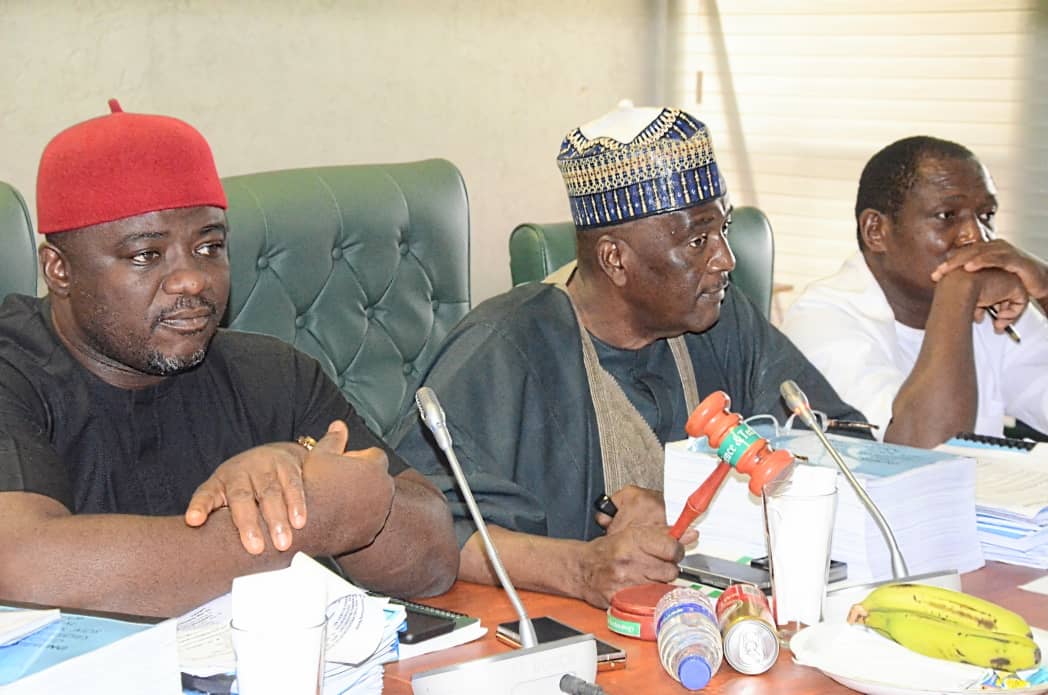
The Chairman of the Senate Committee on Inter-Parliamentary Affairs, Senator Aliyu Wadada has promised to revive the committee’s activities after acknowledging concerns over its prolonged inactivity.
Wadada spoke on Thursday at the end of the committee’s meeting in Abuja.
Specifically, the chairman admitted that the committee had been underutilised, noting that it had met only once in the last three years.
He, however, said issues responsible for the situation had been identified during a closed-door session and would be addressed.
“Of course I feel concerned about it, but when we got into the details in a closed-door meeting, we got to know where the problems are, and they will all be taken care of. The committee will be as active as it should always be,” he said.
Commenting further, the chairman said the committee would focus on its core mandate of promoting and strengthening legislative relations between Nigeria’s National Assembly and parliamentary bodies across the world.
According to him, the committee will deepen engagement with regional and international legislative institutions, including the ECOWAS Parliament, the Pan-African Parliament, the Inter-Parliamentary Union (IPU), and other parliamentary organisations.
He disclosed that a new work plan had already been developed to guide the committee’s activities.
He added: “The direction is basically around the responsibilities of the committee, which is to promote and deepen legislative relationship within Nigeria and with other legislative bodies around the world”.
The chairman added that the committee’s first major activity would be a courtesy visit to the Speaker of the ECOWAS Parliament in Nigeria as part of efforts to strengthen inter-parliamentary cooperation.
SINL NIgeria Online reports that Senator Wadada assured that the public would be kept informed of the committee’s activities as the new work plan is implemented.
News
Just in: FG jerks up salaries soldiers to N100k monthly
The Minister of Defence, Christopher Musa, has revealed that the minimum monthly salary of Nigerian soldiers has increased to N100,000 after the Federal Government reviewed their welfare package.
Musa made the disclosure during an interview with News Central ahead of his appearance on the NC Exclusive programme.
He said the adjustment was part of efforts by the government to improve the living conditions of military personnel.
Executive Branch
The former Chief of Defence Staff, however, said the country’s defence sector still requires more funding despite the improvement in soldiers’ earnings and welfare.
He stated that the current defence budget remains inadequate, adding that more resources are needed to effectively support the armed forces and their operations.
Musa explained that soldiers who previously earned about N49,000 monthly now receive at least N100,000 following the salary review carried out by the government.
The minister also called for tougher punishment for kidnappers, saying stronger measures are needed to reduce the increasing cases of abduction across Nigeria.
News
DAY 22 of Projects Commissioning in the FCT
Remodelled Abuja City Gate To Be Commissioned Today, Thursday, July 9
#ProjectsFCT2026
#FCT31DaysCommissioning
-
News24 hours agoTinubu Sends Two Key Bills to Reps, Rejects Two National Assembly Amendments
-
News18 hours ago‘Serial liar’, Presidency debunks Obi’s death threat claim
-
News17 hours agoDefence minister orders troops to shoot bandits on sight
-
News18 hours agoSenate approves customs’ N11.07tn 2026 revenue target
-
News18 hours agoInsecurity: NGF inaugurates Northern Nigerian Security Trust Fund
-
News18 hours agoEFCC Arraigns Ex-Port Harcourt Refinery MD over Money-laundering Allegations
-
News17 hours agoNSCDC deploys 1,300 personnel for Edo LG poll
-
Economy18 hours ago2024 Bid Round: NUPRC hands oil prospecting licences to 12 firms