News
Election Results: E-Transmission Debate Sad Reality, Should’ve Been Long Settled — Ex-REC Igini
- /home/naijuinz/public_html/wp-content/plugins/mvp-social-buttons/mvp-social-buttons.php on line 27
https://naijablitznews.com/wp-content/uploads/2026/02/Mike-Igini.jpg&description=Election Results: E-Transmission Debate Sad Reality, Should’ve Been Long Settled — Ex-REC Igini', 'pinterestShare', 'width=750,height=350'); return false;" title="Pin This Post">
- Share
- Tweet /home/naijuinz/public_html/wp-content/plugins/mvp-social-buttons/mvp-social-buttons.php on line 72
https://naijablitznews.com/wp-content/uploads/2026/02/Mike-Igini.jpg&description=Election Results: E-Transmission Debate Sad Reality, Should’ve Been Long Settled — Ex-REC Igini', 'pinterestShare', 'width=750,height=350'); return false;" title="Pin This Post">
A former Resident Electoral Commissioner of the Independent National Electoral Commission, Mike Igini, has described the renewed debate over electronic transmission of election results as a “painful and sad reality,” saying the issue ought to have been resolved years ago.

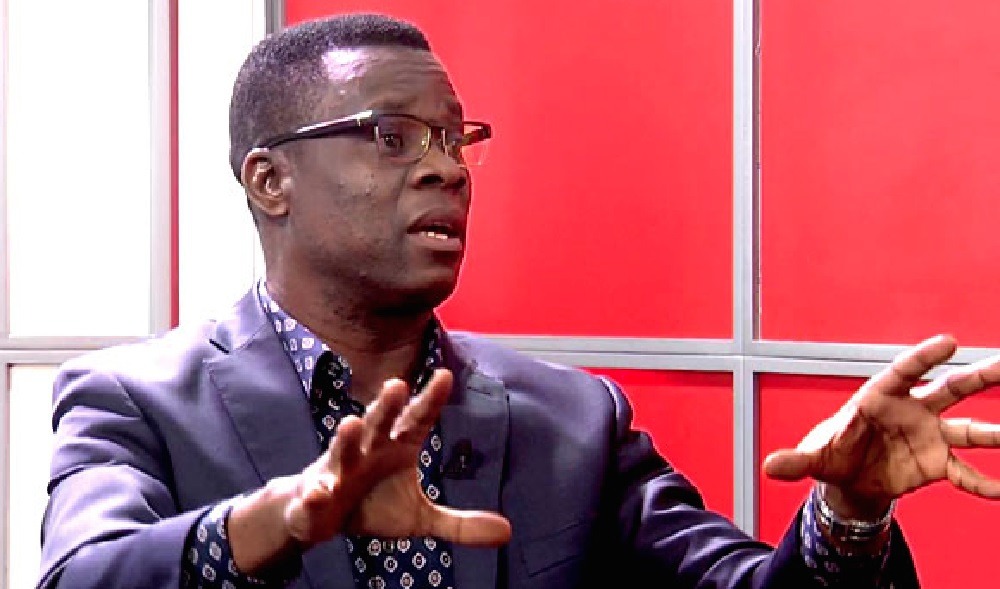
Igini spoke on Monday while appearing as a guest on Politics Today on Channels Television, where he lamented what he called a regression in Nigeria’s electoral reform efforts.
“It’s a painful and sad reality that after several years of collective efforts to give meaning and purpose to the ballots as the best means of expressing the will of the people in a democracy, here we are again, several years after debating what had been long supposed to have been settled,” he said, referencing reforms that began during the tenure of a former INEC chairman, Attahiru Jega, and continued under subsequent leadership.

The former REC also expressed personal frustration with the current state of electoral reforms, noting that after three decades of advocacy and about 10 years within the commission, recent developments make those efforts feel “wasted.”
The lawyer further argued that the electoral body itself had been largely sidelined.
“This debate, INEC is absent in this debate. INEC is isolated. It is INEC that conducts elections… the commission is expected to speak,” he said, adding that the commission had previously addressed issues surrounding electronic transmission.
He warned that reintroducing uncertainty around electronic transmission could create serious challenges ahead of the 2027 general elections, stressing the need for lawmakers to learn from past experiences.
Igini also urged that the Result Viewing portal (IReV) be granted clear legal backing and that concerns about network limitations should not derail reforms.
The debate follows the Senate’s consideration of amendments to the Electoral Act 2022, which initially sparked widespread backlash after lawmakers rejected a proposal to make real-time electronic transmission of results mandatory.
The controversy began on February 4 when the Senate passed an amendment bill that, among other changes, reduced the timeline for INEC to publish election notices from 360 days to 180 days.
At the centre of the dispute was Clause 60(3), which sought to compel presiding officers to upload polling-unit results electronically to the IReV portal immediately after completing Form EC8A, effectively making e-transmission a legal obligation.
However, the Senate initially rejected the clause, retaining the provision that allows INEC to determine the mode of result transmission.
The move triggered protests by civil society groups at the National Assembly, led by Peter Obi and later joined by Rotimi Amaechi and Aisha Yesufu.
Protesters demanded the compulsory electronic transmission of election results in real-time.
While the House of Representatives adopted the mandatory transmission clause, the Senate later reversed its earlier position during an emergency plenary on 10 February, approving electronic transmission while retaining manual collation as a fallback in case of technological failure.
The amendment bill, sponsored by Senator Tahir Monguno and backed by Minority Leader Abba Moro, was passed by voice vote, with both chambers expected to harmonise their versions before final passage.
News
NASENI Reiterates Commitment to Healthcare Innovation
NaseniBy Gloria Ikibah
The National Agency for Science and Engineering Infrastructure (NASENI), has restated its commitment to strengthening Nigeria’s healthcare sovereignty through local manufacturing of medical diagnostic technologies.
The Executive Vice Chairman and Chief Executive Officer of NASENI, Khalil Suleiman Halilu, affirmed this while hosting participants of the Harvard University-led Science of Defeating Malaria programme at a closing dinner in Abuja, following their visit to the NASENI-TROMENT Biotechnologies Factory, where they commended the facility’s role in advancing disease control and healthcare innovation in Africa.
The delegation, led by Professor Dyann F. Wirth of Harvard University and comprising about 85 global health professionals, scientists and policymakers, toured the state-of-the-art facility and described it as a significant step towards combating malaria and other infectious diseases across the continent.
Speaking at the dinner, the NASENI boss noted that the commendation further validated the vision behind the NASENI-TROMENT Biotechnologies Factory, a strategic project initiated 18 months ago to reduce Nigeria’s dependence on imported diagnostic kits and strengthen local healthcare manufacturing capacity.
He explained that the facility is designed to produce up to 600 million diagnostic kits annually, enough to meet about 80 per cent of Nigeria’s diagnostic testing needs while creating opportunities for export to other African countries and global markets.
The factory manufactures rapid diagnostic tests (RDTs) and in-vitro diagnostic (IVD) products under the N-CheckUP brand for diseases and conditions including malaria, hepatitis B and C, HIV, typhoid, syphilis, COVID-19, pregnancy and blood glucose monitoring.
According to Halilu, the project aligns with NASENI’s broader mandate of deploying science, technology and innovation to address national challenges, create jobs and build industrial capacity.
He expressed appreciation to Professor Wirth and members of the Harvard delegation for their recognition of the progress made at the facility and reaffirmed NASENI’s commitment to developing innovative solutions that improve lives and position Nigeria as a leading healthcare manufacturing hub in Africa.
The Science of Defeating Malaria programme, which was held in Abuja from June 7 to 13, brought together global experts committed to advancing strategies for malaria elimination and strengthening public health systems worldwide.
News
Obi Slams Court Ruling Deregistering ADC, Accord, Three Other Political Parties
By Kayode Sanni-Arewa
Ex-Labour Party presidential candidate, Peter Obi, has condemned the recent judgment of the Federal High Court in Abuja ordering the deregistration of five political parties, including the African Democratic Congress (ADC) and the Accord Party.
Justice Peter Odo Lifu of the Federal High Court reportedly directed the Independent National Electoral Commission (INEC) to immediately deregister the affected parties over alleged constitutional breaches in a ruling delivered on Monday, June 15.
Reacting to the judgment, Obi described the decision as another troubling development that could further erode public confidence in Nigeria’s democratic institutions and the judiciary.
In a statement released on Monday, the former Anambra State governor argued that the court’s decision should be reversed, warning that weakening institutions for political purposes could have far-reaching consequences for the country.
According to Obi, the controversy surrounding the removal of former Chief Justice of Nigeria, Walter Onnoghen, had earlier raised concerns about the independence and sanctity of Nigeria’s institutions.
He noted that while investors can manage security and policy risks, uncertainty in the rule of law and perceptions of judicial vulnerability to political influence remain major deterrents to investment.
Strong economies are built on trust. Investors can manage security risks, policy risks, and even market risks. What they fear most is uncertainty in the rule of law and a judiciary that is perceived to be vulnerable to political pressure,” Obi stated.
The former presidential candidate lamented that many Nigerians have lost faith in institutions meant to protect them, adding that businesses increasingly prefer contracts governed by foreign jurisdictions due to greater confidence in their legal systems
Obi further argued that the judgment ordering the deregistration of the ADC and other political parties would further diminish public trust in the nation’s legal system.
“The Federal High Court judgment ordering the de-registration of the ADC and other political parties is just one of those activities that further reduces the common man’s trust in our legal systems. It should be reversed,” he said.
He pledged to work towards restoring the dignity, independence, and integrity of the judiciary, emphasizing the need for a justice system that is impartial, accessible, and respected by all.
“The common man must have a voice. The business community must be protected from legal uncertainty and intimidation. Justice must be impartial, accessible, and respected by all,” Obi added.
He also called on judges, senior advocates, legal luminaries, and lawyers across the country to defend the rule of law and safeguard Nigeria’s democratic institutions.
“To our judges, legal luminaries, senior advocates, and lawyers: this is your moment. Rise, defend the rule of law, take back your country,” he urged.
Obi concluded his statement with his popular refrain: “A New Nigeria is Possible.”
The ruling has continued to generate debate among legal and political stakeholders, with many awaiting further reactions from the affected parties and the electoral commission.
News
BREAKING: Gunmen storm NIPSS Kuru, kill two soldiers Police Officer
…as elite policy institute fends off night raid
By Kayode Sanni-Arewa
The National Institute for Policy and Strategic Studies, NIPSS, came under heavy attack on Monday night, June 15, 2026, as suspected attackers tried to breach Nigeria’s foremost policy school near Jos.
Two soldiers and one police officer were reportedly killed before security forces repelled the assault.
The attack began around 11:00 p.m.
Armed men attempted to force their way into the institute and reach the residential quarters where course participants were lodged, according to initial report by NewsmakersNG.
Sources said the slain police officer was the orderly attached to a retired Deputy Inspector-General of Police. The two soldiers died in the exchange of fire that followed.
But the attackers were stopped. Security operatives stationed at NIPSS mounted swift resistance and blocked access to the participants’ wing.
“No participant was abducted because the security forces successfully repelled the attackers before they could enter the residential area,” a source familiar with the incident was quoted to have said.
—NIPSS confirms incident, urges calm—
In a press release issued early Tuesday, June 16, the institute confirmed a “security incident occurred in the vicinity of the Institute in the early hours of today.”
Management said the situation was “promptly brought under control through the swift response of security personnel and relevant security agencies.”
“There is currently no threat to the safety of participants, staff, residents, or facilities of the Institute, and normal activities are continuing as scheduled,” said Dr. Osime Samuel, mni, Head of Public Affairs.
The institute stressed that investigations were ongoing and it would be “premature to speculate on the nature, scope, or outcome of the event.”
NIPSS said it could not confirm details circulating on social media.
“We urge members of the public and the media to rely on official communications from the Institute and relevant security agencies,” the statement added.
–Manhunt begins, motive unclear–
As of press time, authorities had not released an official statement on the motive behind the attack.
Security has reportedly been reinforced around the institute as investigations and manhunt operations commenced.
NIPSS Kuru trains Nigeria’s top bureaucrats, military officers, and policy strategists. An attack on the institute is an attack on the country’s policy brain trust. That it was targeted at night, with participants inside, has raised fresh fears about insecurity reaching Nigeria’s elite institutions.
For now, the guns are silent. The participants are safe. But three security men paid with their lives to keep it that way.
-
News21 hours agoJust in: Kwara traditional ruler reportedly dies in kidnappers hideout after demand of N21m ransom
-
News16 hours agoNigerian Ports Record Global Leap as Apapa, Tin Can Gain World Bank Recognition
-
News22 hours agoPrice of petrol expected to drop to N900 per litre as US-Iran opens way for Strait of Hormuz
-
News22 hours agoFinally, US-Iran deal announced with end to military warefare
-
News10 hours agoSokoto under siege as bandits bar farmers from farms impose new levies
-
Politics21 hours agoHours after Abuja Court ruling, another Court in Owerri rules against deregistration of party
-
News10 hours agoSad! Nigerian pilgrim dies in auto crash while returning from Holy Mosque in Saudi Arabia
-
News10 hours agoHow troops rescued Gen Rabe’s wife after being shot by bandits — Sources