Connect with us

News

N58.47tn 2026 Budget: Edun defends oil benchmark, borrowing plan

Published

on

ADVERTISEMENT
Zoom Ad
ADVERTISEMENT
Zoom Ad

Minister of Finance and Coordinating Minister for the Economy, Dr. Olawale Edun on Tuesday defended budget assumptions for the N58.472 trillion 2026 Appropriation Bill.


Edun spoke when he led the Federal Government’s economic management team to appear before the Senate Committee on Appropriations on the 2026 budget defence.

Appearing before the Senate Committee on Appropriations chaired by Senator Solomon Adeola (Ogun West), Edun said security spending had been prioritised in the 2026 budget, stressing that emergency funding had consistently been released for critical military procurements.

“We all agree that security is to be prioritised. I can assure you that emergency funding has been given. Critical foreign payments for security equipment have been made at least twice this year that I know of, including as recently as yesterday,” he said.

Advertisement

He explained that some security expenditures might not be immediately visible under conventional budget classifications, but insisted that urgent obligations were being met through the Federation Account within approved fiscal limits.

On the oil production benchmark of 1.84 million barrels per day underpinning the 2026 budget, Edun described the figure as a “stretch target” designed to drive performance.

“It is a stretch target so that the authorities do not settle for lower output. But as long as we do not spend what we do not have, we are within safe limits,” he said.

He added that forward crude contracts were standard practice globally and structured to ensure future production obligations were met with sufficient margins, warning against leaving commodities idle.

Advertisement

“Some countries that left their commodities underground have seen their value decline over time,” he cautioned.

Responding to concerns on debt servicing, Edun said Nigeria’s major challenge was not necessarily its debt-to-GDP ratio but the high cost of borrowing in international markets.

“The problem is the pricing. Developing countries are forced to pay high interest rates in international markets. That is where the difficulty lies,” he said.

He disclosed that Nigeria was chairing the technical group meeting of the G24, where debt sustainability and rising interest costs were dominating discussions.

Advertisement

He added that President Bola Ahmed Tinubu had called for the establishment of an African credit rating agency to ensure fairer assessments and more affordable financing for African economies.

Edun also warned that fiscal discipline and monetary credibility were critical to sustaining macroeconomic stability.

“When this administration came in 2023, we were paying heavily to stabilise the system. You cannot undermine interest rate mechanisms without consequences. If you do not maintain credibility, the exchange rate will move,” he said.

According to him, the economy was showing signs of recovery, growing at about four per cent, with inflation trending downward, foreign reserves rising and exchange rate stability improving.

Advertisement

He cited renewed investor confidence, including a reported $20 billion investment commitment by Shell, alongside other private sector investments.

He said the government aimed to raise investment to 30 per cent of GDP to achieve about seven per cent annual growth and reduce poverty, adding that increased private sector participation in infrastructure would reduce pressure on public borrowing.

However, senators faulted the economic team over persistent budget implementation challenges, particularly zero or minimal releases of capital votes to Ministries, Departments and Agencies (MDAs).

The committee raised concerns over the realistic implementation of the 2026 budget and demanded that the capital components of the 2024 and 2025 budgets be concluded by March 31, 2026.

Advertisement

Edun’s explanation that the capital components of the 2024 and 2025 budgets were still being funded did not satisfy the lawmakers.

The Chairman of the Nigeria Revenue Service (NRS), Dr. Zacch Adedeji, warned that unrealistic assumptions would continue to undermine implementation.

“Budget funding must come from realistic projections. Efficiency is not about the size of the budget but about how much can actually be implemented,” he said.

He added, “If you think you have ten units and spend accordingly, that is manageable. But if you assume you have one hundred and spend based on that assumption, you may run into serious problems if the funds do not materialise.”

Advertisement

Earlier, he stressed that inflated revenue assumptions distorted fiscal planning.

“Budget efficiency is not in the quantum of the budget; it is in what you can carry out. If we think we have 10 naira and we plan with 100 naira in mind, we will create problems for ourselves. The starting point must be realistic assumptions,” he said.

Adedeji explained that under the Petroleum Industry Act framework, the Nigerian National Petroleum Company Limited (NNPCL) now operates as a limited liability company and government revenue from oil production comes mainly from taxes and royalties rather than gross crude sales.

“The only connection between the government and whatever is produced is the taxes and royalties paid. If production costs are high, the net revenue to the government is affected,” he said.

Advertisement

He disclosed that projections indicated about 47 per cent of total oil company output would translate into government revenue under current fiscal arrangements, urging lawmakers to focus on cost structures and enforceable fiscal parameters.

Senator Adeola insisted that the 2026 budget document originated from the executive and must reflect credible assumptions.

“This document before us originated from the executive. The projections and challenges came from the executive arm, not the legislature,” he said.

He questioned the wide gap between projected and realised oil revenues in previous fiscal years, citing 18 per cent performance in one year and projections of 36.5 per cent in another, compared with much higher expectations.

Advertisement

“For example, how do we explain 18 per cent performance in one year and projections of 36.5 per cent the next year when actual performance is still below expectations?” he asked.

Adeola posed a key question on the 2026 budget size: “So the question is: Do we reduce the N58.472 trillion 2026 budget, or do we proceed and make adjustments?”

He also raised concerns about Nigeria’s debt stock, estimated at N152 trillion, suggesting asset sales to reduce borrowing costs.

“If certain assets were disposed of and used to reduce debt, two things would happen: the overall debt stock would reduce, and future borrowing costs could also decline,” he said, urging the finance minister to “speak from the heart” on necessary adjustments.

Advertisement

Minister of State for Finance, Dr. Doris Nkiruka Uzoka-Anite, assured lawmakers that the capital components of the 2024 and 2025 budgets would be fully implemented before March 31, 2026.

“Regarding the 2025 budget, funding processes are beginning. Payments for outstanding 2024 capital projects start today,” she said.

She added, “The financial management system is back online. For 2025, MDAs have been asked to upload their cash plans by Monday, after which payments will commence. We are ready to start, but the MDAs must complete their documentation requirements.”

The committee later held a closed-door session with the economic team for about two hours to review sensitive fiscal details and possible adjustments to the budget framework.

Advertisement

The Minister of Budget and Economic Planning, Senator Atiku Bagudu, and the Accountant-General of the Federation, Mr. Shamsedeen Babatunde Ogunjimi, were also in attendance.

The engagement ended with Edun reiterating the executive’s commitment to meeting approved targets and working with the National Assembly to ensure that the 2026 Appropriation Bill reflects realistic revenue assumptions, credible implementation plans and sustainable fiscal management.
Continue Reading
Advertisement

News

Obi Slams Court Ruling Deregistering ADC, Accord, Three Other Political Parties

Published

on

ADVERTISEMENT
Zoom Ad
ADVERTISEMENT
Zoom Ad

By Kayode Sanni-Arewa

Ex-Labour Party presidential candidate, Peter Obi, has condemned the recent judgment of the Federal High Court in Abuja ordering the deregistration of five political parties, including the African Democratic Congress (ADC) and the Accord Party.

Justice Peter Odo Lifu of the Federal High Court reportedly directed the Independent National Electoral Commission (INEC) to immediately deregister the affected parties over alleged constitutional breaches in a ruling delivered on Monday, June 15.

Reacting to the judgment, Obi described the decision as another troubling development that could further erode public confidence in Nigeria’s democratic institutions and the judiciary.

Advertisement

In a statement released on Monday, the former Anambra State governor argued that the court’s decision should be reversed, warning that weakening institutions for political purposes could have far-reaching consequences for the country.

According to Obi, the controversy surrounding the removal of former Chief Justice of Nigeria, Walter Onnoghen, had earlier raised concerns about the independence and sanctity of Nigeria’s institutions.

He noted that while investors can manage security and policy risks, uncertainty in the rule of law and perceptions of judicial vulnerability to political influence remain major deterrents to investment.

Strong economies are built on trust. Investors can manage security risks, policy risks, and even market risks. What they fear most is uncertainty in the rule of law and a judiciary that is perceived to be vulnerable to political pressure,” Obi stated.

Advertisement

The former presidential candidate lamented that many Nigerians have lost faith in institutions meant to protect them, adding that businesses increasingly prefer contracts governed by foreign jurisdictions due to greater confidence in their legal systems

Obi further argued that the judgment ordering the deregistration of the ADC and other political parties would further diminish public trust in the nation’s legal system.

“The Federal High Court judgment ordering the de-registration of the ADC and other political parties is just one of those activities that further reduces the common man’s trust in our legal systems. It should be reversed,” he said.

He pledged to work towards restoring the dignity, independence, and integrity of the judiciary, emphasizing the need for a justice system that is impartial, accessible, and respected by all.

Advertisement

“The common man must have a voice. The business community must be protected from legal uncertainty and intimidation. Justice must be impartial, accessible, and respected by all,” Obi added.

He also called on judges, senior advocates, legal luminaries, and lawyers across the country to defend the rule of law and safeguard Nigeria’s democratic institutions.

“To our judges, legal luminaries, senior advocates, and lawyers: this is your moment. Rise, defend the rule of law, take back your country,” he urged.

Obi concluded his statement with his popular refrain: “A New Nigeria is Possible.”

Advertisement

The ruling has continued to generate debate among legal and political stakeholders, with many awaiting further reactions from the affected parties and the electoral commission.

Continue Reading

News

BREAKING: Gunmen storm NIPSS Kuru, kill two soldiers Police Officer

Published

on

ADVERTISEMENT
Zoom Ad
ADVERTISEMENT
Zoom Ad

…as elite policy institute fends off night raid

By Kayode Sanni-Arewa

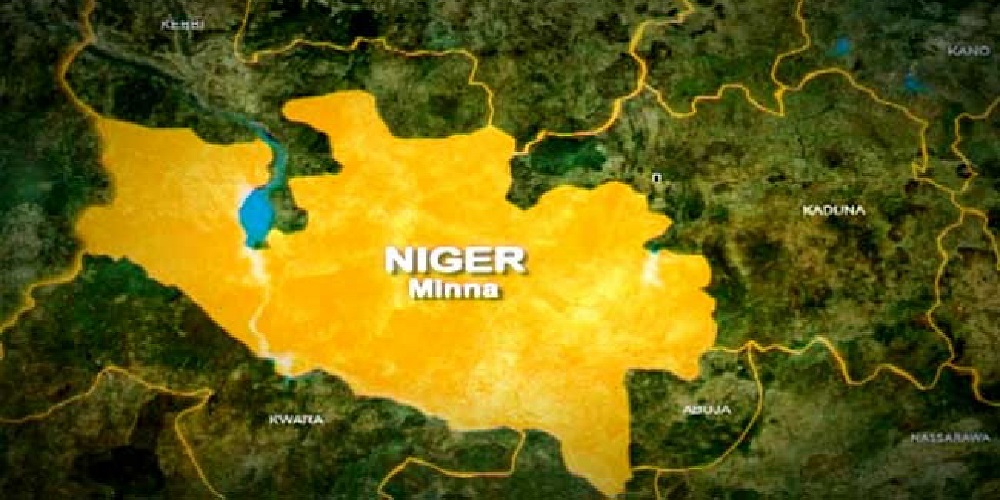
The National Institute for Policy and Strategic Studies, NIPSS, came under heavy attack on Monday night, June 15, 2026, as suspected attackers tried to breach Nigeria’s foremost policy school near Jos.

Two soldiers and one police officer were reportedly killed before security forces repelled the assault.

Advertisement

The attack began around 11:00 p.m.

Armed men attempted to force their way into the institute and reach the residential quarters where course participants were lodged, according to initial report by NewsmakersNG.

Sources said the slain police officer was the orderly attached to a retired Deputy Inspector-General of Police. The two soldiers died in the exchange of fire that followed.

But the attackers were stopped. Security operatives stationed at NIPSS mounted swift resistance and blocked access to the participants’ wing.

Advertisement

“No participant was abducted because the security forces successfully repelled the attackers before they could enter the residential area,” a source familiar with the incident was quoted to have said.

—NIPSS confirms incident, urges calm—

In a press release issued early Tuesday, June 16, the institute confirmed a “security incident occurred in the vicinity of the Institute in the early hours of today.”

Management said the situation was “promptly brought under control through the swift response of security personnel and relevant security agencies.”

Advertisement

“There is currently no threat to the safety of participants, staff, residents, or facilities of the Institute, and normal activities are continuing as scheduled,” said Dr. Osime Samuel, mni, Head of Public Affairs.

The institute stressed that investigations were ongoing and it would be “premature to speculate on the nature, scope, or outcome of the event.”

NIPSS said it could not confirm details circulating on social media.

“We urge members of the public and the media to rely on official communications from the Institute and relevant security agencies,” the statement added.

Advertisement

–Manhunt begins, motive unclear–

As of press time, authorities had not released an official statement on the motive behind the attack.

Security has reportedly been reinforced around the institute as investigations and manhunt operations commenced.

NIPSS Kuru trains Nigeria’s top bureaucrats, military officers, and policy strategists. An attack on the institute is an attack on the country’s policy brain trust. That it was targeted at night, with participants inside, has raised fresh fears about insecurity reaching Nigeria’s elite institutions.

Advertisement

For now, the guns are silent. The participants are safe. But three security men paid with their lives to keep it that way.

Continue Reading

News

Dangote Refinery reduces price of fuel

Published

on

ADVERTISEMENT
Zoom Ad
ADVERTISEMENT
Zoom Ad

By Ojomah Austin.


The Dangote Petroleum Refinery has announced a reduction in the ex-depot price of Premium Motor Spirit (PMS), also known as petrol, lowering its gantry price by ₦75 per litre amid signs of stability in the global energy market.

In a circular issued to fuel marketers on Monday, the refinery disclosed that the new price adjustment takes effect from midnight, June 16, 2026.

Advertisement

Under the revised pricing structure, the gantry price of petrol has been reduced from ₦1,250 per litre to ₦1,175 per litre, providing some relief to marketers and consumers after months of rising fuel costs.

The refinery also announced a reduction in its coastal supply price, which dropped from ₦1,595,790 per metric tonne to ₦1,495,215 per metric tonne.

According to the company, the decision was influenced by the recent easing of geopolitical tensions in the Middle East, a development that has helped moderate global crude oil and energy prices.


Advertisement

“Following the de-escalation of tensions in the Middle East, which has impacted energy prices, we wish to inform you that we have reviewed our Premium Motor Spirit gantry and coastal prices,” the refinery stated in the notice to marketers.

The company further clarified that all outstanding unloaded gantry volumes would be recalculated using the new rate from the effective date.


“Kindly note that all outstanding unloaded gantry volumes will be repriced at the new rate effective 12:00 a.m., June 16, 2026. We sincerely appreciate your continued patronage and assure you of our unwavering commitment to reliable product supply and excellent service delivery,” the statement added.

Advertisement


Marketers Yet to Reflect New Price

Despite the refinery’s reduction, retail pump prices across many parts of the country remained significantly higher as of Monday.

Industry data from Petroleumprice.ng indicated that several filling stations were still selling petrol at around ₦1,240 per litre, suggesting that consumers may not immediately benefit from the refinery’s latest adjustment until existing stock is exhausted and new supplies enter the market.

Advertisement

The development positions Dangote Refinery as one of the most competitively priced suppliers in the domestic petroleum market.

Global Oil Prices Begin to Retreat

The latest price cut comes as pressure in the international crude oil market begins to ease following reports of renewed diplomatic engagements between the United States and Iran over the reopening of the strategic Strait of Hormuz.

Global oil prices had experienced significant volatility over the past three months due to hostilities involving the two countries.

Advertisement

The development positions Dangote Refinery as one of the most competitively priced suppliers in the domestic petroleum market.

Global Oil Prices Begin to Retreat

The latest price cut comes as pressure in the international crude oil market begins to ease following reports of renewed diplomatic engagements between the United States and Iran over the reopening of the strategic Strait of Hormuz.

Global oil prices had experienced significant volatility over the past three months due to hostilities involving the two countries.

Advertisement
Continue Reading

Trending

Copyright © 2024 Naija Blitz News