Connect with us

News

Reps Query AEDC Over Alleged Uneven Power Allocation

Published

on

ADVERTISEMENT
Zoom Ad
ADVERTISEMENT
Zoom Ad

…over 300,000 prepaid meters distributed across coverage area – MD AEDC

…say estimated billing has significantly reduced

By Gloria Ikibah

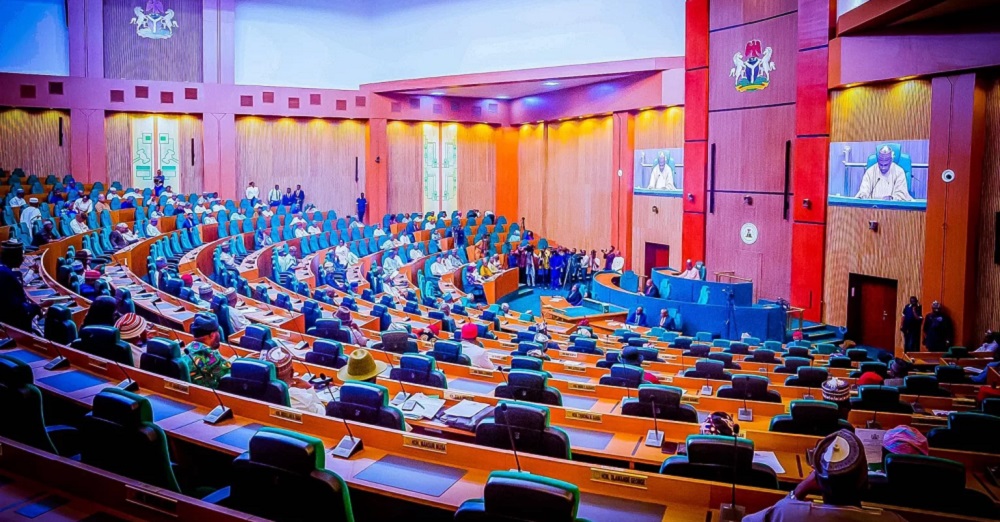
A House of Representatives ad-hoc committee examining reforms and spending in the power sector from 2006 to 2024 has taken a firm stance against what it considers an inequitable electricity distribution pattern within the Abuja Electricity Distribution Company’s network.

Advertisement

During an oversight visit to the company’s headquarters in Abuja, lawmakers voiced unease over reports that as much as 80 per cent of available electricity is channelled to the Federal Capital Territory, leaving Kogi, Niger and Nasarawa states to share the remaining 20 per cent across the wider franchise area.

The visit formed part of the National Assembly’s broader review of power sector performance and the deployment of intervention funds since the 2005 unbundling and subsequent privatisation of the industry. Committee members warned that such an allocation model, if accurate, places an undue burden on households and businesses in the affected states, many of whom continue to grapple with prolonged blackouts, erratic supply and poor service.

Chairman of the Committee, Rep. Mustapha Ibrahim Aliyu, maintained that all states covered by a distribution company are entitled to fair access to electricity. He stressed that supply decisions should not be driven purely by commercial returns, particularly in a sector that has received significant public investment and federal support.

In response, Managing Director of AEDC, Engr. Chijioke Okwuokenye, rejected suggestions of deliberate bias but conceded that disparities in supply exist. He pointed to operational and commercial challenges as key factors shaping distribution decisions. These include widespread energy theft in certain areas, ageing infrastructure, weak network capacity, low revenue recovery, mounting customer debts and the financial pressure to sustain operations by focusing on areas with stronger income streams.

Advertisement

He explained that the Federal Capital Territory represents the company’s most reliable revenue base, which inevitably influences allocation patterns. Nevertheless, he indicated that efforts are under way to upgrade infrastructure and curb losses in underserved locations, adding that meaningful progress would depend on collaboration with host communities, state authorities and consumers.

The committee also turned its attention to the issue of estimated billing. Lawmakers, including Rep. Danladi Suleiman of Kogi and Rep. Ginger Obinna, highlighted persistent complaints from constituents about arbitrary charges and the slow pace of prepaid meter distribution, raising further questions about accountability and service standards within the company’s operatio

In response, Engr. Okwuokenye disclosed that the company has so far distributed over 300,000 prepaid meters across its coverage area. He added that estimated billing has been significantly reduced and that AEDC now operates a capping system in line with regulatory directives to prevent overbilling of unmetered customers.

However, some lawmakers maintained that complaints from consumers suggest that the problem has not been fully resolved.

Advertisement

The committee also queried AEDC over loans and intervention funds reportedly obtained from the Federal Government following the privatisation of the power sector 13 years ago.

Lawmakers expressed dissatisfaction that despite billions of naira injected into the sector through the Central Bank of Nigeria and other intervention mechanisms, Nigerians are yet to see commensurate improvement in electricity supply.

In his defence, Okwuokenye clarified that the current management took over the company in 2023 through a receivership arrangement. He maintained that the new investors cannot be held accountable for financial decisions or obligations incurred as far back as 2013.

He disclosed that the company is currently servicing inherited liabilities, including obligations to the Central Bank of Nigeria, and remains committed to clearing historical debts while stabilising operations.

Advertisement

At the end of the session, the committee directed AEDC to submit all relevant documents relating to power allocation, intervention funds, loan repayments and infrastructure investments to aid the ongoing investigation.

The lawmakers further instructed AEDC to reappear before the panel alongside the Transmission Company of Nigeria (TCN) to clarify issues concerning bulk power allocation, transmission constraints and the interplay between both entities in the distribution chain.

The committee reiterated that its mandate is to ensure accountability, transparency and improved service delivery in the power sector, warning that companies found wanting will be held responsible.
Advertisement
Continue Reading
Advertisement

News

Human Trafficking: Remi Tinubu calls for vigilance, support for survivors

Published

on

By

ADVERTISEMENT
Zoom Ad
ADVERTISEMENT
Zoom Ad

The First Lady, Oluremi Tinubu, on Thursday called on Nigerians to be more vigilant in the protection of vulnerable persons from human trafficking and traffickers.

Tinubu, in a statement she personally signed as part of the celebration of the “World Day Against Trafficking in Persons”, appealed to the global community to strengthen commitment to ending human trafficking in all its forms and protecting the dignity, freedom, and rights of every individual.

She noted that this year’s theme, “Trapped Behind the Scam,” draws attention to the growing threat of human trafficking.

Human trafficking now forms part of modern-day slavery, which is usually perpetrated through online scams, forced criminality, and transnational organised crime.

Advertisement

According to her, the theme also highlights the need to increase public awareness, prevention, enforcement of our laws, and support for survivors.

“Let us remain vigilant, protect the vulnerable, and ensure that no one falls victim to exploitation. Through collective action, we can build a safer society where every person can live in freedom, dignity, and hope.

“We say “No” to human trafficking today”

Also as part of the International Day of Friendship, the First Lady also drew global attention to the power of friendship to unite people, strengthen communities, foster peace, understanding, and mutual respect.

Advertisement

She noted that no matter how far technology advances, man was never created to be alone, adding that ” As we become more connected digitally, human isolation is increasing by the day. We are emotional beings, and we should never underestimate the power of genuine human connection.

“Friendship reminds us to be our brother’s keeper, to show kindness, and to reject unhealthy behaviours that divide us. A simple act of kindness can heal a broken heart and help in making our world a better place”.

She therefore charged Nigerians to ” Go out there, give someone a smile, reach out with compassion, and be a friend”.

Advertisement
Continue Reading

News

Oriire: Makinde sets up judicial panel to probe children, teachers’ abduction

Published

on

By

ADVERTISEMENT
Zoom Ad
ADVERTISEMENT
Zoom Ad

Governor Seyi Makinde of Oyo State has set up a Judicial Commission of Inquiry to investigate the abduction of pupils and teachers from Esinele and Yawota communities in Oriire Local Government Area.

Dotun Oyelade, the Commissioner for Information and Civic Orientation, made this known in a statement on Thursday in Ibadan.

Mr Oyelade said that the commission was expected to determine the circumstances surrounding the abduction and identify the factors that led to the security breach.

He said that the panel, which would be inaugurated on Friday, was also tasked with making recommendations to prevent a recurrence.

Advertisement

“The commission will examine the events leading to the kidnapping, assess the response of relevant authorities, and recommend measures to improve security and safeguard schools and communities across the state,” Mr Oyelade said.

He further explained that the setting up of the panel was in line with the governor’s commitment to ensuring a thorough and independent investigation into the incident.

The abduction occurred on May 15, while the abducted pupils and teachers were rescued after 56 days in captivity.

(NAN)

Advertisement
Continue Reading

News

‘Security threats record sixfold rise in Nigeria, others in two years’

Published

on

By

ADVERTISEMENT
Zoom Ad
ADVERTISEMENT
Zoom Ad

The United States has warned that Nigeria and other African countries are facing a more than sixfold rise in security threats in the last two years, citing a dramatic surge in illegal narcotics trafficking and human trafficking on the continent.

This is even as it listed Nigeria, Kenya and Côte d’Ivoire as key partners for its new technical assistance programme for bankable infrastructure in Africa, which would help the countries develop projects that attract U.S. participation.

Brigadier General Paul G. Filcek, Director of Logistics at U.S. AFRICOM, disclosed this during a digital press conference with African journalists on the ongoing 2026 Africa Logistics and Communications Symposium, co-hosted with the Ethiopian Ministry of Defence.

The 4-day symposium brought together delegates from 39 African nations and 27 private-sector partners under the theme “Forging Partnerships, Driving Innovation, and Enhancing Collective Readiness”.

Advertisement

“Across the African continent, we face growing and converging threats on our mutual security, safety and prosperity, human trafficking and a dramatic rise in illegal narcotics trafficking, now more than six times what it was just two years ago,” Gen. Filcek said.

He stressed that defeating the threats would require cooperation, coordination, reliable and effective communications as well as the ability to move personnel, equipment and supplies quickly across difficult terrain, often over great distances and challenging conditions.

For the first time, the symposium deliberately combined logistics and communications into a single conference, which Flicek described as a decisive edge in modern military operations.

Also speaking, U.S. Deputy Assistant Secretary of Commerce for Middle East and Africa, Mark Mitchell, disclosed that the Departments of Commerce and State were working together on a project termed Technical Assistance for Bankable Infrastructure in Africa that supports African governments to develop bankable projects that can attract U.S. participation and deliver local value. “It’s a model designed to empower African partners rather than create dependency,” he said.

Advertisement

He cited U.S. investment partnerships with Nigeria, Kenya and Cote d’Ivoire as examples of Washington’s commitment to open, competitive and transparent markets that protect sovereignty and unlock innovation.

“Our work on commercial diplomacy, data governance and investment partnerships with countries such as Kenya, Nigeria and Cote d’Ivoire reflect a commitment to fair regulatory environments that unlock innovation and protect sovereignty,” he said.

On what sets the U.S. apart from other global partners, Mitchell said Washington brings high-quality finance, trusted standards, risk mitigation tools that help move projects from concept to bankable reality.

He added that the U.S. partnership was rooted in long-term, enterprise-driven, not one-off transactions, with U.S. companies bringing world-class technology in logistics and communications that could help African nations build the security and stability needed for growth.

Advertisement

Mitchell also highlighted the Strategic Infrastructure Investment Working Group launched earlier this year by the U.S. State Department and the African Union, adding that the Department of Commerce was well-positioned to support it.

Addressing questions on technology, Mitchell said Artificial Intelligence could transform African logistics through route optimisation, predictive fleet maintenance and faster customs processing.

He stressed that real AI sovereignty for African countries means “owning and using best-in-class technology for the benefit of your people and nation,” rather than trying to build entire systems in isolation.

“Keep your data yours. American companies can build large, independent AI infrastructure with secure and robust supply chains that minimise backdoor risk, plus cryptographically protect confidentiality, and world-leading security to keep sensitive logistics and trade data within your borders and under your control,” he said.

Advertisement

Gen. Filcek said U.S. AFRICOM was assessing partner readiness through its A3I programme, which provides targeted military engagement to address urgent operational needs and expand capacity for independence and regional interoperability.

“The most significant advances will come through the acceleration of modular expeditionary capabilities… Investments in local supply chains, infrastructure and secure trade corridors will provide the most profound impact,” he added.

Continue Reading

Trending

Copyright © 2024 Naija Blitz News