

News
Reps Summon Rural Electrification Chief Over Renewable Power Projects
- /home/naijuinz/public_html/wp-content/plugins/mvp-social-buttons/mvp-social-buttons.php on line 27
https://naijablitznews.com/wp-content/uploads/2024/08/house-of-rep.jpg&description=Reps Summon Rural Electrification Chief Over Renewable Power Projects', 'pinterestShare', 'width=750,height=350'); return false;" title="Pin This Post">
- Share
- Tweet /home/naijuinz/public_html/wp-content/plugins/mvp-social-buttons/mvp-social-buttons.php on line 72
https://naijablitznews.com/wp-content/uploads/2024/08/house-of-rep.jpg&description=Reps Summon Rural Electrification Chief Over Renewable Power Projects', 'pinterestShare', 'width=750,height=350'); return false;" title="Pin This Post">
By Gloria Ikibah
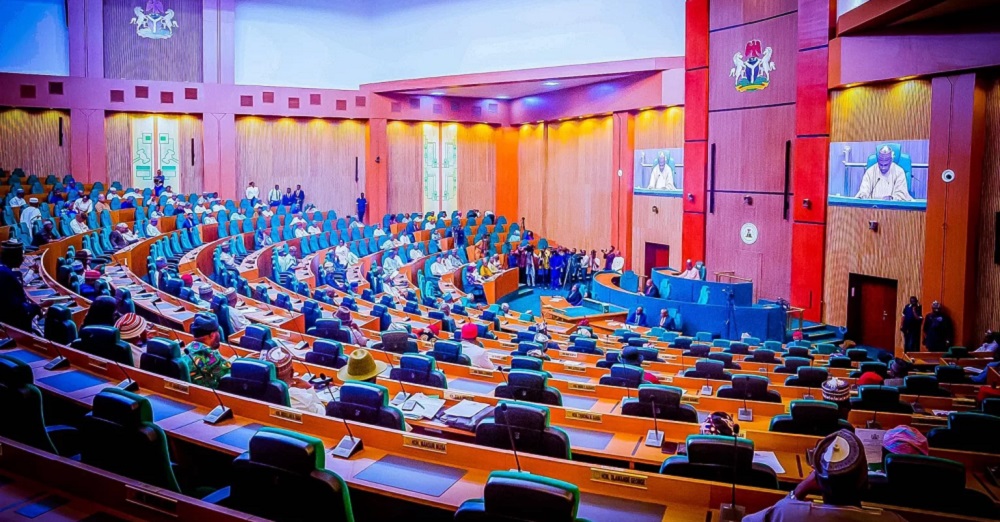
The House of Representatives Committee on Renewable Energy has summoned the Managing Director of the Rural Electrification Agency (REA), Abba Aliyu, to appear before it on Wednesday, 26 February 2026, over ongoing renewable energy projects nationwide.
The decision was taken on Tuesday after the agency’s chief failed to honour an earlier invitation to attend an investigative hearing at the National Assembly Complex in Abuja. Committee members subsequently adopted a motion compelling his appearance as part of their oversight responsibilities.

The inquiry stems from a resolution passed by the House in October 2022, directing the committee to examine how green and renewable energy projects are domiciled and implemented across federal ministries, departments and agencies.
Chairman of the committee, Rep. Afam Ogene, explained that the committee is carrying out a detailed audit of renewable energy interventions executed by the REA. Particular attention is being given to projects delivered under Phases I, II and III of the Energising Education Programme.
Rep. Ogene set out the breadth of the Committee’s inquiry, making clear that lawmakers intend to scrutinise both the structure and execution of renewable energy initiatives across government.
He explained that the Committee’s mandate includes the need to “investigate the domiciliation of green energy projects with inappropriate entities, aiming to prevent substandard implementation and loss of value.
“To examine foreign grants and government investments received in the renewable energy sector from 2015 to date.
“To assess the utilisation of renewable energy in ministries, departments, and agencies of the Federal Government”, he stated.
Rep. Ogene said the investigation is not merely procedural but necessary to safeguard public funds and ensure that renewable energy interventions deliver tangible results.
He also turned attention to what he described as a visible and troubling pattern across the country — the rapid deterioration of public lighting infrastructure.
“If you look around you, whether in the cities where some of us reside or our rural areas, you will most likely notice that many of the streetlights installed for the good of the people go bad less than six months after installation. Why is it so?
“Do streetlights in Europe and other parts of the world suffer the same fate? What could be responsible for this economic wastage, considering the high cost of procurement and installation of these dysfunctional streetlights to the nation?”, Ogene added.
According to him, the recurring failure of such projects points to deeper systemic issues that extend beyond technical faults.
“The prevalence of dysfunctional streetlights,” he added, “raises concerns about procurement practices, maintenance, and the overall value for public investment.
“Comparing our infrastructure to global standards, such as those in Europe, highlights potential inefficiencies and areas for improvement.”
His remarks underscored the Committee’s broader objective: to ensure that renewable energy projects — and public infrastructure more generally — are executed transparently, maintained properly and deliver value commensurate with the resources committed.
Also speaking, the Speaker of the House of Representatives, Rt. Hon. Tajudeen Abbas, who was represented by the Deputy Minority Leader, Abdullahi Halims, described the investigative hearing as a critical parliamentary exercise.
According to him, a key objective of the Electricity Act, 2023, is to provide a holistic and integrated policy framework that accommodates all sources of electricity generation, transmission and distribution, including renewable energy.
He said: “There is a global quest for safer, sustainable and renewable energy, on account of the glaring impact of carbon emissions from fossil fuels on our environment. The growing effects of global warming and climate change are not only reserved as topic for big climate conferences around the world, but could alarmingly be felt all around us in different forms.”
He urged the Committee to conduct a thorough investigation, noting that renewable energy remains central to Nigeria’s sustainable development agenda.
“Renewable energy is a sure way to go. Besides the need for clean energy, there’s also a growing conversation across board about sustainable development in every sphere of life, or sectors of corporate or governance structures”, Abbas stated.
As part of the review, all contractors and developers involved in the programme have been instructed to appear before the committee with full documentation relating to their contracts.
Projects under scrutiny include solar hybrid power installations at Abubakar Tafawa Balewa University and its Teaching Hospital in Bauchi; Bayero University, Kano; the Federal University of Agriculture, Makurdi; and the Federal University of Petroleum Resources, Effurun. Other institutions listed for review are the Federal University Ndufu-Alike in Ikwo; Nnamdi Azikiwe University, Awka; and Usman Danfodio University, Sokoto.
Contractors handling solar hybrid systems at the University of Abuja now known as General Yakubu Gowon University, as well as the Nigeria Defence Academy, Michael Okpara University of Agriculture, Umudike, and the University of Maiduguri have also been directed to present comprehensive records.
These include original and certified copies of contract award letters, executed agreements, memoranda of understanding and technical specifications. The committee is additionally requesting engineering designs, feasibility studies, implementation timelines, commissioning certificates, progress reports and long-term sustainability plans.
The exercise marks the latest step in the House’s effort to ensure transparency, accountability and value for money in the deployment of renewable energy projects intended to strengthen power supply in federal tertiary institutions.
News
Photos: 70% Of FCT Projects We Completed Were Abandoned For 16 Years, Wike
Minister of the Federal Capital Territory (FCT), Barr. Nyesom Wike, has revealed that about 70 per cent of the projects completed by the FCT Administration under President Bola Ahmed Tinubu were abandoned contracts awarded 15 to 16 years ago.

Wike said the projects were revived and completed in line with Tinubu’s directive that no viable government project should be abandoned.
Speaking during his monthly media chat on Thursday in Abuja, the minister said the administration deliberately focused on inherited projects before embarking on new ones.
According to him, allowing the projects to remain abandoned would have denied residents the benefits of critical infrastructure and wasted public resources.
“The President said we can’t abandon old projects. While we cannot abandon old projects, we must also carry out new ones.
“I can tell you that about 60 per cent of the projects we have executed in the last three years were projects awarded 15 to 16 years ago but abandoned.

“If we had allowed that, people would still be asking questions about those abandoned projects. So, we first made sure they were completed, and we have achieved that with not less than 70 per cent of them,” Wike said.
The minister stressed that while inherited projects were being completed, the FCT Administration also initiated new road and infrastructure projects across Abuja and the satellite towns.
He attributed the pace of development in the nation’s capital to President Tinubu’s support, particularly the decision to remove the FCT Administration from the Treasury Single Account (TSA), which, according to him, made funds readily available for infrastructure development.
Wike maintained that the administration would continue executing projects aimed at improving transportation, opening up new districts and enhancing the quality of life for residents of the Federal Capital Territory.
News
READ Wike’s words on marble at his media parley
News
Photos: FG ready to dismantle drug cartels, promoting Nigerians’ wellbeing – SGF Akume
. Substance use summit convened to mobilise National Action Plan against drug scourge, says Marwa
. UNODC, Health Ministry seek translation of commitment into practical, measurable action
The Federal Government has reaffirmed its commitment to every initiative aimed at preventing illicit drug use, dismantling trafficking networks, expanding access to treatment and rehabilitation, and promoting the wellbeing of all Nigerians.

Justifying the government’s stance on the drug scourge, the SGF who was represented by the Permanent Secretary General Services (OSGF) Dr. Adamu Ibrahim Kana, stated that no nation will fold its hands while its youths are under the threat of substance abuse. According to him, “No nation can achieve sustainable development when its young population is threatened by drug abuse and addiction. No society can attain lasting peace and prosperity when criminal networks engaged in illicit trafficking continue to undermine its institutions and exploit its vulnerabilities. This much we know, and this much must guide our resolve. This summit, therefore, presents a timely opportunity for us to renew our collective commitment, deepen our partnerships and chart a clear, coordinated pathway towards a healthier, safer and more resilient Nigeria.
“Let me assure you that the administration of President Bola Ahmed Tinubu remains firmly committed to the health, safety and wellbeing of every Nigerian. Under the Renewed Hope Agenda, we are building resilient communities, promoting mental health, empowering our young people and strengthening the institutions that must confront these emerging social challenges.” He commended the initiative by the NDLEA, Ministry of Health and UNODC to convene the summit.

In his welcome address at the ceremony, Chairman/Chief Executive Officer of NDLEA, Brig Gen Mohamed Buba Marwa (rtd) stated that the summit was convened as a national platform for reflection, dialogue and collective action on the growing burden of drug use and substance use disorders, coming on the heels of a weeklong world drug day programme dedicated to raising awareness, deepening understanding and renewing stakeholders’ resolve, adding that such intensity “testifies to our shared commitment to confronting Nigeria’s evolving drug situation through coordinated, evidence-based and innovative action.”
He noted that despite the efforts and successes recorded in recent years by NDLEA in drug supply and drug demand reduction, it has become increasingly clear that no single institution can successfully confront the drug problem in isolation. “The scale of this challenge demands
a whole-of-government and whole-of-society response, one that mobilises every stakeholder: government institutions, communities, families, development partners, the private sector, religious and traditional leaders, civil society and the media.
“This Summit is therefore both timely and necessary. It aligns with the global call to confront persisting drug challenges with innovative, collaborative responses, and it offers us a unique opportunity to build consensus around a coordinated National Action Plan, one that strengthens prevention, treatment, rehabilitation, data collection, policy implementation and community resilience”, he added.
“Over the years, the National Drug Law Enforcement Agency has remained steadfast in its mandate to combat this menace through a balanced and comprehensive approach. On the supply reduction front, the Agency has recorded significant successes in drug seizures, arrests, convictions and the dismantling of trafficking networks. Our operational feats in the last 18 months alone speak to this: a total of 29,262 arrests leading to the seizure of 5,305,484.88 kilograms of assorted illicit drugs valued at over N1.5 Trillion and the conviction of 5,225 offenders.

“Equally important have been our demand reduction efforts. Through the War Against Drug Abuse (WADA) campaign, we have sustained nationwide awareness initiatives across communities, schools and institutions. We have broadened access to counselling, treatment and rehabilitation services, while advancing preventive interventions such as our school-based Non-Punitive Drug Testing Policy. Within the same period of 18 months, we have conducted 6,645 drug use prevention focused sensitization and awareness creation programmes in schools, worship centres, work places, markets, motor parks and communities, and correctional facilities, among others, equipping nearly five million Nigerians with the life skills to resist drug abuse. Equally significant is the counselling, treatment and rehabilitation of 13,508 drug users across our 31 rehab centres spread all over the country.
“Worthy of particular note, too, is the launch of the Alternative Development Initiative for cannabis sativa growers, designed to support their transition from illicit cultivation to cash crop production and other sustainable livelihoods.” He expressed confidence that through partnership, shared responsibility and sustained commitment, Nigeria can significantly reduce the burden of drug use and build a healthier, safer and more prosperous nation.
In his remark, Minister of Health and Social Welfare, Prof. Ali Pate urged that the summit must not end as a talk shop. “The measure of this summit will not be the communique. It will be the number of young people who choose not to start drugs. It will be the number of patients who sleep without pain. It will be the number of families restored. The Federal Ministry of Health stands ready to lead, to coordinate, to collaborate and to deliver.”
Also speaking, the Country Representative, United Nations Office on Drugs and Crime (UNODC), Mr. Cheikh Toure represented by Dr. Akanidomo Ibanga commended the strong collaboration across ministries, agencies, civil society, the private sector, and development partners, adding that the gathering was a powerful demonstration of Nigeria’s commitment to addressing the drug challenge in a coordinated and forward-looking manner.
According to him, “As the United Nations, we stand here today not as individual agencies, but as one system—united in our support to Nigeria. The UN family is working collectively to support a comprehensive, balanced, and evidence-based response. We meet at a critical time. The scale and evolving nature of drug use in Nigeria—marked by emerging substances and shifting patterns—require us to act with urgency, but also with clarity and purpose. Beyond the numbers are lives, communities, and futures that depend on the strength of our response. This summit is therefore more than a convening. It is a moment of alignment. A moment to reaffirm our shared commitment to the National Drug Control Master Plan and to translate that commitment into practical, measurable action.”
The summit is being attended by relevant ministries, departments and agencies of government; development partners; the military and security agencies; NGOs, and civil society organisations, among others.
-
Economy22 hours agoCBN Clarifies Status Of ₦100 Notes In Nigeria
-
News17 hours agoVideo: DAY 22 of Projects Commissioning in the FCT
-
News23 hours agoSad: Kola Olawuyi’s widow, Abimbola, is dead
-
News23 hours agoRowdy Reps Clash Over Bid to Summon Tinubu on Budget Delays
-
News22 hours agoPhotos: Abuja’s Transformation Mirrors Nigeria’s Renewed Hope Agenda, Tinubu
-
News17 hours agoOkowa at 67: Ibegbulem hails former Governor as exceptional leader, patriot
-
News17 hours agoTinubu Sends Two Key Bills to Reps, Rejects Two National Assembly Amendments
-
Sports23 hours agoWorld Cup: We’ve suffered grave injustice, Egypt coach laments after loss to Argentina