Economy
OPEC+ Hikes Oil Production Amid US-Isreal Strikes On Iran
Key members of the OPEC+ oil cartel announced a greater-than-expected increase to production quotas on Sunday following US and Israeli strikes on Iran that triggered retaliation by Tehran across the Middle East.

The eight-strong V8 (Voluntary Eight) group in the alliance, which includes top oil producers Saudi Arabia and Russia — as well as several Gulf states bearing the brunt of Tehran’s missile strikes — said they had agreed a “production adjustment” of 206,000 barrels per day (bpd).
“This adjustment will be implemented in April,” they said in a statement.

The text did not mention the outbreak of the Iran conflict, instead citing “a steady global economic outlook and current healthy market fundamentals” as their reasons for the increase.
Before the weekend’s meeting, experts had forecast a more modest increase of 137,000 bpd.
However, Jorge Leon, an analyst at Rystad Energy, warned that the agreed-upon increase might not be large enough to prevent the Iran conflict from causing a spike in oil prices when trading opens on Monday.
Leon pointed to the possibility that Iran could target the Strait of Hormuz, a key waterway for nearly a quarter of the world’s seaborne oil supplies, in retaliation.
Iran’s Revolutionary Guards have contacted ships to announce that the Strait was closed.
On Sunday, Iranian state TV said an oil tanker in the strait was struck while attempting to “illegally” pass through and was sinking, showing footage of a burning tanker at sea.
“If oil cannot move through Hormuz, an extra 206,000 barrels per day does very little to ease the market,” Leon said, arguing that “logistics and transit risk matter more than production targets right now”.
The OPEC+ move “is unlikely to calm markets”, he said.
“Prices will respond to developments in the Gulf and the status of shipping flows, not to a relatively small increase in output,” Leon added.
‘Nightmare Scenario’
Besides Russia and Saudi Arabia, the V8 group within OPEC+ includes Kuwait, Oman, Iraq, and the United Arab Emirates, all of which were targeted by Iranian attacks for a second day on Sunday.
Algeria and Kazakhstan are also part of the group.
Another analyst, Stephen Innes, managing partner at SPI Asset Management, said that, with the fear of incoming missiles in the Strait of Hormuz, insurers cancelling contracts for vessels wanting to go through there, and jammed electronic signalling in the Gulf region, commercial shippers were scared.
They are “starting to act as if the route is compromised,” he said.
“A full closure for more than a few days is the nightmare scenario,” he said.
A blockage of the strait could mean oil prices leaping from around $72 before the war to $120 to $150 a barrel when trading starts on Monday, he said, based on industry estimates.
He and other analysts pointed to land pipelines Saudi Arabia and the UAE could use to get around shipping through the strait, but noted that would still leave a shortfall of some eight million to 10 million bpd on the market.
“Those are meaningful pressure valves, but they are not a replacement for the full seaborne flow,” Innes said.
While higher prices might seem a boon for OPEC+ countries, it in fact carries the risk of increasing competition from producers outside the cartel, such as the United States, Canada, and Brazil.
Kpler analyst Homayoun Falakshahi told AFP that the cartel might “prefer prices of $80 to 90, but around $70 per barrel is the ideal price level” to cut the incentive for more investment by those rival producers.
He added that Russian production has been on a downward trend since November, leaving analysts to think that it was at its maximum output.
Leon, of Rystad Energy, said the only OPEC+ members “who can really boost their production are Saudi Arabia, the United Arab Emirates, and, to a lesser degree, Kuwait and Iraq”.
AFP
Economy
Oil tops $100 as Iran vows to keep Hormuz closed
Oil prices soared above $100 and stock markets extended losses as Iran’s new supreme leader ordered the Strait of Hormuz to be kept closed.
Concerns about a long, drawn out conflict were not assuaged by US President Donald Trump saying that stopping the Islamic republic’s “evil empire” was more important than crude prices.
Global markets have been roiled since the United States and Israel launched attacks on Iran. Tehran’s retaliatory strikes on shipping and Gulf neighbours have nearly cut off maritime traffic through the Strait of Hormuz, through which pass around a fifth of the world’s oil and liquefied natural gas.
“Oil prices are up by double-digit percentages again today, as the realisation sinks in that the US is not about to either end the war or institute some kind of convoy system in the region,” said analyst Chris Beauchamp at IG trading and investment platform.
Energy Secretary Chris Wright acknowledged the US military was currently “not ready” to escort tankers through the critical Strait of Hormuz.
Brent North Sea crude, the international benchmark contract peaked at $101.59 per barrel on Thursday.
At $100 per barrel, Brent is up around 38 percent from the eve of the conflict, which began on February 28 when the United States and Israel launched airstrikes against Iran. It is up nearly two-thirds from the start of the year.
Iran’s new supreme leader Mojtaba Khamenei called on Thursday for using “the lever of blocking the Strait of Hormuz”, which the country’s Revolutionary Guards vowed to carry out.
The call followed fresh attacks against Gulf energy targets: an attack on two oil tankers off Iraq killed at least one crew member, while a cargo ship caught fire after being hit by shrapnel.
Oil prices pared their gains after Iran’s deputy foreign minister said that Tehran had allowed ships from some countries to cross the Strait of Hormuz.
The International Energy Agency said the Mideast war “is creating the largest supply disruption in the history of the global oil market”, a day after its member countries agreed to unlock 400 million barrels of oil from their reserves — their largest release ever.
Analyst David Morrison at Trade Nation said that if the announcements of the release of oil from strategic reserves “were supposed to cap prices, then they failed dismally”.
The moves may have “suggested some panic as hostilities across the Middle East intensified”, he added.
The rise in energy prices could cause prices to rise throughout the economy.
“The longer the oil price remains elevated, the more damaging and long lasting the inflation shock will be for the global economy,” noted Kathleen Brooks, research director at trading group XTB.
Wall Street’s main stock indices were down more than one percent in early afternoon trading.
Europe’s leading equity markets closed lower, as did most Asian markets.
eToro US investment analyst Bret Kenwell said that while US equities had held up rather well to date, a long conflict would have a profound impact on businesses.
“If oil doesn’t retreat meaningfully, the pressure won’t just be felt at the pump — it will bleed into margins, spending, and potentially quarters of softer growth,” he said.
The dollar rose further against major rival currencies.
“The dollar has strengthened, driven by safe-haven demand, fears of inflation, and higher-for-longer interest rate expectations,” said Victoria Scholar, head of investment at Interactive Investor.
– Key figures at around 1630 GMT –
Brent North Sea Crude: UP 8.6 percent at $99.88 per barrel
West Texas Intermediate: UP 9.3 percent at $95.38 per barrel
New York – Dow: DOWN 1.2 percent at 46,871.01 points
New York – S&P 500: DOWN 1.2 percent at 6,698.16
New York – Nasdaq Composite: DOWN 1.4 percent at 22,389.89
London – FTSE 100: DOWN 0.5 percent at 10,305.15 (close)
Paris – CAC 40: DOWN 0.8 percent at 7,978.98 (close)
Frankfurt – DAX: DOWN 0.2 percent at 23,589.65 (close)
Tokyo – Nikkei 225: DOWN 1.0 percent at 54,452.96 (close)
Hong Kong – Hang Seng Index: DOWN 0.7 percent at 25,716.76 (close)
Shanghai – Composite: DOWN 0.1 percent at 4,129.10 (close)
Euro/dollar: DOWN at $1.1525 from $1.1574 on Wednesday
Pound/dollar: DOWN at $1.3355 from $1.3419
Dollar/yen: UP at 159.20 yen from 158.92 yen
Euro/pound: UP at 86.31 pence from 86.25 pence
Economy
Dollar, Pound, Euro Rates in Nigeria Today – See Full Exchange for March 12, 2026
Dollar to Naira Today March 12 – The Nigerian foreign exchange market continues to experience moderate fluctuations.
However, the spread between the official and parallel market rates has remained relatively narrow in recent days.
Below is a comprehensive snapshot of exchange rates for major global currencies as at Thursday, March 12, 2026.
Exchange Rates Table
Currency Official Market Rate (₦) Parallel / Black Market Rate (₦) Mid-Market / Indicative Rate (₦)
US Dollar (USD) ₦1,395 – ₦1,405 ₦1,405 – ₦1,418 ₦1,410
Euro (EUR) ₦1,520 – ₦1,540 ₦1,640 – ₦1,670 ₦1,655
British Pound (GBP) ₦1,820 – ₦1,845 ₦1,940 – ₦1,970 ₦1,955
Chinese Yuan (CNY) ₦190 – ₦195 ₦200 – ₦205 ₦202
Japanese Yen (JPY) ₦10.3 – ₦10.6 ₦10.8 – ₦11.2 ₦11.0
Canadian Dollar (CAD) ₦1,030 – ₦1,050 ₦1,080 – ₦1,110 ₦1,095
Swiss Franc (CHF) ₦1,540 – ₦1,560 ₦1,610 – ₦1,640 ₦1,625
Saudi Riyal (SAR) ₦370 – ₦375 ₦380 – ₦390 ₦385
UAE Dirham (AED) ₦375 – ₦380 ₦390 – ₦400 ₦395
Market Notes
The official rate reflects transactions in the Nigerian Foreign Exchange Market supervised by the Central Bank of Nigeria.
Meanwhile, the parallel market rate represents prices offered by Bureau De Change operators and informal forex traders across major cities.
The mid-market rate is the global benchmark used by international money transfer platforms and forex aggregators.
Exchange rates may vary slightly depending on location, demand, and transaction size.
Economy
NNPCL increases fuel for second time in less than 24 hours
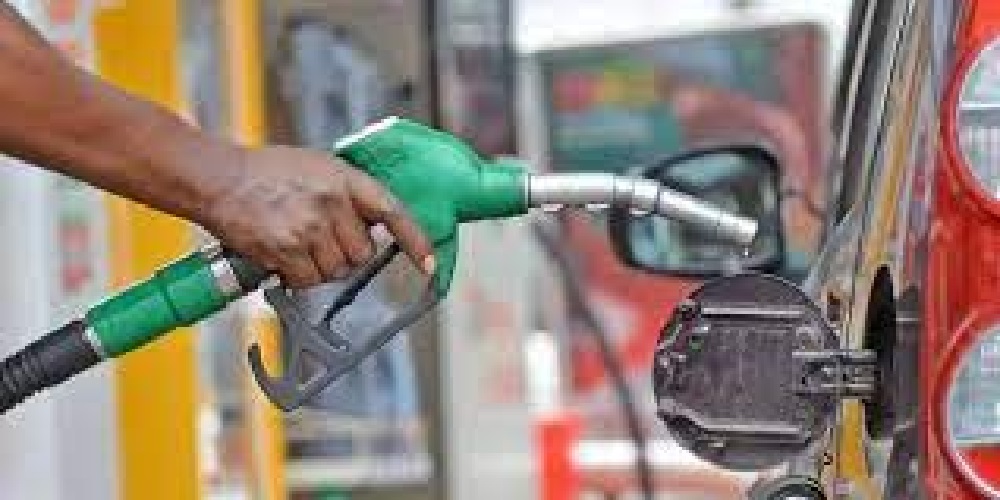
The Nigerian National Petroleum Company Limited, NNPCL, and other filling stations have increased their Premium Motor Spirit (PMS) pump price for the second time in less than 24 hours following Dangote Refinery’s gantry price hike.
The state-owned oil firm on Sunday adjusted its pump price from N967 to N1,082 per liter in Abuja and its environs, representing a N115 increase per liter.
This followed an earlier adjustment from N960 to N967. With the latest hike, NNPCL retail outlets have raised petrol prices by N207 in less than a week.
The latest prices have been implemented across NNPCL retail outlets in Kubwa Expressway, Gwarimpa, Wuse Zone 6, Zone 4, and Lifecamp.
Similarly, other filling stations, including MRS, AA Rano Ranoil, and Empire Energy, have adjusted their fuel pumps at least twice, with prices now ranging between N1,092 and N1,150 per liter, up from around N960 to N980 per liter.
Speaking on the fuel price hike, the National President of the Petroleum Products Retail Outlets Owners Association of Nigeria, Billy Gillis-Harry, said the domestic petrol price increase is linked to global crude oil price volatility.
“The Dangote Refinery gantry petrol price hike and retail price adjustment are due to crude price volatility caused by the Iran–US–Israel conflict affecting the Gulf region,” he said.
He, however, called on oil sector regulators in Nigeria to intervene to prevent further petrol price volatility.
Recall that Dangote Refinery had increased its petrol gantry price by N121, from N874 to N995 per liter, as crude oil prices surged above $90 per barrel.
-
News16 hours agoFormer House Of Reps Speaker Dumps Party, Joins ADC
-
Economy18 hours agoDollar, Pound, Euro Rates in Nigeria Today – See Full Exchange for March 12, 2026
-
News16 hours agoWoman Writes Billionaire Femi Otedola, Wants Permission to Marry His Son Fewa
-
News15 hours agoCeding oil wells: FG losing 780 hectares of maritime water to corruption -CSOs(Video/Photos)
-
News14 hours agoJust in: Nine senators dump their parties for ADC
-
News16 hours agoPakistan Sends Naval warships to protect commercial ships in Strait of Hormuz
-
News16 hours agoGroup Defends Pipeline Surveillance Contracts
-
News13 hours agoJust in: ADC Wuse Ward suspends FCT Senator, Kingibe