Connect with us

News

Emirates Airline Resumes Dubai–Lagos Flights to Bring Stranded Nigerians Home Amid Middle East Crisis

Published

on

ADVERTISEMENT
Zoom Ad
ADVERTISEMENT
Zoom Ad

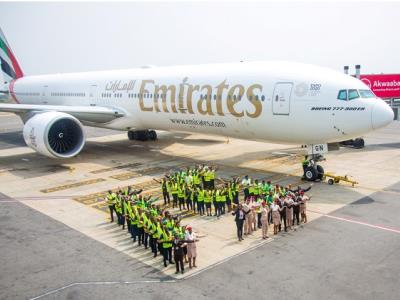
Amid escalating tensions in the Middle East following military confrontations between Israel and Iran, Middle Eastern airline Emirates has announced the resumption of its Dubai–Lagos–Dubai flight operations.


The airline confirmed that flights between Dubai and Lagos resumed on Friday, March 6, 2026. The route had been temporarily suspended last week due to widespread airspace disruptions caused by the intensifying conflict in the region.

Sources close to the airline’s operations revealed that the immediate goal of restarting the service is to transport stranded Nigerians in the United Arab Emirates back home.

Several Middle Eastern carriers had halted flights after multiple countries closed their airspace following coordinated strikes by the United States and Israel on Iranian targets.

Advertisement

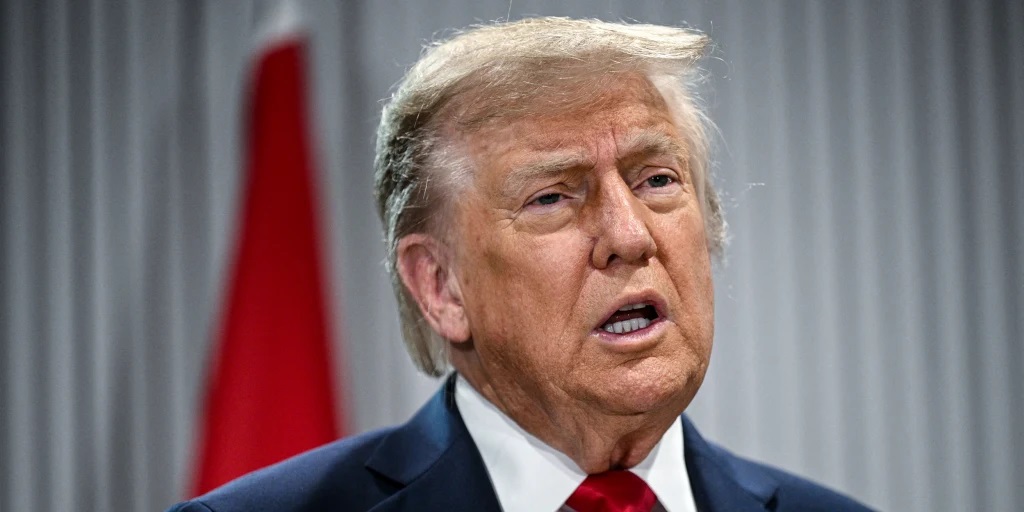
U.S. President Donald Trump described the attacks as a major combat operation, prompting global airlines to reroute flights that normally pass through the busy Middle East aviation corridor.

The disruptions affected numerous long-haul routes connecting Asia, Europe, the Middle East, and North America, forcing airlines to quickly adjust schedules amid growing safety concerns.

The situation intensified after missiles were reportedly launched from Israel toward Iran, followed by retaliatory strikes by Iranian forces. As a result, airlines around the world began avoiding certain airspace corridors.

This led to the cancellation or diversion of several international flights, including services linking India, the United Kingdom, Europe, the Middle East, and North America.

Advertisement

After initially suspending its operations, Emirates said it was closely monitoring developments and maintaining communication with aviation authorities before deciding when it would be safe to resume flights. Passengers were advised to regularly check the airline’s travel updates and flight status pages before heading to the airport.

In a message sent to its trade partners in Nigeria, the airline confirmed the resumption of the Lagos route.
“We will be operating the Dubai–Lagos–Dubai flight (EK783 & EK784) on 6th March 2026,” the carrier stated.

The airline said the resumed flights would give passengers an opportunity to continue their travel plans after days of uncertainty caused by the crisis. It also encouraged travellers to secure seats quickly, warning that demand is expected to rise sharply.

While some flights resumed across the Gulf region on Friday, disruptions continued elsewhere. A Lufthansa aircraft bound for Saudi Arabia diverted to Cairo due to safety concerns, while a repatriation flight by Air France was forced to turn back after reports of missile activity.

Advertisement

The outbreak of hostilities involving the United States and Israel against Iran has triggered widespread flight cancellations across the Middle East, leaving thousands of passengers stranded and forcing airlines and governments to arrange emergency repatriation flights.

Many travellers have spent large sums trying to leave the region, with last-minute airport rushes, overland travel to alternative hubs, and in some cases fighter jets escorting commercial aircraft. Some passengers described the situation as “absolute chaos.”

With much of the region’s airspace still closed due to missile and drone threats, wealthy travellers have turned to private jets while charter flights and limited commercial services struggle to evacuate tens of thousands of people.

France’s Transport Minister Philippe Tabarot said the situation highlights the instability in the region and the challenges involved in repatriation efforts.

Advertisement

Meanwhile, Britain’s first repatriation flight from Oman landed at London Stansted Airport early Friday after delays, while similar operations were underway across Europe.

With the conflict showing no signs of easing, aviation disruptions are expected to continue. The European Union aviation regulator European Union Aviation Safety Agency (EASA) has extended its warning about the risks of flying over the region until March 11.

Despite the challenges, Emirates said it aims to restore “100 percent of its network” in the coming days. However, Lufthansa warned that the conflict creates uncertainty for the airline industry.

“The war in the Middle East proves once again how exposed air traffic is and how vulnerable it remains,” said Lufthansa CEO Carsten Spohr.

Advertisement

Air travel between Europe and the Asia-Pacific region has been particularly affected. Data from aviation analytics firm Cirium shows that Emirates, Qatar Airways and Etihad Airways normally transport about one-third of passengers traveling from Europe to Asia and more than half of those heading to Australia, New Zealand, and the Pacific Islands.

At Dubai International Airport (DXB), normally the world’s busiest international hub, flight traffic nearly doubled compared to the previous day but still remained only about 25 percent of normal levels, according to flight-tracking service Flightradar24.

Etihad announced it would operate a limited schedule until March 19, serving about 70 destinations including London, Paris, Frankfurt, Delhi, New York and Toronto.

Emirates also said it is operating a reduced schedule to 82 destinations such as Sydney, Singapore and New York, with transit passengers in Dubai accepted only if their connecting flights are operating.

Advertisement

Meanwhile, the main hub in Doha remains closed, although authorities have arranged limited relief flights from Oman and Saudi Arabia. Airline flydubai also plans to resume flights from the UAE to Israel early next week.

Rising oil prices have added to the aviation sector’s challenges. Jet fuel costs have surged, with Singapore jet fuel hitting a record $225 per barrel this week due to fears of supply disruptions from Middle Eastern refineries.

Ratings agency Fitch Ratings warned that airlines could face financial pressure from higher fuel costs in addition to revenue losses from disrupted flights.
Advertisement
Continue Reading
Advertisement

News

Photos: We’re building infrastructure for a knowledge-driven economy – Tinubu

Published

on

ADVERTISEMENT
Zoom Ad
ADVERTISEMENT
Zoom Ad

President Bola Tinubu has said that his administration was building road infrastructure to lay the needed physical foundation for a knowledge-driven economy, stressing that education, justice, and innovation need roads to thrive.

Tinubu stated this in Abuja on Tuesday, while flagging off the construction of Collector Road CO1 in the Institutional Research District, from Nile University to Ring Road III.

Represented by the National Chairman of the All Progressives Congress, Prof Nentawe Yilwatda, the President said that the project included dualisation of the road from Baze University roundabout to Nile University, that is the Base University.

He noted that three years into his administration, the results were speaking out.

“From the Southern Parkway to the Institution and Research District, we are laying the physical foundation for a knowledge-driven economy.

“Today, we provide those roads that are needed to provide justice, education, and innovation to our people.

“To the university community, this road is more than a route. It is a connection between learning, law, and the future of our capital,” he said.

He pointed out that the Institution and Research District was designed to be the intellectual heart of Abuja, adding that universities, law chambers, research centers, and innovation hubs were growing in the area.

Advertisement

He, however, stressed that ideas could not move if roads do not move and connect the heart and people together.

Tinubu further said: “Under the Renewed Hope Agenda, we made a choice to finish what was started and to start what we must finish.

“The first phase of this corridor connecting the Body of Benchers, Nile, and Base University is done and ready for commissioning. Today, we begin the next phase to Ring Road III to complete the loop.

“That is how we build a city—with a plan. Not a city of abandoned pieces. Infrastructure must be continuous, and it must also be useful to the people within the environment”.

He commended FCT Minister Nyesom Wike for turning FCT into a delivery agency, stressing that the transformation of Abuja under the minister’s watch is bold, visible and worthy of commendation.

He said, “Wike, your energy is unmatched. You took over a capital with many stalled projects and turned the FCTA into a delivery agency. ‘Mr. Projects’ is not a slogan, it is a record. You have revived sleeping roads, built new interchanges, and brought development to satellite towns. You have domesticated the Renewed Hope Agenda; street by street, district by district. The transformation of Abuja under your watch is bold, visible, and worthy of commendation. Well done, Minister Wike.”

Advertisement

In his remarks, Wike explained that the project was considered following a plea by the Body of Benchers to provide access roads to ease the movement of people in and out of the area.

He assured FCT residents that the Tinubu administration would fulfill all the promises made to the people of FCT, adding that the project would be completed by January 2027.

The minister said that he would continue to deliver life-impacting projects to FCT residents as directed by Tinubu, stressing that the delivery would not be affected by 2027 political activities.

Earlier, acting Executive Secretary, Federal Capital Development Authority, Mr Richard Dauda, said that the Institutional Research District of the FCT is located in Phase III of the city.

Advertisement

Dauda said that the area was planned to accommodate educational institutions like universities, research institutions, and other government institutions as provided in the Abuja master plan.

He added that the district was being developed in stages, with this project being a major intervention in the opening of this district.

He explained that the scope of the current stage involved the construction of Collector Road CO1, from the Nile University to Ring Road III with a total length of about six kilometres.

He added that the project also included the dualisation of the section from the Base University Junction to Nile University.

Advertisement
Continue Reading

News

Just in: Kidnapped APC Chairman, Another Victim Die in Abductors hideout

Published

on

ADVERTISEMENT
Zoom Ad
ADVERTISEMENT
Zoom Ad

Tragedy struck in northern Nigeria following reports that two abducted victims, including a former chairman of the All Progressives Congress (APC) in Koko/Besse Local Government Area of Kebbi State, have died while in captivity.

The deceased, Alhaji Muhammadu Mai Barga Besse, who previously served as APC chairman in the local government area, was reportedly held hostage by armed kidnappers for an extended period before his death. Another victim who was abducted alongside him was also confirmed dead, although his identity had not been officially disclosed at the time of filing this report.

The sad development comes months after disturbing videos emerged online showing the victims in dire conditions while being held captive in the notorious Birnin Gwari forest.

The footage sparked widespread concern among family members, political associates and members of the public who called for urgent intervention to secure their release.

Advertisement

Despite efforts made during their captivity, both men were reportedly never reunited with their families before their deaths.

The incident has once again drawn attention to the persistent security challenges facing communities across northern Nigeria.

The Birnin Gwari axis, located along the Kaduna-Niger corridor, has become one of the country’s most dangerous regions, with criminal gangs and armed bandits frequently carrying out kidnappings, attacks on villages and other violent crimes.

Residents and stakeholders have repeatedly called on security agencies to intensify operations in the area and dismantle criminal hideouts within the vast forest, which has long served as a sanctuary for armed groups.

Advertisement

News of the deaths has generated an outpouring of grief on social media, with many Nigerians expressing sadness over the fate of the victims and urging authorities to strengthen efforts against kidnapping and banditry.

Popular social media personality Denglishalhajii also shared the development on Instagram, mourning the victims and drawing attention to the growing insecurity affecting many parts of the region.

The deaths of the former APC chairman and his fellow captive have further underscored the human cost of the country’s security crisis, leaving families, friends and political associates in mourning while raising renewed concerns about the safety of citizens in vulnerable communities.

Advertisement
Continue Reading

News

Tinubu Seeks Constitutional Backing For State Police, Writes Senate

Published

on

ADVERTISEMENT
Zoom Ad
ADVERTISEMENT
Zoom Ad

President Bola Tinubu has asked the senate to approve a constitutional amendment bill seeking to establish state police across Nigeria as part of efforts to strengthen the country’s security architecture.

The request was contained in a letter dated June 15, 2026, and read on the floor of the senate on Tuesday by Godswill Akpabio.

In the correspondence, Tinubu said the proposed Constitution of the Federal Republic of Nigeria (Alteration) State Police Bill, 2026, seeks to amend the 1999 constitution to provide a legal framework for the creation of state police services.

The president said the bill is designed to address Nigeria’s evolving security challenges by introducing a dual policing structure that would allow both federal and state policing systems to operate within a constitutional framework.

Advertisement

According to him, the proposal builds on previous legislative efforts by both chambers of the national assembly and contains additional safeguards to ensure effective implementation.

“This bill builds on the significant work already done in this regard by the House of Representatives and the Senate, and incorporates additional safeguards to ensure that the creation of a dual policing structure to address our nation’s evolving national security challenges, will be achieved quickly and effectively to the benefit of all Nigerians,” Tinubu said.

The president described the proposed legislation as a key component of his administration’s broader plan to reform Nigeria’s security system and improve the protection of lives and property.

“The proposed legislation is a critical component of our administration’s strategy to reorganize Nigeria’s security architecture to better protect our citizens, and I’m confident that the Senate will act quickly to consider and pass this bill,” he added.

Advertisement

Read Also: Amnesty International Demands Immediate Release of Omoyele Sowore, Condemns Detention

Tinubu urged lawmakers to give the proposal expeditious consideration.

Following the reading of the letter, Akpabio referred the bill to the senate committee on constitution review for further legislative action.

The committee was directed to report back to the chamber on the next legislative day.

Advertisement
Continue Reading

Trending

Copyright © 2024 Naija Blitz News