
Foreign
Iran Is Ready For A Long War With The US – Iranian Official

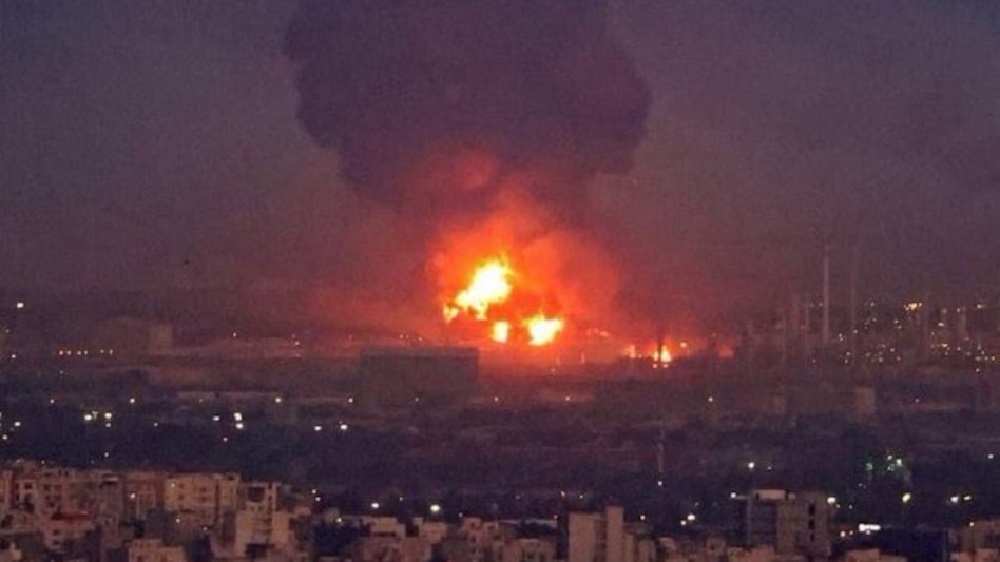


A top Iranian official has warned that the government is prepared for a long war with the US and signaled that it is willing to continue attacking Gulf countries in an effort to persuade them to convince US President Donald Trump to step back from the conflict.
The warning came in a new CNN interview in Tehran with Kamal Kharazi, foreign policy adviser to the office of the Supreme Leader, who ruled out diplomacy for now and said the war would only end through economic pain, signaling a hardening of the government’s stance on day 10 of the conflict.
“I don’t see any room for diplomacy anymore. Because Donald Trump had been deceiving others and not keeping with his promises, and we experienced this in two times of negotiations – that while we were engaged in negotiation, they struck us,” Kharazi told CNN on Monday.
“There’s no room unless the economic pressure would be built up to the extent that other countries would intervene to guarantee (the) termination of aggression of Americans and Israelis against Iran,” Kharazi said, suggesting that Gulf Arab countries and beyond need to put pressure on the US to end the war.
“This war has been producing a lot of pressure, economic pressure – on others, in terms of inflation, in terms of lack of energy, and so if it will be continued, this pressure will be built up more, and therefore others have no choice (but) to intervene,” he said.
Since the US and Israel launched the war, Iran has struck a slew of countries across the Middle East. Tehran claims it is targeting US interests in Gulf nations but residential buildings and airports have also repeatedly come under attack.
The Iranian strikes have exploited the fragility of the global energy trade including infrastructure and transit routes. Maritime traffic through the Straight of Hormuz has all but collapsed, with crude oil prices surging past $100 a barrel on Monday, rattling wallets and the stock market.
An estimated 20% of world oil supply has been disrupted by the ongoing conflict, roughly twice as big as the record set during the Suez Crisis of 1956-1957, according to historical data from Rapidan Energy Group.
Not only has the war derailed the flow of oil out of the region, it has also effectively wiped out the “spare capacity” that typically serves as a shock absorber in energy markets. Spare capacity measures how much more oil production could quickly get brought back online, if needed.
A spokesperson for the Islamic Revolutionary Guard Corps (IRGC) said Sunday that Iran is using 60% of its firepower to attack US bases and “strategic interests” in the region.
Meanwhile, Mojtaba Khamenei, the second son of former Supreme Leader Ali Khamenei was elevated to the country’s highest post over the weekend, an indication that further escalation is likely.
Asked if the Iranian military and the supreme leadership are as one going forward, Kharazi said: “Yes, exactly.”
“The responsibility of the leader of Islamic Republic of Iran is to lead the defense capability of Iran, and therefore, as Ayatollah Khamenei was doing that, now the new leader would do that,” he said.
Trump said last week that Khamenei’s appointment as his father’s successor would be “unacceptable” to him.
“That is not his business,” Kharazi said.


Air defence systems intercepted rockets fired at the US embassy in Baghdad, security sources told AFP.
It is the first such attack on the embassy in Baghdad since the start of the war in the Middle East, triggered by a joint US-Israeli attack on Iran, into which Iraq has been dragged.
Loud bangs were heard on Saturday night in Baghdad, AFP journalists said, with a witness near the fortified Green Zone, which houses the US embassy, reporting seeing air defences activated over the area.
“Four rockets were launched… toward the embassy,” a security official said, adding that air defences intercepted three, while one fell in an open area in the embassy’s airbase.
Two other security sources confirmed the attack, with one saying that all rockets were downed, including the one that fell in the airbase.
Prime Minister Mohammed Shia al-Sudani, ordered security forces to find the perpetrators of “the terrorist act” against the US embassy.
He said that “targeting diplomatic missions and embassies operating in Iraq is an act that cannot be justified or accepted under any circumstances.”
Iraq, long a proxy battleground between the US and Iran, had said it did not want to be dragged into the conflict engulfing the Middle East, but it has not been spared.
It was drawn into the war from the outset, with strikes blamed on the United States and Israel targeting Iran-backed groups, which have since claimed attacks on US bases in Iraq and the region.
Drone and rocket attacks have targeted Baghdad International Airport, which houses a military base and a US diplomatic facility, as well as oil fields and facilities.
The northern autonomous Kurdistan region, which hosts US troops, has also been a main target of drone attacks that were largely intercepted.
Late on Saturday, an AFP journalist reported hearing the sound of a drone followed by at least three loud bangs in Kurdistan’s capital Erbil, which also houses a major US consulate complex.
Airstrikes
On Saturday, airstrikes hit military bases belonging to the former paramilitary coalition Hashed al-Shaabi in the northern Nineveh province, the government’s security media cell said.
One fighter was killed and three other wounded.
The Hashed al-Shaabi, or the Popular Mobilisation Forces (PMF), is an alliance of factions now integrated into the regular army, including several Iran-backed groups, which have a reputation for acting on their own.
Bases belonging to Hashed al-Shaabi have been hit several times since the start of the war.
The group’s media cell said Saturday’s strikes were carried out by “unidentified aircraft,” but a PMF official told AFP that “an airstrike, likely American, hit a Hashed base” near the city of Mosul.
Kurdish militants
Iraq’s Kurdistan also hosts camps and rear bases operated by several Iranian Kurdish rebel groups, which Iran has struck repeatedly since the start of the war.
Iran’s Revolutionary Guards said Saturday they have targeted “separatist groups” in Iraqi Kurdistan, after Tehran threatened to target “all the facilities” of Kurdistan if militants were allowed to enter the Islamic republic.
So far, no forces have entered Iran, Iraq’s border guards said.
The Iraqi government and the autonomous region said Friday that Iraq must not be a launchpad for attacks against neighbouring countries.
AFP

Prime Minister Benjamin Netanyahu said on Saturday that Israel would continue its war with Iran “with all our force,” and alongside the United States had gained near-total control of the skies over Tehran after a week of strikes.
“We have a systematic plan to eradicate the Iranian regime and achieve many other objectives,” Netanyahu said in a televised address.
Israel and the United States launched the war against Iran with strikes on Tehran last Saturday that killed Supreme Leader Ayatollah Ali Khamenei.
“Citizens, you are telling me, the government, and our heroic soldiers to continue until victory, and I thank you. I can assure you that we will continue with all our force,” Netanyahu said.
The Israeli leader said that thanks to the bombing campaign by Israeli and American pilots, “we have gained almost complete control of the airspace” over Iran’s capital.
Speaking to the Iranian people, he said the “moment of truth” was coming as Israel was seeking to help liberate them from the “yoke of tyranny”.
He said that Israel had managed to “transform the Middle East” and shift the balance of power in the region.
Israel’s military said earlier that it had carried out around 3,400 strikes on Iran during the first week of the war, dropping roughly 7,500 munitions.
Meanwhile, a member of Iran’s Assembly of Experts said on Saturday that the body would meet within a day to choose the country’s next supreme leader, Iranian media reported.
“With divine assistance, this session will occur within the next twenty-four hours,” said Hossein Mozafari, one of the assembly’s 88 members, cited by the Fars news agency.
The statement came a week after the killing of Supreme Leader Ayatollah Ali Khamenei in a US-Israeli attack.
Mozafari also urged Iranians to “refrain from any speculation and the spreading of rumours regarding this matter” as the assembly has not yet convened for a session.
But the United States on Saturday condemned Iran’s drone strikes earlier this week on an Azerbaijan border region, describing the attack as a “needless escalation” of aggression by Tehran during the Middle East war.
The State Department said Thursday’s “unprovoked drone attack” targeted an airport and school in Azerbaijan’s exclave of Nakhchivan bordering Iran, and that innocent civilians were injured.
“These strikes are a flagrant violation of Azerbaijan’s sovereignty and a needless escalation of Iran’s aggression,” State Department spokesman Tommy Pigott said in a statement, adding that attacks on American partners in the region “are unacceptable and will be met with resolute US support for those partners.”
AFP

A member of Iran’s Assembly of Experts said on Saturday that the body would meet within a day to choose the country’s next supreme leader, Iranian media reported.
“With divine assistance, this session will occur within the next twenty-four hours,” said Hossein Mozafari, one of the assembly’s 88 members, cited by the Fars news agency.
The statement came a week after the killing of Supreme Leader Ayatollah Ali Khamenei in a US-Israeli attack.
Mozafari also urged Iranians to “refrain from any speculation and the spreading of rumours regarding this matter” as the assembly hasdnot yet convened for a session.
Meanwhile, the United States on Saturday condemned Iran’s drone strikes earlier this week on an Azerbaijan border region, describing the attack as a “needless escalation” of aggression by Tehran during the Middle East war.
The State Department said Thursday’s “unprovoked drone attack” targeted an airport and school in Azerbaijan’s exclave of Nakhchivan bordering Iran, and that innocent civilians were injured.
“These strikes are a flagrant violation of Azerbaijan’s sovereignty and a needless escalation of Iran’s aggression,” State Department spokesman Tommy Pigott said in a statement, adding that attacks on American partners in the region “are unacceptable and will be met with resolute US support for those partners.”
Similarly, explosions were heard on Saturday night in Iraq’s capital, Baghdad, and in the city of Erbil in the autonomous Kurdistan region, AFP journalists reported.
The cause of the loud bangs in Baghdad was still unknown, but a witness near the fortified Green Zone, which houses the US embassy, reported seeing air defences activated over the area.
Several drones have been intercepted near Baghdad airport since the start of the war in the Middle East.
In Erbil, the capital of the Kurdistan region, an AFP journalist reported hearing the sound of a drone followed by at least three loud bangs.
Since the start of the war, drones have repeatedly been intercepted over the city of Erbil, which is also home to a major US consulate complex.
AFP

Iran war ‘pretty much’ over – Trump

‘I’ve never fought my husband over infidelity’ – Omotola Jalade-Ekeinde

Petrol May Hit N2,000 per Litre Amid Refinery Price Hike, PETROAN Warns




-

 News21 hours ago
BREAKING: HoCS building in Abuja engulfed by fire(Video)
-
 News23 hours ago
Speaker Abbas Urges Caution Over Planned Single-Use Plastic Ban
-

 News20 hours ago
Qatar LNG Shutdown Sends European Gas Prices Soars Over 50percent
-

 News20 hours ago
Bwala’s Al-Jazeera interview made a spectacle of Nigeria, disgraceful to Tinubu – Moghalu
-

 News20 hours ago
Energy supply crisis looming, crude price- rise above $110 as middle east war escalates
-
 News23 hours ago
Reps Question National Library Over Alleged Abandonment of N365m Jalingo Project
-
 Politics18 hours ago
Breaking,: PDP Leadership Dispute: Appeal Court nullifies Ibadan Convention
-

 News18 hours ago
BREAKING: Appeal Court Upholds judgment stopping 2025 PDP National Convention