News
Tinubu signs bill to protect IDPs in Nigeria into law
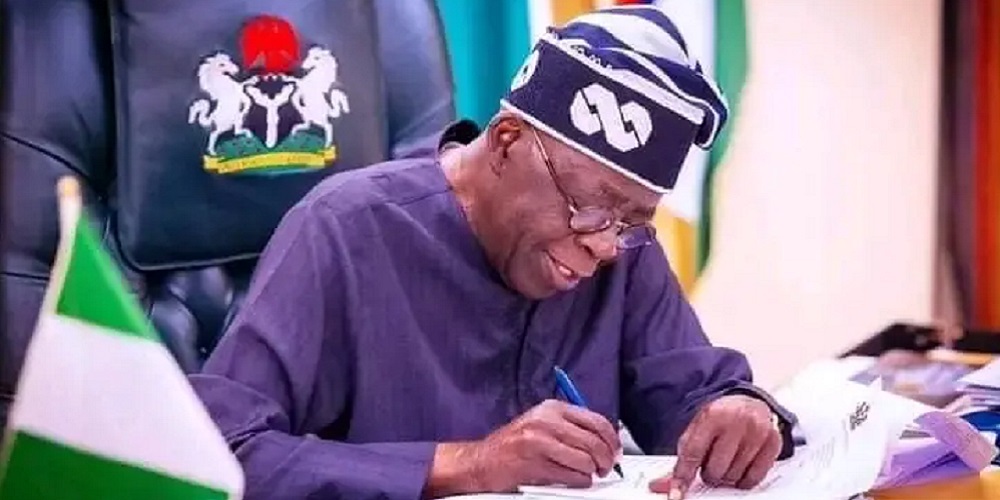
President Bola Ahmed Tinubu has signed into law the African Union Convention for the Protection and Assistance of Internally Displaced Persons (IDPs) to strengthen humanitarian protection and uphold the rights and dignity of displaced citizens.

The convention is popularly known as the Kampala Convention.
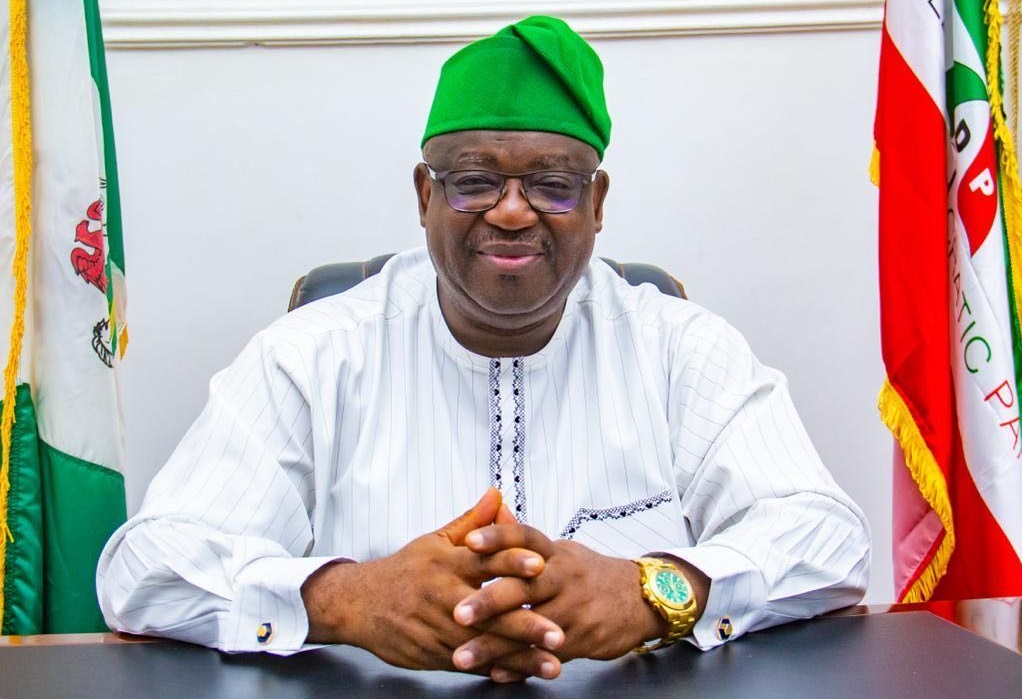
The law titled “Act to give effect to the provisions of the African Union Convention for the protection and assistance of internally displaced persons in Nigeria; and for Related Matters” was sponsored by Deputy Speaker of the House of Representatives, Benjamin Kalu.

The bill was cosponsored by Jonathan Gaza Gbefwi, Khadijat Bukar Ibrahim, Blessing Onuh, Nasiru Shehu, Felix Uche Nwaeke and Steve Fatoba.
The new law seeks to domesticate and enforce in Nigeria the African Union Convention for the protection and assistance for Internally Displaced Persons.
It also seeks to eliminate the root causes of internal displacement in Nigeria in line with the provisions of the Constitution of the Federal Republic of Nigeria, 1999 and other relevant laws and international instruments to which Nigeria is a party.
The objectives of the legislation include to provide a legal and institutional framework for the prevention, mitigation and elimination of root causes of internal displacement; make provision for the protection, assistance and durable solutions for internally displaced persons in Nigeria.
It also aim to ensure the protection of the human rights of internally displaced persons in line with the provisions of the Constitution, relevant laws, and international instruments to which Nigeria is a party; provide for the obligations, responsibilities and roles of government agencies (“competent authorities”) and non-state actors.
The law will provide a comprehensive and gender friendly framework for national response, coordination and collaboration for the protection, assistance and humanitarian interventions relating to internal displacement.
Others are to promote solidarity, cooperation, durable solutions and mutual support among State Parties to the Convention, State Parties and non-state actors, competent authorities, and non-state actors in collaboration with relevant agencies, in order to combat displacement and address its consequences.
Available report says that Nigeria is challenged by severe, long-term humanitarian crises with millions of Internally Displaced Persons (IDPs), struggling with extreme poverty, hunger, disease, and lack of security in mostly informal camps.
This is primarily due to Boko Haram insurgency, banditry, farmer-herder conflicts and natural disasters.
Essentially, the domestication of the Kampala Convention marks a significant step towards protecting IDPs in Nigeria as it is expected to check overcrowded, under-resourced shelters, limited access to healthcare and education.
Speaking on the development, the Deputy Speaker, Kalu commended President Tinubu for signing the Act, stating that he has given a human face to the suffering of IDPs, demonstrating his commitment to addressing their plight.
He urged Nigerians to support the efforts of the government in implementing the Kampala Convention.
“We must work together to address the humanitarian crisis and provide durable solutions for IDPs. The international community is also called upon to partner with Nigeria in addressing the root causes of displacement”, he said.

News
“New Foreign Affairs Leadership Must Deliver Respect, Access, and Global Value for Nigerians”-ADSC Boss Oluwafemi
… hails emergence of Ojukwu as Foreign Affairs minister
Sir Victor Walsh Oluwafemi,
International Development Consultant
Reputation Architecture Strategist
President, Africa Development Studies Centre (ADSC) has said New Foreign Affairs Leadership Must Deliver Respect, Access, and Global Value for Nigerians”
Oluwafemi in a signed statement issued on Thursday evening stated that:
“I extend my warm congratulations to Her Excellency Bianca Ojukwu on her appointment as Nigeria’s Minister of Foreign Affairs, as well as to the Honourable Minister of State.
“This moment represents more than a routine transition. It is an opportunity to reset Nigeria’s diplomatic direction with clarity, intention, and measurable outcomes that directly impact the lives of Nigerians at home and abroad.
“At this critical time in our national journey, Nigeria’s reputation must be elevated to the very centre of foreign policy. Across parts of Africa and beyond, there has been a growing pattern of negative sentiment and perception about Nigerians, sometimes expressed in ways that undermine dignity and national pride.
“This reality calls for deliberate and coordinated action. Reputation is no longer an abstract concept in global relations. It is a strategic asset that influences how citizens are treated, how businesses are received, and how a nation is positioned in the global order. Nigeria must therefore take ownership of its narrative and actively shape how it is perceived through structured engagement, consistent communication, and firm diplomatic presence.
“The Ministry of Foreign Affairs must lead this repositioning effort by working closely with diaspora communities, international partners, and strategic institutions to project a confident, responsible, and forward-looking image of Nigeria.
” This is not merely about image-building. It is about restoring respect and ensuring that Nigerians are treated with dignity wherever they go. Others will inevitably define a nation that does not define itself, and often unfairly.
“Closely linked to this is the urgent need to expand global mobility for Nigerian citizens. The difficulty many Nigerians face in accessing visas to travel for business, education, tourism, or professional engagement is a matter that requires strong diplomatic attention.
“The ability of citizens to cross borders reflects a nation’s influence and bilateral strength. The new leadership must therefore be intentional in pursuing visa-free arrangements, visa-on-arrival frameworks, and simplified entry systems with key countries.
“Where visa-free access is not immediately achievable, there should be a clear push towards efficient e-visa systems and structured bilateral agreements that make travel less burdensome and more predictable for Nigerians. Improved mobility is not just a convenience. It is a driver of economic opportunity, global integration, and national pride.
“Equally important is the experience of Nigerians within Nigeria when interacting with foreign visa systems. It is deeply concerning that many citizens are subjected to undignified conditions while applying for visas, often standing for long hours under the sun or in the rain, with inadequate facilities and poor service structures.
“These processes, managed largely by third-party agencies on behalf of foreign missions, must be brought to a standard that reflects respect for Nigerian citizens.
” The Ministry of Foreign Affairs has a critical role to play in engaging with foreign embassies and ensuring that minimum standards of service, organisation, and human dignity are upheld. Nigerians should not feel diminished in their own country simply because they are seeking access to another.
“There must be a clear principle of reciprocity in how nations engage. If Nigeria extends respect and structured processes to foreign nationals, then the same standard should be expected in return for Nigerians. This is not a confrontation. It is mutual respect, and it must be pursued with professionalism and firmness.
“Beyond these immediate concerns, this moment calls for a broader transformation in how the Ministry operates. Diplomacy must move from being largely ceremonial to being results-driven, data-informed, and aligned with national development priorities. Through structured frameworks such as Policy-as-a-Platform and Results-as-a-Service, the Ministry can begin tracking outcomes, measuring impact, and ensuring that every international engagement delivers tangible value for Nigeria. Embassies must become centres of opportunity, not just representation, actively driving trade, investment, and strategic partnerships that benefit the country.
He explained that: “This is a defining opportunity to shift from intention to execution. The expectation is clear. Nigerians want to be respected, to travel with dignity, and to see their country command influence and credibility on the global stage.
“Diplomacy, at its highest level, is not about protocol alone. It is about protection, access, and national advantage. This new leadership has the opportunity to deliver on all three and to set a new standard for Nigeria’s engagement with the world.
Signed:
Sir Victor Walsh Oluwafemi, KJW
International Development Consultant
Reputation Architecture Strategist
President, Africa Development Studies Centre (ADSC)
Member, Harvard Business Review Advisory Council
News
FCT Traditional Rulers Hail Tinubu’s Developmental Strides, Confers Wike With “Light of Abuja” Chieftaincy Title(Photos)
Traditional rulers in the Federal Capital Territory (FCT) has conferred on the FCT Minister, Nyesom Wike, the Chieftaincy title of “Hasken Abuja” (Light of Abuja), in recognition of his contributions to the development of the territory.

The traditional rulers, who thanked President Bola Ahmed Tinubu, for the infrastructural development in the FCT, especially the satellite towns, asked for more recognition of the indigenous people of the federal capital.
Speaking during an appreciation visit by the FCT Stakeholders Assembly at the Federal Capital Development Authority (FCDA) Conference Hall in Abuja, the Ona of Abaji and Chairman of the FCT Council of Chiefs, Dr. Adamu Baba Yunusa, praised the administration for improving the welfare of traditional rulers and approved projects such as the construction of a new palace in Abaji.

The monarch noted that the honor recognizes Wike’s “visionary leadership” and “commitment to the development of the FCT,” specifically citing his recent approval for the construction of a new Ona Palace in Abaji, the upgrading of the status and welfare of FCT traditional rulers, and structural reforms that have restored dignity to the traditional institution.
Reading out their list of “more work for hard work,” the traditional rulers requested the provision of 17 tractors—one for each of the 17 Chiefdoms—to bolster food security for the territory’s rural agrarian communities.

They also advocated for the elevation of historically significant chiefdoms, such as Garki and Jiwa, to higher statuses.
Responding to traditional rulers demands, Wike promised to protect the interests of the indigenous people, granting several immediate requests:
He directed the Mandate Secretary for Agriculture to provide tractors for each of the 17 Chiefdoms.
Also, he instructed the Council of Chiefs to submit names for the creation of third-class traditional stools, stating, “It is not in my position to write who will be… you people should do the right thing.”

He pledged to resolve issues regarding land certificates based on the numbers submitted by the stakeholders.
”I’m now from here. For me to be the Light of Abuja, I must do everything to protect your interest,” Wike concluded, while maintaining that the FCT’s political future depends on having a “strong voice” in the National Assembly to lobby for the expansion of senatorial seats.

On the 2027 elections, the minister counselled the FCT stakeholders against electing weak or inexperienced representatives, saying that such choices could leave the territory voiceless at the National Assembly.
“The Senate is not an all-comers’ game. Experience matters, ranking matters… you must have a strong voice there,” he said.
The minister expressed concern that past representation had failed to effectively articulate the needs of the FCT, urging stakeholders to make more strategic decisions in future elections.

“You elected a senator you can’t see… a senator who cannot even organise the indigenous community to ask what their needs are,” he stated.
Wike said that repeating such mistakes would further weaken the territory’s ability to attract development and influence national policy decisions.
“If you make a mistake this time, it will be difficult for you. When it was time to help yourself, you didn’t help… don’t expect miracles,” he added as he endorsed Sen Philip Tanimu Aduda.

Beyond electoral choices, the minister linked political alignment with development outcomes, noting that the administration of President Bola Tinubu had continued to deliver infrastructure projects in the FCT despite low electoral support in the 2023 elections.
“In 2023, most of you did not give Mr. President up to six per cent, yet he has done so much for you… now that you know, do not make that mistake again,” he said.
He disclosed that several projects, including water supply schemes in rural communities and new road networks, would soon be inaugurated as part of activities marking the President’s anniversary in office.
“Mr. President has touched virtually all the satellite towns… more roads will be constructed to open up our communities,” Wike said.
The minister also charged incoming area council chairmen to focus on governance and address pressing challenges, particularly in the education sector.
“It cannot continue that our children are at home because of strikes. Education is a first priority… without it, there cannot be development,” he emphasised.
Earlier, President of the FCT Stakeholders Assembly, Dr. Aliyu Daniel Bakna Kwali, commended the minister for ongoing reforms and infrastructural development, while presenting key demands including increased representation for the FCT at the National Assembly and the creation of additional area councils.
The event, which opened with remarks from former Federal Commissioner Dr. Aliyu Almakura Abdulkadir, underscored a new era of collaborative governance, with the traditional institution positioning itself as a central pillar in the FCT’s drive for political and economic expansion.
News
Watch moment FCT minister Wike being conferred with title of Abuja Hasken, Light of Abuja by FCT Traditional Council led by Ona of Abaji (Video)
Watch moment FCT Minister, Nyesom Wike, being conferred with the title of Hasken Abuja (The Light of Abuja) today, by the FCT Traditional Council led by The Ona of Abaji, Dr Adamu Baba Yunusa.
It’s indeed a well deserved title as truly Wike brought light to the Territory.
Watch:
-
News13 hours ago2027: Ogbeide-Ihama Joins Edo South Senatorial Race, Says Upper Chamber Not For Neophytes(Photos)
-
News13 hours agoJUST IN: Tinubu Appoints Bianca Ojukwu Foreign Affairs Minister
-
News13 hours agoMay Day: FG Announces Public Holiday for All Nigerians
-
Sports13 hours agoArsenal Hold Atlético Madrid To 1-1 Draw In UCL Semi-Final
-
News10 hours agoReps probe $4.6bn health grants, demand stricter oversight
-
News13 hours agoFG Raises Concern Over Fresh Xenophobic Attacks In South Africa
-
News21 hours agoPhotos: Appellate Court Advocacy Demands Precision, Discipline — Wike
-
News13 hours agoIGP Disu Fires ASP Nuhu Usman From Police Force Over Killing Of Mene Ogidi In Effurun