Connect with us

News

Senator Agadaga Supports State Police, Says Nigeria Is Ripe for Decentralised Security

Published

on

ADVERTISEMENT
Zoom Ad
ADVERTISEMENT
Zoom Ad

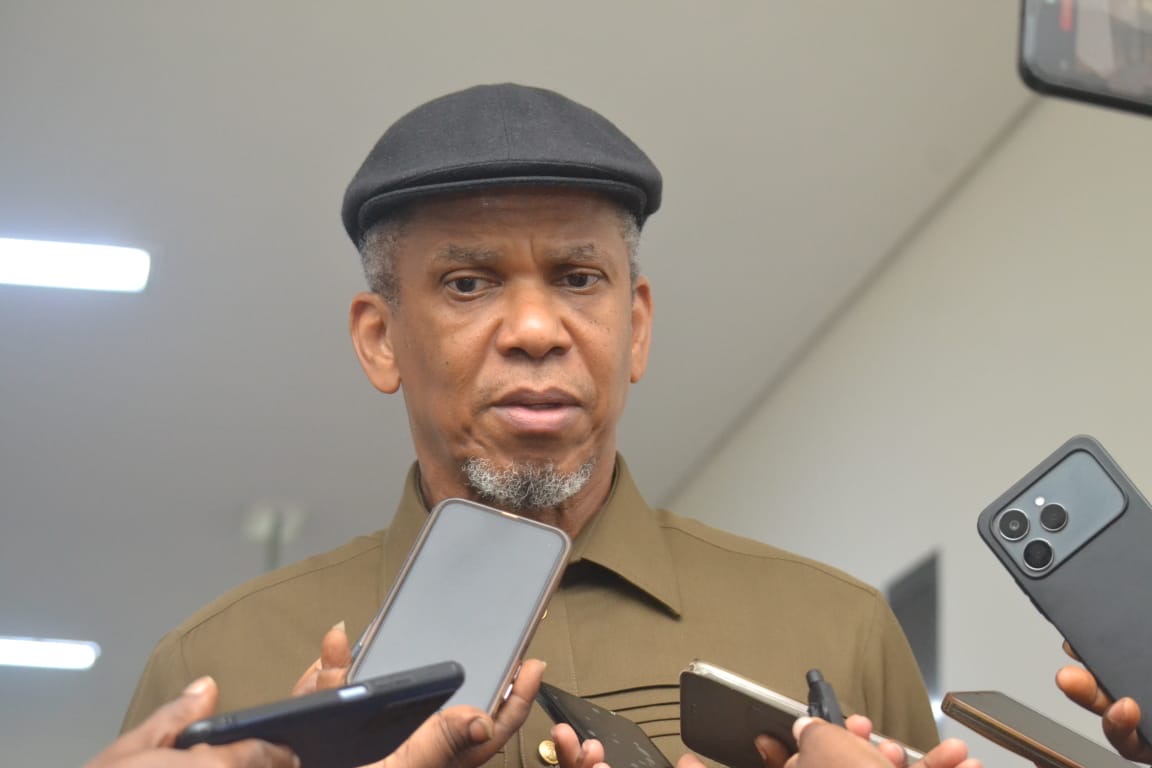
The lawmaker representing Bayelsa East Senatorial District, Senator Benson Sunday Agadaga, has expressed strong support for the establishment of state police in Nigeria, describing it as long overdue and necessary to address the country’s worsening security challenges.


Speaking during an interview on the growing debate around decentralising policing, the senator said the current security situation shows clearly that Nigeria is ready for state policing.

According to him, the agitation for state police is driven by the need for security operatives who understand the local environment and can effectively respond to threats within their communities.

“State police is long overdue in Nigeria. The agitation of the people is that we should have police officers who understand the environment and can concentrate on the security of the states where they belong,” he said.

Advertisement

The senator explained that local security personnel would have better knowledge of the terrain, culture, and security dynamics of their areas, making them more effective in tackling crimes such as banditry, kidnapping, and attacks on rural communities.

He cited the example of difficult terrains such as the creeks of the Niger Delta, noting that outsiders may struggle to understand the complex waterways and terrain.

“If you have your indigenous people handling the security of their communities, they know the environment very well. For instance, someone who is not familiar with the winding creeks in the Niger Delta cannot effectively navigate them,” he said.

Addressing Concerns Over Political Abuse

Advertisement

Responding to concerns that governors might use state police to manipulate elections or intimidate political opponents, Akadaga acknowledged the risk but argued that such abuse is not limited to state-controlled security.

He noted that even federal authorities could misuse centrally controlled police forces for political advantage.

“If you say police should be owned by the federal government, the federal government can also use it to its advantage.
Governors could also attempt to do that,” he said.

He suggested that Nigeria could adopt a hybrid structure where both federal and state police operate under clear constitutional guidelines and oversight mechanisms to prevent abuse.

Advertisement

“We can have a Federal National Police and also have state police, with provisions that ensure proper supervision and accountability,” he added.

Despite potential drawbacks, the lawmaker insisted that the benefits of decentralised policing outweigh the risks.

“We need security first. People must be alive before anyone can even talk about elections or political advantage,” he said.

Regional Police Still a Better Option

Advertisement

While supporting state policing, the senator revealed that he personally favours a regional police system, similar to what existed in Nigeria before 1966.

He said regional policing could reduce the risk of governors personalising security forces and encourage collaboration among states within the same geopolitical zone.

“Personally, my initial intention was to push for regional police. Up till today, I believe it is a better option than state police,” he said.

According to him, criminal activities often cut across state boundaries, making regional coordination more effective.

Advertisement

“When someone is kidnapped in Bayelsa, the next moment they may be in Delta, Edo or Cross River. That shows the need for a coordinated regional security system,” he explained.

However, he acknowledged that funding arrangements could become a challenge in implementing regional policing, as states may disagree over financial contributions.

Bayelsa’s Security Situation

The senator also commended the current administration in Bayelsa State for maintaining relative peace and stability.

Advertisement

He attributed the improved security situation to collaboration among security agencies, regular security meetings, surveillance operations, and community engagement.

“The police, navy and army are working cooperatively, and there are regular security meetings and surveillance activities,” he said.

He added that proactive security measures have helped authorities apprehend criminal elements, discouraging further crimes.

Lawmakers’ Role in Governance

Advertisement

On the achievements of lawmakers, Agadaga emphasised that legislators play a crucial role in governance despite not being part of the executive arm.

“We are lawmakers; we are not in the executive, but we continue to support initiatives and policies that will improve the lives of Nigerians,” he said.

Continue Reading
Advertisement

News

Reps Gives MREIF Boss Final One-Week Reprieve Over Housing Fund Probe

Published

on

ADVERTISEMENT
Zoom Ad
ADVERTISEMENT
Zoom Ad

By Gloria Ikibah

The House of Representatives Committee on Housing and Habitat has granted the management of the MOFI Real Estate Investment Fund (MREIF) a one-week extension to appear before lawmakers as part of an ongoing investigation into the fund’s operations, performance and administration.

The committee had initially summoned MREIF Managing Director and Chief Executive Officer, Dr Armstrong Ume Takang, alongside members of the fund’s management team, to appear on Tuesday, 2 June 2026, for a comprehensive review of the initiative and several petitions submitted against it.

The Committee Chairman, Rep. Abdulmumin Jibrin, said the investigation was aimed at ensuring the fund was operating in line with the objectives set by President Bola Tinubu and delivering on its mandate.

Advertisement

According to him, the exercise seeks to determine whether the administration and performance of MREIF are meeting public expectations while also addressing concerns raised in petitions before the committee.

However, in a letter addressed to lawmakers, Dr Takang acknowledged receipt of the summons and expressed the fund’s willingness to cooperate fully with the National Assembly’s oversight responsibilities.

He explained that he was outside Abuja on an official engagement that had been scheduled before the committee’s invitation was received and requested a new date for the hearing.

The MREIF chief also assured lawmakers of the organisation’s readiness to engage constructively with the committee.

Advertisement

Responding to the request, Jibrin said the committee had agreed to postpone the hearing by one week in the interest of fairness and cooperation.

He stated that the session had now been rescheduled for Tuesday, 9 June 2026, stressing that the extension was granted specifically to allow the managing director to appear in person.

The committee maintained that Dr Takang’s personal appearance was crucial to its inquiry and could not be delegated.

Jibrin reiterated the committee’s determination to conduct a thorough and impartial investigation into the management of the fund, which was established to expand access to affordable home ownership for Nigerians.

Advertisement

He said the committee remained committed to addressing all issues raised in the petitions before it while ensuring transparency, accountability and effective implementation of the housing initiative in line with the vision of the Tinubu administration.

The lawmaker further stated that the committee expects Dr Takang and the entire MREIF management team to appear before it on the new date without fail.

Continue Reading

News

FG stops three-month Pre-retirement leave for civil servants

Published

on

ADVERTISEMENT
Zoom Ad
ADVERTISEMENT
Zoom Ad

The Federal Government abolished the three-month preretirement leave for civil servants.

This was contained in a circular titled “Correct Interpretation of Public Service Rule 120243 on Pre-Retirement Activities,” issued by the Head of the Civil Service of the Federation, Didi Walson-Jack, and addressed to top government officials, including ministers, permanent secretaries, service chiefs, heads of agencies, and other senior public sector administrators.

According to the circular, FG directed Ministries, Departments, and Agencies to immediately discontinue the practice of placing civil servants on what is commonly referred to as a mandatory three-month preretirement leave.

Walson-Jack argued that such a provision does not exist in the Public Service Rules, adding that several MDAs had wrongly interpreted the retirement notice period as an automatic leave period, leading to the premature withdrawal of officers from active service.

Advertisement

The Public Service Rule, according to her, only requires officers due for retirement to give three months’ notice before their exit date, attend a one-month pre-retirement workshop or seminar, and use the remaining period to regularise service records and pension documentation.

Nigeria’s federal civil service retirement framework is governed by the Public Service Rules and the Pension Reform Act.

Under the rules, civil servants retire upon attaining 60 years of age or after 35 years in service, whichever comes first.

The Head of Service’s directive seeks to standardise the implementation of the Public Service Rules across government institutions and to prevent manpower losses resulting from the early disengagement of experienced officers

Advertisement

“The so-called ‘mandatory three-month pre-retirement leave’ has no basis in the Public Service Rules,” Walson-Jack stated.
She explained that Rule 120243 establishes three distinct requirements: a notice obligation, attendance at a pre-retirement seminar during the first month, and completion of retirement-related documentation during the remaining two months.
“A retiring officer must give three months’ notice before their effective date of retirement. This is a notice requirement, not a leave entitlement,” the circular stated.

Civil Service Commission

She stressed that retiring officers remain public servants throughout the notice period and are expected to continue performing their official duties unless they are attending approved retirement workshops or have been granted leave under existing regulations.

“PSR 120243 does not exempt retiring officers from official duties during the notice period, except where they are attending an approved pre-retirement workshop or seminar, or are otherwise authorised to be absent under extant leave rules,” the circular added.

Advertisement

In view of the above, all MDAs have been directed to stop compelling retiring officers to vacate their posts before their official retirement dates.

Under the new directive, ministries and agencies must ensure that retiring officers continue to discharge their responsibilities, participate in approved pre-retirement programmes, and complete all pension and service record reconciliations before leaving service.
The latest circular seeks to end that ambiguity by affirming that the three-month period is primarily a notice and administrative preparation window, rather than an automatic absence from duty.
The circular further instructed permanent secretaries, directors-general, executive secretaries, chairpersons of statutory agencies, and chief executives of government organisations to bring the directive to the attention of all staff and ensure strict compliance.

The government said it believes the measure could improve service delivery by ensuring that retiring officers continue contributing their expertise until their official exit dates while simultaneously completing documentation required for pension processing.

Advertisement
Continue Reading

News

Six members of same family shot dead during domestic dispute in US

Published

on

ADVERTISEMENT
Zoom Ad
ADVERTISEMENT
Zoom Ad

Six people were killed in the US state of Iowa after a series of shootings that appeared to stem from a domestic dispute, police said.

The suspected shooter also was found dead with a self-inflicted gunshot wound, according to the Muscatine Police Department.

The victims are believed to be family members of the suspect, identified as Ryan Willis McFarland, 52, of Muscatine, the department said.

Muscatine Police Chief Anthony Kies called the shooting an “act of evil”.

Advertisement

The shootings took place on Monday at multiple locations within the city of Muscatine.

Police received a report of a shooting just after noon on Monday. When officers responded to a home, they found four people with gunshot wounds, police said.

All four victims were pronounced dead at the scene.

McFarland had left the residence before officers arrived, but officials found him shortly after on a riverfront trail near a pedestrian bridge.

Advertisement

He had a self‑inflicted gunshot wound, police said, and received medical aid, but was pronounced dead at the scene.

Detectives later found another man dead from an apparent gunshot wound in a different residence. A further search led officers to a business, where they found another victim, also dead of an apparent gunshot wound.

Online maps show a metal workshop at the address provided by police.

“Preliminary findings indicate the shootings stemmed from a domestic‑related dispute,” McFarland police said in a statement. “All victims are believed to be family members of the deceased suspect.”

Advertisement

Kies did not give the names or ages of the victims and noted that the investigation is ongoing.

He confirmed the suspect had an existing criminal record but did not share any further details.

Muscatine, in the southwest of Iowa, sits on the Mississippi River and has a population of approximately 23,500 people, according to US government data published last year.

Mayor Brad Bark wrote in a post on Facebook: “Our hearts are heavy tonight after the tragic shootings that claimed innocent lives.”

Advertisement

Source: BBC

Continue Reading

Trending

Copyright © 2024 Naija Blitz News