Connect with us

News

Pressure Mounts on Starmer to Challenge Tinubu on Christian Killings During UK Trip

Published

on

ADVERTISEMENT
Zoom Ad
ADVERTISEMENT
Zoom Ad

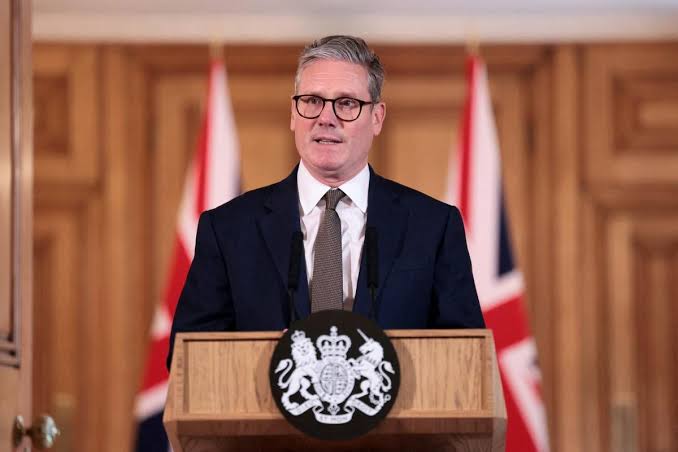
British lawmakers have urged Prime Minister Keir Starmer to raise concerns about the killing of Christians in Nigeria during his upcoming meeting with Nigerian President Bola Ahmed Tinubu, who is scheduled to visit the United Kingdom for a state engagement.


President Tinubu and Nigeria’s First Lady, Oluremi Tinubu, are expected to be hosted by King Charles III and Queen Camilla at Windsor Castle on Wednesday. The royal reception will include a state banquet in their honour as part of a high-profile diplomatic visit.

Following the royal engagement, Tinubu is scheduled to travel to 10 Downing Street on Thursday for talks with Starmer. The visit is expected to mark the first official state visit by a Nigerian president to the United Kingdom in about 37 years.

Ahead of the meeting, members of the All-Party Parliamentary Group for Freedom of Religion or Belief (APPG FoRB) have written to the UK’s Development Minister, Jenny Chapman, urging the British government to use the opportunity to address concerns about human rights and religious freedom in Nigeria.

Advertisement

The lawmakers said the UK government should press the Nigerian administration to take stronger measures to protect religious communities and ensure justice for victims of violence.

Their concerns come amid reports that Nigeria remains one of the countries where Christians face significant threats from extremist groups, including Boko Haram and Islamic State West Africa Province (ISWAP), both of which have carried out numerous attacks in parts of northern Nigeria.

READ ALSO:  National Assembly Extends Deadline for Submission of New State, LG Creation Request

Earlier this year, about 163 Christian worshippers were reportedly abducted by armed gangs in Kaduna State, highlighting the continuing wave of kidnappings and violence affecting communities in the region.

Advertisement

Chairman of the parliamentary group and member of the Democratic Unionist Party, Jim Shannon, stated that Nigeria must take decisive action to address the situation.

According to him, the Nigerian government should implement concrete measures to prevent harassment, persecution, and killings of Christians while ensuring that those responsible for such crimes are properly investigated and prosecuted.

The group, which includes more than 200 MPs and members of the House of Lords, also expressed concern that Nigerian authorities have not responded to the attacks with the urgency required.

Among the issues raised in the letter is the case of Leah Sharibu, one of the schoolgirls abducted in 2018 during a mass kidnapping carried out by militants. While several of the abducted girls were later released, Sharibu reportedly remains in captivity after refusing to renounce her Christian faith.

Advertisement

The lawmakers urged the UK government to ensure that discussions on diplomacy, trade, and security with Nigeria are accompanied by firm commitments on human rights protections.

They also requested that the Development Minister provide a response to their concerns before President Tinubu’s visit takes place.

Meanwhile, the Archbishop of Canterbury, Sarah Mullally, is also expected to engage with Nigeria’s First Lady during the visit. Mrs Tinubu is scheduled to attend an event at Lambeth Palace, the official residence of the Archbishop.

During the gathering, she will participate in a prayer service and is expected to deliver a sermon. The event will also include representatives from the Church of England as well as humanitarian organisations such as Christian Aid, which have been involved in supporting communities affected by conflict and insecurity in Nigeria.

Advertisement

The planned engagements highlight the diplomatic importance of the visit while also placing renewed international attention on security and religious freedom concerns in Nigeria.

Continue Reading
Advertisement

News

Climate Change Threatens West Africa’s Livelihoods, Stability — Experts

Published

on

ADVERTISEMENT
Zoom Ad
ADVERTISEMENT
Zoom Ad

By Gloria Ikibah

Experts have warned that climate change is putting growing pressure on livelihoods, infrastructure and regional stability across West Africa, as lawmakers deliberate on the need for stronger adaptation measures and regional cooperation.

The warning was issued at the second Extraordinary Session of the ECOWAS Parliament and its second Parliamentary Seminar on Monday in Accra, Ghana, where experts examined the theme, “Climate Change as a Driver of Environmental Degradation, Population Displacement and Rising Insecurity in the ECOWAS Region”.

The experts said rising temperatures, extreme weather, drought, unpredictable rainfall, flooding, rising sea levels and land degradation were placing increasing pressure on communities and critical infrastructure across the sub-region.

Advertisement

In a presentation on climate change in West Africa, including risk areas, vulnerabilities and implications for regional stability, the Senior Programme Officer, Climate Change and Ozone Directorate of Ghana’s Environmental Protection Authority, Dr Derek Sarfo-Yiadom, said climate hazards were no longer distant threats.

“Climate hazards are with us,” he said, identifying extreme heat, drought, heavy and unpredictable rainfall, rising sea levels and other weather-related events as growing concerns.

Sarfo-Yiadom said climate hazards became disasters when communities exposed to them lacked the capacity to cope.

According to his presentation, seasonal temperatures in the region have risen by between one and three degrees Celsius since 1970, contributing to hotter heatwaves and increasingly unpredictable weather patterns.

Advertisement

He said changing rainfall patterns were also increasing the risk of flooding, while drought and heat were placing additional pressure on agriculture and livelihoods.

Farmers, low-income communities, coastal settlements and displaced populations were identified as particularly vulnerable to the effects of climate change.

The presentation also highlighted threats to homes, irrigation systems, electricity supply, transport networks, ports, markets and public services.

Sarfo-Yiadom said the consequences of climate change extended beyond the environment, with social and economic implications for communities.

Advertisement

He warned that climate pressures can contribute to displacement and conflict, particularly in communities heavily dependent on agriculture and natural resources.

The expert called for increased investment in climate adaptation, flood-proof zoning and wider climate-risk mapping.

He also urged governments to ensure that early-warning systems reached vulnerable communities and that public authorities were held accountable for climate-related spending.
ECOWAS seeks stronger regional climate action
In another presentation focusing on the ECOWAS regulatory and institutional framework and the need to translate climate commitments into regional action, the Principal Officer, Climate Change and Climate Services at the ECOWAS Commission, Mr Raoul Kouame, said the region needed to harmonise climate policies and standards.

He said member states should also be supported to implement their commitments under the Paris Agreement.

Advertisement

“The challenge is no longer just to define climate commitments,” he said.

Kouame identified institutional fragmentation, differences in national capacities and difficulties in accessing climate finance among the challenges affecting climate action across West Africa.

He called for stronger coordination between regional and national institutions, as well as greater sharing of experience among member states.

He also advocated mechanisms that would enable countries to develop national climate frameworks linked to regional structures.

Advertisement

According to him, regional cooperation should cover climate services, early-warning systems, forest and ecosystem protection, carbon markets and access to climate finance.

According to him, West African countries needed to strengthen their capacity to access available climate funds and develop innovative financing mechanisms to support implementation.

Kouame stressed that ECOWAS had an important role to play in providing regional solidarity and helping member states implement their climate commitments more effectively.

The ECOWAS Parliament has previously identified climate change and environmental protection among areas within its parliamentary responsibilities, including the harmonisation of policies and programmes among member states.
Climate risks cross national borders
A climate, water and meteorology expert with the Permanent Inter-State Committee for Drought Control in the Sahel (CILSS), Dr Abdou Ali, also called for greater regional cooperation in responding to climate and resource pressures.

Advertisement

His presentation examined drought, land degradation and food insecurity, with particular attention to the need for countries to share climate information, data, technical expertise and climate services.

Ali said regional cooperation was essential because climate risks did not stop at national borders.

He highlighted agriculture, coastal areas, biodiversity, disaster risk and human displacement as areas requiring coordinated adaptation measures.

He also emphasised the need to integrate climate action into policies covering agriculture, forestry, energy, transport, industrialisation and waste management.

Advertisement

The expert said regional strategies would require adequate financing, stronger institutions and effective implementation mechanisms to deliver results.

The presentations converged on the need for stronger climate adaptation measures across West Africa, with the experts stressing that responses should reflect the needs and livelihoods of affected communities to avoid creating new vulnerabilities.

The discussions come as West African countries face continued climate variability, with drought in the Sahel and flooding in Gulf of Guinea countries posing risks to food security, water resources, health systems and infrastructure. Regional institutions are increasingly emphasising early warning, data sharing and coordinated responses to climate-related disasters.

Parliamentarians at the Accra seminar are continuing deliberations on the expert presentations, with discussions expected to focus on practical measures that can strengthen climate resilience and address the links between environmental degradation, displacement and insecurity in the ECOWAS region.

Advertisement
Continue Reading

News

ECOWAS Parliament Seeks Urgent Action as Climate Change Fuels Displacement, Insecurity

Published

on

ADVERTISEMENT
Zoom Ad
ADVERTISEMENT
Zoom Ad

By Gloria Ikibah

The Speaker of the ECOWAS Parliament, Rt. Hon. Mémounatou Ibrahima, has called for practical and people-centred responses to the growing effects of climate change, warning that environmental disruption is increasingly affecting livelihoods, communities and the security of populations across West Africa.

Ibrahima made the call on Monday in Accra, Ghana, while opening the second Parliamentary Seminar of the year under the theme “Focusing on climate change, environmental degradation, population displacement and growing insecurity in the ECOWAS region”.

The seminar forms part of the activities of the Sixth Legislature of the ECOWAS Parliament and brings lawmakers together to examine the interconnected challenges facing communities across the sub-region. Recent regional discussions by the Parliament have similarly placed climate change, displacement and insecurity at the centre of its agenda.

Advertisement

In her welcome remarks, Ibrahima said the effects of climate disruption can no longer be viewed simply through statistics or scientific projections, as communities were already experiencing its consequences.

She said: “Climate disruption can no longer be measured only in degrees, statistics or projections. It is read in land that yields less, in coastlines that retreat, in flooded neighbourhoods, in families losing their livelihoods, and in communities forced to relocate.

“Behind the climate question lies a profoundly human one: how do we protect the living conditions, dignity and security of our populations when their environment is changing faster than their capacity to adapt to it?”
The Speaker said the responsibility of parliamentarians at the seminar was to connect technical knowledge with the realities experienced by people in their constituencies.

“Our responsibility during this Seminar will be precisely to connect these realities, not to restate here what we already know, but to better understand what is at stake in our territories and to consider the most appropriate responses.”

Advertisement

She said the expertise to be shared during the seminar would be valuable, but stressed that it needed to be combined with the experiences of lawmakers who remained closely connected to their communities.

“The expertise that will be shared with us should inform our discussions. But it must also meet the experience of parliamentarians, who remain in close contact with their territories and their people.

“It is from this dialogue between technical knowledge and lived realities that truly useful proposals can emerge”, she added.

Ibrahima also linked the opening of the seminar to Ghana’s Founder’s Day, which is commemorated on September 21 to mark the birth of Ghana’s first President, Osagyefo Dr Kwame Nkrumah.

Advertisement

She recalled Nkrumah’s contribution to Ghana’s independence and his wider vision of a united and self-reliant Africa.

“The 21st of September carries special resonance in Ghana. The country celebrates today Founder’s Day, a date that coincides with the birth of Osagyefo Dr Kwame Nkrumah.

“Gathered here in Accra, we cannot let this occasion pass without recalling the man whose fight for Ghana’s independence was inseparable from a far greater ambition: that of a free, united Africa, able to take charge of its own destiny.

“On this day of commemoration, I would like us to pause to stand with the people of Ghana and honour the memory of this illustrious African figure. I invite us to observe a minute of silence”, Speaker Ibrahima stated.

Advertisement

The lawmakers observed a minute of silence in honour of Nkrumah.

Ibrahima urged participants to focus on substantive discussions during the seminar, saying the formal opening ceremonies should not distract from the need to address the challenges confronting West African communities.

“Tomorrow we will have time for solemnity. Today, let us choose substance, listening and work.

“It is in this spirit that I invite us to get straight to the heart of our work. Thank you. Thank you. Obrigada”, she noted.

Advertisement

The Accra seminar is expected to examine how climate change and environmental degradation are contributing to population movements and insecurity, as well as possible regional responses.

The ECOWAS Parliament has previously identified climate change and environmental protection among areas within its parliamentary remit, including the development and harmonisation of regional policies on climate change, natural resources and environmental protection.

Continue Reading

News

2027: Wike Reaffirms Tinubu Support, Says Rainbow Coalition Not APC Structure

Published

on

ADVERTISEMENT
Zoom Ad
ADVERTISEMENT
Zoom Ad

Minister of the Federal Capital Territory (FCT), Barr. Nyesom Wike, has reaffirmed his support for President Bola Ahmed Tinubu’s re-election in 2027, insisting that the Rainbow Coalition is aimed at mobilising support for the President and not at weakening the All Progressives Congress (APC).

Wike, spoke on Monday after inspecting the ongoing ISEX 2 project, the Southern Parkway project and the road linking Nile University to Ring Road 3 in Lugbe, Abuja, said his major political concern ahead of the 2027 election was to ensure Tinubu secured a second term, stressing that he had made his position clear from the outset.

“My concern is that the President will be re-elected for the second term. That is my concern. And I made that known from the onset that I was going to support Mr President with all my might and strength,” he said.

The minister’s position comes amid disagreement between supporters of the Rainbow Coalition and APC governors over the structure and purpose of the political platform.

While Wike has maintained that the coalition is a cross-party platform for mobilising support for Tinubu, the APC Progressive Governors Forum has said it would not support any political arrangement capable of weakening the party or affecting its candidates in the 2027 elections.

Wike, however, questioned the criticism of the coalition, saying it was designed to bring together APC members and like-minded individuals from other political parties who support Tinubu’s re-election.

Advertisement

“We said all our party members, all those like-minds who are not APC members, to please ensure that they support Mr. President,” he said.

He also dismissed speculation that he was positioning himself for the 2031 presidential election, saying such political calculations would depend on circumstances that could only emerge in the future.

“You know, people take the position of God. First of all, you have to pray that you are alive. You must ask God, ‘Keep me alive till tomorrow,’ or ‘Keep me alive till the next day.’ When God keeps you alive, then you now know what to do,” Wike said.

The former Rivers State governor recalled his participation in the 2022 Peoples Democratic Party (PDP) presidential primary, where he finished second, saying his experience had given him a good understanding of Nigeria’s political dynamics.

Advertisement

Responding to suggestions that he was already positioning himself for 2031, Wike asked: “So, am I positioning myself… in which of the parties am I positioning myself to?”

He added that the eventual successor of Tinubu in 2031 would also involve the President having an interest in who succeeds him.

Wike further said he would disclose what he described as the “undertones” behind opposition to the Rainbow Coalition during a television appearance.

“You will hear it today. What is the real cry about the Rainbow Coalition, the undertone. Nigerians don’t understand that there are undertones about it, and we’ll let the cat out of the bag so that Nigerians will be well-informed,” he said.

Advertisement

The minister’s clarification is consistent with his earlier position that the Rainbow Coalition has no formal affiliation with the APC and is focused specifically on mobilising support across political parties for Tinubu’s presidential bid.

Meanwhile, Wike has expressed satisfaction with the pace of work on major road projects in Abuja, saying contractors have renewed their commitment to completing and handing over the projects ahead of the 2027 general elections.

He said the inspection was part of efforts to monitor projects promised to residents of the Federal Capital Territory and ensure that contractors kept to agreed delivery schedules.

“I came back yesterday and, as usual, I have to go round to check the ongoing projects which were promised to residents of Abuja to be completed before the elections,” he said.

Advertisement

He said he was particularly impressed by the quality of work on projects inspected, noting that CGC had reaffirmed its commitment to handing over the High Court project by December.

The minister also disclosed that work on the second bridge around the Gaduwa axis would intensify after the rains.

“The second bridge is ongoing, and they have said but for the heavy downpours, they would have started the earthworks. However, by the time the rain subsides, they will start heavy earthwork and still promise that to be completed before the elections,” he said.

At the Nile University–Ring Road 3 project, Wike said he was relieved by the progress recorded since his previous inspection, when he had expressed concern over the pace of work.

Advertisement

According to him, CCECC has now committed to completing and handing over the project in the first week of January.

“I must say the management has committed itself that latest first week of January, they would have also handed over this project. So, I’m very, very happy that we are on schedule, on course, and the promise made by this administration of President Bola Ahmed Tinubu would be completed before we go for the general elections,” he said.

Wike said the contractors’ renewed commitments had eased his earlier concerns, adding that he trusted their ability to meet the agreed deadlines.

“Last time I came, I was worried, but now I think I’m a bit relieved. With their further commitment, you saw what CGC said, and now CCECC has repeated that they will be on course. So, I trust them,” he said.

Advertisement
Continue Reading

Trending

Copyright © 2024 Naija Blitz News