
News
50% Nigerians Lack Confidence In INEC — GoNigeria


- /home/naijuinz/public_html/wp-content/plugins/mvp-social-buttons/mvp-social-buttons.php on line 27
https://naijablitznews.com/wp-content/uploads/2025/09/INEC.jpg&description=50% Nigerians Lack Confidence In INEC — GoNigeria', 'pinterestShare', 'width=750,height=350'); return false;" title="Pin This Post">
- Share
- Tweet /home/naijuinz/public_html/wp-content/plugins/mvp-social-buttons/mvp-social-buttons.php on line 72
https://naijablitznews.com/wp-content/uploads/2025/09/INEC.jpg&description=50% Nigerians Lack Confidence In INEC — GoNigeria', 'pinterestShare', 'width=750,height=350'); return false;" title="Pin This Post">


Ahead of the 2027 general elections, Conveners of GoNigeria, yesterday, stated that credible electoral reform remains urgent and unavoidable.
It also called for the strengthening of public confidence in the electoral process.
GoNigeria, in a statement titled ‘Electoral reform and the sanctity of Nigeria’s democratic future’, by its convener, Mr Atedo Peterside and 24 others, noted that electoral reforms, judicial reforms and freedom of speech, among others, are critical for Nigeria’s democracy.
The group, however, lamented that surveys have shown that less than 50 percent of Nigerians have confidence in the Independent National Electoral Commission, INEC.
The statement reads: “Four pillars are critical for Nigeria’s democracy: electoral reform, judicial reform, freedom of speech, and the security of life and property. These pillars are the practical guardrails required for a democracy that is durable and productive.
“Among these pillars, electoral reform is foundational. Elections do not simply select leaders; they determine whether power is accepted as legitimate, whether institutions are trusted, and whether governance will be effective. Where elections are credible, authority is strengthened.
“This understanding was clearly articulated by the Justice Mohammed Uwais-led Electoral Reform Committee, whose recommendations emphasised independence of the electoral body, transparency, credible dispute resolution, and firm enforcement of electoral rules.
“Subsequent reforms centered on the adoption of digital tools, including biometric voter registration, Permanent Voters’ Cards, and electronic accreditation. These innovations reflected institutional intent and public demand: technology as a guardrail against manipulation and a basis for public confidence.
“That intent reached its apex in 2015, widely regarded as a benchmark for our democracy. Progress, however, proved fragile and post 2019 and 2023 elections, public trust has regressed due to uneven use of technology, weak enforcement and increased reliance on courts to determine electoral outcomes.
“Today, surveys indicate that less than 50 per cent of Nigerians have confidence in the electoral commission, with distrust deepest in the South-South and South-East. Among young Nigerians, nearly three-quarters of those aged 18 to 35 report a lack of trust in the system’s ability to deliver free and fair elections. These figures signal a serious democratic fault line beyond reputational concerns.
“The costs of a weak electoral system are profound, increased violence, unaccountable governments and compromised institutions. Nigeria confronts a clear democratic risk. The persistent review of electoral laws, the growing demand for transparency, and declining public confidence all point to the conclusion that credible electoral reform is urgent and unavoidable.
“For instance, concerns about the potential for administrative discretion by electoral officers to permit manual transmission of results in the event of network failure can be addressed with clear operational guidelines, stronger safeguards, and transparent procedures that ensure technology remains a tool for accountability.
“Following the assent to the Electoral Act 2026, attention must now turn to effective implementation and the strengthening of public confidence in the electoral process. “GoNigeria’s approach will remain practical and inclusive: supporting voter registration and participation; encouraging informed public debate on electoral transparency and responsible use of technology in elections; engaging institutions and stakeholders on closing the gap between law and implementation; and amplifying citizen demand for elections that are credible, verifiable, and beyond reasonable dispute.
“GoNigeria is committed to ensuring, through advocacy, stakeholder engagement, and informed analysis, that elections in Nigeria are decided by the people and trusted by the people.”
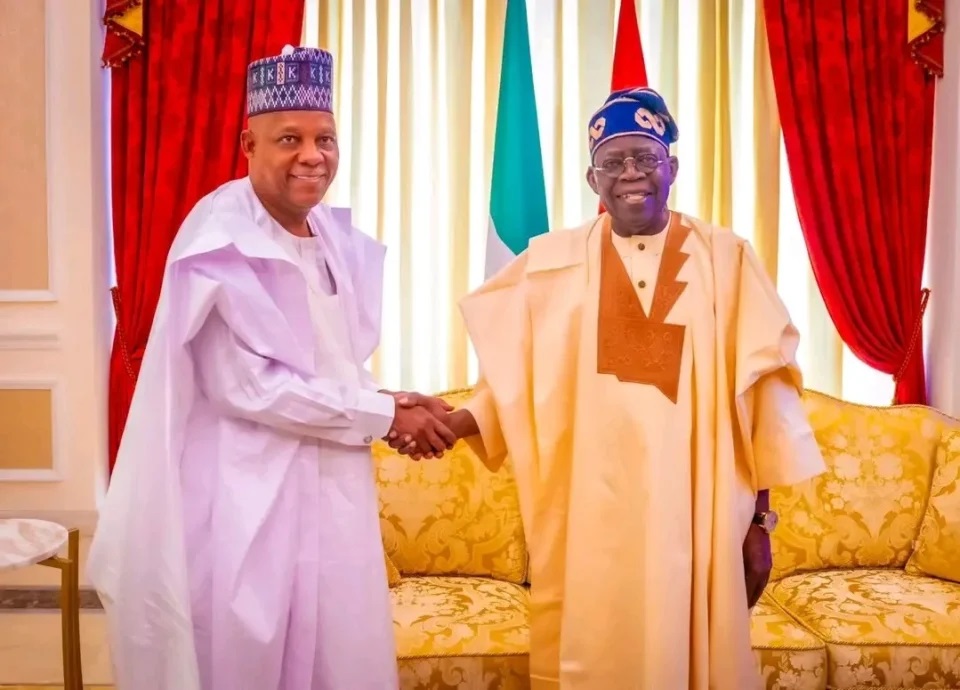
Vice President Kashim Shettima has visited President Bola Tinubu in Lagos after representing the President at the 2026 United Nations General Assembly in New York.
The visit was disclosed by the Special Assistant to the President on Social Media, Dada Olusegun, in a post on Saturday.
Shettima, who spoke with journalists after the meeting in his Lagos residence , said he had remained in regular contact with Tinubu during the President’s stay abroad.
“Well, we are quite thrilled that he is back on the seat and we have been in regular contact throughout his sojourn abroad,” Shettima said.
He said advances in science and technology had made it possible for leaders to remain engaged in governance regardless of their location.
“So we have been in regular contact, we speak almost every other day and we are updating him on developments in the nation and we are happy he is back on the seat,” he said.
Shettima also defended some of the economic decisions taken by the Tinubu administration, including the removal of fuel subsidy and the unification of multiple exchange rates.
He urged Nigerians to be patient with the administration, saying the government was introducing measures to ease the economic hardship faced by citizens.
“When we assume the mantle of leadership, our foreign reserves was a staggeringly low $3.9bn that was not enough to import fuel for one month,” he said.
He said Tinubu “had the courage and the conviction to take far-reaching decisions,” including the withdrawal of the fuel subsidy and the realignment of multiple exchange rates.
“He saved the economy. I want Nigerians to understand this fundamental truism,” Shettima said.
The Vice President acknowledged the hardship being experienced by Nigerians but said the situation would not last indefinitely.
“We appreciate the pains Nigerians are going through, but tough times do not last forever, tough people do,” he said.
Shettima said the government would roll out programmes aimed at reducing the impact of the economic hardship, including the planned launch of e-logistics in the North-East.
He said the initiative would include 10,600 electric tricycles, 300 buses and e-taxis.
He added that the government was also working on programmes to support students and other vulnerable Nigerians.
“Be rest assured that we’ll come up with programmes and projects to ease the pains of the people,” he said.
Shettima also said the administration would combine governance with politics ahead of the 2027 general elections.
“Politics is in the air, but we’ll combine politics and governance,” he said.
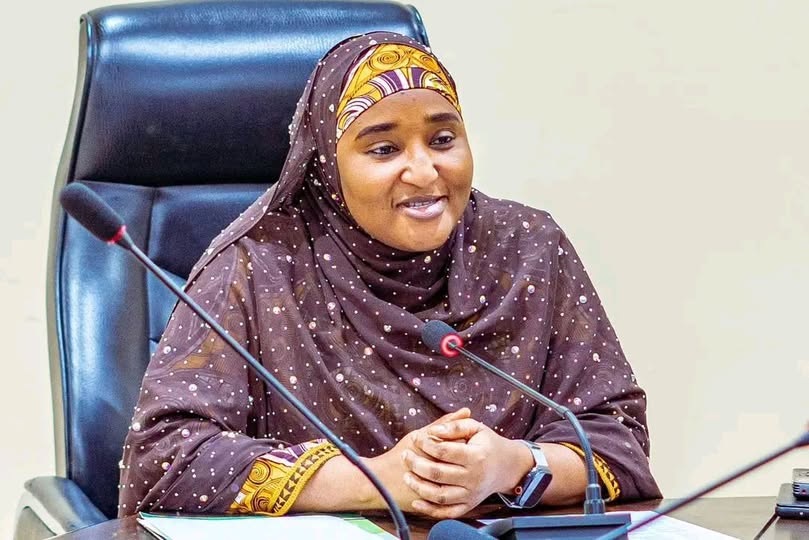
The Federal Government has digitalised the selection process for the 2026 President’s Teachers’ and Schools’ Excellence Awards (PTSEA), ending the manual process previously used to select outstanding teachers and schools.
The Minister of State for Education, Prof Suwaiba Said Ahmad, disclosed this in yesterday during a press briefing ahead of the 2026 World Teachers’ Day celebration scheduled for October 5.
She said 14 teachers, schools and other education stakeholders would be recognised under the 2026 awards, with the first, second and third-best teachers receiving prizes, while other awardees would receive laptops.
World Teachers’ Day is observed annually on October 5 and has been celebrated since 1994. The 2026 edition also marks 60 years of the 1966 ILO/UNESCO Recommendation concerning the Status of Teachers, which established international standards relating to teachers’ rights, responsibilities, preparation, recruitment, employment and working conditions.
Ahmad said the digital selection process was introduced in line with African Union guidelines to promote transparency, accountability, security and proper documentation in the selection of awardees.
“For the first time, the selection process coordinated by the Federal Ministry of Education was digitalised in line with the African Union guidelines to ensure certainty, accountability and reference,” she said.
She said the annual celebration, organised by the Federal Ministry of Education in collaboration with the Nigerian Union of Teachers (NUT), would focus on transforming the teaching profession and preparing teachers for the demands of a rapidly changing world.
According to the minister, the celebration would focus on five interconnected pillars; innovation, mobility, artificial intelligence, inclusion and professional excellence.
She said teachers from the 36 states and the Federal Capital Territory would participate in the October 5 celebration, including a march-past featuring state flags and cultural attire to showcase unity, diversity and cooperation.
Speaking on behalf of Nigeria Union of Teachers (NUT) President, Comrade Titus Amba, the union’s Deputy National President, Kizito Kalu, said the changing nature of education made it necessary to strengthen rather than diminish the professional role of teachers.
Kalu said technology and artificial intelligence were transforming education, but teachers must remain at the centre of the learning process.
“The NUT believes that a strong education system cannot be built without a strong, respected and adequately supported teaching profession,” he said.
He added that teachers needed to be equipped to navigate technological changes with confidence and competence.
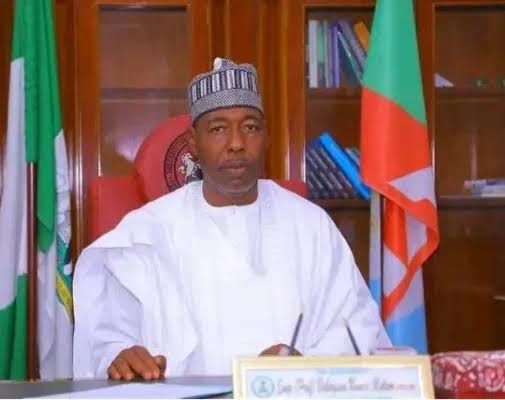
Governor Babagana Zulum of Borno on Saturday urged the federal government to resume work on oil exploration projects in Magumeri and Gubio Local Government Areas of the state.
Mr Zulum made the call while addressing the 13th regular meeting of the North-East Governors’ Forum in Maiduguri.
The governor, however, commended President Bola Tinubu for making efforts to revive oil exploration at the Kolmani oil field in Bauchi State.
The two-day meeting, which commenced on October 2 and ends on October 3, brought together leaders from the six North-Eastern states to discuss regional security, economic development and infrastructure cooperation.
The governor, who chairs the forum, described the renewed efforts to revive exploration at Kolmani in Bauchi State as a significant step towards unlocking the economic potential of the North-East.
He said the development could create employment, stimulate infrastructure growth, expand government revenue and open up new economic opportunities for communities across the region.
“We particularly welcome the renewed efforts towards reviving exploration activities at the Kolmani Oil Field in Bauchi State.
“The revival of this important project represents more than an investment in the oil and gas sector; it offers an opportunity to unlock new economic possibilities, create employment, stimulate infrastructure development and broaden the revenue base of our states and communities,” Mr Zulum said.
He urged the federal government to extend the renewed momentum to Borno State, where earlier oil exploration activities in Magumeri and Gubio Local Government Areas had stalled.
“In the same spirit, we respectfully urge the Federal Government to revisit the exploration activities earlier commenced but subsequently stalled in Magumeri and Gubio Local Government Areas of Borno State,” he said.
Mr Zulum said responsible exploration and development of the state’s natural resources would complement ongoing reconstruction efforts, strengthen local economies and restore livelihoods in communities affected by years of insurgency.
According to him, reviving oil exploration in Borno and other parts of the North-East could also support economic diversification, generate jobs and create sustainable opportunities for the region’s growing population.
He added that renewed investment in the oil and gas sector, particularly around the Lake Chad Basin, should form part of a broader regional strategy to accelerate economic recovery and development.
Also speaking, Gombe State Governor, Inuwa Yahaya, highlighted some achievements of the forum since its establishment, including the creation of the North-East Education Council and initiatives to address the challenges of Almajiri education and out-of-school children.
Mr Yahaya said the states were pursuing different approaches to expanding access to education, citing Borno’s Tsangaya Commission, Taraba’s Almajiri Model Education Centres and Gombe’s Integrated Almajiri Education Centres.
He also noted that the region’s commissioners for health established a regional health platform in 2024 to improve cooperation, strengthen responsiveness and facilitate the sharing of best practices among the states.
Governor Ahmadu Fintiri of Adamawa and attended the meeting, while Bauchi and Yobe states were represented by their deputy governors.
Other dignitaries included Borno Deputy Governor Umar Usman Kadafur; APC governorship candidate Mustapha Gubio and his deputy, Ali Isa Abdullahi; APC deputy ational chairman Ali Bukar Dalori; and the party’s state chairman, Bello Ayuba.
Traditional rulers from across the region also attended, led by the Shehu of Borno, Abubakar Umar Garbai Elkanemi.
The meeting is expected to issue a communiqué outlining the forum’s resolutions on security, economic integration, infrastructure development and other priorities for the North-East.
(NAN)

Anambra shuts market after palace burnt, five killed

Shettima visits Tinubu in Lagos after UNGA

14 To Receive National Honours As FG Automates Teachers’ Awards



-

 News20 hours ago
Amaechi: I’ll Dump Atiku, Back Tinubu If Petrol Drops to ₦600 Per Litre
-

 Metro21 hours ago
Edo APC Chairman Tenebe Sparks Outrage Over ‘AK-47 Fire’ Threat Against Tinubu Vote Opponents
-
 Metro21 hours ago
Fear grips RCCG Church members as pastor collapses, dies while preaching about sudden death
-
 News20 hours ago
Lagos University Workers Threaten Indefinite Strike Over Nine-Month Salary Arrears
-
 News18 hours ago
Nigeria at 66: TeeJay Yusuf Calls for Urgent Action to Tackle Hardship, Insecurity, Restore Hope
-
 News15 hours ago
Grand reception for FCT minister Wike at Ekpeye Kingdom on a visit to Uzugbani NEC, in Ahoada LGA today (VIDEO)