
Opinion
KINGSLEY CHINDA AT 60: CELEBRATING SPUNK, INTEGRITY, AND MODESTY



BY BOLAJI AFOLABI
For over two years, the Peoples Democratic Party, (PDP), has gone through different stages of crisis and contestations. In the process, the party has lost members to the ruling All Progressives Congress, (APC), and a few others. With the Court of Appeal giving judicial recognition to the Abdulrahman Mohammed-led Caretaker National Working Committee, (CNWC),
many members of the party described it as the silver lining needed to revive it from the near-prostrate state. Determined to meet the guidelines of the Independent National Electoral Commission, (INEC), for next year’s General Elections, the CNWC constituted the Central, and other Committees for the party’s national convention scheduled to hold this weekend, in Abuja. For many members of the party, the quality and calibre of those that made the list was inspiring. Others believe that the pedigree and antecedents of the over 500 members that will midwife the party’s national convention evidenced that the PDP remains relevant in Nigeria’s political development.
So, last Saturday, hours to the commencement of the Inauguration of the national convention committees, activities and movements in and around a major facility in the Utako District of Abuja was huge. Vehicular and mass movement of people more than doubled. The atmosphere within the hall was electrifying and convivial, as members engaged in serial hand-slaps, back-slaps, hugging, and spontaneous embrace. Former Governors, past Ministers, Legislators, and many others moved around to serenade the evening, and, perhaps, the opportunity to reboot the party. The collection of songs perfectly dished by the Disc Jockey added the necessary verve, gusto, and excitement among members; who have not had an opportunity of being together in a long while.
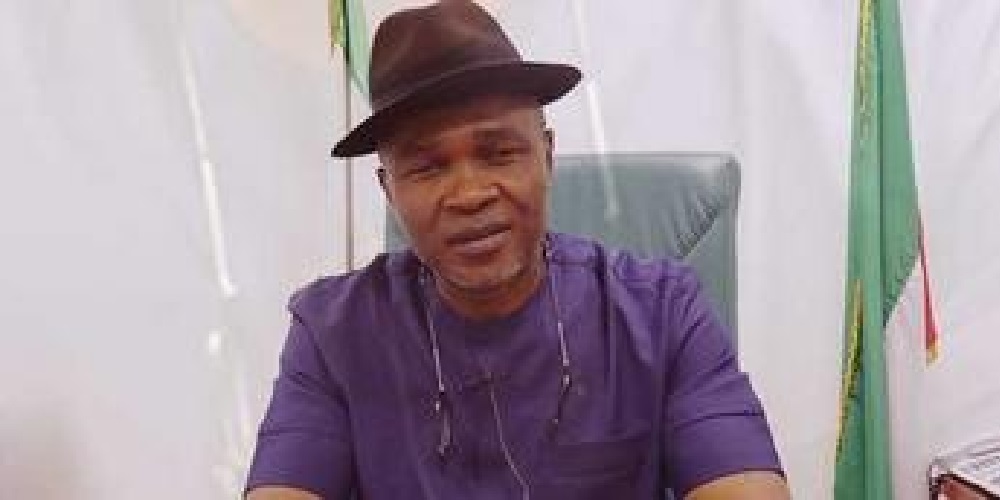
In the midst of the vociferous atmosphere, Kingsley Chinda, the subject of this Tribute emerged. The Rivers State-born politician and lawyer, who is the Leader of the Minority Caucus in Nigeria’s House of Representatives walked in quietly, and took a seat at the rear of the crowded but lively hall. With no retinue of aides, escorts, and security details, his arrival was barely noticed and innocuous. That is vintage Chinda, who prefers to operate in the background, and avoids undue attention. Indeed, it took the prodding and persistence of Hon. Jones Onyeriri; a former colleague, and PDP’s Deputy Governorship candidate in Imo State for Chinda to leave the “back seat” when informed a few of his friends including Hons. TeeJay Yusuf, and Rimamnde Shawulu were somewhere further within the hall.
Perhaps, as a result of his demeanor and carriage which looked ordinary, many people didn’t have an idea that their party’s number two person in the Legislative arm of government was around. Literally, the cat was left out of the bag when the MC, Ms. Chinwe Nnorom, PDP’s Director of Publicity invited Chinda for a goodwill message. Surprised, with this shocking discovery, the reactions of the “back-benchers” through applause and cheeres were palpable. Chief Davidson Ndubuisi exclaimed, “I never knew the man who sat beside me, and even greeted me firstly was an important person in Nigeria.” Hajiya Fatima Usman confessed that, “I’m not happy about missing the opportunity of having interaction with someone I have long desired to meet; this is painful.” Princess Anita Olateru sounded spiritual, “this confirms the saying that Angels, in human form comes around but one may not know. The man greeted me, sat a few seats away, and yet I didn’t know he was such a powerful person in government.”
This is an encapsulation of who Chinda is. Either naturally or deliberately, he, regularly plays down his position, influence, and personality. According to those close to him, he lives a non-complicated and well-cultured life, anchored on hard work, sincerity, and moderation. His commitment to friendship, relationship, and group interest remains unequivocal. Described as gentle and genial, Chinda is a perfect specimen of humility and humanity. In an interaction with the writer, Chinda declared that, “life and living is better when you remain true, real to yourself and conscience; avoid complications by being simple because whatever position you occupy, and wherever you are is ephemeral.”
Chinda, a former Commissioner for Environment in Rivers State has emerged as a trailblazer in Nigeria’s Legislature. He achieved unprecedented milestones by being elected in 2023 – the fourth consecutive time – to represent the Obio-Akpor federal constituency. That his constituents have consistently invested their respective electoral franchise in him as their representative is an eloquent statement of recognition, acceptance, and performances. True to his burning passion and unapologetic commitment to development, Chinda, in diverse ways has continued to impact on his constituents. His strides in infrastructural development, roads construction, medical and healthcare services, and education are evident across the entire 17 Wards in the Obio-Akpor federal constituency. Not forgetting agriculture, power, skill development, sports, financial support, and other numerous empowerment programmes for personal growth of the constituents and community development.
Aware of his contributions to national development, particularly, the deepening of legislative actions in the 7th to 9th Assembly where he was at various times Deputy Chairman, Committee on Customs; Chairman, Public Accounts Committee; and Leader of the PDP Caucus, he was unanimously elected as the Minority Leader of the 10th Assembly of the House of Representatives. In this capacity, Chinda, who remains limpid in matters of good governance, general well-being of the people, and legislative resourcefulness, prefers collegiate leadership. This novel, and unique style, which is a clear departure from what existed before is an all-embracing, all-inclusive leadership model in managing the affairs of the Minority Caucus.
As a fourth-termer in the House of Representatives; famously called “House of the Nigerian people” Chinda’s profound understanding of legislative ethos, nuances, issues, and practices has impacted contributions to national development. No doubt, his character, capacity, and competence have made him an invaluable asset to the Legislature, just as his insightful advocacy and robust commentaries have solidified his status as one of the most respected members of the National Assembly. A strong advocate for transparent and accountable governance, Chinda has been forthright and consistent in every cause that will improve the general well-being of all Nigerians; particularly those in the lower rungs.
On the Diamond Jubilee anniversary of a legislative colossus whose life and politics exemplifies service; in its entirety, the writer prays that his trajectories will continue to inspire and impact the people. As he climbs the 6th Floor, may he continue to leave indelible marks on
the path towards the resolve of Nigerians to have a progressive, prosperous, and fruitful nation.
* BOLAJI AFOLABI; a Development Communications specialist was with the Office of Public Affairs, The Presidency, Abuja.


By Sonny Aragba-Akpore
The future of technology is getting more interesting as the adoption of Artificial Intelligence (AI) and internet of things (IoT) takes centre stage.
But while the fast adoption creates excitement for scientists and those who desire to deploy technology for everyday use and everything,there are manifest fears of possible abuse of AI if strategies are not put in place to guide both promoters and users.
Questions of ethics and compliance are being raised and these have created worries for everyone.
And to douse these fears and create a semblance of comfort for all,AI governance is becoming necessary to stem a potential unwholesome practice.
“AI governance encompasses the frameworks, policies and practices that promote the responsible, ethical and safe development and use of AI systems. It establishes the guardrails that enable innovation while protecting stakeholders from potential harm” analysts agree.
Responsible AI governance considers among others:Ethical standards which define AI governance policies to promote human-centric and trustworthy AI and ensure a high level of protection of health, safety and fundamental human rights.
On regulations and policies,Boards consider compliance with applicable legal frameworks that govern AI usage where they operate, or intend to operate, such as the European Union (EU) AI Act.
The governance treats Accountability and oversight to ensure Organizations assign responsibility for AI decisions to ensure human oversight and prevent misuse and abuse.
Chief technology officers, risk officers, chief legal officers and their boards must develop a governance approach that protects data, prevents unauthorized access to ensure that AI systems don’t become a cybersecurity threat.
As AI governance fast emerges as one of the most pressing strategic challenges facing boards and everyday living today,its governance remains a major concern.
In the Q4 2025 Business Risk Index conducted by Diligent Institute and Corporate Board Member, “60% of legal, compliance and audit leaders now cite technology as their top risk concern — well ahead of economic factors (33%) and tariffs (23%). Yet despite this urgency, only 29% of organizations have comprehensive AI governance plans in place.”
Although there’s currently no wide-scale governing body to write and enforce these rules, many technology companies have adopted their own version of AI ethics or an AI code of conduct.
AI ethics are the set of guiding principles that stakeholders (from engineers to government officials) use to ensure artificial intelligence technology is developed and used responsibly. This means taking a safe, secure, humane, and environmentally friendly approach to AI.
A strong AI code of ethics can include avoiding bias, ensuring privacy of users and their data, and mitigating environmental risks. Codes of ethics in companies and government-led regulatory frameworks are two main ways that AI ethics can be implemented.
By covering global and national ethical AI issues, and laying the policy groundwork for ethical AI in companies, both approaches help regulate AI technology.
The future will see large parts of our lives influenced by Artificial Intelligence (AI) technology. Machines can execute repetitive tasks with complete precision, and with recent advances in AI, machines are gaining the ability to learn, improve and make calculated decisions in ways that will enable them to perform tasks previously thought to rely on human experience, creativity, and ingenuity.
“AI innovation will be central to the achievement of the United Nations’ Sustainable Development Goals (SDGs) by capitalizing on the unprecedented quantities of data now being generated on sentiment behavior, human health, commerce, communications, migration and more” according to the International Telecommunications Union (ITU) documents.
ITU said it will provide a neutral platform for government, industry and academia to build a common understanding of the capabilities of emerging AI technologies and consequent needs for technical standardization and policy guidance.
“Countries must put in conscious efforts to mitigate the dangers of deployment if they want to achieve positive results.” ITU said.
AI governance is calculated to Prevent bias whereby AI models can inherit biases from training data, leading to unfair hiring, lending, policing and healthcare outcomes.
The report states that Governance proactively identifies and mitigates these biases.
Aside that,AI governance Prioritizes accountability when AI makes decisions, and holds someone responsible.
Governance holds humans accountable for AI-driven actions, preventing harm from automated decision-making.
Price WaterhouseCooper (PwC),s Head of AI Public Policy and Ethics,Maria Axente was quoted as saying that “We need to be thinking, ‘What AI do we have in the house, who owns it and who’s ultimately accountable?’”
AI governance should Protect privacy and security where AI relies on vast amounts of data, a particular risk for healthcare and financial organizations handling sensitive information.
Governance establishes guidelines for data protection, encryption and ethical use of personal information.
Governance Prepares for AI’s
environmental, social and governance (ESG)
impact.
“Generative AI has a significant environmental impact, requiring massive amounts of electricity and water for every query. It also reshapes job markets and corporate operations.”Governance helps create policies that balance AI’s opportunities with its ESG risks and by Promoting transparency and trust,Many AI systems are considered “black boxes” with little insight into their decision-making.
Governance encourages transparency and helps users trust and interpret AI outcomes.
Governance Balances innovation and risk as AI holds immense potential for progress in healthcare, finance and education, governance weighs innovation alongside possible ethical considerations and public harm.
As the future of AI becomes a way of life,global telecommunications regulators,the International Telecommunications Union (ITU) says Geneva ,Switzerland is fast becoming the global headquarters for AI.
From July 7 through 10,2026 the world will converge to deliberate and conclude talks on AI governance.
It will host the seventh edition of “AI for good summit” as governments,institutions crystallize strategies for the future of AI across industries,homes ,governments and the work place.
“AI for Good will be held back-to-back with the Global Dialogue on AI Governance, convened by the United Nations General Assembly and facilitated by UN Secretary-General António Guterres at Palexpo from July 6 to 7, where the Global Dialogue is supported by a joint secretariat that include the Executive Office of the Secretary General, ITU, the United Nations Educational, Scientific and Cultural Organization (UNESCO) and the United Nations Office for Digital and Emerging Technologies (ODET), with ITU and UNESCO leading the coordination.
“As artificial intelligence moves from strategy to real-world deployment, countries need the skills, solutions, and international standards for AI to work for everyone,” according to ITU Secretary-General Doreen Bogdan-Martin.
“Through AI for Good, ITU helps turn AI breakthroughs into practical ways to improve lives. We are also pleased to work with our partners on the inaugural UN Global Dialogue on AI Governance where Member States and stakeholders will exchange perspectives on the policies shaping AI’s future.”
The AI for Good Global Summit to be hosted by ITU – the United Nations agency for digital technologies – with over 50 UN partners and co-convened by Switzerland is seen as the Summit flagship platform for showcasing and helping scale up AI applications in areas from healthcare and education to food security, disaster risk reduction and misinformation, particularly in developing countries.
World-class keynotes, global technology premieres and an expo floor filled with innovators, UN partners and national pavilions will present local AI solutions and strategies from around the world, including special exhibits featuring home-grown innovations from Switzerland.
“We are delighted to once again co-convene with ITU the AI for Good Global Summit in Geneva, a central location for discussing and showcasing advances in artificial intelligence,” said Albert Rösti, Swiss Federal Councillor and Head of the Federal Department of the Environment, Transport, Energy and Communication.
The summit will Unite leaders to scale AI impact.
Over 11,000 participants from 169 countries attended 2025 AI for Good Global Summit and World Summit on the Information Society (WSIS) events.
Participation included ministers from 100 countries, more than half representing developing countries.
The 2026 edition aims to further strengthen AI for Good as a globally representative platform for dialogue, collaboration, and action on AI and how to best harness the innovative power of technology.
While many tech companies grow the artificial intelligence in their various corners of the world,the International Telecommunications Union (ITU) ,the global technology regulator,is rearing to unify the technology in such ways as to create standards for open platform.
In a few months,tech gurus will converge on Geneva,the ITU headquarters in Switzerland to strategize on the way forward for Artificial Intelligence for Good.“The goal of AI for Good is to identify practical applications of AI to accelerate progress towards the Sustainable Development Goals(SDGs) and connect AI innovators with public and private-sector decision-makers to help scale up AI solutions globally.”according to the ITU.
In 2017 ,the landmark AI for Good Global Summit marked the beginning of a global dialogue on the potential of AI to act as a force for good. The action-oriented 2018 and 2019 summits gave rise to numerous AI for Good projects including several standardisation initiatives of the ITU

BY BOLAJI AFOLABI
Wednesday April 8, a few minutes to six in the evening, while putting final preparations to a three-day trip, the phone beeped. First thought; it could be an advisory from friends or family members on the need for vigilance as a result of the shenanigans perpetrated by notorious bandits on major highways across the country. How wrong! The WhatsApp message was an invite from the irrepressible, inimitable Dapo Olorunyomi – fondly called Dapsy, and Uncle Dapsy by friends, colleagues, and mentees. The carefully worded, simple looking but aesthetically beautiful card was to attend a Symposium in honour of Dr. Chido Onumah; a serial award winner, versatile journalist, rights activist, published author on his 60th birthday. Though the writer does not have any personal relationship with the celebrant, but to have Olorunyomi as the Chief Host speaks volumes about the credibility, integrity, and stewardship of Onumah.
The clash of the timings of both events – Onumah’s and the trip, was not a good discovery by the writer. Thoughts of missing out on an occasion that will see the convergence of heroes and heroines of civil society and journalism; who as true activists and professionals sacrificed selflessly for democracy and good governance in the ’80s and ’90s, was painful. Given the importance of the trip, one had to communicate to Olorunyomi reason for not attending the unique event. Though not physically present, the coverage of proceedings by national newspapers, electronic media, and numerous online media platforms was useful. Perhaps, the choice of a national discourse to celebrate an ideologue who, for over three decades has weaved every of his life odysseys on fairness, probity, justice, ethics, and morality is fitting and proper.
William Shakespeare, in one of his timeless books, ‘Hamlet’ wrote; “this above all, to thine own self be true.” Here, humanity is advised to be honest, truthful, and pursue self-dignity. Indeed, honesty with oneself provides light and equanimity. From the testimonials of people, this encapsulates Onumah; who pursues wholeheartedly whatever he believes in, and stays focused even if he is the last man standing. Conscious that honesty is a wealth that doesn’t wither with time, as it attracts respect, trust, and belief from people, he clothes himself with these virtues which brings greatness. In many ways, his attributes, activities, and contributions to life and humanity confirm Shakespeare’s words in ‘Twelfth Night’ that, “be not afraid of greatness. Some are born great, some achieve greatness, and some have greatness thrust upon them.” No doubt, with the right attitude, hard work, and fidelity, Onumah has achieved greatness in diverse ways.
From reports, the symposium, themed, “Formation or Nation Building: Nigeria’s Quest for a Modern Federal Republic” which took place at the historical Shehu Musa Yar’Adua Centre, Abuja, was graced by many notable personalities from the media, academics, public service, and politics from far and near. Comments by many people attested to his unwavering commitment to the attainment of good governance, and unrestrained passion for national development. His loyalty to friendship and relationships were variously highlighted. Mallam Nuhu Ribadu, the National Security Adviser, who was the Special Guest of Honour said, “Chido is special and means a lot to me. He was part of my life at the most critical moments, and (he) went through the most difficult period with me.” His Excellency, Dr. Kayode Fayemi, former Governor of Ekiti State, who chaired the event, acknowledged Onumah’s sacrificial, and consistent contributions to the fights against military rulership, and the country’s struggles for democracy.
Generally described as a people’s man who is largely accessible, reliable, and dependable, Onumah is deeply loved for his courage, commitment, and consistency in pursuing noble causes that will improve the general well-being of the people. Imbued with an uncommon indomitable spirit, he is a perfect exemplar of true social activism built on principles, high moral standards, and selflessness – million miles different from what we have these days. Without a doubt, he remains one of the best, and has carved an enviable niche for himself as the compass for assessing activists in Nigeria. Not driven by pecuniary benefits, showmanship, and human accolades, his penchant for cross-fertilization of ideas, and public discourse; at all times geared towards ensuring national cohesion, growth, and development remains unequivocal. This may have further informed the choice of a symposium to mark his landmark birthday.
Onumah’s professional resume, human interests-driven calling, and development engagements are replete with qualitative services within the country, in Africa, Europe, and the United States of America. As a journalist, though he started out with The Guardian newspapers, Onumah, at various times was at Sentinel Magazine – late Dr. Stanley Macebuh was the Managing Director; The News Magazine; AM News; Thisday Newspapers; Weekly Insight, Ghana, as the Associate Editor; Africanews Service, Kenya; and African Observer, New York, USA. For decades, Onumah has emerged as a prominent figure, and major voice in media and information literacy.
As the Co-ordinator of the African Centre for Media & Information Literacy (AFRICMIL) – he has been able to promote media literacy to foster democracy, accountability, good governance, and combat misinformation in Africa through research,advocacy, and training programmes. To expand the frontiers of excellence, he co-founded the Media & Information Literacy and Intercultural Dialogue (MILID) Foundation, with special emphasis on media literacy in governance and education. Through AFRICMIL, and the Yar’Adua Foundation, Onumah launched the Corruption Anonymous (CORA); a whistleblowing platform to facilitate anonymous reporting and bolster accountability in governance.
Given his passion for good governance, Onumah, through the Whistleblowing Advocacy Coalition of West Africa (WACOWA); and the Advocacy for Whistleblowers Protection Laws has covered parts of the continent. Appreciable mileage has been achieved towards regional cooperation on whistleblower protection; adopting the policy as a veritable instrument for exposing crimes; and deepening governance across Africa. Similarly, Onumah’s broad-based advocacy and activism are well documented through his involvement with numerous bodies such as the West African Human Rights Committee (WAHRC); Pan-African Alliance for Media and Information Literacy (PAMIL); Global Alliance for Partnerships on Media and Information Literacy (GAPMIL); Whistleblowing International Network (WIN); United Nations Educational Scientific Cultural Organization (UNESCO); and the Panos Institute, USA.
Indeed, Onumah’s decades-long involvement, contributions to Nigeria’s democratic journey, and the emplacement of probity in the public service deserves mention. He functioned as the Head, Civil Society Unit; and Coordinator, Fix Nigeria Initiative at the Economic and Financial Crimes Commission (EFCC), under the Chairmanship of Ribadu. He, among other things contributed to drafting templates that translated international anti-corruption laws into accessible tools for citizens; collaboration with various groups on integrity and accountability; training of journalists in investigative reporting; and workshops for judges, law enforcement agencies, and the media.
His varied contributions to the media, human rights, democracy, and good governance has earned him several local and global recognitions including the Kudirat Initiative for Democracy Awards; William C. Heine Fellowship for International Media Studies; Jerry Rogers Writing Award; and the Clement Mwale Prize for Courage. Despite his busy schedules, Onumah has authored some books including Time To Reclaim Nigeria; Nigeria Is Negotiable; and We Are All Biafrans. Many of his friends, colleagues, and associates applaud his de-tribalized credentials; described as a true nationalist. Born on the 10th of April, 1966, Onumah attended the Army Children School, Apapa; and Awori Ajeromi Grammar School, Lagos. He graduated from the University of Calabar with a B.A Philosophy. He earned his Masters and Doctorate degrees in Journalism, and Communications & Journalism at the University of Ontario, Canada, and the Universitat Autonoma de Barcelona, Spain, respectively.
* BOLAJI AFOLABI, a Development Communications specialist was with the Office of Public Affairs, The Presidency, Abuja.
Opinion
Why PDP Should Pick Dr Olotu Akpodiete as Candidate for Ughelli North, South and Udu Federal Constituency

By Comrade. Amb Emmanuel Kpoharor_
To secure victory in Ughelli North, South and Udu Federal Constituency, the Peoples Democratic Party (PDP) needs a tested, grassroots-oriented candidate who has demonstrated real capacity for mobilization, loyalty, and community impact.
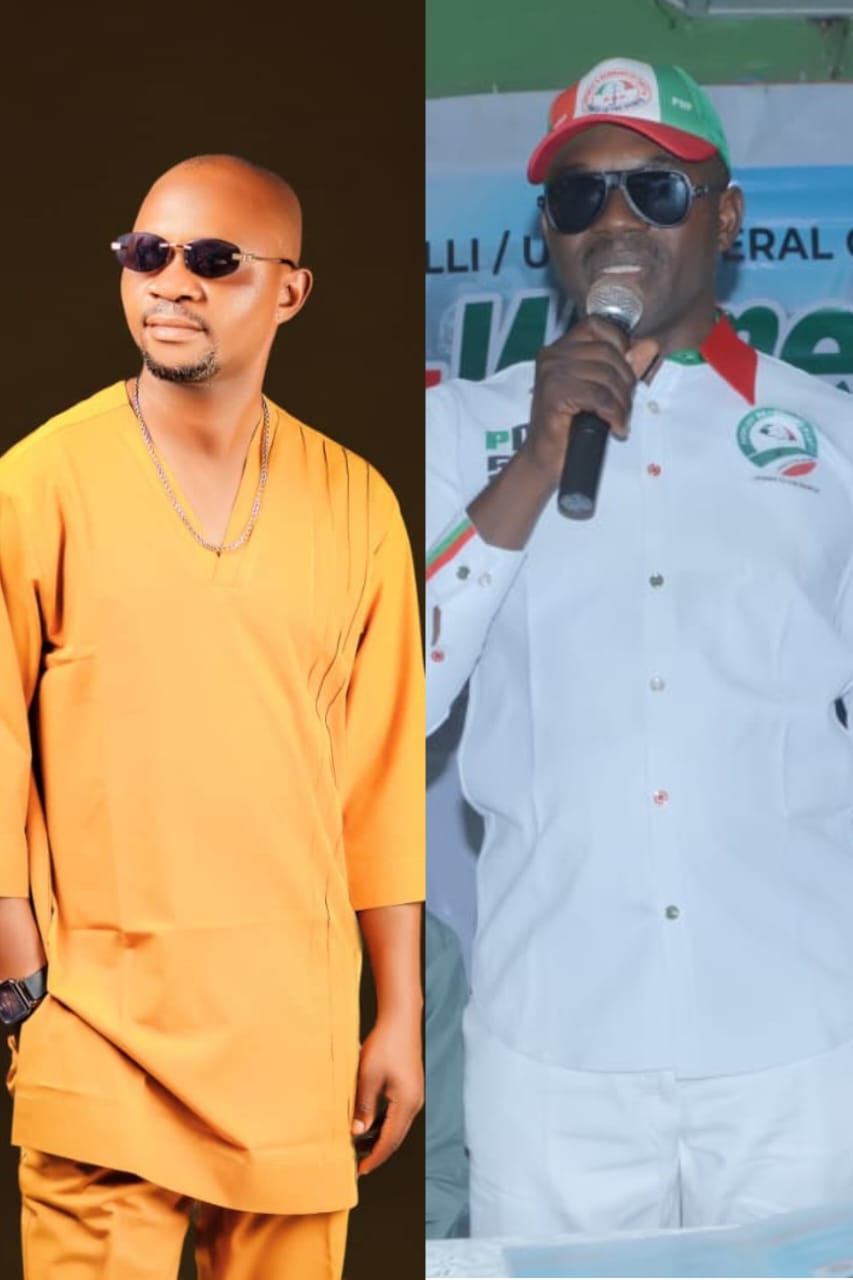
As the PDP prepares for the forthcoming House of Representatives election, stakeholders across the three local government areas are calling on the party to field Hon. Dr. Olotu Akpodiete JP as its candidate.
Dr. Akpodiete is widely credited with reviving the PDP in the constituency at a time when mass defections had left the party’s structure severely weakened. He reactivated dormant ward executives, bankrolled logistics for meetings, financed mobilization drives, and spearheaded reconciliation efforts that brought back aggrieved members while attracting new ones across Ughelli North, South and Udu. According to party chieftains, his swift intervention restored stability and re-established the PDP as the dominant political force in the area.
His influence goes beyond party administration. Dr. Akpodiete initiated and personally sponsored the U3 Youth, Women, and Executive Empowerment programme. The initiative has provided startup grants, vocational training, and business support to hundreds of beneficiaries in the constituency. It has been commended for reducing unemployment and boosting household incomes across the three LGAs.
To strengthen political engagement, he also floated two strategic pressure groups: the U3 Media Ambassadors and the U3 Legislators Forum. The Media Ambassadors have expanded the PDP’s message and improved voter education at the grassroots. The Legislators Forum brings together past and present PDP-aligned legislators in U3 to mentor emerging politicians, harmonize party positions, and drive community consultations. Together, the two groups have created a permanent, community-rooted campaign structure for the party.
Dr. Akpodiete’s humanitarian record through the Olotu and Ekuogbe Rowland Akpodiete Foundation also sets him apart. Since its establishment, the Foundation has focused on sustainable development, education, healthcare, security support, charity, social welfare, and empowerment.
Key activities of the Foundation since 2018 include:
– Annual Empowerment Programs: The Foundation conducts yearly outreach for vulnerable groups. On April 9, 2026, it held a widow empowerment program at Iwhreko Community Town Hall, Ughelli, where over 100 widows from Ughelli North, South and Udu received cash, gifts, and wrappers during the 31st remembrance of Late Chief Ekuogbe Rowland Akpodiete. Dr. Akpodiete has pledged to sustain the program annually and extend it to other segments of society.
– Education Support: The Foundation awards scholarships and provides learning materials and school support to indigent students across the constituency to improve access to quality education.
– Healthcare Interventions: It runs medical outreaches and supports community health initiatives for underserved populations in the three LGAs. The Foundation has registered over 500 Deltans for health insurance across Delta State.
– Youth and Sports Development: The Foundation hosts an annual novelty football match in honor of Late Chief Ekuogbe Rowland Akpodiete at Clifford Cassidy Play Ground, General Field, to discover and nurture young football talents. The 2026 second edition ended 1-1 between children and grandchildren of the late chief, with cash gifts presented to team captains. The Foundation has also trained over 700 youths in vocational and digital skills.
– Community Development and Security: The Foundation supports community projects such as water boreholes across Delta and backs security initiatives including conflict resolution capacity building and donation of security gadgets to various communities to improve safety and social cohesion.
– Recognition of Service: Through Life Achievement Awards, the Foundation celebrates individuals for outstanding service to humanity. In 2026, recipients included Olorogun Miller Uloho and Chief Morrison Obaseki Olori.
Party faithfuls maintain that Dr. Akpodiete combines loyalty, proven mobilization strength, and a verifiable humanitarian record. His work in rebuilding the PDP, empowering constituents, building enduring political structures, and sustaining philanthropy through his Foundation makes him the most electable and prepared aspirant to represent Ughelli North, South and Udu in the House of Representatives come 2027.

BREAKING: Finally, Power Minister, Adelabu resigns from Tinubu’s cabinet

Reps Begin Review of Police Trust Fund Law, Tighten Timeline for Committee Work

Iran Seizes Two Ships attempting to cross Strait of Hormuz




-

 News16 hours ago
How Tinubu Sacked Finance Minister Wale Edun Weeks After Hon. Alex Mascot Exposed ‘Missing’ N1.15tr
-
 News16 hours ago
Yul Edochie Under Attack Over Disparaging Post Against Peter Obi
-
 News16 hours ago
Okowa Accuses Ned Nwoko of Misleading Anioma People Over State Creation Proposal
-

 Entertainment16 hours ago
Davido Bags Political Appointment
-

 Health16 hours ago
Cross River reports outbreak of Covid-19, activates response centre
-

 Foreign16 hours ago
Trump Extends Ceasefire To Give Iran More Time To Negotiate
-
 News16 hours ago
Dangiwa Reacts To His Sack As Minister By Tinubu
-
 News11 hours ago
Adelabu ready to quit as Power Minister after meeting with Tinubu