Connect with us

News

NASS Backs Pipeline Security Deal, Rejects Petitions

Published

on

ADVERTISEMENT
Zoom Ad
ADVERTISEMENT
Zoom Ad

…as lawmakers credit surveillance efforts of Tantita for surge in oil output

By Gloria Ikibah

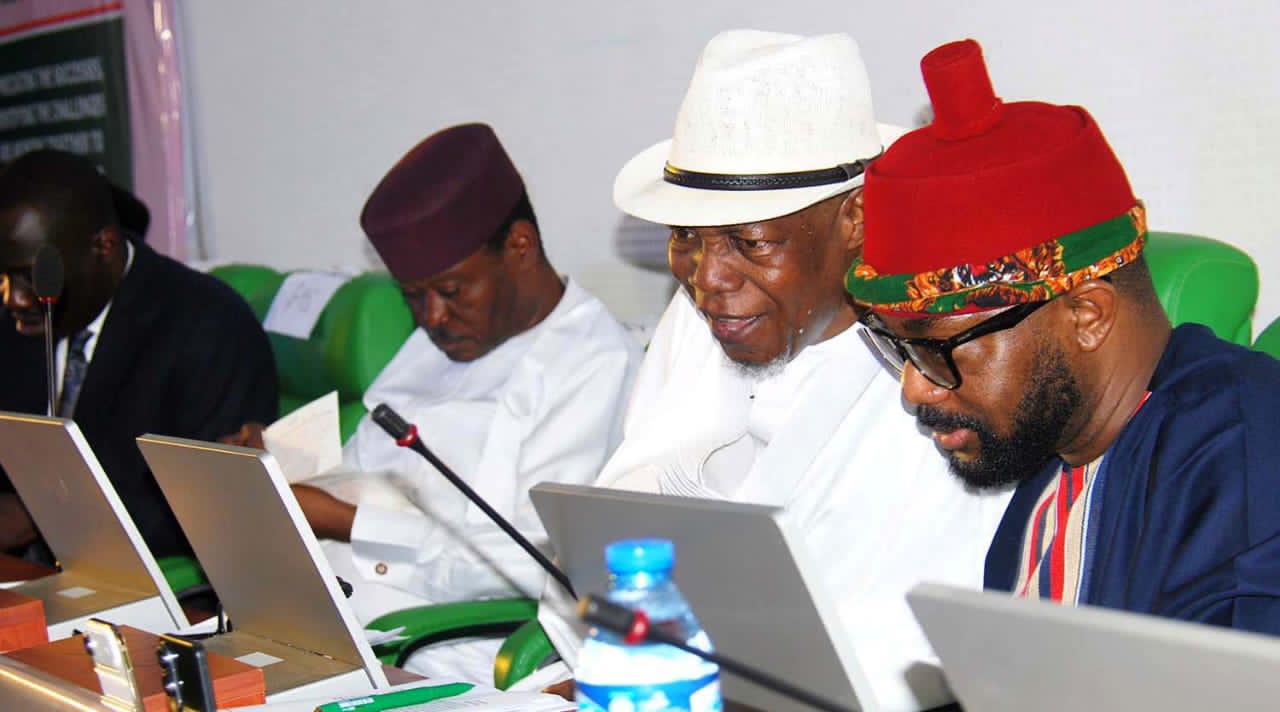
The National Assembly Joint Petroleum Committees have brushed aside three petitions challenging the pipeline surveillance contract, while throwing their full support behind Tantita Security Services, security agencies and the Nigerian National Petroleum Company Limited (NNPCL).

The decision followed a one-day parliamentary roundtable examining pipeline security and the fight against crude oil theft, where lawmakers pointed to significant gains in safeguarding oil infrastructure.

Advertisement

Official figures presented at the session indicate a sharp rise in oil production, now standing at roughly 1.8 million barrels per day as of April. This marks a major recovery from 2022 levels, when output had dropped significantly at the height of widespread pipeline vandalism and theft.

The resolution came after a motion by Chairman House Committee on Petroleum Resources (Midstream), Rep. Henry Okojie, who highlighted the role of surveillance contractors and security operatives in stabilising production and boosting national revenue.

Lawmakers credited improved monitoring and enforcement measures for curbing illegal activities in the oil sector, noting that the collaboration between private contractors and state security forces has yielded measurable results.

In his addess, Speaker of the House of Representatives,Rt. Hon. Abbas Tajudeen, drew attention to global energy pressures, pointing to instability in the Middle East and the prolonged Russia-Ukraine conflict as factors driving uncertainty in supply and pricing.

Advertisement

The Speaker who was represented by the House Leader,  Rep. Julius Ihombvere, stressed that despite the growing push for alternative energy, crude oil remains the dominant global energy source, particularly in transport, where it continues to power the vast majority of vehicles, aircraft and ships.

He also warned that disruptions such as the closure of the Strait of Hormuz have triggered price spikes and supply concerns, with ripple effects on Nigeria’s economic stability.

The Speaker underscored the importance of sustained efforts to secure the country’s oil assets, noting that Nigeria’s history as an oil-producing nation has long been shaped by challenges ranging from theft to infrastructure vulnerability.

The roundtable, he noted, reflects a renewed determination by lawmakers to take the lead in addressing these longstanding issues and ensuring the sector’s resilience.

Advertisement

He said: “The discovery of petroleum has both earned us massive foreign exchange and resulted in environmental degradation and despair. As a result, the Niger Delta has witnessed profound agitations over the years which often resulted in pipeline vandalism, crude oil theft, and illegal refining activities.

“Desperate communities and weak enforcement structures created a climate of instability in the oil sector with staggering consequences.

“At some point, Nigeria was losing billions of dollars annually as between 10 to 30 percent of crude oil production was lost to theft, undermining national revenue and questioning our capacity to remain a reliable oil producer.

“It was within this context that the Federal Government introduced the pipeline surveillance contract, including the engagement of private security actors and community-based structures.

Advertisement

“These interventions were designed to provide security to our oil facilities, with the understanding that without the help of the communities where these pipelines and other infrastructure were located, the job of securing them would be impossible.

“In the end, the synergy of private surveillance providers, our security agencies, and community engagement, led to remarkable improvements in our daily production quotas.”

The Speaker further stated that there has been clear undeniable and compelling success stories.

“recent reports indicate that most of the illegal tapping points have been dismantled, production levels have improved significantly and oil receipts are approaching near-total delivery to export terminals, compared to the alarming losses of previous years when production sometimes plummeted to about 700 barrels per day.

Advertisement

“Today, largely due to these surveillance/security efforts, we have been able to ramp up production to about 1.8 million barrel per day. Importantly, the surveillance contract has been able to create direct employment for thousands of Niger Delta youths who were formerly agitators, providing a legitimate alternative to crime, and placing security back in the hands of the people who host the facilities.

“There is no doubt that we can do better. There are still a number of challenges, particularly as they concern accountability, transparency, and the effectiveness of certain surveillance frameworks.

“Recent public discourse suggests that crude oil theft still occurs at concerning levels, sometimes even under existing security arrangements. This underscores the need for continuous oversight and reform”, he added.

According to him, the National Assembly has remained at the forefront of confronting the challenges in the oil sector and has through legislation, oversight, and appropriation taken deliberate steps to strengthen Nigeria’s response to threats to our oil industry.

Advertisement

“We have enacted and reviewed laws such as the Petroleum Production and  Distribution (Anti-Sabotage) Act and other relevant statutes aimed at deterring-pipeline vandalism while emplacing stringent penalties.

“We have also worked to strengthen institutions like the National Oil Spill Detection and Response Agency (NOSDRA), recognizing the need for improved monitoring and environmental accountability.

“Both are the fruits of comprehensive and deliberate policy actions that were enabled by the passing of the landmark Petroleum Industry Act (PIA). Some of the provisions of this act, like the Host Community Development Trust, made Corporate Social Responsibility a legal mandate and gave host communities a direct financial stake in the profitability of the oil sector.

“Moreover, by legislating that communities forfeit their entitlement for the year if vandalism occurs in their domain, the law operationalized the concept of “shared responsibility.” Communities now police their own areas, knowing that an attack on a pipeline becomes an attack on their trust fund.

Advertisement

“The 10th National Assembly has continued to take bold legislative steps to institutionalize the gains of the PIA. From maintaining a rigorous oversight of the Act to ensure steady implementation, to our recent investigative hearings on oil theft, we are closing the legal loopholes that once allowed criminals to thrive.

‘Furthermore, this Assembly has exercised its constitutional mandate by probing aspects of the surveillance contract, approving critical funding for pipeline security, and insisting that crude oil theft be treated not just as an economic crime, but as a national security threat requiring coordinated action across agencies.

“In summary, we have consistently emphasized that curbing crude oil theft must be a collective responsibility, involving government, host communities, security agencies, and private operators alike”, Abbas stated.

The Speaker said the event was an  opportunity to advance the fortunes of the oil industry by consolidating on the gains made so far from the surveillance contract, while addressing existing gaps, while also

Advertisement

reassessing the current pipeline surveillance architecture, strengthen transparency and accountability mechanisms, deepen community engagement as critical stakeholders in protecting national assets, and align legislative frameworks with emerging realities in the oil and gas sector, particularly under the circumstances the world has now found itself.

“Let us remember that the story of Nigeria’s oil industry is not only one of challenges, but also of resilience and possibility. Let us build a system where pipelines are no longer targets, but symbols of shared prosperity; where host communities are not marginalized, but empowered partners; and where Nigeria’s oil wealth translates into sustainable national development.

“The Middle East is in turmoil, Russia is distracted, and global energy maps are being redrawn. The world is looking for energy security, and Nigeria must put itself out there as a credible alternative. We cannot afford the luxury of internal sabotage. Our message to the world is clear: Nigeria is securing its assets, stabilizing its output, and is open for business,”, he said. 

Advertisement
Continue Reading
Advertisement

News

ECOWAS Parliament Rallies Communities Against Irregular Migration, Modern Slavery

Published

on

ADVERTISEMENT
Zoom Ad
ADVERTISEMENT
Zoom Ad

By Gloria Ikibah

The ECOWAS Parliament will this week launch a major grassroots campaign in The Gambia and Senegal to raise awareness of the dangers of irregular migration and modern slavery, amid growing concern over the increasing number of young West Africans embarking on perilous journeys in search of better opportunities.

In a statement by the Chief Communication Officer of the ECOWAS Parliament, Uchenna Duru-Nwaotule, it stated that the initiative is themed “One Journey, Many Risks. Ask First, Move Safely”,  will be held in Banjul from 6 to 10 July before moving to Dakar from 13 to 17 July.

According to the regional parliament, the exercise will bring lawmakers into direct contact with young people, returnees, community leaders, civil society organisations and other stakeholders to discuss the risks associated with irregular migration and human trafficking.

Advertisement

The parliament said the engagement was designed to deepen public understanding of one of West Africa’s most pressing socio-economic and security challenges.

It noted that worsening unemployment, poverty, insecurity and limited economic opportunities continue to push many young people into dangerous migration routes across land and sea.

“Irregular migration remains one of the most pressing socio-economic and human security challenges confronting West Africa.

“Driven by unemployment, poverty, limited economic opportunities, insecurity and aspirations for better livelihoods, many young people undertake perilous migration journeys through unsafe land and maritime routes, exposing them to exploitation, trafficking in persons, forced labour, sexual exploitation, debt bondage and other forms of modern slavery”, the statement read.

Advertisement

The parliament observed that both The Gambia and Senegal continue to face the consequences of irregular migration as countries of origin, transit and return.

It said the campaign aims to educate vulnerable communities, while giving Members of Parliament a clearer understanding of the factors driving migration and the challenges faced by victims and returnees.

“The engagement seeks to sensitize young people and vulnerable communities on these risks, provide Members of Parliament with first-hand insight into the drivers and consequences of irregular migration, promote dialogue between parliamentarians and citizens, and generate practical recommendations to strengthen national and regional prevention, protection and reintegration efforts”, it added.

Activities in The Gambia will begin with a courtesy visit to the Minister of Interior, followed by a stakeholders’ briefing involving the ECOWAS Resident Representative, the Gambian delegation to the ECOWAS Parliament, the International Organization for Migration and the National Agency Against Trafficking in Persons.

Advertisement

The programme will also feature a series of community town hall meetings in Bakau, Brikama and Barra, where parliamentarians will engage residents through local-language awareness sessions, testimonies from returnees and survivors, and interactive discussions.

As part of efforts to reach young people through sport, organisers will also stage a community football event in Bakau under the campaign slogan, “One Journey, Many Risks. Ask First, Move Safely.”

The Gambian leg will conclude with a debriefing session on 10 July to review key findings and consolidate recommendations.

The second phase of the campaign will take place in Dakar, where lawmakers will engage youth groups, students, returnees, community organisations and public institutions through town hall meetings, public discussions and media outreach.

Advertisement

According to the ECOWAS Parliament, both engagements will rely heavily on interactive dialogue, question-and-answer sessions, as well as radio, television and community media platforms to encourage widespread public participation and strengthen awareness of the dangers associated with irregular migration and modern slavery.

Continue Reading

News

FG Condemns Killing of Two Nigerians in South Africa, Warns ‘All Options Remain on the Table

Published

on

ADVERTISEMENT
Zoom Ad
ADVERTISEMENT
Zoom Ad

By Gloria Ikibah

The Federal Government has strongly condemned the killing of two Nigerian nationals in South Africa, demanding swift investigations and justice for the victims while warning Pretoria that Nigeria may consider stronger measures if attacks on its citizens continue.

In a statement issued on Sunday by the Ministry of Foreign Affairs, the government expressed deep concern over what it described as a disturbing pattern of violence against Nigerians amid rising xenophobic tensions in South Africa.

According to the ministry, one of the victims, Emeka Charles Iroegbu, was allegedly killed by officers of the Tshwane Metro Police in Sunnyside, Pretoria, on 28 June after being subjected to what it described as “gruesome interrogation techniques.”

Advertisement

The ministry also recalled the death of Nnaemeka Mathew Andrew Ekpenyong, who was allegedly killed by the same officers on 20 April.

It said although the identities of the four officers involved were known to the South African Police Service, no arrests had been made.

The second victim, Musa Yunana Joe, popularly known as Big Joe, was reportedly shot dead in front of his shop in Witbank, Mpumalanga, on 28 June by unidentified gunmen.

The Federal Government said the incidents had heightened concerns over the safety of Nigerians and other foreign nationals living in South Africa.

Advertisement

It argued that Nigerians were unfairly being blamed for broader socio-economic problems confronting South Africa.

“These two killings come at a time when foreigners are being unduly targeted in South Africa. This raises questions about deliberate attempt by some elements to wrongfully generalise and tag well-meaning, hard-working, and respectable Nigerians as criminals. It also raises further questions over the general safety of Nigerians and other foreigners in South Africa.

“The continuing pattern of such terrible incidents is clearly evidence of complicity on the part of security operatives, especially officers of the Tshwane Metro Police, which raises the question of state responsibility under International Law.

“It is a fact that South Africa currently has one of the highest rates of crime globally, including the culture of looting and mob action. Nigerians are more civil in our engagements with foreign nationals, and we always uphold the rule of law when dealing with illegalities. It is therefore unfair to target foreigners and make them scapegoats of endemic socio-economic conditions that need to be addressed by the authorities”, the statement read.

Advertisement

The Nigerian government also criticised recent remarks attributed to a spokesperson for the South African government, who reportedly challenged Nigerians leaving the country during the ongoing xenophobic protests to reveal where illegal drugs were hidden.

The ministry described the comments as inflammatory.
It added that groups accused of promoting violence against foreign nationals would also be held accountable.

The unguarded public statements are unacceptable and are strongly condemned. Such derogatory, unprofessional and uncensored  public statements by highly placed government officials constitute hate speech that influences and incites negative and criminal actions against members of the Nigerian community.

“The gang leaders of groups such as March on March and Operation Dudula, who incite violence and hate against fellow Africans, will also be held to account as a matter of regional and international criminal liability”, it added.

Advertisement

Nigeria called on the South African authorities to investigate the latest killings as well as other unresolved cases involving Nigerian citizens.

“The Government of Nigeria, therefore, calls on the South African authorities to conduct urgent investigations into the two killings and several other pending cases of extra-judicial killings of Nigerian nationals in South Africa, and ensure that the perpetrators of the heinous crimes are brought to justice without further delay.

“Our position remains that no matter what the allegations or suspicions may be, there are lawful processes and steps to justice. All must be presumed innocent and granted fair hearing in a court of law”, it stated.

The government extended its condolences to the families of the victims and advised Nigerians living in South Africa to remain vigilant while diplomatic efforts continue.

Advertisement

“With the volatile security situation, we appeal to our nationals to remain calm, law-abiding and security conscious, especially due to the ongoing xenophobic and afrophobic demonstrations in the country. They are advised to move to safer neighbourhoods and avoid areas that are prone to violent activities, while the Government continues to explore diplomatic solutions to address the growing scourge of Afrophobia in South Africa”, the Federal Government stated.

The ministry also stressed that South African citizens and businesses continue to operate freely in Nigeria and urged Pretoria to guarantee similar protection for Nigerians.

“The Government of Nigeria wishes to reiterate the fact that there are numerous South African nationals and businesses operating safely in Nigeria without harassment of any kind. Likewise, it is the responsibility of the South African Government to protect the lives and properties of all foreigners, including Nigerian nationals, living in the country.

“Therefore, the systematic targeting of Nigerian nationals who are legally residing in South Africa is not acceptable, and their safety should be guaranteed.

Advertisement

“We wish to place the Government of South Africa on notice that if the situation continues to persist, all options remain on the table, some of which will be activated if the uncultured and provocative trend of intolerance and apartheid-style behaviour of South Africa against foreigners is not addressed”,it stated.

Despite its strong stance, the Federal Government appealed to Nigerians at home to refrain from reprisals.

“The government calls on the general Nigerian public to remain calm and not take laws into their hands with retaliatory actions. We will continue to pursue dialogue and negotiations in the spirit of African unity, brotherhood and solidarity, which are the cornerstones of Nigeria’s foreign policy in resolving the unfortunate developments”, it pleaded.

The ministry added that the ongoing evacuation of Nigerians who had registered to leave South Africa will continue as planned.

Advertisement
Continue Reading

News

NYSC Reforms Spark Fresh Row as Agbese Urges Tinubu to Suspend Plan

Published

on

ADVERTISEMENT
Zoom Ad
ADVERTISEMENT
Zoom Ad

By Gloria Ikibah

A member of the House of Representatives, Philip Agbese, has urged President Bola Tinubu to suspend the Federal Government’s proposed reformsAggese to the National Youth Service Corps (NYSC), warning that some of the changes could weaken the scheme’s founding purpose and undermine Nigeria’s national defence strategy.

Agbese, who represents Ado/Okpokwu/Ogbadibo Federal Constituency of Benue State and serves on the House Committees on Youth and Defence, made the appeal in a statement issued on Sunday in Abuja.

He argued that although reforms were necessary to keep the NYSC relevant, they should not erode the institution’s core mandate of promoting national unity and preparing young Nigerians for national service.

Advertisement

“Reducing NYSC to a skill acquisition training centre is not healthy for our national life”, Agbese said.

His comments come days after the Minister of Youth Development, Ayodele Olawande, unveiled what the Federal Government described as the first comprehensive review of the NYSC since its establishment in 1973.

The proposed reforms include restructuring the orientation camp into three phases, introducing 11 specialised career streams from which prospective corps members will make their choice during registration, strengthening skills acquisition programmes, replacing the traditional khaki uniform with locally produced attire and appointing a civilian, rather than a military officer, to head the scheme.

The proposals have sparked debate, with supporters describing them as overdue modernisation, while critics fear they could alter the character of the national service programme.

Advertisement

Agbese maintained that the NYSC had evolved into far more than a youth development initiative, saying it had become a strategic national institution that had repeatedly supported the country during periods of national need.

He noted that corps members had over the years played vital roles in education, healthcare, elections and emergency response, making the scheme an important component of Nigeria’s nation-building efforts.

The lawmaker also opposed plans to place the scheme under civilian leadership, arguing that the military culture embedded in the orientation programme helps instil discipline, patriotism and national consciousness among participants.

“Instilling military training in citizens is an international practice that must be sustained”, he added.

Advertisement

According to him, removing that element could diminish one of the NYSC’s defining features and weaken its contribution to national preparedness.

Agbese therefore called on President Tinubu to suspend implementation of the reforms and set up a broader review committee comprising security experts, lawmakers, former NYSC officials, youth organisations and other key stakeholders.

He argued that any restructuring of the scheme should be based on extensive consultation to ensure that its original objectives are preserved while addressing contemporary challenges.

Established on 22 May 1973 by the administration of Yakubu Gowon in the aftermath of the Nigerian Civil War, the NYSC was designed to promote reconciliation, national integration and unity by deploying graduates to states outside their places of origins

Advertisement

Over the past five decades, the scheme has become a key platform for cultural exchange and public service, with corps members contributing to sectors facing manpower shortages while supporting government programmes ranging from healthcare campaigns to election duties and disaster response.

Although successive governments have introduced policy adjustments over the years, the current proposals represent the most extensive attempt to reshape the NYSC since its creation, fuelling a wider national conversation about the future of one of Nigeria’s most enduring institutions.

Continue Reading

Trending

Copyright © 2024 Naija Blitz News