
News
BREAKING: Supreme Court restores Mark’s ADC leadership, voids status quo order




By Kayode Sanni-Arewa
The Supreme Court on Thursday set aside a controversial “status quo ante bellum” order made in the protracted leadership crisis rocking the African Democratic Congress, holding that the preservative directive could not validly subsist after proceedings had been concluded.
In a lead judgment delivered by Justice Mohammed Garba, the apex court held that although courts possess inherent powers to make preservative orders to protect the subject matter of litigation, such orders cannot survive once proceedings have been “fully, conclusively and finally concluded.”
The court subsequently allowed the appeal and nullified the order sustaining the status quo ante bellum in the dispute involving rival factions of the ADC leadership.
The judgment arose from the legal battle over the party’s leadership structure, including the legitimacy of appointments and congresses conducted by opposing factions within the party.
Justice Garba, in the judgment, explained that the trial court’s directive maintaining the status quo ante bellum was essentially a preservative order intended to prevent parties from taking steps capable of foisting a fait accompli on the court while proceedings were ongoing.
The justice, however, held that such powers must be exercised only in relation to live proceedings.
According to him, once proceedings have been “fully, faithfully, conclusively and finally concluded,” there would be “nothing left for that court to preserve.”
The apex court also addressed the competence of the appeal filed in the matter and the constitutional basis relied upon by the appellants
Justice Garba held that Section 241(1)(f)(ii) of the 1999 Constitution, which provides for appeals as of right in certain interlocutory decisions relating to injunctions, did not apply in the circumstances of the case.
He held that the trial judge neither granted nor refused an application for injunction but merely issued procedural directives aimed at preserving the subject matter of the dispute pending hearing.
The court further held that because the grounds of appeal were not purely on points of law, leave of court was required before the appeal could validly be filed.
The justice stressed that obtaining leave in such circumstances was a “condition precedent” to the validity and competence of the appeal.
He added that the competence of a notice of appeal goes to the jurisdiction of the court and once defective, the entire appeal becomes incompetent.
Despite those findings, the apex court proceeded to examine the propriety of the preservative orders made by the lower courts and eventually held that sustaining the status quo ante bellum after the relevant proceedings had ended was unnecessary and legally unsustainable.


Electricity supply in Lagos has been significantly disrupted following a major shutdown at the Egbin Power Station and a simultaneous fault on a key transmission route feeding the state, according to the Nigerian Independent System Operator.
In a statement issued on Thursday, the operator warned that the combined incidents could lead to prolonged power shortages across Lagos, Nigeria’s largest electricity consumption hub.
The disruption reportedly began late on April 28 when Egbin Power Station experienced a critical operational failure that forced an immediate halt in generation. Power output dropped sharply from about 641 megawatts to zero within a short period.
The system operator explained that the plant’s shutdown was triggered by a failure involving its central compressor unit, alongside a malfunction of the circulating water pump system, necessitating a full safety shutdown of all generating units.
The statement noted: “The Nigerian Independent System Operator wishes to inform the general public of a significant reduction in power generation currently affecting electricity supply across the country, particularly within the Lagos region.
“Egbin Power Station, which is the largest electricity-generating plant on the national grid and a major contributor to daily power supply in Nigeria, experienced a major operational disturbance.
“At approximately 8:21 p.m. on April 28, 2026, Egbin Power Station recorded a total loss of generation, dropping from about 641MW to zero output.
“This incident was caused by the failure of the plant’s central compressor, in addition to a malfunction of the circulating water pump system, which necessitated an immediate shutdown of all generating units to safeguard the facility.”
The agency also noted that the disruption has been compounded by an unrelated fault on the Osogbo–Ikeja West 330kV transmission line, a critical corridor responsible for evacuating electricity into Lagos.
According to the operator, the transmission failure has further limited the volume of power that can be delivered into the Lagos electricity network, worsening the supply shortfall.
“Power supply to the Lagos region is currently further restricted due to the forced outage of the Osogbo–Ikeja West 330kV transmission line, thereby limiting the evacuation of available generation into the Lagos load centre,” the statement added.
With both generation and transmission constraints in place, system operators have begun implementing load-shedding measures to maintain grid stability and avoid a wider system collapse.
Emergency interventions currently underway include redistribution of available power across distribution companies, with priority given to critical infrastructure such as hospitals, security installations and essential services. Operators are also working to optimise output from other generation plants to cushion the impact on consumers.
“Consequently, this loss of generation has created a significant supply shortfall, necessitating immediate load-shedding measures to maintain grid stability and prevent a wider system disturbance.
“System operators have since deployed contingency measures, including the reallocation of available load across distribution companies, with priority given to critical national infrastructure.
“In addition, efforts are ongoing to optimise generation from other available power plants to mitigate the impact of this development on electricity consumers.”
The operator expressed regret over the disruption, particularly its impact on residents of Lagos and surrounding areas, and assured that restoration efforts are ongoing in collaboration with relevant stakeholders.
“We acknowledge the inconvenience this situation has caused electricity consumers, especially within Lagos and surrounding areas, and we assure the public that all relevant stakeholders are working closely to resolve the situation as quickly as possible.”
The Egbin Power Station, located in Ikorodu, is the largest thermal power facility connected to Nigeria’s national grid, with an installed capacity of over 1,300 megawatts.
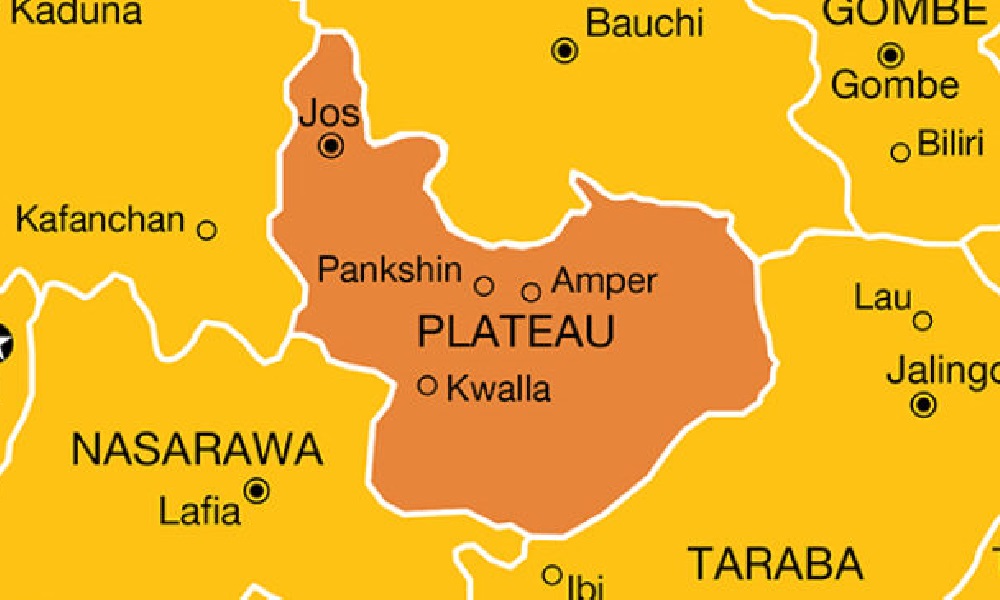
President Bola Ahmed Tinubu’s high-level engagement with Plateau stakeholders in Abuja has begun to yield tangible gains, with fresh commitments on security, relief funding, and, most significantly, a historic political reconciliation among the state’s leadership.
At the heart of the breakthrough was the unprecedented convergence of all living former governors of Plateau State under one roof for the first time, an outcome Governor Caleb Mutfwang described as a major step toward lasting peace in the crisis-prone state.
The meeting, which stretched into the evening at the Presidential Villa, brought together a powerful delegation including former governors Simon Lalong, Jonah Jang, Joshua Dariye, and Fidelis Tapgun, alongside traditional rulers and key political figures.
Beyond the symbolism of unity, the Abuja trip delivered concrete outcomes, including President Tinubu’s approval of N2 billion relief support for victims of the March 29 attack in Angwan Rukuba, Jos North Local Government Area.
The President also took a firm stance on security, vowing to deploy the full weight of federal authority against individuals identified as sponsors or instigators of violence in the state.
“If you identify and you know the name of troublemakers… we will use the instrument of office to deal with them,” Tinubu told the delegation, while charging Plateau leaders to take ownership of the peace process.
A major institutional gain from the meeting was the endorsement of a new peace committee comprising former governors, effectively placing them at the centre of reconciliation efforts. The President directed the committee to review past reports, harmonise recommendations, and drive implementation of sustainable peace strategies.
In what could signal long-term structural reform, Tinubu also renewed his push for the establishment of state police, describing it as critical to addressing Plateau’s unique security challenges.
Governor Mutfwang, reflecting on the outcomes, said the Abuja engagement had helped depoliticise key issues and foster a renewed spirit of unity among Plateau leaders.
“The coming together of the former governors has never happened before. This is the first time it is happening, and I believe that is a step we can build upon,” he said, adding that the state was now better positioned to “rise above all divides of religion and ethnicity.”
Remarkably, the President also directed inclusive governance measures, urging the state to integrate non-indigenes more fully into its political and administrative structure as part of confidence-building efforts.
Traditional rulers at the meeting, including the Gbong Gwom Jos, Da Jacob Gyang Buba, pressed for enhanced security deployment, technological surveillance, and the urgent resettlement of displaced persons—issues the Federal Government signalled readiness to support.
For many observers, the Abuja meeting marked more than a routine consultation—it represented a strategic reset, combining political unity, financial intervention, and a clearer security roadmap, all anchored on a rare consensus among Plateau’s past and present leaders.

Confusion erupted in the early hours of Thursday after suspected herdsmen reportedly attacked an Army Estate in the Kurudu area of Abuja.
However, one of the assailant died in the attack.
The incident, which occurred around 12:15 a.m. on April 30, occurred at Kurudu Post Army Estate, Phase 5.
According to eyewitness accounts, between 30 and 40 armed men believed to be herdsmen stormed the estate, causing fear among residents.
However, occupants of the estate quickly raised an alarm, prompting an immediate response from soldiers stationed at the estate’s gate.
During the confrontation, one of the suspected attackers was shot dead, while others fled the scene.
It remains unclear whether the attackers intended to carry out a robbery or a kidnapping operation, as authorities are yet to release an official statement on the incident.
Residents have been urged to remain vigilant as investigations continue.

Blackout looms in Lagos as Egbin power station shuts down

Plateau Leaders Unite In Abuja As Tinubu Approves N2bn Relief

Sad: One dead as suspected herdsmen attack Army Estate in Kurudu, Abuja




-

 News16 hours ago
2027: Ogbeide-Ihama Joins Edo South Senatorial Race, Says Upper Chamber Not For Neophytes(Photos)
-

 News16 hours ago
JUST IN: Tinubu Appoints Bianca Ojukwu Foreign Affairs Minister
-

 News13 hours ago
Reps probe $4.6bn health grants, demand stricter oversight
-

 News16 hours ago
May Day: FG Announces Public Holiday for All Nigerians
-

 Sports16 hours ago
Arsenal Hold Atlético Madrid To 1-1 Draw In UCL Semi-Final
-

 News10 hours ago
Watch moment FCT minister Wike being conferred with title of Abuja Hasken, Light of Abuja by FCT Traditional Council led by Ona of Abaji (Video)
-

 News11 hours ago
Troops halt late-night terrorist attack in Borno
-

 News16 hours ago
IGP Disu Fires ASP Nuhu Usman From Police Force Over Killing Of Mene Ogidi In Effurun