Opinion
From Abuja to the World: The Insecurity Triad and Rise of the Independent African Scholar
- /home/naijuinz/public_html/wp-content/plugins/mvp-social-buttons/mvp-social-buttons.php on line 27
https://naijablitznews.com/wp-content/uploads/2026/05/IMG-20260517-WA0000-1000x600.jpg&description=From Abuja to the World: The Insecurity Triad and Rise of the Independent African Scholar', 'pinterestShare', 'width=750,height=350'); return false;" title="Pin This Post">
- Share
- Tweet /home/naijuinz/public_html/wp-content/plugins/mvp-social-buttons/mvp-social-buttons.php on line 72
https://naijablitznews.com/wp-content/uploads/2026/05/IMG-20260517-WA0000-1000x600.jpg&description=From Abuja to the World: The Insecurity Triad and Rise of the Independent African Scholar', 'pinterestShare', 'width=750,height=350'); return false;" title="Pin This Post">
From Abuja to the World: The Insecurity Triad and Rise of the Independent African Scholar
By Max Amuchie
There are moments when an idea moves beyond commentary and begins entering systems.

The week that just ended was one of those moments.
Within the span of days, The Insecurity Triad experienced three separate but interconnected breakthroughs.
First came the Brussels intervention, last Sunday via an Op-ed piece in BusinessDay by hugely respected Collins Nweke, where the framework was interpreted within a European geopolitical context as an explanatory model for Sahel instability and its implications for Europe’s own strategic future.

Second came its consolidation into the global scholarly archive through repositories including Academia.edu, Harvard Dataverse, Zenodo, SSRN, OSF, and SocArXiv — six distinct platforms representing the full architecture of contemporary open-access scholarship.
Then came a third development whose symbolism may ultimately prove just as significant: my integration into the ResearchGate ecosystem.
At first glance, this may appear procedural. Another profile. Another platform. Another account.
But within the architecture of global scholarship, ResearchGate represents something much larger than social networking.
It is one of the world’s largest academic visibility platforms — a digital meeting ground where researchers, scholars, institutions, laboratories, journals, policy specialists, and interdisciplinary thinkers interact within a continuously evolving scholarly network.
To understand why this matters, one must first understand what ResearchGate actually represents in contemporary academic life.
What ResearchGate Really Is
Founded in 2008 by physicians Ijad Madisch and Sören Hofmayer alongside computer scientist Horst Fischbach, ResearchGate emerged as part of a broader transformation in global scholarship: the migration of academic visibility from closed institutional corridors into digital knowledge ecosystems.
Traditionally, scholarly recognition depended heavily on university affiliation, conference access, institutional journals, and physical academic networks.
ResearchGate altered part of that equation.
With over 25 million researchers from 193 countries, it created a platform where research outputs, citations, working papers, datasets, methodological discussions, and scholarly engagement could circulate beyond the limits of geography and institutional hierarchy.
Today, researchers from universities, think-tanks, laboratories, policy institutes, and independent research environments use the platform to upload publications, track citations, share datasets, engage with disciplinary debates, connect with other scholars, and increase discoverability across fields.
In effect, ResearchGate functions as part archive, part visibility engine, and part intellectual networking infrastructure.
And visibility matters in scholarship.
Because ideas do not influence debates merely by existing. They influence debates by becoming discoverable.
The Platforms and What They Represent
The repositories into which The Insecurity Triad has now been archived are not equivalent. Each represents a distinct layer of global scholarly infrastructure.
Academia.edu, with over 250 million registered users, is the world’s largest platform for academic sharing — the first point of entry into the global research conversation for many independent scholars.
Harvard Dataverse is an open-source repository operated by Harvard University, one of the most trusted and widely indexed academic archives in existence. A deposit there is not a symbolic gesture. It is a permanent record.
Zenodo, developed under the European OpenAIRE programme and operated by the European Council for Nuclear Research (CERN), assigns each deposit a Digital Object Identifier — a DOI — making it permanently citable in academic literature worldwide regardless of what happens to any journal or institution that might otherwise have hosted it.
OSF — the Open Science Framework — developed by the US Centre for Open Science, supports the full research lifecycle from planning through archiving and dissemination. It has become a standard for researchers committed to transparency and reproducibility.
SocArXiv is a premier open-access repository designed to ensure that social science research is shared rapidly and transparently.
It serves as a vital bridge between rigorous academic inquiry and the public interest.
It was founded in 2016 by Philip N. Cohen, a distinguished Professor of Sociology at the University of Maryland, College Park with a vision to create a “knowledge commons” that returns power to the scholars themselves.
And SSRN — the US-based Social Science Research Network, owned by Elsevier — is where social science scholarship enters the citation economy. With over one million papers and three million registered users, it is the platform through which working papers reach the global research community before and alongside formal peer review. It is also, notably, where Nobel Economics laureates Joseph Stiglitz, Esther Duflo, and Paul Krugman circulate their working papers — not because they are required to, but because that is where the serious readership is.
Together, these six platforms represent discovery, archiving, citation, networking, and dissemination. A coordinated presence across all six creates an unusually broad discoverability footprint for an independent scholar. For a scholar-journalist working from a newsroom in Abuja, it is extraordinary.
The Scholarly Series
Embedded within the developments of the week just ended is a commitment that deserves to be named directly.
Over the next twelve months, The Insecurity Triad will be developed into a ten-part scholarly series — engaging the framework, the Trinity of State Decay theory, and Sahel security dynamics in full academic register. Not as journalism. Not as commentary. As scholarship.
Part One — The Insecurity Triad (Part 1): Foundations of Convergence and Rival Sovereignty — An Analysis of Money, Land, and Mind (MLM) — has already been published and archived across Academia.edu, Harvard Dataverse, Zenodo, OSF, and SocArXiv, with SSRN forthcoming.
That is the opening instalment of a structured, year-long intellectual undertaking. Nine parts remain.
Why Admission Matters for an Independent Scholar
This is where the significance of these developments becomes clear.
Admission into these global scholarly platforms from outside formal academia carries symbolic and structural weight because it challenges one of the oldest assumptions within global intellectual culture: that legitimate scholarship must originate exclusively from institutional spaces.
For generations, the architecture of scholarship has largely been built around universities as gatekeepers of credibility.
The university conferred identity. The institution supplied legitimacy. The department validated intellectual existence.
But digital scholarly ecosystems are increasingly disrupting that monopoly.
An independent scholar operating from Abuja can now enter the same searchable research environment inhabited by professors in London, policy researchers in Brussels, doctoral candidates in Toronto, and analysts in Pretoria.
That does not erase institutional inequalities. But it narrows intellectual distance.
And that narrowing matters enormously for African thinkers working outside formal academic systems.
The African Reality of Intellectual Production
Across Africa, some of the continent’s most original analytical work often emerges under structurally difficult conditions.
Many researchers operate without university grants, funded research assistants, subscription journal access, institutional methodological support, conference travel funding, or formal research laboratories.
Yet despite these constraints, important ideas continue to emerge.
This is partly because African intellectual production has historically developed through hybrid spaces: journalism, activism, policy observation, civil society, strategic commentary, and independent inquiry.
In many cases, African thinkers are forced to become researchers, archivists, editors, publishers, and distributors simultaneously.
That reality makes entry into global scholarly ecosystems especially important.
Because platforms like Harvard Dataverse, SSRN, ResearchGate and others do more than host publications. They insert researchers into discoverability networks where their work can be found, cited, discussed, questioned, and expanded upon.
For an independent scholar, that visibility is not cosmetic. It is infrastructural.
The Insecurity Triad’s Expanding Scholarly Geography
Taken together, this sequence reveals the expanding geography of the framework’s circulation
The Insecurity Triad is no longer confined to one medium, one geography, or one intellectual ecosystem.
It now exists simultaneously across media discourse, policy interpretation, repository preservation, and scholarly networking systems.
From Abuja’s grounded observation of insecurity dynamics, to Brussels’ geopolitical interpretation of Sahel instability, to integration within global repository and research infrastructures, the framework is beginning to circulate through multiple layers of international knowledge production.
That circulation matters because frameworks gain strength through repeated engagement across different environments.
Some will critique it. Others will refine it. Some may reject aspects of it. Others may adapt it to new contexts.
But circulation itself is the beginning of intellectual life.
Beyond Personal Achievement
It is tempting to read these developments purely as personal achievement.
That would be too narrow.
What makes this moment significant is what it signals for African media institutions, independent scholars, and emerging researchers across the continent who operate outside traditional academic pathways.
It suggests that the global knowledge system — while still unequal — is becoming more permeable.
An idea no longer needs to begin at Oxford, Harvard, or Sciences Po before it can enter international circulation.
It can begin in Abuja.
It can emerge from a newsroom. From a scholar-journalist’s research desk. From a media-backed analytical unit. From a self-funded intellectual project.
And if sufficiently coherent, persistent, and discoverable, it can travel.
The Deeper Meaning of This Convergence
Perhaps the most important lesson of this moment is not institutional.
It is psychological.
For many African thinkers, the greatest barrier has often not been intelligence or originality, but proximity to recognised systems of validation.
The old model suggested: first secure institutional acceptance, then produce ideas.
The emerging reality increasingly suggests the reverse: produce durable ideas, and institutions may eventually begin to engage them.
That is the quiet significance of last week.
From Brussels to ResearchGate, from repositories to scholarly circulation, The Insecurity Triad is beginning to move through systems that were historically difficult for independent African frameworks to enter.
Not as charity. Not as symbolic inclusion. But through interpretive engagement.
And in the evolving geography of global scholarship, that distinction changes everything.
Interlude
In the last eight or nine weeks, this column has birthed The Insecurity Triad, defined its architecture, examined its dynamics, and from there developed the Trinity of State Decay theory. There is still much more to explore.
But next week, we step briefly away from the Triad and the Trinity to pay tribute to one of the outstanding intellectual giants of twentieth-century Africa.
Thirty years after his passing, Claude Ake remains profoundly missed.
Trust Is Sacred. Stay seasoned.
•Dr. Max Amuchie is the CEO of Sundiata Post and architect of The Insecurity Triad Analytical Framework, and the Trinity of State Decay theory. He writes The Sunday Stew, a weekly syndicated column on faith, character, and the forces that shape society, with a focus on Nigeria and Africa in a global context.
X — @MaxAmuchie | Email: max.a@sundiatapost.com | Tel: +234(0)8053069436

Opinion
At the helm of reform: Birthday reflections on Adebowale Adedokun, By Sufuyan Ojeifo
Nigeria doesn’t lack policies. It lacks people who can make them stick. That’s where Dr. Adebowale A. Adedokun comes in.
Appointed Director-General of the Bureau of Public Procurement, BPP, in November 2024 by President Bola Tinubu, Adedokun isn’t an outsider parachuted in for optics. He’s been in the BPP since day one, rising from pioneer staff member to Director of Research, Training and Strategic Planning before taking the top job. Twenty-plus years inside the system means he knows exactly where the leaks are.
And he’s been plugging them.
-From insider to reformer-
Adedokun holds a PhD in Procurement and Supply Chain Management plus four master’s degrees covering procurement, finance, technology, and transport. That mix of academic depth and hands-on experience is rare in public service.
Since taking charge, he’s pushed reforms that move beyond press releases. The BPP has overhauled Standard Bidding Documents to tighten transparency, rolled out a National Debarment Policy, launched Price Intelligence and Benchmarking Systems, and aggressively backed the Nigeria First Policy Framework to give local firms a real shot at public contracts.
-The numbers talk-
According to BPP reports, these changes saved the federal government over ₦1.1 trillion in 2025 alone. Tighter processes, less waste, stricter accountability.
In a country where procurement has often been a pipeline for leakage, that’s not small.
Adedokun has also pushed MDAs to adopt e-submissions for better traceability and built capacity across ministries, departments, and agencies. He’s defended Nigeria’s procurement interests abroad too, earning the “Public Sector Reformer of the Year” nod in 2025.
-Steady, not flashy-
What stands out isn’t grandstanding. It’s consistency. Adedokun rose through the ranks, saw the system’s weak points firsthand, and chose to fix them rather than manage around them.
Public procurement sits at the core of governance. It determines how roads, schools, and hospitals get built, and whether citizens trust the process. When it works, it drives development. When it doesn’t, cynicism grows.
The big question now is sustainability. Can these reforms outlast any single leader and become part of the institution’s DNA? Too early to call. But the early signals are solid.
As Adedokun marks his birthday, the message isn’t just celebration. It’s a reminder of how much heavy lifting public service demands. Nigeria needs more stewards who treat office as responsibility, not theatre.
Right now, the BPP looks like it has one.
Happy Birthday [May 15], Dr. Adebowale A. Adedokun. The work continues. Measured, deliberate, and overdue.
Opinion
5G: Africa still on the outskirts of connectivity
By Sonny Aragba-Akpore
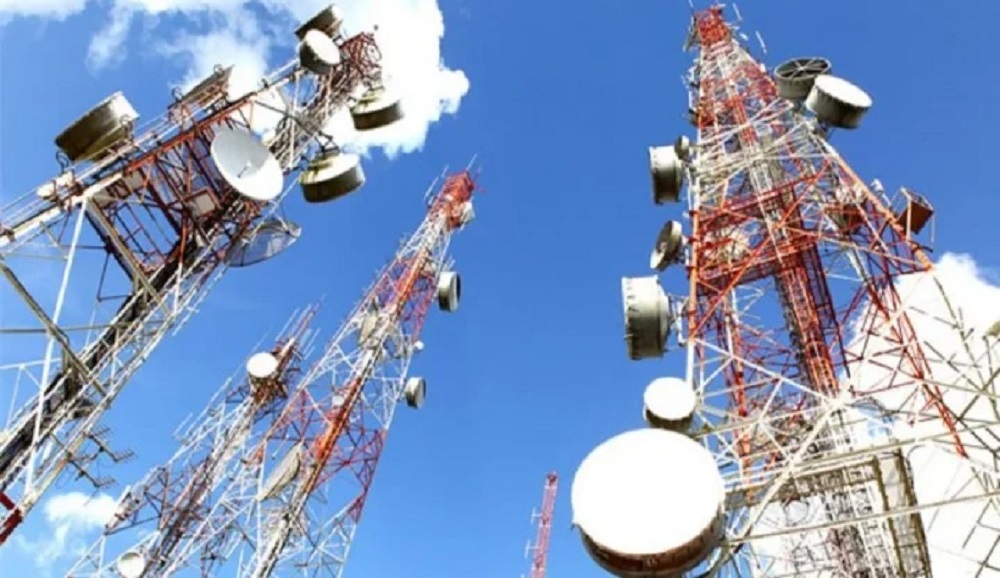
Global System of Mobile Communication Association (GSMA) said that between
2023 and 2030, capital expenditure on fifth-generation (5G ) technology in Sub-Saharan Africa is expected to reach $62 billion, as part of a larger, broader $1.5 trillion global investment in the next-generation networks. These figures, released at the last Mobile World Congress (MWC) in Barcelona, Spain, early in 2026, underscore the fast growth being recorded in 5G across the globe. Although Africa is seen as recording some measure of growth, there are no indications that the continent will quickly get out of the outskirts of globalisation. Only about 11% of the African population has coverage. South Africa leads the pack while Nigeria, Egypt and others trail behind.
By December 2025, 5G in Africa reached a significant milestone with 53 operators launching commercial services in 29 countries, driven heavily by Fixed Wireless Access (FWA) to bridge the digital divide. While adoption remained in early stages—estimated at ~3.8% of total mobile connections—14 additional markets are planned, focusing on urban areas in Nigeria, Kenya, and North Africa to boost connectivity and economic growth, according to GSMA Intelligence. 25 operators use 5G for Fixed Wireless Access (FWA) to provide home and office broadband in underserved areas. This is viewed as the primary near-term revenue generator, offering high-speed connectivity without extensive fibre installation. South Africa is the clear leader with significant investment from operators like MTN South Africa. In Nigeria, MTN and Airtel provide 5G coverage, with MTN deploying over 2,100 sites and offering unlimited, high-capacity data plans. Safaricom significantly scaled up its sites to 1,700+, covering roughly 30% of the population and dominating in Kenya. Strong expansion is seen in Tunisia, Egypt, Morocco, and Algeria, often using mid-band spectrum for better coverage. But despite rapid rollouts, 5G penetration is only about 3.8% of total mobile connections, with 2G–4G still accounting for the vast majority of connectivity in Africa.
Power challenges are being tackled with solar-battery systems and infrastructure sharing, often using a “Network-as-a-Service” model. 5G is projected to contribute $ 10 billion to Africa’s economy by 2030, enhancing the fintech, health, and agriculture sectors. It’s been five years now since the introduction of 5G technology in Nigeria, but its coverage has been anything but robust. Penetration is still very low, primarily because of poor and limited coverage. Apart from Lagos, Abuja, Port Harcourt, among a few other semi-urban and urban centres, the beauty of 5G is lost to a majority of the population despite its promise. While Lagos and Abuja have average coverage of 70% and 65%, respectively, the average in other parts of the few semi-urban and urban centres appears miserable. Indeed, there is no coverage in many towns and cities at all. Early in 2026, Nigeria recorded 7.2 million 5G subscribers, representing 3.94% of the 182 million connected subscribers to various networks. MTN and Airtel are believed to be the only visible operators for now. The other licence holder, Mafab Communication, is yet to show any serious sign of the licence it acquired in 2021, at the same time as MTN. In all, 5G coverage is in pockets across the country despite the Nigerian Communications Commission (NCC) ‘s commitment to driving sector improvement by enforcing fair competition and pushing for network modernisation. Subscribers are basically connected to 4G and 3G networks. When the regulator released industry performance data the other day in collaboration with Ookla, there was a manifest demonstration that the adoption of Niche Performance with newer technologies offers a significant boost to network performance, reinforcing this Technology Gap.
commitment. “Key opportunities for sector advancement of 5G include overall national Quality of Service (QoS) in the data analysis. The NCC thinks that in order to close the Digital Divide, expanding 4G/5G coverage into underserved rural regions to acceptable results is certain to ensure equitable access and performance for all Nigerians. Accelerating 5G deployment is expected to boost the significant coverage gap in high-demand areas to fall further behind competitors in urban areas (Lagos and Abuja) to serve the growing number of 5G-capable device users. “Focusing investment on improving latency and reducing jitter across all networks will ensure a high-quality experience for real-time applications. The NCC says Nigeria is deploying 5G, but having the infrastructure is only half the battle. A true 5G experience means high speeds, low delay, and seamless connectivity. “But the report analyses the ‘5G Gap’, the difference between the theoretical capacity of the network (what it could do) and the experience users are getting (what it is doing). “Our goal is to identify exactly where investment is needed to turn ‘coverage’ into ‘real time performance “according to the NCC report. On the global level, GSMA, the platform for mobile communication service providers and equipment providers, said that 5G now covers over 50% of the global population, adding that Global 5G connections exceeded 2.7 billion by the end of 2025. Approximately 20% of operators with 5G have launched live Stand Alone (SA) networks and project that this figure will be over 70 operators with faster adoption in 2026 The GSMA Intelligence 5G Connectivity Index highlights top performers to include Kuwait, UAE, Norway, Finland, Qatar, Denmark, Hong Kong, South Korea, China, and the USA.5G Fixed Wireless Access (5G FWA ) is a key use case, projected to reach 80 million connections by 2030, with 67% in Asia Pacific and 23% in Europe.
Asia Pacific continues to lead in SA deployment, with China, India, and Singapore in the top spots globally.
“The fastest-growing mobile technology is driven by momentum in major markets, including high adoption in the Asia Pacific and expanding, high-performance deployments in Europe and America “The International Telecommunications Union (ITU) explains that while 5G continues to expand, addressing the gap between high- and low-income regions remains a critical challenge for global digital inclusion. ITU identifies regional disparities as a major hindrance in the race to bridge the digital divide. “While Europe and Asia-Pacific lead, coverage is significantly lower in other regions, with Africa and the Arab States lagging”.5G access is heavily concentrated in high-income nations (84% coverage), while low-income nations have only 4% coverage. It says 66% of urban residents have 5G access, compared to just 40% in rural areas. The ITU has finalised the IMT-2020 specifications, defining the global standards for 5G, including both standalone (SA) and non-standalone (NSA) deployments.While 5G grows, 4G remains the key alternative in low-income areas, covering 92% of the global population. The ITU says while 5G momentum is strong, affordability and infrastructure gaps prevent equitable global access. 5G subscriptions are estimated to reach roughly three billion, representing over one-third of all mobile broadband subscriptions by 2026. Europe leads in 5G coverage (72%), followed by the Americas (63%), and Asia-Pacific (62%). Coverage is significantly lower in the Arab States (13%), CIS (12%), and Africa (11%).
In high-income countries, 90% of the urban population has 5G access, compared to just 58% of the rural population. In low-income countries, 5G is almost non-existent in rural areas (10% of the urban population). More than 300 commercial 5G networks have launched globally, with over 2,700 new devices announced.
Opinion
Oshiomhole: Akpabio keeps selling himself as a leader who prefers partnership over division
By Rt Hon Eseme Eyiboh
A recent video of Senator Adams Oshiomhole praising Senate President Godswill Akpabio has put the spotlight back on the 10th National Assembly. In the clip, Oshiomhole called Akpabio’s leadership exceptional. He said the Senate President has brought politicians from opposition parties into the APC without threats, pressure, or public fights.
According to Oshiomhole, people who used to be fierce opponents are now joining the APC willingly because of the atmosphere Akpabio has created. He even joked that Akpabio deserves a Guinness World Record for pulling off these political shifts so smoothly and seamlessly.
The comment has elevated the positive perception of the 10th Senate and sparked conversations around the institutional integrity of the 10th Senate. For Akpabio’s admirers, it shows his skill at building bridges, cooling down political tension, and getting people to work together. Critics may see it as a typical political praise that comes with power and authority. But beyond the buzz, one thing is clear: the 10th Senate leadership has become one of the most talked-about institutions since this government started.
Since taking office in June 2023, Akpabio has positioned himself as a leader focused on unity and stability. In his first in speech as Senate President, he said his election was a collective win, not a personal one. He promised to lead with fairness and integrity, put teamwork first, and keep national interest above party lines. He admitted that disagreements are normal in democracy, but said the Senate must move past division to focus on lawmaking, oversight, security, and the economy. This demonstrated commitment has occasioned multiple vote of confidence on Akpabio’s leadership by the 10th Senate.
That message mattered because Nigerians were already worried about governance, the economy, and deep political divides. Akpabio promised that the 10th Senate would work with the executive but still do its job as a check on power. He called it “a Senate for all Nigerians” and described his approach as “Servant leadership” and “Uncommon leadership.” Those phrases have stuck.
This style has brought calm to the Senate. Unlike past assemblies marked by internal fights and clashes with the Executive arm, this Senate has kept a working relationship with President Bola Tinubu’s administration. For many analysts, this cooperation is more necessary right now than ever, with inflation, insecurity, unemployment, and debt all weighing on the country.
Several leaders have publicly backed Akpabio’s approach. Edo State Governor, Monday Okpebholo, praised his transformational and development-focused leadership. Deputy Speaker Benjamin Kalu called him visionary and patriotic, saying he has strengthened the National Assembly. Akpabio has also received several awards for legislative integrity and institutional leadership to add verve to his leadership pedigree.
At the International arena, Senator Allwell Heacho Onyesoh credited him with helping Nigeria regain visibility in the Inter-Parliamentary Union, calling it a diplomatic win. Many say this shows the Senate leadership is thinking beyond Abuja.
Akpabio has repeatedly stressed inclusiveness. In many of his speeches, he has spoken about more roles for women, support for persons with disabilities, youth empowerment, and pushing innovation and technology. He has argued that Nigeria’s future depends on preparing young people for a knowledge-based economy and making laws that support technology, entrepreneurship, and revenue sources beyond oil.
This is evidently seen in his home state (Akwa Ibom State). The working relationship between Akpabio and Governor Umo Eno is having a clear effect on Akwa Ibom’s politics and economy. Both men have pushed for inclusive politics, and that has helped calm tensions in the state. Leaders, stakeholders, and ordinary citizens now feel like they have a place in how the state is run. That has made it easier for people across party lines to work together on projects that move the state forward.
One big result is the growing support for Governor Eno’s administration. Instead of stoking division or personal rivalries, Akpabio has publicly backed the governor’s development plans. That has taken some heat out of state politics and given people more confidence in government. For many residents, it now feels like governance is a team effort, not a fight for personal power.
Akpabio’s backing has also put Akwa Ibom more firmly on the federal radar. As Senate President, he has the clout to draw national attention and opportunities to the state. That has led to better cooperation between Akwa Ibom and the federal government on roads, human capital programmes, and economic projects. The calm between both leaders has also made investors and development partners more comfortable. Stable politics make it easier for them to commit.
Governor Eno’s government is seeing the benefits of that stability. His policies on rural development, job creation, agriculture, and social welfare are getting wider public support because political leaders are not pulling in different directions. This symbiotic relationship is the first in the annals of Akwa Ibom State since creation
These ideas line up with President Tinubu’s “Renewed Hope” agenda. The government has pushed through fuel subsidy removal, exchange rate changes, and fiscal reforms to stabilize finances and attract investment. Officials say these moves are necessary for long-term growth, regardless of the hardship for many Nigerians.
That’s why the National Assembly’s role matters now more than ever. The Senate has to pass laws that support reforms, but also keep oversight to make sure policies actually help citizens. Akpabio has said the Senate will protect national interest while backing policies that can drive recovery.
Even with all the praise coming his way, Akpabio often shifts credit to President Tinubu. He frames himself as part of a team, not the sole force behind stability. He has praised Tinubu’s push to rebuild investors’ confidence and restore trust through the Renewed Hope Agenda.
He points to ongoing projects like the Lagos-Calabar Coastal Highway and the Lagos-Maiduguri corridor as signs of long-term planning. These roads show a serious effort to connect the country and fix years of neglect in transport infrastructure.
Akpabio has also highlighted the creation of development commissions across the geopolitical zones. He says this shows the government is trying to make every region feel carried along. In a country often split along ethnic and regional lines, that message resonates.
On security, he has backed the military’s operations against terrorism, banditry, and other crimes. With kidnapping, insurgency, and communal violence still major concerns, his public support for the administration’s approach reinforces the image of the Senate and presidency working together.
One striking part of his recent comments was his mention of early endorsements for Tinubu ahead of 2027. He said the support isn’t random but tied to what he sees as real governance results.
Senator Oshiomhole’s comments also show a strategy in Nigerian politics that party strength is not just about winning elections. It’s about pulling in influential figures from other parties. Defections signal shifting power, and Oshiomhole’s remarks frame Akpabio as a unifier who expands the party through persuasion, not confrontation.
Still, Akpabio keeps selling himself as a leader who prefers partnership over division. His speeches push dialogue, teamwork, and putting Nigeria first. He reminds lawmakers that even though they came in on different platforms, they are all representing one country.
Whether you agree with his politics or not, Akpabio is now one of the deepest and most thoughtful figures in Nigeria’s political space. He has kept strong ties in the Senate, stayed aligned with the presidency, and earned public endorsements from major players. That has solidified his position and sustained the sobriquet “uncommon transformer”.
Rt Hon Eseme Eyiboh is the Special Adviser,Media/Publicity and Official Spokesperson to the President of the Senate
-
News11 hours agoDHQ releases details about slain ISIS top leader, Al-Minuki
-
News13 hours agoAPC releases list of disqualified Reps aspirants across Nigeria
-
News17 hours agoFinal Farewell in Delta as Family, Community Honour Mama Eunice Ikpen
-
News22 hours agoUS and Nigerian forces kill ISIS 2nd in command in joint operation-Trump reveals
-
News10 hours agoVideo/Photos:Rescued alive after being buried under rubble of a collapsed building for more than 9 hours
-
News13 hours agoGumi Speaks On Killing Of ISIS Commander, Al-Minuki
-
News20 hours agoGen Otiki: Finally, Supreme Court acquits ex-GOC of all charges
-
News13 hours agoSad: Fayose loses wife to Cancer