Connect with us

Foreign

Trump to suspend US gas tax as Iran war raises prices

Published

on

ADVERTISEMENT
Zoom Ad
ADVERTISEMENT
Zoom Ad

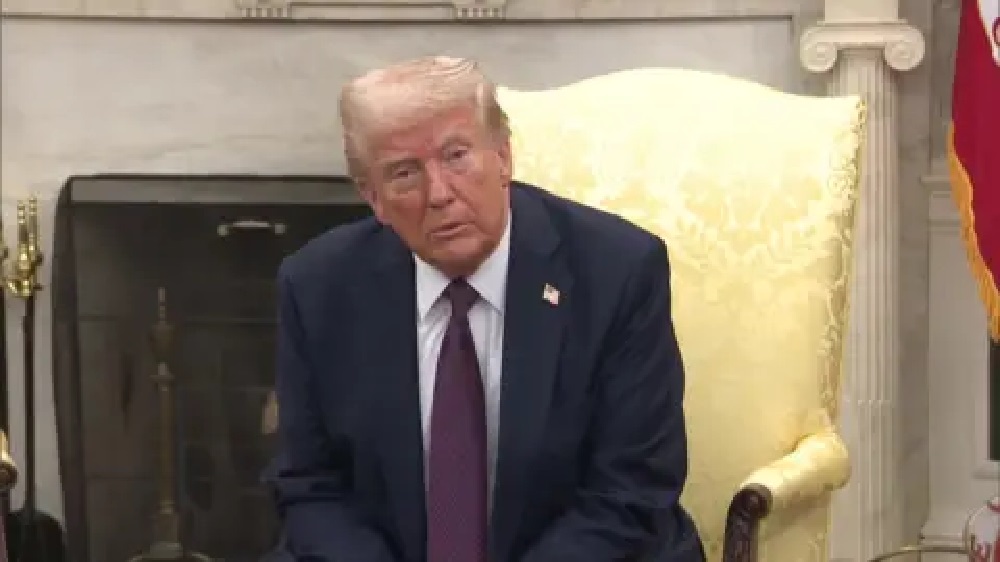
US President Donald Trump said on Monday that he plans to suspend a federal gasoline tax as consumers deal with surging energy prices in the wake of the Iran war.


Responding to a reporter’s question at the White House, Trump said he would be taking the step, with the suspension to remain in place “till it’s appropriate.”

“It’s a small percentage, but you know it’s still money,” he said.

US federal taxes on gasoline amount to 18.4 cents per gallon on gasoline and 24.4 cents per gallon for diesel, according to the US Energy Information Administration (EIA).

Advertisement

Suspending the tax would require an act of Congress, where Trump’s Republican party holds a razor-thin majority in both houses.

Trump ally Senator Josh Hawley said he would introduce legislation to do so on Monday. In the House, Republican Anna Paulina Luna made a similar pledge to introduce a bill “this week.”

US fuel prices have skyrocketed since Trump launched the war on Iran, with gasoline and diesel both up about 50 percent since late February.

Iran’s retaliatory action has included virtually closing the key Strait of Hormuz, through which about a fifth of the world’s oil and natural gas passes.

Advertisement

On Monday, the average price of a gallon of regular gasoline in the United States was $4.52, with diesel at $5.64, according to the AAA motor club.

Suspending the federal fuel tax would bring those prices down by about four percent.

State taxes on fuel, which average 32.61 cents per gallon for gasoline and 34.76 cents for diesel according to the EIA, would be unaffected by the move.

AFP
Advertisement
Continue Reading
Advertisement

Foreign

UK imposes 70 new sanctions on Russia

Published

on

By

ADVERTISEMENT
Zoom Ad
ADVERTISEMENT
Zoom Ad

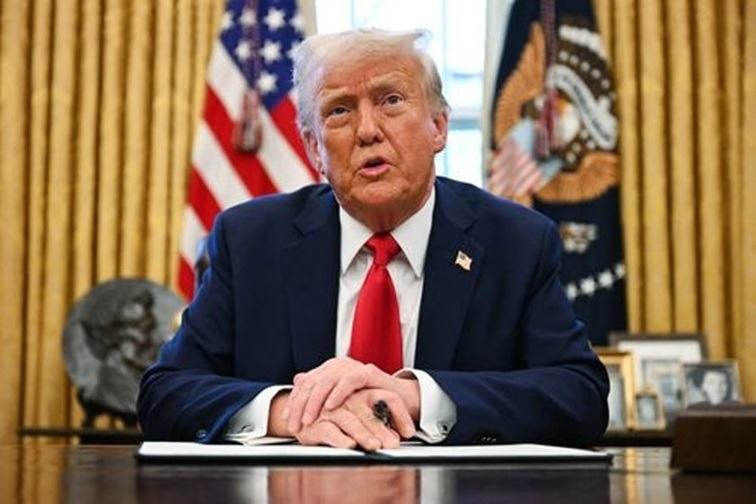
The UK is imposing a raft of new sanctions against Russia, including on tankers that transport LNG, in a bid to pressure Moscow into halting the war against Ukraine, Prime Minister Keir Starmer announced as a special G7 summit session got underway Tuesday.

Ukrainian President Volodymyr Zelensky is attending the summit of seven leading world powers in the French resort town of Evian-les-Bains, with allies looking to tilt the balance in Kyiv’s favour after over four years of war and intensify pressure on Russian President Vladimir Putin.

“Working with our G7 allies, we will continue to increase the pressure on Putin and his circle of collaborators until Russia’s war machine is brought to a halt and peace returns to our continent,” said Starmer.

The talks are taking place after a Russian barrage of missiles and drones early Monday killed at least 11 people across Ukraine and sparked a fire at one of the most important Orthodox monasteries in the capital.

Advertisement

“UK announces 70 new sanctions targeting Russia’s decrepit shadow fleet, military procurement supply chains and illicit finance networks used to circumvent sanctions,” a statement by UK’s Foreign, Commonwealth & Development and Starmer’s offices read on Tuesday.

The new sanctions actions “will choke Russia’s war effort across multiple fronts” by targeting Russia’s illicit “shadow fleet,” military procurement supply chain and finance networks used to circumvent sanctions, Starmer’s office said further.

The actions against the so-called “shadow fleet” — used by Russia to transport energy and other assets under a different flag — target more than 20 oil tankers.

Starmer’s office said the United Kingdom is now the first G7 country to sanction several Liquefied Natural Gas (LNG) vessels recently acquired by Russia to service an already sanctioned Arctic LNG project.

Advertisement

The British premier — under pressure at home after his defence minister resigned in a row over military spending last week — is to tell leaders at the session that “the G7 should collectively go further to ensure Ukraine secures the just and lasting peace it deserves”.

Starmer’s office also announced a deal to send enriched uranium to fuel Ukrainian nuclear power stations which would “power Ukraine for the next two years”.

Some £210 million ($282 million) worth of export finance will allow the UK-based Urenco to supply enriched uranium to Ukraine’s nuclear power producer, Energoatom, it said.

AFP

Advertisement
Continue Reading

Foreign

US says ships exiting Hormuz, ‘expectation’ of no Iran tolls

Published

on

By

ADVERTISEMENT
Zoom Ad
ADVERTISEMENT
Zoom Ad

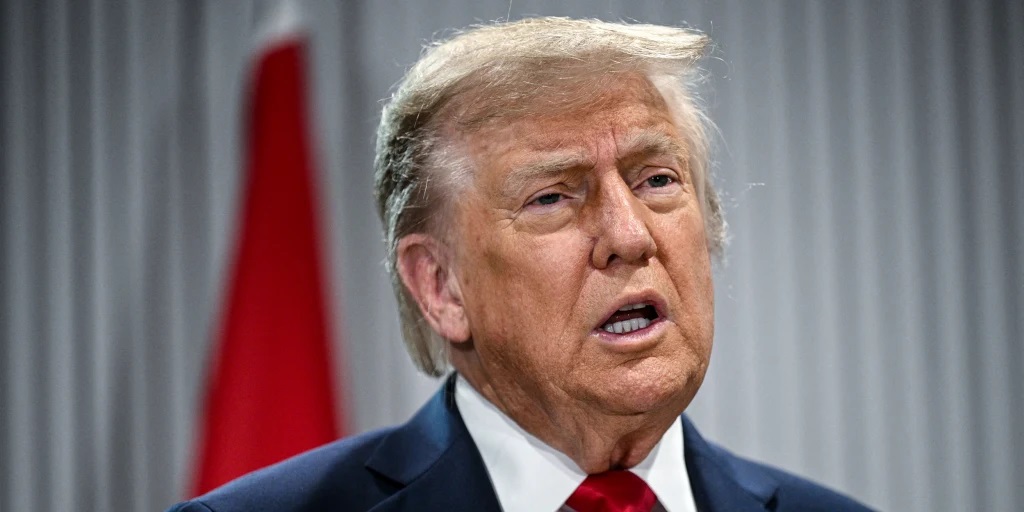
US President Donald Trump said on Monday that oil tankers are again exiting the Strait of Hormuz, following a peace deal, but uncertainty persisted over whether Iran will keep imposing tolls on ships in the vital waterway.

Mediator Pakistan announced on Sunday that the United States and Iran had agreed to an “immediate and permanent termination” of military operations, but the text of their peace deal has yet to be released.

The deal is expected to be signed on Friday in Switzerland and be followed by further “technical” talks on a long-term agreement.

Trump said that with the signing, the Strait of Hormuz — a vital waterway for Gulf energy exports — would be reopened and a US naval blockade of Iran would be lifted.

Advertisement

On Monday, while flying to a G7 summit in France, Trump posted on his Truth Social platform that “ships are starting to move, many loaded up with Oil, out of the Strait of Hormuz.”

“They are going along the Southern ‘Highway,’ which is totally safe, secure, and pristine,” he wrote, apparently referring to a shipping route nearer to Oman in the narrow waterway.

Trump said last week that the US military had secretly helped more than 200 commercial ships carrying over 100 million barrels of oil pass through the Strait of Hormuz since May.

“There are other areas of travel, also!!!” he posted Monday, without further details.

Advertisement

Iran, in response to the US-Israeli strikes that began on February 28, effectively halted traffic through the Strait of Hormuz.

Closure of the strait, which normally carries around a fifth of global oil and gas exports, caused energy prices to spike around the world.

Iran later moved to set up a payment system for transiting ships.

– Toll-free? –

Advertisement

US Vice President JD Vance was asked on CNBC Monday morning if there was an understanding with Iran that the strait would reopen toll-free for just an initial period of 60 days or indefinitely under the deal.

“Our expectation is that the strait is going to be opened in a toll-free way for the long term, and that’s the sort of thing that we’re going to figure out in these technical negotiations,” he said.

Iran’s foreign ministry meanwhile said on Monday that the deal would allow it to charge maritime service fees on ships transiting the Strait of Hormuz, rather than imposing “tolls.”

Uncertainty also surrounds other key aspects of the deal, including Iran’s access to its frozen funds and relief from international and US sanctions.

Advertisement

Vance did not give specifics on the terms of the relief Monday, but emphasized that it would be dependent on a “verification process.”

“We say to the Iranians, you are welcome to have access to an unsanctioned economy, you’re welcome to be reinvited into the world economy, but only if you honor the commitments that you make in this agreement.”

“You don’t have access to the money to rebuild that nuclear program,” Vance said, “but if you’re willing to give up that program long term, if you’re willing to accept the inspections and verification regime that’s necessary to give us the confidence you’re never going to have a nuclear weapon, then we want you to be a prosperous country, and we will reinvite you into the community of nations.”

Asked who would be representing the United States at the signing ceremony, Vance said there will be a “full spectrum of representatives.”

Advertisement
Continue Reading

Foreign

Iran Agrees US Peace Deal, To Reopen Strait Of Hormuz

Published

on

By

ADVERTISEMENT
Zoom Ad
ADVERTISEMENT
Zoom Ad

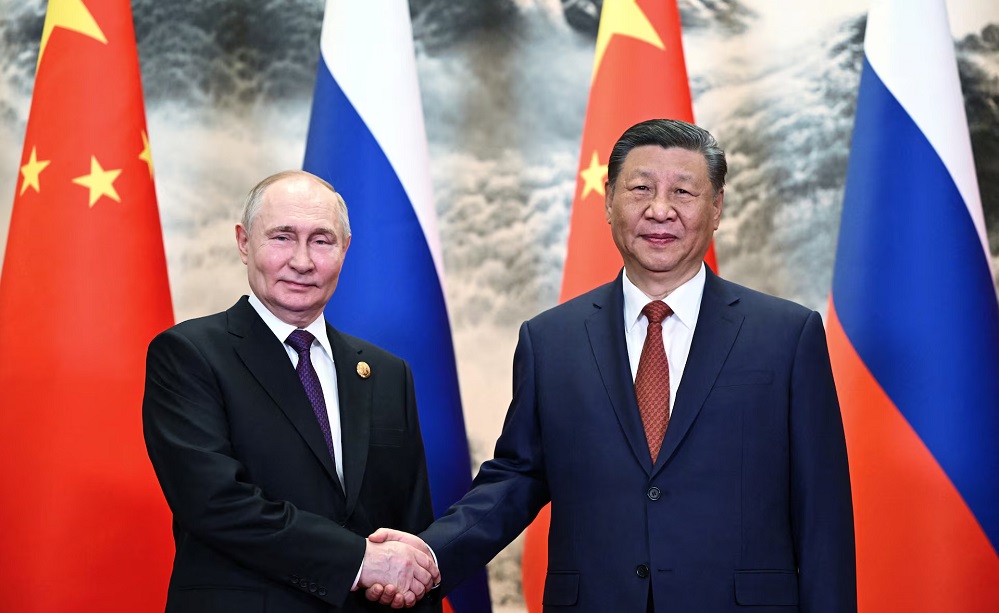
Iran has indicated its willingness to forgo the pursuit of nuclear weapons and reopen the strategically important Strait of Hormuz as part of a proposed peace framework reportedly being negotiated with the United States.

The development emerged on Sunday amid growing optimism that months of heightened tensions and conflict between the two countries could move toward a diplomatic resolution, although officials on both sides have cautioned that negotiations are still ongoing and a final agreement has not yet been concluded.

According to reports, the draft framework under discussion would see Iran commit to refraining from producing or acquiring nuclear weapons while reopening the Strait of Hormuz to commercial shipping. In return, the United States would release approximately $25 billion in frozen Iranian assets, ease certain sanctions, and suspend the imposition of new sanctions during a negotiation period aimed at reaching a broader agreement.

The proposed arrangement has attracted global attention because of the significance of the Strait of Hormuz, one of the world’s most important maritime trade routes. The waterway serves as a critical passage for global energy supplies, with disruptions in the area often triggering concerns in international oil markets. Shipping activity through the strait has reportedly been affected by recent hostilities, contributing to uncertainty in global energy and financial markets.

Advertisement

Sources familiar with the negotiations said the draft agreement would establish a 60-day framework for further talks between Washington and Tehran. During that period, both countries would work toward a more comprehensive settlement covering Iran’s nuclear programme, sanctions relief, and broader regional security issues.

Under the reported terms, Iran would maintain the current status of its nuclear activities pending a final agreement, while discussions continue on the future of uranium enrichment and other aspects of its nuclear programme. The United States, on the other hand, would temporarily ease some economic restrictions and facilitate the release of frozen Iranian funds.

Diplomatic efforts to finalize the framework have reportedly involved mediators from Qatar and Pakistan, both of whom have played active roles in encouraging dialogue between the two sides. Discussions are said to be focused on creating conditions that could reduce tensions and prevent a return to military confrontation.

Despite the optimism surrounding the negotiations, uncertainty remains. Iranian officials have stated that no final decision has been reached regarding a formal signing ceremony, while previous statements from U.S. officials suggesting an imminent agreement have sometimes been met with caution from Tehran.

Advertisement

The diplomatic developments come against the backdrop of continued instability in the Middle East. Fresh military actions involving regional actors have underscored the fragile nature of the situation and highlighted the challenges facing negotiators as they seek to transform a tentative framework into a lasting agreement.

If finalized, the proposed deal would mark one of the most significant diplomatic breakthroughs between Washington and Tehran in years, potentially easing tensions in the Gulf region, restoring confidence in international energy markets, and opening the door to broader negotiations on long-standing disputes between the two countries.

Continue Reading

Trending

Copyright © 2024 Naija Blitz News