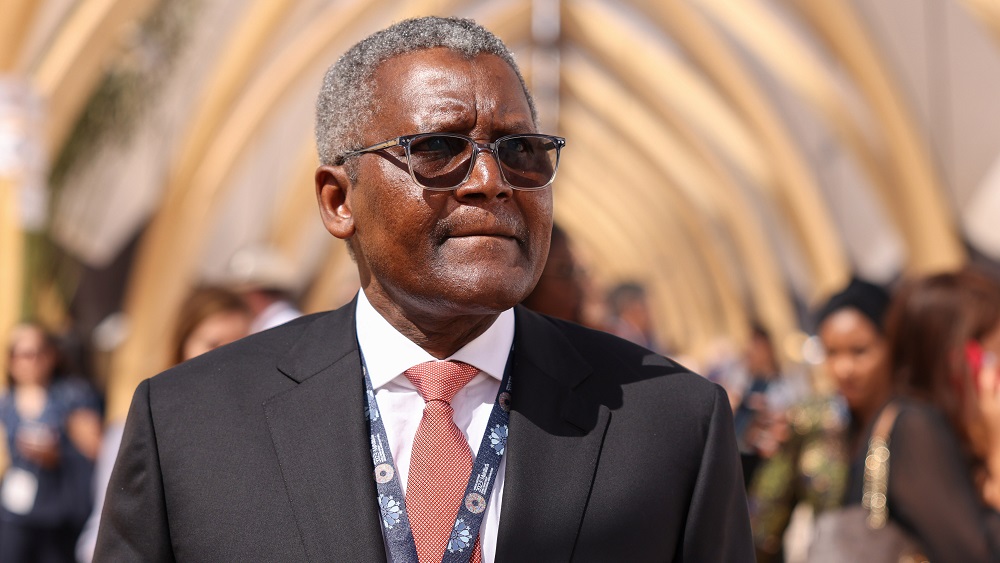
Governor of the Central Bank of Nigeria, Mr. Olayemi Cardoso, has disclosed that Nigeria’s foreign exchange market has recorded daily transactions of up to $1 billion on several occasions in recent months, describing the development as a major improvement in market liquidity and investor confidence.
Cardoso spoke during the official launch of the 4th Edition of the Central Bank’s Foreign Exchange Manual in Abuja, where he said reforms introduced by the apex bank have helped transform the foreign exchange market from a heavily intervention-driven system into a more transparent and active market.
According to him, average daily turnover in the market has risen significantly since the beginning of the current administration. 
He explained that when the administration came into office, the foreign exchange market recorded average daily turnover of about $100 million.
However, he said the figure has now increased to between $400 million and $600 million daily, with the market already achieving the $1 billion mark on several trading days.
“When this administration took over, the average turnover per day was about $100 million. Now it has gone to an average of between $400 million and $600 million per day,” Cardoso said.
He added that the long-term target is to consistently achieve daily turnover of about $1 billion in the foreign exchange market.
According to the CBN governor, the improvement reflects growing confidence among market participants and increasing liquidity in the system.
Cardoso explained that Nigeria’s foreign exchange market has become more dynamic because participants now feel more confident entering and exiting the market without unnecessary restrictions.
He said the market has moved away from the previous situation where traders and investors depended mainly on periodic interventions from the Central Bank.
“We’ve gone from a situation where it was more or less a one-way market where the Central Bank came in, intervened and went away, and everybody waited for the next intervention,” he stated.
According to him, the market is now more transparent and active, encouraging greater participation from banks, investors and other operators.
Cardoso noted that deeper liquidity in the foreign exchange market would strengthen the economy and improve market stability over time.
He also stressed that foreign reserves should primarily serve as reserves rather than being constantly used to defend or fund the market.
The CBN governor explained that the revised Foreign Exchange Manual was introduced to improve clarity, consistency and efficiency in the management of the market.
He said the new manual was developed after extensive consultations with banks and other stakeholders to ensure that industry concerns and operational challenges were properly addressed.
According to him, the revised guidelines reflect international best practices and are designed to strengthen transparency and credibility in the foreign exchange market.
Cardoso urged banks, exporters, importers, government agencies and private sector operators to comply fully with the provisions of the new manual.
He stated that maintaining stability and credibility in the foreign exchange market requires collective responsibility and cooperation among all stakeholders.
The governor also disclosed that the revised manual would take effect from June 1, 2026, and would be distributed free of charge to authorised dealers to encourage compliance and proper implementation.
He warned market participants against any form of misconduct or abuse of the foreign exchange system, stressing that the apex bank would strengthen monitoring mechanisms to ensure fairness, accountability and consistency across the market.
Cardoso expressed confidence that the reforms being implemented by the CBN would continue to deepen the foreign exchange market, improve liquidity and support long-term economic stability in the country.
Earlier in his address, Deputy Governor, Economic Policy Directorate of the Central Bank of Nigeria, Dr. Muhammad Sani Abdullahi spoke on some of the major policy changes introduced in the revised manual.
Abdullahi said the CBN has harmonised the disbursement structure for Personal Travel Allowance and Business Travel Allowance with the revised Bureau De Change guidelines. Under the new arrangement, he said 75 per cent of PTA and BTA transactions would be processed electronically while only 25 per cent could be paid in cash.
He also disclosed that the allowable advance payment for imports has been increased from 15 per cent to 30 per cent.
Other major changes include free processing of Form NXP, new provisions for service exports, documentation requirements for technology companies’ remittances, and the introduction of guidelines for PAPSS transactions aimed at supporting regional payments and intra-African trade.
Abdullahi further said the revised manual allows payments for services and fees in foreign currency where receipts are earned in foreign currency. He added that the CBN has introduced Non-Resident Investment Accounts and Non-Resident Ordinary Accounts as part of efforts to improve market operations.
The deputy governor also disclosed that the revised manual now permits payment of tuition fees for undergraduate and postgraduate studies up to a maximum of $25,000 per semester.
He explained that holders of export proceeds and ordinary domiciliary accounts would now enjoy easier access to their funds, including transfers between banks for eligible transactions. According to him, foreign companies operating in Nigeria’s extractive sector would now be allowed full repatriation of export proceeds.
Abdullahi also said the mandatory requirement for Form A in certain transactions involving ordinary domiciliary accounts has been removed, although banks would still be expected to verify the legitimacy of such transactions.
He added that the revised framework now includes provisions aimed at stopping the front-loading of foreign exchange purchases. According to him, the reforms collectively seek to modernise Nigeria’s foreign exchange system, support legitimate business activities, improve efficiency and deepen confidence in the market.